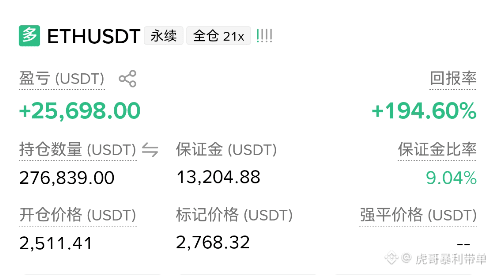
After you’ve been in the crypto market for a while, you’ll understand: the people who can actually make money aren’t the ones with the sharpest “inside information,” and they’re not the boldest. It’s the ones who have the best rhythm and can restrain themselves $ETH
Many people come in and immediately want to predict the market, catch bottoms, and escape tops. But the ones who consistently make money don’t actually “predict”—they just follow.
When it’s time to rise, go long along with it. When it’s weak, reduce positions or short along with it. If there’s no signal, stay out and do nothing. It’s better to miss than to act recklessly $SNDK
I’ve seen a person who went from a few thousand USDT to tens of thousands, and he survived and grew by relying on this.
The trading isn’t complicated, but the discipline is strict. For every trade, set a stop-loss; when it’s hit, execute—no hesitation. Once you start turning a profit, first withdraw your original capital, then use the profits to keep compounding.
No holding on to losing positions, no adding “extra drama,” and no arguing with the market about right or wrong.
He said it plainly: it’s not that I don’t want to go fast—it's that I can’t afford to lose.
It sounds simple, but most people can’t do it. And exactly because he can, he hasn’t been liquidated, and there haven’t been huge ups and downs—his account curve is getting smoother and steadier instead.
Money isn’t made in one big burst. It’s “worn down” through repeated risk control. This market never rewards impulsiveness—it only rewards long-term self-discipline $BTC
Don’t always think about turning things around in one shot. First learn not to lose wildly. Get the rhythm right, keep drawdowns under control, and your account will naturally climb step by step.
The real advantage was never how fast you can make money—it’s how long you can stay alive in the market.
No big dreams, no blowing up-rich myths—just sharing practical position-control logic that helps you survive long-term. Brothers who want to learn a “sure-win” mindset and flip a small account into better ground: welcome to join the chat room to exchange ideas and stay in sync with the rhythm.
Many people come in and immediately want to predict the market, catch bottoms, and escape tops. But the ones who consistently make money don’t actually “predict”—they just follow.
When it’s time to rise, go long along with it. When it’s weak, reduce positions or short along with it. If there’s no signal, stay out and do nothing. It’s better to miss than to act recklessly $SNDK
I’ve seen a person who went from a few thousand USDT to tens of thousands, and he survived and grew by relying on this.
The trading isn’t complicated, but the discipline is strict. For every trade, set a stop-loss; when it’s hit, execute—no hesitation. Once you start turning a profit, first withdraw your original capital, then use the profits to keep compounding.
No holding on to losing positions, no adding “extra drama,” and no arguing with the market about right or wrong.
He said it plainly: it’s not that I don’t want to go fast—it's that I can’t afford to lose.
It sounds simple, but most people can’t do it. And exactly because he can, he hasn’t been liquidated, and there haven’t been huge ups and downs—his account curve is getting smoother and steadier instead.
Money isn’t made in one big burst. It’s “worn down” through repeated risk control. This market never rewards impulsiveness—it only rewards long-term self-discipline $BTC
Don’t always think about turning things around in one shot. First learn not to lose wildly. Get the rhythm right, keep drawdowns under control, and your account will naturally climb step by step.
The real advantage was never how fast you can make money—it’s how long you can stay alive in the market.
No big dreams, no blowing up-rich myths—just sharing practical position-control logic that helps you survive long-term. Brothers who want to learn a “sure-win” mindset and flip a small account into better ground: welcome to join the chat room to exchange ideas and stay in sync with the rhythm.