【CJ Market Making Notes 07/14】
Concentrated liquidity isn’t only used to neutralize and earn fees—it can also express direction. I usually split it into “long LP” and “short LP,” but that isn’t the same as opening a long or a short position on a contract.
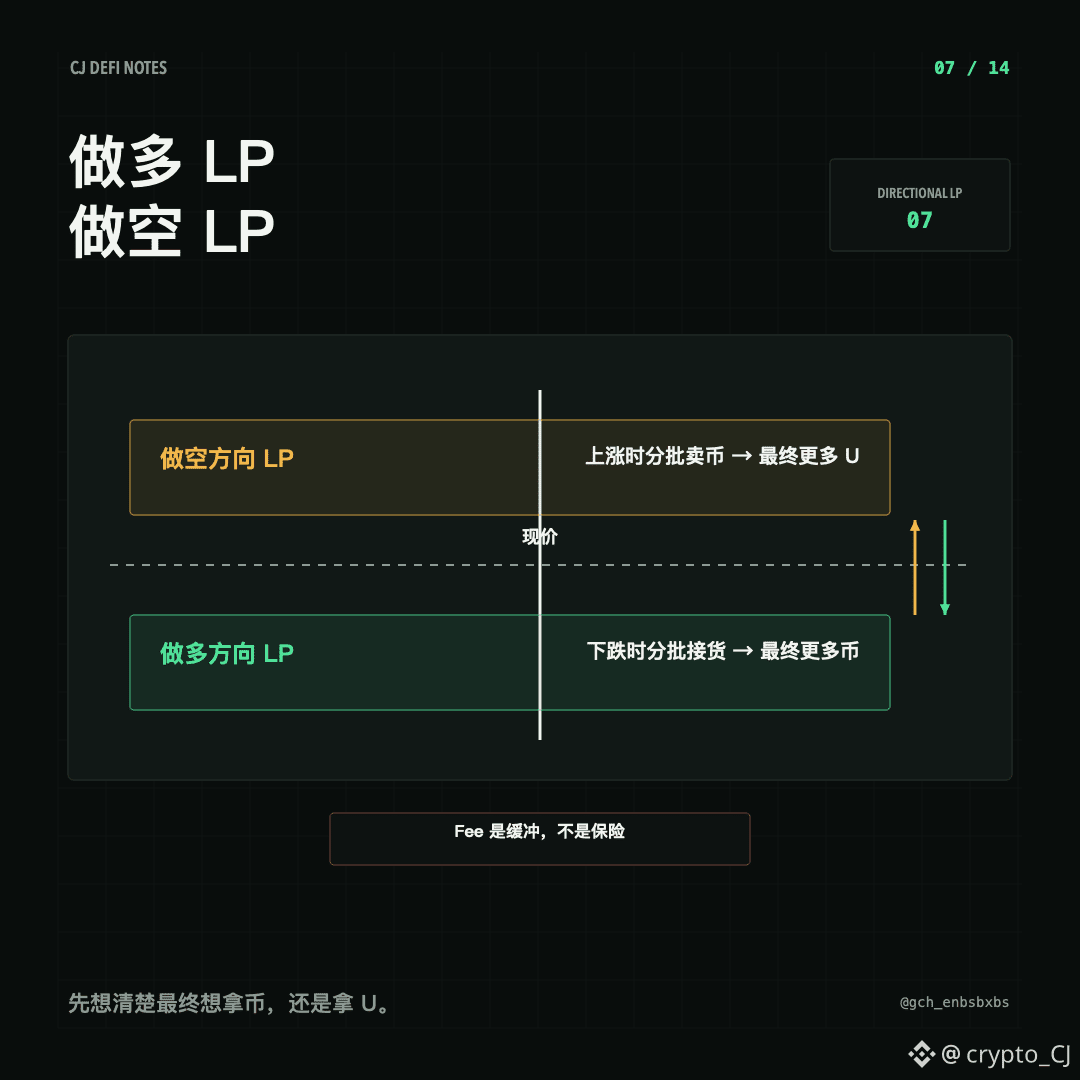
If you think the price is too high and want to gradually sell coins during an uptrend, you can place your one-sided sell range above the current price. As the price moves upward, the pool will convert the coins into stablecoin U in batches, while also charging a fee. Finally, if the price breaks through the entire range, most of the position will end up as U. The cost is that you might sell too early; if the price keeps rising afterward, you’ll have very few coins left.
If you want to pick up coins during a pullback, you can place your one-sided buy range below the current price. As the price falls, U will be converted into coins in batches. If the price never enters the range, the funds may generate only very small fees—or even no trades at all. After the price breaks through the entire range downward, the position will become spot; at that point, you must be willing to hold it.
If your directional judgment is wrong, the fee can only provide a buffer—it can’t turn a mistake into a correct outcome. The most practical question before opening is: after the price passes through the entire range, do I want to ultimately end up with U, or with coins? That answer determines which side to place the range.
Next post: What coins are suitable for using LP to buy on dips?
#DeFi #LP market making
Concentrated liquidity isn’t only used to neutralize and earn fees—it can also express direction. I usually split it into “long LP” and “short LP,” but that isn’t the same as opening a long or a short position on a contract.
If you think the price is too high and want to gradually sell coins during an uptrend, you can place your one-sided sell range above the current price. As the price moves upward, the pool will convert the coins into stablecoin U in batches, while also charging a fee. Finally, if the price breaks through the entire range, most of the position will end up as U. The cost is that you might sell too early; if the price keeps rising afterward, you’ll have very few coins left.
If you want to pick up coins during a pullback, you can place your one-sided buy range below the current price. As the price falls, U will be converted into coins in batches. If the price never enters the range, the funds may generate only very small fees—or even no trades at all. After the price breaks through the entire range downward, the position will become spot; at that point, you must be willing to hold it.
If your directional judgment is wrong, the fee can only provide a buffer—it can’t turn a mistake into a correct outcome. The most practical question before opening is: after the price passes through the entire range, do I want to ultimately end up with U, or with coins? That answer determines which side to place the range.
Next post: What coins are suitable for using LP to buy on dips?
#DeFi #LP market making