At a glance: In the hot springs of California’s Lassen Volcanic National Park, a newly discovered “Cascade fire deforming amoeba,” Incendiamoeba cascadensis, can remain active, grow, and reproduce at 63°C (about 145°F), pushing forward the upper temperature limit at which known eukaryotes can continuously grow.
For a long time, people generally believed that to sustain long-term growth, eukaryotes (complex cells with a nucleus) have a temperature ceiling of about 60°C. The research team collected samples from the hot springs from 2023–2025 and then gradually increased the temperature in the lab. At 63°C, a complete mitosis process can still be observed. At around 70°C (158°F), the cells shrink and enter a protective state; after cooling, they can recover, but further heating prevents sustained growth. Genomic analysis also shows that the genome contains more genes related to protein homeostasis and DNA repair.
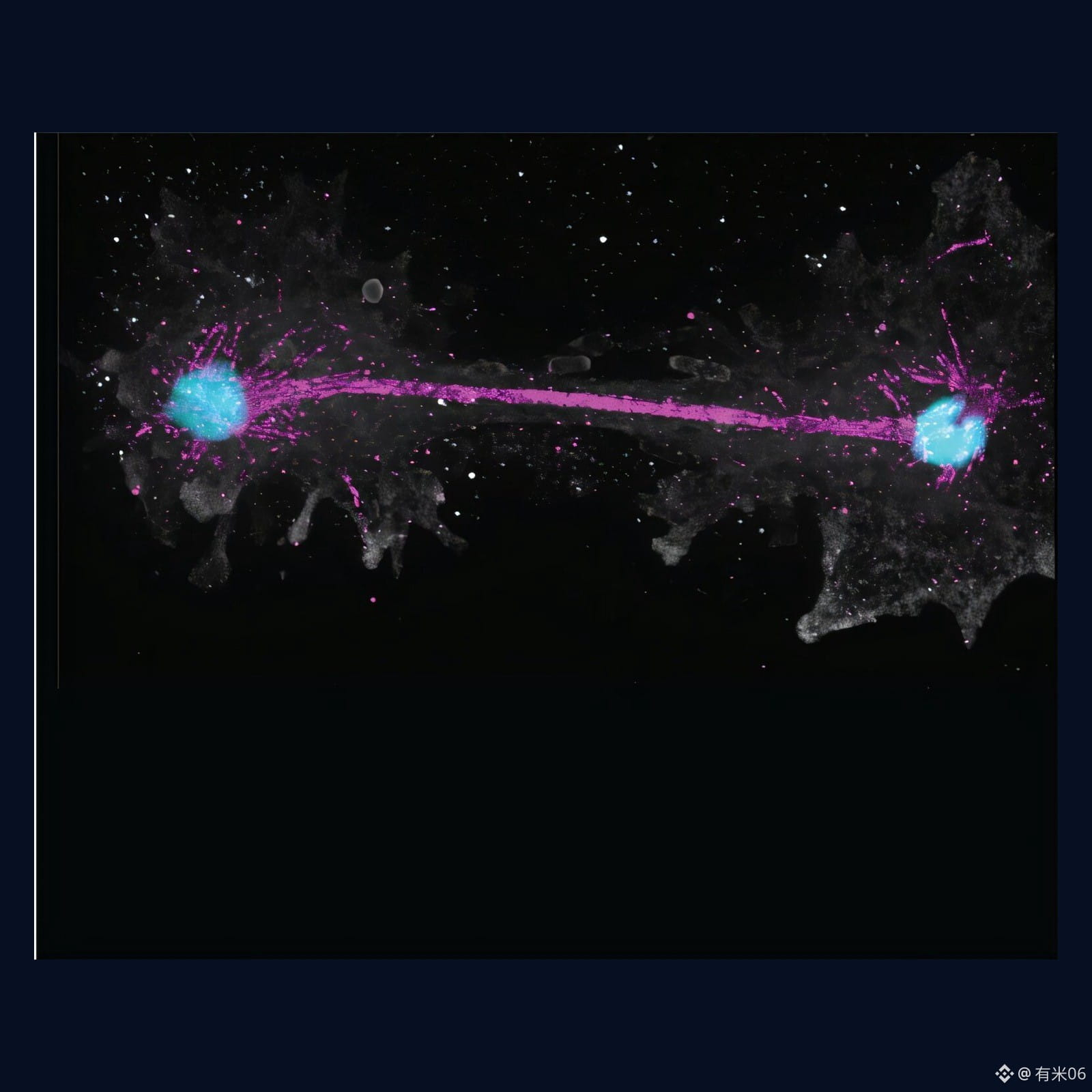
The image shows fluorescence microscopy at 63°C: blue represents DNA, pink represents tubulin proteins, and gray represents the cell membrane (Felix Mikus). The research was published in Cell (DOI: 10.1016/j.cell.2026.08.043); Phys.org and Live Science reported it on 2026-09-22.
Data as of: 2026-09-22
#生物 #Science
For a long time, people generally believed that to sustain long-term growth, eukaryotes (complex cells with a nucleus) have a temperature ceiling of about 60°C. The research team collected samples from the hot springs from 2023–2025 and then gradually increased the temperature in the lab. At 63°C, a complete mitosis process can still be observed. At around 70°C (158°F), the cells shrink and enter a protective state; after cooling, they can recover, but further heating prevents sustained growth. Genomic analysis also shows that the genome contains more genes related to protein homeostasis and DNA repair.
The image shows fluorescence microscopy at 63°C: blue represents DNA, pink represents tubulin proteins, and gray represents the cell membrane (Felix Mikus). The research was published in Cell (DOI: 10.1016/j.cell.2026.08.043); Phys.org and Live Science reported it on 2026-09-22.
Data as of: 2026-09-22
#生物 #Science