
币圈小贝贝
105 Posts

币圈小贝贝
Report
Block User
6年市场经验,公众号.比特柠檬,记录市场真实逻辑,研究下一步会去哪
12 Following
1.7K+ Followers
786 Liked
Posts
All
Live
·
--
See translation
#ai股持续上涨还有哪些投资机会
今天这份报告最有意思的地方,其实不在结论..
[🤖 进群看风向](https://app.binance.com/uni-qr/6d5gRrvm)
全球最大的那家资管公司出了一篇研究,讲的是 AI 和数字资产之间的关系.. 大多数人看完的第一反应是「哦,AI 又跟币扯上关系了」,然后就划过去了..
我看完觉得,真正值得看的不是它说了什么新东西,是它换了一种算法..
过去大家讲 AI 和加密的关系,基本都停在「AI 概念带动情绪」这一层.. 这次不一样,它把落点写得很具体:AI 代理,也就是那些会自己下单、自己付款的程序,现在要付出去一笔钱其实很麻烦——开户、授权、绑卡,中间好几个环节还得人来点一下,而一笔几分钱的交易,光手续费就把它做没了..
这就奇怪了.. 我们平时算 AI 的账,算的都是芯片、电力和服务器,很少有人往前算一步,算到「它到底怎么付钱」..
更有意思的是它给这件事排了顺序.. 算力越来越贵、越来越像一件商品,那如果算力本身能被切成份额、能流转、还能当成担保品用,AI 这边的钱就不只是买设备——它会顺着往下走一站,走到结算和清算这一层..
这是资金轮动的顺序,不是叙事的顺序.. 过去一年钱追的是「谁给 AI 供货」,供货那一层已经挤满了,下一层的入口反而窄得多..
这里就有点耐人寻味了.. 一家管着几万亿美元的机构,为什么偏偏在这个时间点出来说这件事被低估了..
按行业里的惯例,机构说某个方向被低估,往往不是刚发现,是位置已经站好了.. 报告是写给谁看的,可能比报告写了什么更值得看——它的读者不是短线的人,是那些需要一份「能算清楚下限」的说明才敢配的机构资金..
但问题来了.. 这件事现在整个还只是纸面上的用例,没有收入、没有规模,而且更关键的分岔在于:AI 以后自动付款,最后到底是落在开放的链上轨道,还是落在几家大公司的封闭系统里,现在完全没有定论.. 谁接住这部分流量,谁才有资格谈后面的事..
所以真正值得盯的信号只有一个——AI 相关的支付和算力担保品,什么时候从白皮书里的用例,变成财报里的收入.. 到那天,加密和 AI 谁是燃料、谁是发动机,这个问题的答案可能跟今天完全不一样..
#ai股持续上涨还有哪些投资机会
今天这份报告最有意思的地方,其实不在结论..
🤖 进群看风向
全球最大的那家资管公司出了一篇研究,讲的是 AI 和数字资产之间的关系.. 大多数人看完的第一反应是「哦,AI 又跟币扯上关系了」,然后就划过去了..
我看完觉得,真正值得看的不是它说了什么新东西,是它换了一种算法..
过去大家讲 AI 和加密的关系,基本都停在「AI 概念带动情绪」这一层.. 这次不一样,它把落点写得很具体:AI 代理,也就是那些会自己下单、自己付款的程序,现在要付出去一笔钱其实很麻烦——开户、授权、绑卡,中间好几个环节还得人来点一下,而一笔几分钱的交易,光手续费就把它做没了..
这就奇怪了.. 我们平时算 AI 的账,算的都是芯片、电力和服务器,很少有人往前算一步,算到「它到底怎么付钱」..
更有意思的是它给这件事排了顺序.. 算力越来越贵、越来越像一件商品,那如果算力本身能被切成份额、能流转、还能当成担保品用,AI 这边的钱就不只是买设备——它会顺着往下走一站,走到结算和清算这一层..
这是资金轮动的顺序,不是叙事的顺序.. 过去一年钱追的是「谁给 AI 供货」,供货那一层已经挤满了,下一层的入口反而窄得多..
这里就有点耐人寻味了.. 一家管着几万亿美元的机构,为什么偏偏在这个时间点出来说这件事被低估了..
按行业里的惯例,机构说某个方向被低估,往往不是刚发现,是位置已经站好了.. 报告是写给谁看的,可能比报告写了什么更值得看——它的读者不是短线的人,是那些需要一份「能算清楚下限」的说明才敢配的机构资金..
但问题来了.. 这件事现在整个还只是纸面上的用例,没有收入、没有规模,而且更关键的分岔在于:AI 以后自动付款,最后到底是落在开放的链上轨道,还是落在几家大公司的封闭系统里,现在完全没有定论.. 谁接住这部分流量,谁才有资格谈后面的事..
所以真正值得盯的信号只有一个——AI 相关的支付和算力担保品,什么时候从白皮书里的用例,变成财报里的收入.. 到那天,加密和 AI 谁是燃料、谁是发动机,这个问题的答案可能跟今天完全不一样..
今天这份报告最有意思的地方,其实不在结论..
🤖 进群看风向
全球最大的那家资管公司出了一篇研究,讲的是 AI 和数字资产之间的关系.. 大多数人看完的第一反应是「哦,AI 又跟币扯上关系了」,然后就划过去了..
我看完觉得,真正值得看的不是它说了什么新东西,是它换了一种算法..
过去大家讲 AI 和加密的关系,基本都停在「AI 概念带动情绪」这一层.. 这次不一样,它把落点写得很具体:AI 代理,也就是那些会自己下单、自己付款的程序,现在要付出去一笔钱其实很麻烦——开户、授权、绑卡,中间好几个环节还得人来点一下,而一笔几分钱的交易,光手续费就把它做没了..
这就奇怪了.. 我们平时算 AI 的账,算的都是芯片、电力和服务器,很少有人往前算一步,算到「它到底怎么付钱」..
更有意思的是它给这件事排了顺序.. 算力越来越贵、越来越像一件商品,那如果算力本身能被切成份额、能流转、还能当成担保品用,AI 这边的钱就不只是买设备——它会顺着往下走一站,走到结算和清算这一层..
这是资金轮动的顺序,不是叙事的顺序.. 过去一年钱追的是「谁给 AI 供货」,供货那一层已经挤满了,下一层的入口反而窄得多..
这里就有点耐人寻味了.. 一家管着几万亿美元的机构,为什么偏偏在这个时间点出来说这件事被低估了..
按行业里的惯例,机构说某个方向被低估,往往不是刚发现,是位置已经站好了.. 报告是写给谁看的,可能比报告写了什么更值得看——它的读者不是短线的人,是那些需要一份「能算清楚下限」的说明才敢配的机构资金..
但问题来了.. 这件事现在整个还只是纸面上的用例,没有收入、没有规模,而且更关键的分岔在于:AI 以后自动付款,最后到底是落在开放的链上轨道,还是落在几家大公司的封闭系统里,现在完全没有定论.. 谁接住这部分流量,谁才有资格谈后面的事..
所以真正值得盯的信号只有一个——AI 相关的支付和算力担保品,什么时候从白皮书里的用例,变成财报里的收入.. 到那天,加密和 AI 谁是燃料、谁是发动机,这个问题的答案可能跟今天完全不一样..

2
·
--
#加密市场总市值重回3万亿美元
This news is actually kind of weird..
[📢 盘面异动群里说](https://app.binance.com/uni-qr/6d5gRrvm)
Everyone is talking about how Solana is going to get faster—how a transaction supposedly goes from 13 seconds down to 0.15 seconds. It sounds like another benchmark record, but what really makes me pause is another word: finality—literally, in Chinese, “finality/“ultimate finality”.” Plainly put: after the money is sent, how long does it take before it’s considered truly received—and never retrievable.
Most people see “faster,” but the deeper issue might be something else..
Because when the exchange credits your account, when a cross-chain bridge sends the loan on another chain, when a merchant confirms a payment—what gets stuck is never just speed. It’s “certainty.”
That waiting period before funds arrive is, in essence, waiting for some intermediary point to give the nod..
Now that waiting has been squeezed from 13 seconds to 0.15 seconds. What’s been reduced isn’t just the time—it’s the person giving the nod.
What’s even more interesting is how it’s done.. It turns out validators record votes one by one on-chain, and only after they accumulate 32 slots does it count. The new design lets validators directly vote for each other, and after one or two rounds, the decision is made. Users don’t need to change wallets or modify transfer methods—the change is in the underlying consensus layer..
And now things start to look different..
If this trend continues, how money is used will change along with it.. If stablecoins really move into everyday payments, what’s missing has never been the amount—it’s whether merchants dare to say, “Once this money arrives, you can’t take it back.” Bridges, custody, and institutional deposits are the same logic..
So in this upgrade, what’s really moving isn’t the numbers on trading software—it’s the gate that institutional funds can enter.
But here’s the problem.. There’s a detail many people will skip: in the first batch of migrations, those two standby validator clients on-chain still don’t support this test, meaning the first migration will all run the exact same software. To be “more certain,” they actually concentrate the risk once.. That’s a bit thought-provoking..
Now looking at the timeline: in the official checklist, September 28 is only a tentative date to enable mainnet functionality, not the launch date for this upgrade. What’s really worth watching is: when the alternate clients get plugged in, and whether the very first transaction judged irreversible within 0.15 seconds—will it be a stablecoin transfer..
Once later we see use cases like “cross-chain bridges send out payouts per second,” that’s when this narrative will start to come true. Until then, it’s more like a ticket that hasn’t been stamped yet.
#加密市场总市值重回3万亿美元
This news is actually kind of weird..
📢 盘面异动群里说
Everyone is talking about how Solana is going to get faster—how a transaction supposedly goes from 13 seconds down to 0.15 seconds. It sounds like another benchmark record, but what really makes me pause is another word: finality—literally, in Chinese, “finality/“ultimate finality”.” Plainly put: after the money is sent, how long does it take before it’s considered truly received—and never retrievable.
Most people see “faster,” but the deeper issue might be something else..
Because when the exchange credits your account, when a cross-chain bridge sends the loan on another chain, when a merchant confirms a payment—what gets stuck is never just speed. It’s “certainty.”
That waiting period before funds arrive is, in essence, waiting for some intermediary point to give the nod..
Now that waiting has been squeezed from 13 seconds to 0.15 seconds. What’s been reduced isn’t just the time—it’s the person giving the nod.
What’s even more interesting is how it’s done.. It turns out validators record votes one by one on-chain, and only after they accumulate 32 slots does it count. The new design lets validators directly vote for each other, and after one or two rounds, the decision is made. Users don’t need to change wallets or modify transfer methods—the change is in the underlying consensus layer..
And now things start to look different..
If this trend continues, how money is used will change along with it.. If stablecoins really move into everyday payments, what’s missing has never been the amount—it’s whether merchants dare to say, “Once this money arrives, you can’t take it back.” Bridges, custody, and institutional deposits are the same logic..
So in this upgrade, what’s really moving isn’t the numbers on trading software—it’s the gate that institutional funds can enter.
But here’s the problem.. There’s a detail many people will skip: in the first batch of migrations, those two standby validator clients on-chain still don’t support this test, meaning the first migration will all run the exact same software. To be “more certain,” they actually concentrate the risk once.. That’s a bit thought-provoking..
Now looking at the timeline: in the official checklist, September 28 is only a tentative date to enable mainnet functionality, not the launch date for this upgrade. What’s really worth watching is: when the alternate clients get plugged in, and whether the very first transaction judged irreversible within 0.15 seconds—will it be a stablecoin transfer..
Once later we see use cases like “cross-chain bridges send out payouts per second,” that’s when this narrative will start to come true. Until then, it’s more like a ticket that hasn’t been stamped yet.
This news is actually kind of weird..
📢 盘面异动群里说
Everyone is talking about how Solana is going to get faster—how a transaction supposedly goes from 13 seconds down to 0.15 seconds. It sounds like another benchmark record, but what really makes me pause is another word: finality—literally, in Chinese, “finality/“ultimate finality”.” Plainly put: after the money is sent, how long does it take before it’s considered truly received—and never retrievable.
Most people see “faster,” but the deeper issue might be something else..
Because when the exchange credits your account, when a cross-chain bridge sends the loan on another chain, when a merchant confirms a payment—what gets stuck is never just speed. It’s “certainty.”
That waiting period before funds arrive is, in essence, waiting for some intermediary point to give the nod..
Now that waiting has been squeezed from 13 seconds to 0.15 seconds. What’s been reduced isn’t just the time—it’s the person giving the nod.
What’s even more interesting is how it’s done.. It turns out validators record votes one by one on-chain, and only after they accumulate 32 slots does it count. The new design lets validators directly vote for each other, and after one or two rounds, the decision is made. Users don’t need to change wallets or modify transfer methods—the change is in the underlying consensus layer..
And now things start to look different..
If this trend continues, how money is used will change along with it.. If stablecoins really move into everyday payments, what’s missing has never been the amount—it’s whether merchants dare to say, “Once this money arrives, you can’t take it back.” Bridges, custody, and institutional deposits are the same logic..
So in this upgrade, what’s really moving isn’t the numbers on trading software—it’s the gate that institutional funds can enter.
But here’s the problem.. There’s a detail many people will skip: in the first batch of migrations, those two standby validator clients on-chain still don’t support this test, meaning the first migration will all run the exact same software. To be “more certain,” they actually concentrate the risk once.. That’s a bit thought-provoking..
Now looking at the timeline: in the official checklist, September 28 is only a tentative date to enable mainnet functionality, not the launch date for this upgrade. What’s really worth watching is: when the alternate clients get plugged in, and whether the very first transaction judged irreversible within 0.15 seconds—will it be a stablecoin transfer..
Once later we see use cases like “cross-chain bridges send out payouts per second,” that’s when this narrative will start to come true. Until then, it’s more like a ticket that hasn’t been stamped yet.

370
·
--
Verified
#zec突破1600美元创新高
The name that surged the most today—most likely it isn’t on the watchlists of most people..
[🏛️ 进群蹲一手消息](https://app.binance.com/uni-qr/6d5gRrvm)
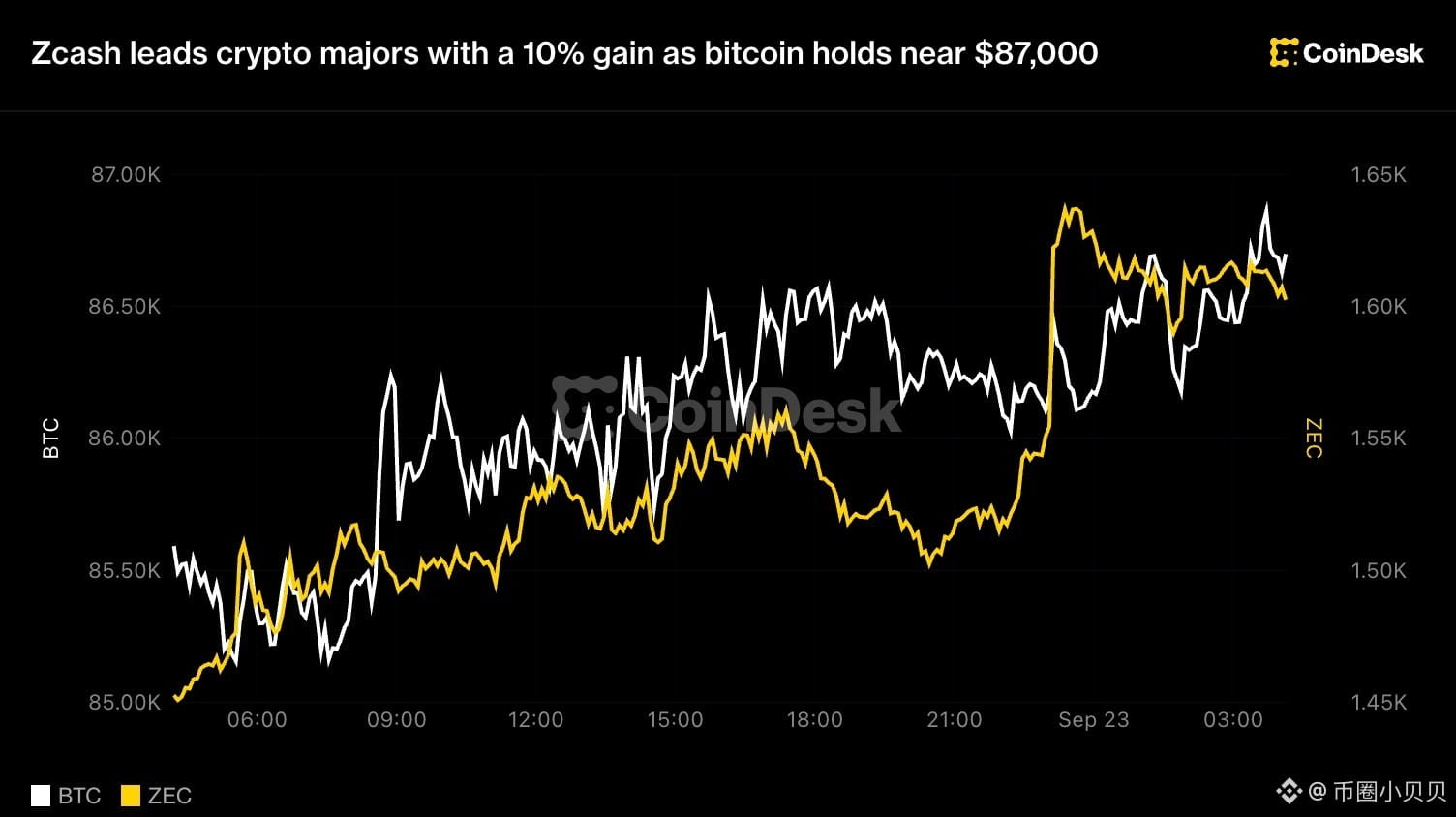
Bitcoin is still steady around 87,000, while Ethereum, BNB, and SOL have all moved less than 1%. But one old coin that hasn’t been mentioned in a long time suddenly shot up by 10% in one go, crossing above $1,600 and becoming the top gainer in the broader market..
Many people see it as: “A privacy coin suddenly gets remembered by capital.”.. But what I care about more is that, around the same time, two much bigger things happened in Washington..
The first is that bill which officially brings the bitcoins held by the U.S. government into reserves. It passed the House Financial Services Committee by 28 votes to 21, which is the farthest any bill of this kind has gone in Congress. And the content isn’t vague: roughly 325,000 bitcoins held by the government—most of which come from criminal and civil forfeitures—would be shifted into the Treasury’s strategic bitcoin reserve. The bill requires holding them for at least 20 years, producing audit proof each quarter that these coins are indeed still there, and also studying how to continue buying without increasing the deficit..
This is where it gets a bit intriguing.. It doesn’t promise new purchases. The real focus is “locking” and “proving they’re still there”—turning the forfeited spoils into an asset class formally recorded on the balance sheet..
The second one is even more interesting.. While Congress has been stuck, the SEC used its own creative exemption and, within a day, opened a channel for on-chain trading of tokenized U.S. stocks. Instead of waiting for legislation, regulators took action themselves..
Put these two events together with the order of the price surges, and it becomes clear.. ZEC took the lead, up 10%; XRP added 6%; HYPE and Dogecoin each gained 4%; but the largest “big blocks” with the thickest liquidity basically didn’t move.. The most elastic jumped first—money is seeping outward from the hardest layer. This isn’t just a one-coin story anymore..
What’s even more interesting is that the faucet outside hasn’t been shut tightly.. Oil prices have been falling for the sixth straight trading day. Brent is around $99. The Bank of Japan just raised rates last week, but the vote split was 7 to 2; the market read it as “it will move very slowly from here,” the yen weakened, and borrowing in yen stays cheap—so that pipe supporting risk trading is still letting water out for now..
But the question is.. After the bill, it still has to pass the full House and then the Senate. The SEC exemption is originally just a temporary tool, and the reserves provision only locks up existing coins—it doesn’t mean someone is rushing to accumulate on the market. So what’s truly worth watching comes down to two things: whether Bitcoin’s allocation will loosen, and whether there’s a real, measurable increase in buy-side demand.. If it’s only sentiment driven by the exemption, then this is just old coins hopping around in turn; but once volume can back it up, the story will be told differently.
#zec突破1600美元创新高
The name that surged the most today—most likely it isn’t on the watchlists of most people..
🏛️ 进群蹲一手消息
Bitcoin is still steady around 87,000, while Ethereum, BNB, and SOL have all moved less than 1%. But one old coin that hasn’t been mentioned in a long time suddenly shot up by 10% in one go, crossing above $1,600 and becoming the top gainer in the broader market..
Many people see it as: “A privacy coin suddenly gets remembered by capital.”.. But what I care about more is that, around the same time, two much bigger things happened in Washington..
The first is that bill which officially brings the bitcoins held by the U.S. government into reserves. It passed the House Financial Services Committee by 28 votes to 21, which is the farthest any bill of this kind has gone in Congress. And the content isn’t vague: roughly 325,000 bitcoins held by the government—most of which come from criminal and civil forfeitures—would be shifted into the Treasury’s strategic bitcoin reserve. The bill requires holding them for at least 20 years, producing audit proof each quarter that these coins are indeed still there, and also studying how to continue buying without increasing the deficit..
This is where it gets a bit intriguing.. It doesn’t promise new purchases. The real focus is “locking” and “proving they’re still there”—turning the forfeited spoils into an asset class formally recorded on the balance sheet..
The second one is even more interesting.. While Congress has been stuck, the SEC used its own creative exemption and, within a day, opened a channel for on-chain trading of tokenized U.S. stocks. Instead of waiting for legislation, regulators took action themselves..
Put these two events together with the order of the price surges, and it becomes clear.. ZEC took the lead, up 10%; XRP added 6%; HYPE and Dogecoin each gained 4%; but the largest “big blocks” with the thickest liquidity basically didn’t move.. The most elastic jumped first—money is seeping outward from the hardest layer. This isn’t just a one-coin story anymore..
What’s even more interesting is that the faucet outside hasn’t been shut tightly.. Oil prices have been falling for the sixth straight trading day. Brent is around $99. The Bank of Japan just raised rates last week, but the vote split was 7 to 2; the market read it as “it will move very slowly from here,” the yen weakened, and borrowing in yen stays cheap—so that pipe supporting risk trading is still letting water out for now..
But the question is.. After the bill, it still has to pass the full House and then the Senate. The SEC exemption is originally just a temporary tool, and the reserves provision only locks up existing coins—it doesn’t mean someone is rushing to accumulate on the market. So what’s truly worth watching comes down to two things: whether Bitcoin’s allocation will loosen, and whether there’s a real, measurable increase in buy-side demand.. If it’s only sentiment driven by the exemption, then this is just old coins hopping around in turn; but once volume can back it up, the story will be told differently.
The name that surged the most today—most likely it isn’t on the watchlists of most people..
🏛️ 进群蹲一手消息
Bitcoin is still steady around 87,000, while Ethereum, BNB, and SOL have all moved less than 1%. But one old coin that hasn’t been mentioned in a long time suddenly shot up by 10% in one go, crossing above $1,600 and becoming the top gainer in the broader market..
Many people see it as: “A privacy coin suddenly gets remembered by capital.”.. But what I care about more is that, around the same time, two much bigger things happened in Washington..
The first is that bill which officially brings the bitcoins held by the U.S. government into reserves. It passed the House Financial Services Committee by 28 votes to 21, which is the farthest any bill of this kind has gone in Congress. And the content isn’t vague: roughly 325,000 bitcoins held by the government—most of which come from criminal and civil forfeitures—would be shifted into the Treasury’s strategic bitcoin reserve. The bill requires holding them for at least 20 years, producing audit proof each quarter that these coins are indeed still there, and also studying how to continue buying without increasing the deficit..
This is where it gets a bit intriguing.. It doesn’t promise new purchases. The real focus is “locking” and “proving they’re still there”—turning the forfeited spoils into an asset class formally recorded on the balance sheet..
The second one is even more interesting.. While Congress has been stuck, the SEC used its own creative exemption and, within a day, opened a channel for on-chain trading of tokenized U.S. stocks. Instead of waiting for legislation, regulators took action themselves..
Put these two events together with the order of the price surges, and it becomes clear.. ZEC took the lead, up 10%; XRP added 6%; HYPE and Dogecoin each gained 4%; but the largest “big blocks” with the thickest liquidity basically didn’t move.. The most elastic jumped first—money is seeping outward from the hardest layer. This isn’t just a one-coin story anymore..
What’s even more interesting is that the faucet outside hasn’t been shut tightly.. Oil prices have been falling for the sixth straight trading day. Brent is around $99. The Bank of Japan just raised rates last week, but the vote split was 7 to 2; the market read it as “it will move very slowly from here,” the yen weakened, and borrowing in yen stays cheap—so that pipe supporting risk trading is still letting water out for now..
But the question is.. After the bill, it still has to pass the full House and then the Senate. The SEC exemption is originally just a temporary tool, and the reserves provision only locks up existing coins—it doesn’t mean someone is rushing to accumulate on the market. So what’s truly worth watching comes down to two things: whether Bitcoin’s allocation will loosen, and whether there’s a real, measurable increase in buy-side demand.. If it’s only sentiment driven by the exemption, then this is just old coins hopping around in turn; but once volume can back it up, the story will be told differently.
3
8.8k
·
--
#比特币突破8.7万美元创八个月新高
This news is actually a bit strange.. The headline says “XRP trading volume explodes to 7.4 billion,” but after watching it for a long time, what I noticed is the difference in the amount of shorts withdrawing across two regulated channels within the same week—almost a 20-fold difference..
[⚖️ 最新消息群里说](https://app.binance.com/uni-qr/6d5gRrvm)
Most people see XRP surge to 1.60 on September 22, with volume exploding and a big bullish candle.. Then instinctively they go looking for “who is buying”.. But I think what’s really worth watching this time isn’t who is buying—it’s who is withdrawing, and why they are withdrawing from only one channel..
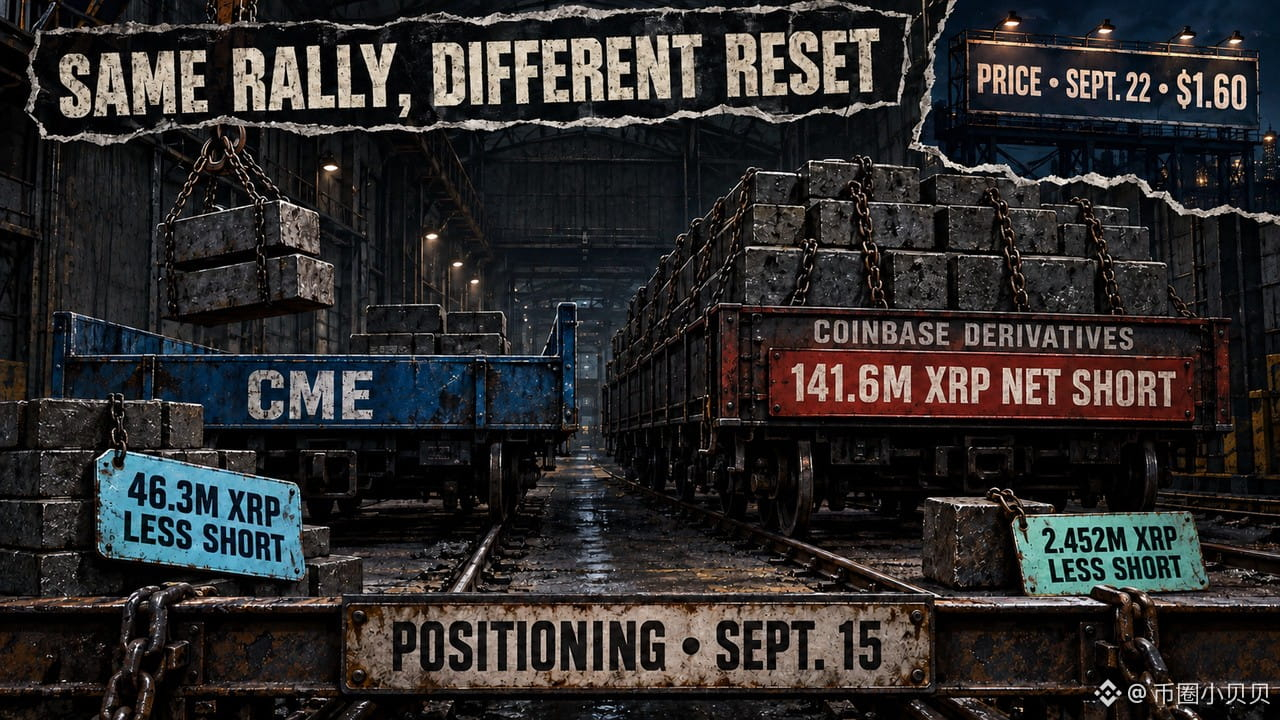
That’s where it gets different.. In the CFTC’s September 15 positions snapshot, for leveraged funds on CME’s XRP futures, within a week they cut net shorts by about 46.3 million XRP. From 82.25 million the prior week down to 35.95 million.. This is a significant move—and it’s not only cutting shorts; they also added a bit to longs along the way..
What’s even more interesting is that among the same group of people, in another regulated derivatives channel in the U.S., across three products combined, in the same week they reduced net shorts by only 2.45 million. And they still held around 141.6 million XRP of net shorts.. While they were withdrawing on one side, they almost didn’t move on the other—the scale difference is nearly 20 times..
So the question is.. If this is “institutions collectively turning bullish on XRP,” then the direction of those two ends should be roughly the same.. But what we see is that money is only moving out from one side.. This looks more like a specific position getting squeezed off on the CME side, rather than the entire market switching its long/short stance..
And the funds line here tells the same story.. In the same period, CME’s open interest also fell by 509 contracts, which is equivalent to 25.45 million XRP. Shorts are decreasing, and total positioning is also decreasing.. This isn’t adding leverage—it’s closing the books.. Cutting shorts while shrinking total open interest suggests someone first pulled the chips off the table, rather than switching direction and re-entering..
The timeline is also a little intriguing.. This positioning is from September 15; it was only published on September 18, yet the price didn’t move until September 22.. What we’re seeing is footprints, not causation.. Strictly speaking, no one can prove that short covering pushed the price up..
But the footprints themselves have value.. They indicate that within this 7.4 billion volume, part of it was forced out—not attracted in. The forced-out volume comes quickly and disappears just as fast..
What’s really worth tracking is next period’s positions.. If CME continues to retreat and the other channel also starts retreating, then this isn’t just a squeeze—it would mean the positioning structure is truly shifting.. If only CME moves and then stops, then this 7.4 billion is very likely just a few days of excitement..
Once both sides turn together in the next cycle, the nature of this XRP move will be completely different.. But if only one side moves, then it’s probably just a one-off technical de-risking/closing..
That’s what makes it interesting..
#比特币突破8.7万美元创八个月新高
This news is actually a bit strange.. The headline says “XRP trading volume explodes to 7.4 billion,” but after watching it for a long time, what I noticed is the difference in the amount of shorts withdrawing across two regulated channels within the same week—almost a 20-fold difference..
⚖️ 最新消息群里说
Most people see XRP surge to 1.60 on September 22, with volume exploding and a big bullish candle.. Then instinctively they go looking for “who is buying”.. But I think what’s really worth watching this time isn’t who is buying—it’s who is withdrawing, and why they are withdrawing from only one channel..
That’s where it gets different.. In the CFTC’s September 15 positions snapshot, for leveraged funds on CME’s XRP futures, within a week they cut net shorts by about 46.3 million XRP. From 82.25 million the prior week down to 35.95 million.. This is a significant move—and it’s not only cutting shorts; they also added a bit to longs along the way..
What’s even more interesting is that among the same group of people, in another regulated derivatives channel in the U.S., across three products combined, in the same week they reduced net shorts by only 2.45 million. And they still held around 141.6 million XRP of net shorts.. While they were withdrawing on one side, they almost didn’t move on the other—the scale difference is nearly 20 times..
So the question is.. If this is “institutions collectively turning bullish on XRP,” then the direction of those two ends should be roughly the same.. But what we see is that money is only moving out from one side.. This looks more like a specific position getting squeezed off on the CME side, rather than the entire market switching its long/short stance..
And the funds line here tells the same story.. In the same period, CME’s open interest also fell by 509 contracts, which is equivalent to 25.45 million XRP. Shorts are decreasing, and total positioning is also decreasing.. This isn’t adding leverage—it’s closing the books.. Cutting shorts while shrinking total open interest suggests someone first pulled the chips off the table, rather than switching direction and re-entering..
The timeline is also a little intriguing.. This positioning is from September 15; it was only published on September 18, yet the price didn’t move until September 22.. What we’re seeing is footprints, not causation.. Strictly speaking, no one can prove that short covering pushed the price up..
But the footprints themselves have value.. They indicate that within this 7.4 billion volume, part of it was forced out—not attracted in. The forced-out volume comes quickly and disappears just as fast..
What’s really worth tracking is next period’s positions.. If CME continues to retreat and the other channel also starts retreating, then this isn’t just a squeeze—it would mean the positioning structure is truly shifting.. If only CME moves and then stops, then this 7.4 billion is very likely just a few days of excitement..
Once both sides turn together in the next cycle, the nature of this XRP move will be completely different.. But if only one side moves, then it’s probably just a one-off technical de-risking/closing..
That’s what makes it interesting..
This news is actually a bit strange.. The headline says “XRP trading volume explodes to 7.4 billion,” but after watching it for a long time, what I noticed is the difference in the amount of shorts withdrawing across two regulated channels within the same week—almost a 20-fold difference..
⚖️ 最新消息群里说
Most people see XRP surge to 1.60 on September 22, with volume exploding and a big bullish candle.. Then instinctively they go looking for “who is buying”.. But I think what’s really worth watching this time isn’t who is buying—it’s who is withdrawing, and why they are withdrawing from only one channel..
That’s where it gets different.. In the CFTC’s September 15 positions snapshot, for leveraged funds on CME’s XRP futures, within a week they cut net shorts by about 46.3 million XRP. From 82.25 million the prior week down to 35.95 million.. This is a significant move—and it’s not only cutting shorts; they also added a bit to longs along the way..
What’s even more interesting is that among the same group of people, in another regulated derivatives channel in the U.S., across three products combined, in the same week they reduced net shorts by only 2.45 million. And they still held around 141.6 million XRP of net shorts.. While they were withdrawing on one side, they almost didn’t move on the other—the scale difference is nearly 20 times..
So the question is.. If this is “institutions collectively turning bullish on XRP,” then the direction of those two ends should be roughly the same.. But what we see is that money is only moving out from one side.. This looks more like a specific position getting squeezed off on the CME side, rather than the entire market switching its long/short stance..
And the funds line here tells the same story.. In the same period, CME’s open interest also fell by 509 contracts, which is equivalent to 25.45 million XRP. Shorts are decreasing, and total positioning is also decreasing.. This isn’t adding leverage—it’s closing the books.. Cutting shorts while shrinking total open interest suggests someone first pulled the chips off the table, rather than switching direction and re-entering..
The timeline is also a little intriguing.. This positioning is from September 15; it was only published on September 18, yet the price didn’t move until September 22.. What we’re seeing is footprints, not causation.. Strictly speaking, no one can prove that short covering pushed the price up..
But the footprints themselves have value.. They indicate that within this 7.4 billion volume, part of it was forced out—not attracted in. The forced-out volume comes quickly and disappears just as fast..
What’s really worth tracking is next period’s positions.. If CME continues to retreat and the other channel also starts retreating, then this isn’t just a squeeze—it would mean the positioning structure is truly shifting.. If only CME moves and then stops, then this 7.4 billion is very likely just a few days of excitement..
Once both sides turn together in the next cycle, the nature of this XRP move will be completely different.. But if only one side moves, then it’s probably just a one-off technical de-risking/closing..
That’s what makes it interesting..
581
·
--
#加密市场总市值重回3万亿美元
This news is actually a bit strange.. Everyone is staring at the K-line chart, looking for where the next high will be. But the line that’s really moving is tucked away “after you’ve finished buying things,” in that layer nobody will look at..
[💥 消息第一时间](https://app.binance.com/uni-qr/6d5gRrvm)
Most people see it as “yet another good piece of news about a stablecoin getting deployed.” A payment news item that doesn’t really seem to have anything to do with their own holdings.. But I think what’s truly worth watching isn’t that stablecoins have gained another use case—it’s exactly where it’s been inserted this time..
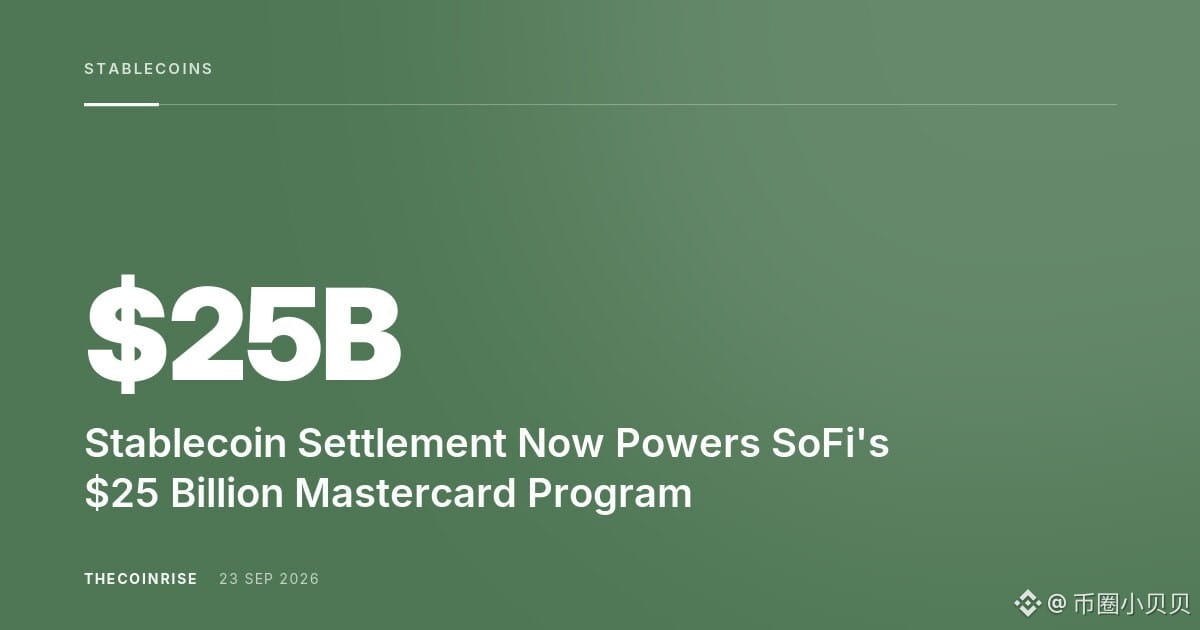
And that’s where things start to be different.. A U.S. digital bank has changed the clearing of its card project to run on a stablecoin it issues itself.. This project has roughly $25 billion in annual transaction volume. Reports say this is the first time a bank’s own issued stablecoin is being used for settlement on a mainstream global card network..
Even more interesting is what “clearing” is actually referring to.. When you swipe your card to buy something, the money doesn’t really move at that moment.. What comes next is that the bank, the card network, and the merchants all reconcile their accounts with each other. Previously, this process ran through the bank’s old pipeline—fast or not, it took more than a day..
So this time, it isn’t changing the way you pay.. The way you swipe doesn’t change for even a second, and the feeling of when the merchant receives funds doesn’t change either.. What changes is only the back-end reconciliation pipe. And that slice of infrastructure happens to be, over the past few decades, the most stable, the least touched, and the most profitable area..
This makes it a bit thought-provoking.. Also, the stablecoin this bank uses is one it issues itself, not one it adopts from someone else. That’s two completely different stances.. The former is “I’m using someone else’s tools.” The latter is “I built this infrastructure myself.”
The money line is here too.. What money cares about now isn’t really “can the coin go up,” it’s “how does money move between institutions.” Traditional banks and card networks are willing to try this not because they’re bullish on coin prices, but because clearing time and operating costs really can be saved.. What’s saved is worth more than a story..
The bigger narrative is already laid out.. Stablecoin use cases are gradually shifting from trading and remittances to “how institutions move money back and forth.” The card network itself is also building stablecoin-related infrastructure.. A project running $25 billion a year is essentially a living test scenario—not a demo from a few machines..
But here’s the question.. Can this shift turn from a case into a norm depends on whether there will be a second, third, and more banks that start issuing their own settlement tokens. If it’s always only the first one, it’s just a nice headline. If later they start to cluster together, then the segment of the pipeline that gets replaced will never be replaced back..
What’s truly worth watching are the third-party issuers who make a living by issuing tokens.. Once banks start issuing their own settlement tokens, their position in this chain needs to be recalculated.
Once stablecoin eats up the clearing layer, the line separating crypto and traditional finance will no longer be drawn on “the coin,” but on the thickness of the pipeline..
That’s what makes it interesting..
#加密市场总市值重回3万亿美元
This news is actually a bit strange.. Everyone is staring at the K-line chart, looking for where the next high will be. But the line that’s really moving is tucked away “after you’ve finished buying things,” in that layer nobody will look at..
💥 消息第一时间
Most people see it as “yet another good piece of news about a stablecoin getting deployed.” A payment news item that doesn’t really seem to have anything to do with their own holdings.. But I think what’s truly worth watching isn’t that stablecoins have gained another use case—it’s exactly where it’s been inserted this time..
And that’s where things start to be different.. A U.S. digital bank has changed the clearing of its card project to run on a stablecoin it issues itself.. This project has roughly $25 billion in annual transaction volume. Reports say this is the first time a bank’s own issued stablecoin is being used for settlement on a mainstream global card network..
Even more interesting is what “clearing” is actually referring to.. When you swipe your card to buy something, the money doesn’t really move at that moment.. What comes next is that the bank, the card network, and the merchants all reconcile their accounts with each other. Previously, this process ran through the bank’s old pipeline—fast or not, it took more than a day..
So this time, it isn’t changing the way you pay.. The way you swipe doesn’t change for even a second, and the feeling of when the merchant receives funds doesn’t change either.. What changes is only the back-end reconciliation pipe. And that slice of infrastructure happens to be, over the past few decades, the most stable, the least touched, and the most profitable area..
This makes it a bit thought-provoking.. Also, the stablecoin this bank uses is one it issues itself, not one it adopts from someone else. That’s two completely different stances.. The former is “I’m using someone else’s tools.” The latter is “I built this infrastructure myself.”
The money line is here too.. What money cares about now isn’t really “can the coin go up,” it’s “how does money move between institutions.” Traditional banks and card networks are willing to try this not because they’re bullish on coin prices, but because clearing time and operating costs really can be saved.. What’s saved is worth more than a story..
The bigger narrative is already laid out.. Stablecoin use cases are gradually shifting from trading and remittances to “how institutions move money back and forth.” The card network itself is also building stablecoin-related infrastructure.. A project running $25 billion a year is essentially a living test scenario—not a demo from a few machines..
But here’s the question.. Can this shift turn from a case into a norm depends on whether there will be a second, third, and more banks that start issuing their own settlement tokens. If it’s always only the first one, it’s just a nice headline. If later they start to cluster together, then the segment of the pipeline that gets replaced will never be replaced back..
What’s truly worth watching are the third-party issuers who make a living by issuing tokens.. Once banks start issuing their own settlement tokens, their position in this chain needs to be recalculated.
Once stablecoin eats up the clearing layer, the line separating crypto and traditional finance will no longer be drawn on “the coin,” but on the thickness of the pipeline..
That’s what makes it interesting..
This news is actually a bit strange.. Everyone is staring at the K-line chart, looking for where the next high will be. But the line that’s really moving is tucked away “after you’ve finished buying things,” in that layer nobody will look at..
💥 消息第一时间
Most people see it as “yet another good piece of news about a stablecoin getting deployed.” A payment news item that doesn’t really seem to have anything to do with their own holdings.. But I think what’s truly worth watching isn’t that stablecoins have gained another use case—it’s exactly where it’s been inserted this time..
And that’s where things start to be different.. A U.S. digital bank has changed the clearing of its card project to run on a stablecoin it issues itself.. This project has roughly $25 billion in annual transaction volume. Reports say this is the first time a bank’s own issued stablecoin is being used for settlement on a mainstream global card network..
Even more interesting is what “clearing” is actually referring to.. When you swipe your card to buy something, the money doesn’t really move at that moment.. What comes next is that the bank, the card network, and the merchants all reconcile their accounts with each other. Previously, this process ran through the bank’s old pipeline—fast or not, it took more than a day..
So this time, it isn’t changing the way you pay.. The way you swipe doesn’t change for even a second, and the feeling of when the merchant receives funds doesn’t change either.. What changes is only the back-end reconciliation pipe. And that slice of infrastructure happens to be, over the past few decades, the most stable, the least touched, and the most profitable area..
This makes it a bit thought-provoking.. Also, the stablecoin this bank uses is one it issues itself, not one it adopts from someone else. That’s two completely different stances.. The former is “I’m using someone else’s tools.” The latter is “I built this infrastructure myself.”
The money line is here too.. What money cares about now isn’t really “can the coin go up,” it’s “how does money move between institutions.” Traditional banks and card networks are willing to try this not because they’re bullish on coin prices, but because clearing time and operating costs really can be saved.. What’s saved is worth more than a story..
The bigger narrative is already laid out.. Stablecoin use cases are gradually shifting from trading and remittances to “how institutions move money back and forth.” The card network itself is also building stablecoin-related infrastructure.. A project running $25 billion a year is essentially a living test scenario—not a demo from a few machines..
But here’s the question.. Can this shift turn from a case into a norm depends on whether there will be a second, third, and more banks that start issuing their own settlement tokens. If it’s always only the first one, it’s just a nice headline. If later they start to cluster together, then the segment of the pipeline that gets replaced will never be replaced back..
What’s truly worth watching are the third-party issuers who make a living by issuing tokens.. Once banks start issuing their own settlement tokens, their position in this chain needs to be recalculated.
Once stablecoin eats up the clearing layer, the line separating crypto and traditional finance will no longer be drawn on “the coin,” but on the thickness of the pipeline..
That’s what makes it interesting..
145
·
--
#代币化股票平台或最早下季度启动
This data is actually a little strange.. A 99% figure, quietly hanging in the deposit statistics of a tokenized stock, with almost nobody discussing it..
[📢 今日盘面群里聊](https://app.binance.com/uni-qr/6d5gRrvm)
Most people see it as “some decentralized exchange just won again”.. A piece of on-chain data that seems unrelated to themselves.. But I think what’s truly worth watching isn’t how big this number is—it’s the position it’s associated with: the entry point..
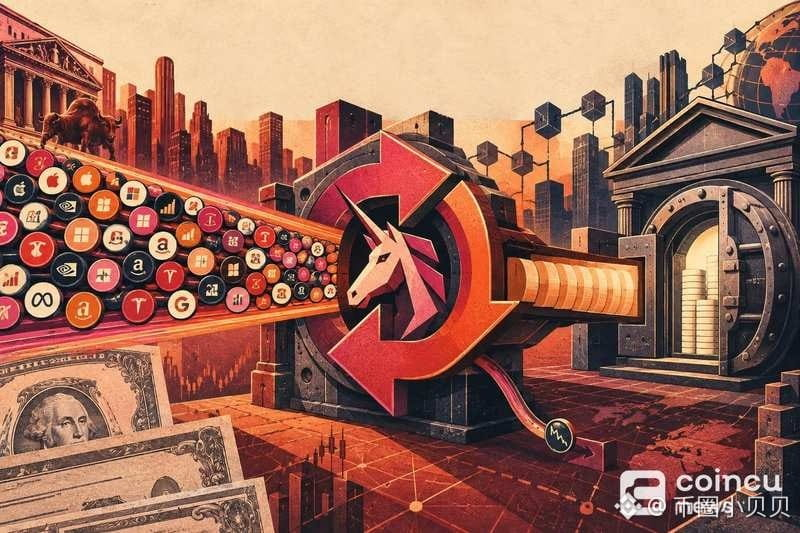
That’s when things get different.. This 99% isn’t talking about trading volume, nor who is buying—it’s about when these external stock tokens are prepared to be put on-chain: nearly all of them come in from the same place.. The chain built by a U.S. brokerage was only recently launched, and more than 99% of the deposit sources for stock tokens are concentrated in the pool of a single decentralized exchange..
Even more interesting is how restrained this dataset itself is.. It doesn’t state the statistical period, doesn’t state the amount, doesn’t state the number of transactions, and doesn’t say how it’s calculated.. It only publishes the result.. So this number feels more like a signal, not a conclusion..
This is where it becomes thought-provoking.. In traditional finance, the first stop for stocks should be the broker, the custodian, the clearinghouse.. Now, the first stop for tokenized stocks becomes a pool of funds on a chain.. Whoever controls the entry point collects the toll, and gains a say in pricing..
The line about the money matters here too.. In the past couple of days, the market’s total capitalization has just come back above three trillion.. On the other side, regulators are laying the groundwork for tokenization and 24/7 trading.. When the entire on-chain stock entry funnel is concentrated in one hand, what regulators see won’t be just the “currency-exchange” business anymore.. That’s the entry to securities, and the compliance algorithms are completely different..
The bigger narrative is already there.. The tokenized stock platform is said to be ready to move as early as next quarter.. The missing piece for traditional capital to go on-chain has never been enthusiasm—it’s the channel.. And now the shape of that channel has appeared: narrow, but it’s open..
But here’s the problem.. A single entry point looks simple and convenient, but the cost is that the lifeline of this chain depends on someone else’s fees, congestion, and governance.. Shift the pool’s depth and the entry traffic moves along with it.. This isn’t design—it’s something that hasn’t fully grown in yet..
So what’s really worth tracking isn’t this 99%—it’s when it gets diluted.. When the second entry point appears, where it comes from, and who shoved it in there..
If you ever see this ratio drop to 70% one day, that’s when this line truly starts getting lively..
Once the entry point is controlled by only one party, this market won’t be about “whose stocks can get on-chain” anymore—it’ll be about “who is allowed to open the door”..
That’s what makes this interesting..
#代币化股票平台或最早下季度启动
This data is actually a little strange.. A 99% figure, quietly hanging in the deposit statistics of a tokenized stock, with almost nobody discussing it..
📢 今日盘面群里聊
Most people see it as “some decentralized exchange just won again”.. A piece of on-chain data that seems unrelated to themselves.. But I think what’s truly worth watching isn’t how big this number is—it’s the position it’s associated with: the entry point..
That’s when things get different.. This 99% isn’t talking about trading volume, nor who is buying—it’s about when these external stock tokens are prepared to be put on-chain: nearly all of them come in from the same place.. The chain built by a U.S. brokerage was only recently launched, and more than 99% of the deposit sources for stock tokens are concentrated in the pool of a single decentralized exchange..
Even more interesting is how restrained this dataset itself is.. It doesn’t state the statistical period, doesn’t state the amount, doesn’t state the number of transactions, and doesn’t say how it’s calculated.. It only publishes the result.. So this number feels more like a signal, not a conclusion..
This is where it becomes thought-provoking.. In traditional finance, the first stop for stocks should be the broker, the custodian, the clearinghouse.. Now, the first stop for tokenized stocks becomes a pool of funds on a chain.. Whoever controls the entry point collects the toll, and gains a say in pricing..
The line about the money matters here too.. In the past couple of days, the market’s total capitalization has just come back above three trillion.. On the other side, regulators are laying the groundwork for tokenization and 24/7 trading.. When the entire on-chain stock entry funnel is concentrated in one hand, what regulators see won’t be just the “currency-exchange” business anymore.. That’s the entry to securities, and the compliance algorithms are completely different..
The bigger narrative is already there.. The tokenized stock platform is said to be ready to move as early as next quarter.. The missing piece for traditional capital to go on-chain has never been enthusiasm—it’s the channel.. And now the shape of that channel has appeared: narrow, but it’s open..
But here’s the problem.. A single entry point looks simple and convenient, but the cost is that the lifeline of this chain depends on someone else’s fees, congestion, and governance.. Shift the pool’s depth and the entry traffic moves along with it.. This isn’t design—it’s something that hasn’t fully grown in yet..
So what’s really worth tracking isn’t this 99%—it’s when it gets diluted.. When the second entry point appears, where it comes from, and who shoved it in there..
If you ever see this ratio drop to 70% one day, that’s when this line truly starts getting lively..
Once the entry point is controlled by only one party, this market won’t be about “whose stocks can get on-chain” anymore—it’ll be about “who is allowed to open the door”..
That’s what makes this interesting..
This data is actually a little strange.. A 99% figure, quietly hanging in the deposit statistics of a tokenized stock, with almost nobody discussing it..
📢 今日盘面群里聊
Most people see it as “some decentralized exchange just won again”.. A piece of on-chain data that seems unrelated to themselves.. But I think what’s truly worth watching isn’t how big this number is—it’s the position it’s associated with: the entry point..
That’s when things get different.. This 99% isn’t talking about trading volume, nor who is buying—it’s about when these external stock tokens are prepared to be put on-chain: nearly all of them come in from the same place.. The chain built by a U.S. brokerage was only recently launched, and more than 99% of the deposit sources for stock tokens are concentrated in the pool of a single decentralized exchange..
Even more interesting is how restrained this dataset itself is.. It doesn’t state the statistical period, doesn’t state the amount, doesn’t state the number of transactions, and doesn’t say how it’s calculated.. It only publishes the result.. So this number feels more like a signal, not a conclusion..
This is where it becomes thought-provoking.. In traditional finance, the first stop for stocks should be the broker, the custodian, the clearinghouse.. Now, the first stop for tokenized stocks becomes a pool of funds on a chain.. Whoever controls the entry point collects the toll, and gains a say in pricing..
The line about the money matters here too.. In the past couple of days, the market’s total capitalization has just come back above three trillion.. On the other side, regulators are laying the groundwork for tokenization and 24/7 trading.. When the entire on-chain stock entry funnel is concentrated in one hand, what regulators see won’t be just the “currency-exchange” business anymore.. That’s the entry to securities, and the compliance algorithms are completely different..
The bigger narrative is already there.. The tokenized stock platform is said to be ready to move as early as next quarter.. The missing piece for traditional capital to go on-chain has never been enthusiasm—it’s the channel.. And now the shape of that channel has appeared: narrow, but it’s open..
But here’s the problem.. A single entry point looks simple and convenient, but the cost is that the lifeline of this chain depends on someone else’s fees, congestion, and governance.. Shift the pool’s depth and the entry traffic moves along with it.. This isn’t design—it’s something that hasn’t fully grown in yet..
So what’s really worth tracking isn’t this 99%—it’s when it gets diluted.. When the second entry point appears, where it comes from, and who shoved it in there..
If you ever see this ratio drop to 70% one day, that’s when this line truly starts getting lively..
Once the entry point is controlled by only one party, this market won’t be about “whose stocks can get on-chain” anymore—it’ll be about “who is allowed to open the door”..
That’s what makes this interesting..
1.3k
·
--
#加密市场总市值重回3万亿美元
This news is actually a little strange.. A crypto venture capital firm that has been doing projects for over ten years doesn’t roll out a new fund to invest in projects this time; it goes straight to making loans..
[💬 有想法的进群聊](https://app.binance.com/uni-qr/6d5gRrvm)
Most people see “$300 million—yet another fund”.. With a scale like this in today’s market, the headline isn’t even worth looking at twice.. But I think what’s truly worth watching is the position it changed to—from being the one holding equity, to being the one collecting interest..
That’s where it starts to be different.. Equity and credit are two entirely different kinds of money.. Equity profits from multiples of valuation; it depends on whether the next cycle is still there. Credit profits from interest over time; it fears the cycle being cut off mid-way.. When the same institution pivots, it shows that its judgment about what form “money should stay in the market in” has changed..
What’s even more interesting is the angle it chose.. The institution’s own explanation is that to address the bottleneck where institutions lack funds when they enter, it uses a set of loan standards with “contractual terms and constraints”..
This is worth pondering.. The key to lending should be what kind of collateral you have; now it can only rely on terms to cover the risk.. It’s basically an admission that the market still doesn’t have a universally recognized collateral system. Where the gap is, the money queues up to take sides..
The funding line shows it too.. In the past few days, the market’s total pool has just returned to above 3 trillion, but what institutions truly get stuck on has never been whether they can buy—it’s whether the money can be borrowed and raised smoothly.. Whoever breaks through this bottleneck gets the right to collect toll fees. So the real signal isn’t the $300 million itself—it’s that it chose to enter the arena in the form of “debt”..
The bigger narrative is over on traditional finance’s side.. Private credit has been the fastest-expanding segment on Wall Street in recent years. Now this whole playbook gets transplanted in, and the money on-chain starts learning to make profits from interest rate spreads rather than living off market moves..
But here’s the problem.. The prerequisite for lending is that someone truly needs this money—and can repay it.. If the borrower uses the funds for something with high volatility, then the outcome of this credit will be no different from all the previous cases of blind lending in history..
So what’s really worth tracking isn’t the fund size.. It’s who the first batch of borrowers are, what the money ultimately gets used for, and which exact numbers are written into the terms..
If this trend continues, this market’s segmentation will add another layer.. In the future, it won’t be about who can go up— it’ll be about who is qualified to be lent to..
That’s kind of interesting..
#加密市场总市值重回3万亿美元
This news is actually a little strange.. A crypto venture capital firm that has been doing projects for over ten years doesn’t roll out a new fund to invest in projects this time; it goes straight to making loans..
💬 有想法的进群聊
Most people see “$300 million—yet another fund”.. With a scale like this in today’s market, the headline isn’t even worth looking at twice.. But I think what’s truly worth watching is the position it changed to—from being the one holding equity, to being the one collecting interest..
That’s where it starts to be different.. Equity and credit are two entirely different kinds of money.. Equity profits from multiples of valuation; it depends on whether the next cycle is still there. Credit profits from interest over time; it fears the cycle being cut off mid-way.. When the same institution pivots, it shows that its judgment about what form “money should stay in the market in” has changed..
What’s even more interesting is the angle it chose.. The institution’s own explanation is that to address the bottleneck where institutions lack funds when they enter, it uses a set of loan standards with “contractual terms and constraints”..
This is worth pondering.. The key to lending should be what kind of collateral you have; now it can only rely on terms to cover the risk.. It’s basically an admission that the market still doesn’t have a universally recognized collateral system. Where the gap is, the money queues up to take sides..
The funding line shows it too.. In the past few days, the market’s total pool has just returned to above 3 trillion, but what institutions truly get stuck on has never been whether they can buy—it’s whether the money can be borrowed and raised smoothly.. Whoever breaks through this bottleneck gets the right to collect toll fees. So the real signal isn’t the $300 million itself—it’s that it chose to enter the arena in the form of “debt”..
The bigger narrative is over on traditional finance’s side.. Private credit has been the fastest-expanding segment on Wall Street in recent years. Now this whole playbook gets transplanted in, and the money on-chain starts learning to make profits from interest rate spreads rather than living off market moves..
But here’s the problem.. The prerequisite for lending is that someone truly needs this money—and can repay it.. If the borrower uses the funds for something with high volatility, then the outcome of this credit will be no different from all the previous cases of blind lending in history..
So what’s really worth tracking isn’t the fund size.. It’s who the first batch of borrowers are, what the money ultimately gets used for, and which exact numbers are written into the terms..
If this trend continues, this market’s segmentation will add another layer.. In the future, it won’t be about who can go up— it’ll be about who is qualified to be lent to..
That’s kind of interesting..
This news is actually a little strange.. A crypto venture capital firm that has been doing projects for over ten years doesn’t roll out a new fund to invest in projects this time; it goes straight to making loans..
💬 有想法的进群聊
Most people see “$300 million—yet another fund”.. With a scale like this in today’s market, the headline isn’t even worth looking at twice.. But I think what’s truly worth watching is the position it changed to—from being the one holding equity, to being the one collecting interest..
That’s where it starts to be different.. Equity and credit are two entirely different kinds of money.. Equity profits from multiples of valuation; it depends on whether the next cycle is still there. Credit profits from interest over time; it fears the cycle being cut off mid-way.. When the same institution pivots, it shows that its judgment about what form “money should stay in the market in” has changed..
What’s even more interesting is the angle it chose.. The institution’s own explanation is that to address the bottleneck where institutions lack funds when they enter, it uses a set of loan standards with “contractual terms and constraints”..
This is worth pondering.. The key to lending should be what kind of collateral you have; now it can only rely on terms to cover the risk.. It’s basically an admission that the market still doesn’t have a universally recognized collateral system. Where the gap is, the money queues up to take sides..
The funding line shows it too.. In the past few days, the market’s total pool has just returned to above 3 trillion, but what institutions truly get stuck on has never been whether they can buy—it’s whether the money can be borrowed and raised smoothly.. Whoever breaks through this bottleneck gets the right to collect toll fees. So the real signal isn’t the $300 million itself—it’s that it chose to enter the arena in the form of “debt”..
The bigger narrative is over on traditional finance’s side.. Private credit has been the fastest-expanding segment on Wall Street in recent years. Now this whole playbook gets transplanted in, and the money on-chain starts learning to make profits from interest rate spreads rather than living off market moves..
But here’s the problem.. The prerequisite for lending is that someone truly needs this money—and can repay it.. If the borrower uses the funds for something with high volatility, then the outcome of this credit will be no different from all the previous cases of blind lending in history..
So what’s really worth tracking isn’t the fund size.. It’s who the first batch of borrowers are, what the money ultimately gets used for, and which exact numbers are written into the terms..
If this trend continues, this market’s segmentation will add another layer.. In the future, it won’t be about who can go up— it’ll be about who is qualified to be lent to..
That’s kind of interesting..

239
·
--
#加密市场总市值重回3万亿美元
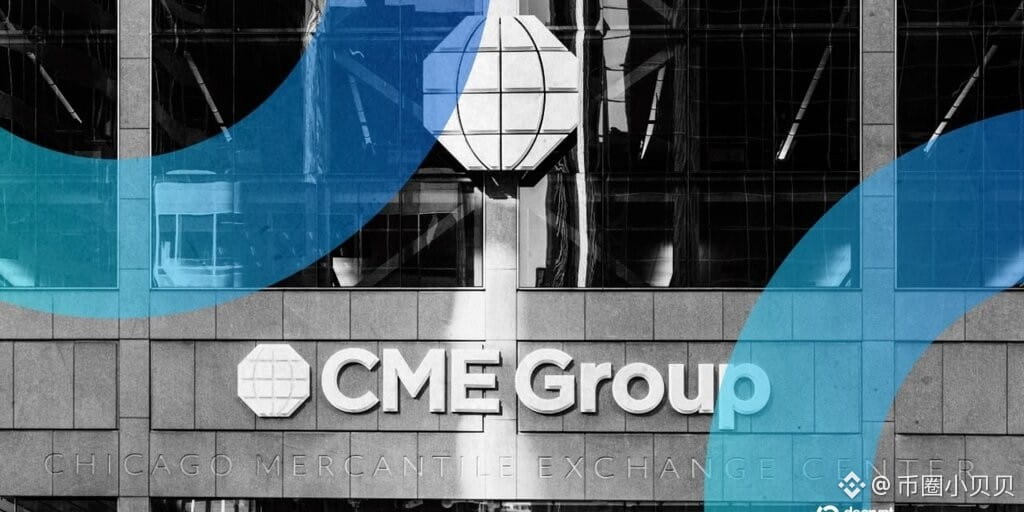
This news is actually a bit strange.. One of the world’s largest futures exchanges—this time it didn’t list a so-called “celebrity coin,” but Bitcoin Cash and the Uniswap contract..
[🔄 进群看机构动作](https://app.binance.com/uni-qr/6d5gRrvm)
Most people see it as “CME adding two more contracts”.. Such things usually aren’t even worth looking at twice for most people.. But I went through the listing sequence carefully, and it feels like it isn’t new contracts being introduced here—it’s a layering process..
And that’s where things start to differ.. Before this, names like Cardano, Chainlink, Stellar, Avalanche, and Sui were already in.. Now it’s BCH and UNI’s turn—one is an old-school payment coin, and the other is a DeFi governance token.. They don’t have much in common, but they share one identity: they’re still standing outside the mainstream roster..
What’s even more interesting is the exchange’s “signature” itself.. It doesn’t exist to help you make quick money—it exists to give institutions a place that can hedge, comply, and be used as margin.. When a coin is brought into its contract pool, it’s like getting a “ticket for institutions to participate in a proper and legitimate way.”.. Pay attention to the order: derivatives come first, and only then does spot capital dare to talk about allocation..
This is the capital line.. Over the past two years, the pricing power of altcoins has basically been in the hands of retail investors, swinging according to sentiment and hype.. But derivatives speak a different language—who gets to hedge, get hedged, get shorted, and only then earns the right to appear on an institution’s balance sheet.. Each additional name added to this list further hardens the layering inside the altcoin world by one notch..
So what’s really worth watching isn’t the trading volume of these two contracts.. It’s who will be next, and how the coins that never manage to get into this pool should be priced going forward..
But the twist is here too.. Getting listed on contracts doesn’t necessarily mean it will go up—possibly it could even go the other way.. Once there are smooth short-selling tools, volatility in the short term could become even more vicious.. In history, quite a few coins, after getting this “institutional ticket,” first went through a long period of sideways movement..
If this trend continues, the deciding factor in this round of altcoins may not be which story is sexier—it may be who can get written into this institutional, tradable list first.. That’s what makes it interesting..
#加密市场总市值重回3万亿美元
This news is actually a bit strange.. One of the world’s largest futures exchanges—this time it didn’t list a so-called “celebrity coin,” but Bitcoin Cash and the Uniswap contract..
🔄 进群看机构动作
Most people see it as “CME adding two more contracts”.. Such things usually aren’t even worth looking at twice for most people.. But I went through the listing sequence carefully, and it feels like it isn’t new contracts being introduced here—it’s a layering process..
And that’s where things start to differ.. Before this, names like Cardano, Chainlink, Stellar, Avalanche, and Sui were already in.. Now it’s BCH and UNI’s turn—one is an old-school payment coin, and the other is a DeFi governance token.. They don’t have much in common, but they share one identity: they’re still standing outside the mainstream roster..
What’s even more interesting is the exchange’s “signature” itself.. It doesn’t exist to help you make quick money—it exists to give institutions a place that can hedge, comply, and be used as margin.. When a coin is brought into its contract pool, it’s like getting a “ticket for institutions to participate in a proper and legitimate way.”.. Pay attention to the order: derivatives come first, and only then does spot capital dare to talk about allocation..
This is the capital line.. Over the past two years, the pricing power of altcoins has basically been in the hands of retail investors, swinging according to sentiment and hype.. But derivatives speak a different language—who gets to hedge, get hedged, get shorted, and only then earns the right to appear on an institution’s balance sheet.. Each additional name added to this list further hardens the layering inside the altcoin world by one notch..
So what’s really worth watching isn’t the trading volume of these two contracts.. It’s who will be next, and how the coins that never manage to get into this pool should be priced going forward..
But the twist is here too.. Getting listed on contracts doesn’t necessarily mean it will go up—possibly it could even go the other way.. Once there are smooth short-selling tools, volatility in the short term could become even more vicious.. In history, quite a few coins, after getting this “institutional ticket,” first went through a long period of sideways movement..
If this trend continues, the deciding factor in this round of altcoins may not be which story is sexier—it may be who can get written into this institutional, tradable list first.. That’s what makes it interesting..
This news is actually a bit strange.. One of the world’s largest futures exchanges—this time it didn’t list a so-called “celebrity coin,” but Bitcoin Cash and the Uniswap contract..
🔄 进群看机构动作
Most people see it as “CME adding two more contracts”.. Such things usually aren’t even worth looking at twice for most people.. But I went through the listing sequence carefully, and it feels like it isn’t new contracts being introduced here—it’s a layering process..
And that’s where things start to differ.. Before this, names like Cardano, Chainlink, Stellar, Avalanche, and Sui were already in.. Now it’s BCH and UNI’s turn—one is an old-school payment coin, and the other is a DeFi governance token.. They don’t have much in common, but they share one identity: they’re still standing outside the mainstream roster..
What’s even more interesting is the exchange’s “signature” itself.. It doesn’t exist to help you make quick money—it exists to give institutions a place that can hedge, comply, and be used as margin.. When a coin is brought into its contract pool, it’s like getting a “ticket for institutions to participate in a proper and legitimate way.”.. Pay attention to the order: derivatives come first, and only then does spot capital dare to talk about allocation..
This is the capital line.. Over the past two years, the pricing power of altcoins has basically been in the hands of retail investors, swinging according to sentiment and hype.. But derivatives speak a different language—who gets to hedge, get hedged, get shorted, and only then earns the right to appear on an institution’s balance sheet.. Each additional name added to this list further hardens the layering inside the altcoin world by one notch..
So what’s really worth watching isn’t the trading volume of these two contracts.. It’s who will be next, and how the coins that never manage to get into this pool should be priced going forward..
But the twist is here too.. Getting listed on contracts doesn’t necessarily mean it will go up—possibly it could even go the other way.. Once there are smooth short-selling tools, volatility in the short term could become even more vicious.. In history, quite a few coins, after getting this “institutional ticket,” first went through a long period of sideways movement..
If this trend continues, the deciding factor in this round of altcoins may not be which story is sexier—it may be who can get written into this institutional, tradable list first.. That’s what makes it interesting..
3
8.3k
·
--
#strategy增持950枚btc
The first glance at this message seems pretty ordinary... It’s the usual “old wallets are waking up,” and “the giant whale is about to move” kind of vibe. But when I went through the data, I felt the most unusual part this time is actually the two words: “cost.”..
[⚖️ 盘面异动群里说](https://app.binance.com/uni-qr/6d5gRrvm)
Most people see the sell-pressure... Four addresses that had been sleeping for more than ten years moved a total of 1,971 bitcoins in two weeks, worth almost 160 million+ US dollars at the current price. The largest single transfer is 1,260 BTC, which hasn’t moved since July 2016—its cost basis is around $650.
But what’s really worth looking at is the cost structure of this batch of coins... There’s a wallet from March 2011 with just a little over ten coins, with an average cost basis around $1. And there’s another from November 2011 with 100 coins—their cost is also sitting right near the floor.
That’s when it starts to be different... For someone whose cost basis is in the single-digit dollars, whether it “rises to 86,000” or “rises to 60,000” doesn’t make much difference in decision-making—selling either way is basically a windfall. So using “the price is too high, so they’re taking profits” to explain this doesn’t really hold up.
There’s a more telling detail inside... Of these four addresses, three have the same sending label attached to them: Noah Doe. It points to that lawsuit in New York that recognized a large number of dormant addresses as abandoned property. After the judge paused the proceedings in June, the addresses under those labels began to move intermittently.
This is the money-flow angle... The dormant holdings that haven’t moved for a decade are the toughest supply in the market. If they start moving, it suggests the change isn’t in price expectations—it’s in the holding structure. The “seller” being awakened may not actually be the seller; it may be “the party seeking rightful confirmation.”
Even more interesting is what’s happening on the other side... The market is also watching institutions accumulate. Strategy added another 950 coins—buying openly on one side, “waking up” in the shadows on the other. Put these two things together, and they’re really talking about the same underlying question: where is Bitcoin’s coin supply actually concentrating—into whose hands?
So what’s truly worth tracking isn’t whether these few transfers will dump and crash the market... It’s the next stop after these old coins move for the first time—are they going into custody, into institutional balance sheets, or directly into exchanges?
But the twist is also here... If this is only a technical movement tied to that lawsuit procedure, with nothing to do with the market行情, then this lead should be downgraded. What to watch is whether it keeps happening in batches and continues—not how big any single transfer amount is.
If this trend continues, the pricing power on the supply side will slowly shift from “who’s willing to sell” to “who can prove they’re the ones holding.” That’s when it gets interesting...
#strategy增持950枚btc
The first glance at this message seems pretty ordinary... It’s the usual “old wallets are waking up,” and “the giant whale is about to move” kind of vibe. But when I went through the data, I felt the most unusual part this time is actually the two words: “cost.”..
⚖️ 盘面异动群里说
Most people see the sell-pressure... Four addresses that had been sleeping for more than ten years moved a total of 1,971 bitcoins in two weeks, worth almost 160 million+ US dollars at the current price. The largest single transfer is 1,260 BTC, which hasn’t moved since July 2016—its cost basis is around $650.
But what’s really worth looking at is the cost structure of this batch of coins... There’s a wallet from March 2011 with just a little over ten coins, with an average cost basis around $1. And there’s another from November 2011 with 100 coins—their cost is also sitting right near the floor.
That’s when it starts to be different... For someone whose cost basis is in the single-digit dollars, whether it “rises to 86,000” or “rises to 60,000” doesn’t make much difference in decision-making—selling either way is basically a windfall. So using “the price is too high, so they’re taking profits” to explain this doesn’t really hold up.
There’s a more telling detail inside... Of these four addresses, three have the same sending label attached to them: Noah Doe. It points to that lawsuit in New York that recognized a large number of dormant addresses as abandoned property. After the judge paused the proceedings in June, the addresses under those labels began to move intermittently.
This is the money-flow angle... The dormant holdings that haven’t moved for a decade are the toughest supply in the market. If they start moving, it suggests the change isn’t in price expectations—it’s in the holding structure. The “seller” being awakened may not actually be the seller; it may be “the party seeking rightful confirmation.”
Even more interesting is what’s happening on the other side... The market is also watching institutions accumulate. Strategy added another 950 coins—buying openly on one side, “waking up” in the shadows on the other. Put these two things together, and they’re really talking about the same underlying question: where is Bitcoin’s coin supply actually concentrating—into whose hands?
So what’s truly worth tracking isn’t whether these few transfers will dump and crash the market... It’s the next stop after these old coins move for the first time—are they going into custody, into institutional balance sheets, or directly into exchanges?
But the twist is also here... If this is only a technical movement tied to that lawsuit procedure, with nothing to do with the market行情, then this lead should be downgraded. What to watch is whether it keeps happening in batches and continues—not how big any single transfer amount is.
If this trend continues, the pricing power on the supply side will slowly shift from “who’s willing to sell” to “who can prove they’re the ones holding.” That’s when it gets interesting...
The first glance at this message seems pretty ordinary... It’s the usual “old wallets are waking up,” and “the giant whale is about to move” kind of vibe. But when I went through the data, I felt the most unusual part this time is actually the two words: “cost.”..
⚖️ 盘面异动群里说
Most people see the sell-pressure... Four addresses that had been sleeping for more than ten years moved a total of 1,971 bitcoins in two weeks, worth almost 160 million+ US dollars at the current price. The largest single transfer is 1,260 BTC, which hasn’t moved since July 2016—its cost basis is around $650.
But what’s really worth looking at is the cost structure of this batch of coins... There’s a wallet from March 2011 with just a little over ten coins, with an average cost basis around $1. And there’s another from November 2011 with 100 coins—their cost is also sitting right near the floor.
That’s when it starts to be different... For someone whose cost basis is in the single-digit dollars, whether it “rises to 86,000” or “rises to 60,000” doesn’t make much difference in decision-making—selling either way is basically a windfall. So using “the price is too high, so they’re taking profits” to explain this doesn’t really hold up.
There’s a more telling detail inside... Of these four addresses, three have the same sending label attached to them: Noah Doe. It points to that lawsuit in New York that recognized a large number of dormant addresses as abandoned property. After the judge paused the proceedings in June, the addresses under those labels began to move intermittently.
This is the money-flow angle... The dormant holdings that haven’t moved for a decade are the toughest supply in the market. If they start moving, it suggests the change isn’t in price expectations—it’s in the holding structure. The “seller” being awakened may not actually be the seller; it may be “the party seeking rightful confirmation.”
Even more interesting is what’s happening on the other side... The market is also watching institutions accumulate. Strategy added another 950 coins—buying openly on one side, “waking up” in the shadows on the other. Put these two things together, and they’re really talking about the same underlying question: where is Bitcoin’s coin supply actually concentrating—into whose hands?
So what’s truly worth tracking isn’t whether these few transfers will dump and crash the market... It’s the next stop after these old coins move for the first time—are they going into custody, into institutional balance sheets, or directly into exchanges?
But the twist is also here... If this is only a technical movement tied to that lawsuit procedure, with nothing to do with the market行情, then this lead should be downgraded. What to watch is whether it keeps happening in batches and continues—not how big any single transfer amount is.
If this trend continues, the pricing power on the supply side will slowly shift from “who’s willing to sell” to “who can prove they’re the ones holding.” That’s when it gets interesting...

2
1.8k
·
--
Verified
#苹果谷歌招募稳定币与代币化存款人才
At first glance, it looks like a trading platform is spending money to buy credibility for itself..
[⚖️ 最新消息群里说](https://app.binance.com/uni-qr/6d5gRrvm)
But something feels off about the direction of this money..
The situation itself isn’t complicated.. A document submitted to U.S. regulators shows that Binance used $100 million to buy 1.24 million shares of Circle’s Class A stock at $80.84 per share. It was done via a private placement, with settlement on September 17.. At the same time, both sides upgraded their existing cooperation into a five-year term—Circle pays Binance a monthly incentive fee, calculated as a percentage of the USDC volume that flows through some wallet service, while Binance handles the promotion of this stablecoin on its own turf..
Most people see it as “another platform taking equity in a stablecoin company, and another institutional tailwind”.. But what’s really worth watching is: who pays whom for this money..
In past years, platforms had to keep stablecoins’ float circulating, so they themselves paid out and subsidized.. Now it’s the other way around: the issuer pays the channels on a monthly basis.. That suggests the scarcity of stablecoins is no longer about “who can issue,” but about “who can get it to sit in their arena”.. Issuing coins is becoming more and more like selling water—the real landlord collecting rent is the side that holds the users’ balances..
Interesting.. In the same business, once the direction of money flips, it means bargaining power has changed hands..
Look more closely at the equity details and it gets even more interesting.. The $100 million buys shares that cannot be sold, transferred, or hedged within two years—only voting rights remain. And because it’s a private placement, resale is restricted anyway.. This doesn’t feel like an investment; it feels more like a binding voucher—within two years, neither side should rush to leave..
Even the fee structure follows the same logic.. It’s not a one-time price—it’s a cut based on transaction/flow size. The platform’s revenue is tied to the stablecoin’s volume on its own turf: the bigger the pool, the more it earns each month..
And now things are different..
Put it in a larger picture: this line is moving both upstream and downstream at the same time.. Upstream, the issuer is willing to share a portion of reserve gains to exchange for channels; downstream, the money is still clustering on the side “covered by someone”.. In earlier rounds, we already saw institutions deposit coins into regulated custody entities and then pull out liquidity. We also saw a group of traditional finance firms queuing up to obtain licenses.. In the second half of stablecoins, the competition likely won’t be about whose reserves are more transparent, but whose channels are stronger..
But here’s the problem..
Monthly payments combined with equity lock-up mean the issuer and the channel will become ever more tightly bound.. Once a channel grows, the issuer’s bargaining power actually shifts downward. And if one day a channel simply issues its own stablecoin, this structure of “I pay you to help me promote it” would flip entirely..
What’s really worth keeping an eye on are two things.. First, whether arrangements like this—cut-based on flow volume—will become the industry standard; second, whether the locked shares due in two years will see any changes around that time..
Once, later on, “channels issue their own coins” really happens—looking back at today’s news, it may just have been the time window before the channels grew large, a transitional setup..
#苹果谷歌招募稳定币与代币化存款人才
At first glance, it looks like a trading platform is spending money to buy credibility for itself..
⚖️ 最新消息群里说
But something feels off about the direction of this money..
The situation itself isn’t complicated.. A document submitted to U.S. regulators shows that Binance used $100 million to buy 1.24 million shares of Circle’s Class A stock at $80.84 per share. It was done via a private placement, with settlement on September 17.. At the same time, both sides upgraded their existing cooperation into a five-year term—Circle pays Binance a monthly incentive fee, calculated as a percentage of the USDC volume that flows through some wallet service, while Binance handles the promotion of this stablecoin on its own turf..
Most people see it as “another platform taking equity in a stablecoin company, and another institutional tailwind”.. But what’s really worth watching is: who pays whom for this money..
In past years, platforms had to keep stablecoins’ float circulating, so they themselves paid out and subsidized.. Now it’s the other way around: the issuer pays the channels on a monthly basis.. That suggests the scarcity of stablecoins is no longer about “who can issue,” but about “who can get it to sit in their arena”.. Issuing coins is becoming more and more like selling water—the real landlord collecting rent is the side that holds the users’ balances..
Interesting.. In the same business, once the direction of money flips, it means bargaining power has changed hands..
Look more closely at the equity details and it gets even more interesting.. The $100 million buys shares that cannot be sold, transferred, or hedged within two years—only voting rights remain. And because it’s a private placement, resale is restricted anyway.. This doesn’t feel like an investment; it feels more like a binding voucher—within two years, neither side should rush to leave..
Even the fee structure follows the same logic.. It’s not a one-time price—it’s a cut based on transaction/flow size. The platform’s revenue is tied to the stablecoin’s volume on its own turf: the bigger the pool, the more it earns each month..
And now things are different..
Put it in a larger picture: this line is moving both upstream and downstream at the same time.. Upstream, the issuer is willing to share a portion of reserve gains to exchange for channels; downstream, the money is still clustering on the side “covered by someone”.. In earlier rounds, we already saw institutions deposit coins into regulated custody entities and then pull out liquidity. We also saw a group of traditional finance firms queuing up to obtain licenses.. In the second half of stablecoins, the competition likely won’t be about whose reserves are more transparent, but whose channels are stronger..
But here’s the problem..
Monthly payments combined with equity lock-up mean the issuer and the channel will become ever more tightly bound.. Once a channel grows, the issuer’s bargaining power actually shifts downward. And if one day a channel simply issues its own stablecoin, this structure of “I pay you to help me promote it” would flip entirely..
What’s really worth keeping an eye on are two things.. First, whether arrangements like this—cut-based on flow volume—will become the industry standard; second, whether the locked shares due in two years will see any changes around that time..
Once, later on, “channels issue their own coins” really happens—looking back at today’s news, it may just have been the time window before the channels grew large, a transitional setup..
At first glance, it looks like a trading platform is spending money to buy credibility for itself..
⚖️ 最新消息群里说
But something feels off about the direction of this money..
The situation itself isn’t complicated.. A document submitted to U.S. regulators shows that Binance used $100 million to buy 1.24 million shares of Circle’s Class A stock at $80.84 per share. It was done via a private placement, with settlement on September 17.. At the same time, both sides upgraded their existing cooperation into a five-year term—Circle pays Binance a monthly incentive fee, calculated as a percentage of the USDC volume that flows through some wallet service, while Binance handles the promotion of this stablecoin on its own turf..
Most people see it as “another platform taking equity in a stablecoin company, and another institutional tailwind”.. But what’s really worth watching is: who pays whom for this money..
In past years, platforms had to keep stablecoins’ float circulating, so they themselves paid out and subsidized.. Now it’s the other way around: the issuer pays the channels on a monthly basis.. That suggests the scarcity of stablecoins is no longer about “who can issue,” but about “who can get it to sit in their arena”.. Issuing coins is becoming more and more like selling water—the real landlord collecting rent is the side that holds the users’ balances..
Interesting.. In the same business, once the direction of money flips, it means bargaining power has changed hands..
Look more closely at the equity details and it gets even more interesting.. The $100 million buys shares that cannot be sold, transferred, or hedged within two years—only voting rights remain. And because it’s a private placement, resale is restricted anyway.. This doesn’t feel like an investment; it feels more like a binding voucher—within two years, neither side should rush to leave..
Even the fee structure follows the same logic.. It’s not a one-time price—it’s a cut based on transaction/flow size. The platform’s revenue is tied to the stablecoin’s volume on its own turf: the bigger the pool, the more it earns each month..
And now things are different..
Put it in a larger picture: this line is moving both upstream and downstream at the same time.. Upstream, the issuer is willing to share a portion of reserve gains to exchange for channels; downstream, the money is still clustering on the side “covered by someone”.. In earlier rounds, we already saw institutions deposit coins into regulated custody entities and then pull out liquidity. We also saw a group of traditional finance firms queuing up to obtain licenses.. In the second half of stablecoins, the competition likely won’t be about whose reserves are more transparent, but whose channels are stronger..
But here’s the problem..
Monthly payments combined with equity lock-up mean the issuer and the channel will become ever more tightly bound.. Once a channel grows, the issuer’s bargaining power actually shifts downward. And if one day a channel simply issues its own stablecoin, this structure of “I pay you to help me promote it” would flip entirely..
What’s really worth keeping an eye on are two things.. First, whether arrangements like this—cut-based on flow volume—will become the industry standard; second, whether the locked shares due in two years will see any changes around that time..
Once, later on, “channels issue their own coins” really happens—looking back at today’s news, it may just have been the time window before the channels grew large, a transitional setup..

3
1.8k
·
--
Verified
#xrp上涨8%
A company holding The Sandbox, which originally planned to list on Nasdaq, ended up pausing that route itself.. This kind of thing is rather uncommon..
[👉 加入粉丝群](https://app.binance.com/uni-qr/6d5gRrvm)
Most people see it as “yet another company’s IPO fell through”.. But what may be truly worth watching isn’t that it couldn’t get listed—it’s that it chose not to, first.
Let’s lay it out clearly.. Hong Kong-based Animoca Brands has paused its reverse merger talks with Currenc for a Nasdaq listing.. Under the original plan, Currenc would be folded into Animoca, and after the merger, Animoca’s shareholders would receive 95% of the shares of the new company.. The stated reasons were “market conditions” and an “expected closing timeline.” The wording said both sides mutually agreed, and added that if the conditions are right, they could talk again..
This is where it gets interesting.. If this pause was caused by regulators blocking it, then it’s a compliance issue; but if what’s written is that both sides hit the brakes together, then it’s not a question of whether it can be listed—it’s a question of whether the valuation at this price is worth it..
Even more interesting is the timing.. On the same day, money in the secondary market was rushing into the cheapest available chips: Dogecoin jumped 15% in a day, with XRP and SOL following.. On one side, the public market is setting a multi-year price for “equity with a story”; on the other, in the market, the chips are priced per minute and can be traded anytime..
So things start to look different.. With the same batch of money, people are now more willing to stay in places where they can trade immediately, rather than get locked into an IPO process that takes months to review, with a delivery/closing period that’s still uncertain..
Look one layer further.. In 2020, Animoca was delisted from an Australian exchange; now it’s also been paused on this Nasdaq backdoor-to-listing route.. Both times got stuck at the same point. Public markets do have cycles in their appetite for this kind of asset.. Add to that last week’s CLARITY bill failing to pass, and the regulatory path was already unclear—companies generally won’t set their own price when the rules haven’t been written clearly.
What’s really worth watching is what that shell plans to do next.. If Currenc restarts talks within a month, it suggests it’s just a timing issue; if it turns around to look for other targets, then it’s a valuation problem, not a timing problem..
The twist stays here.. The listing is stopped, and it looks like this company is the one at a disadvantage; but if the window is closing and the shell is still in hand, then the initiative is actually on the side of the asset preparing to be injected.. Sometimes it’s not that it can’t get listed—it’s that it doesn’t want to be listed at this price.
#xrp上涨8%
A company holding The Sandbox, which originally planned to list on Nasdaq, ended up pausing that route itself.. This kind of thing is rather uncommon..
👉 加入粉丝群
Most people see it as “yet another company’s IPO fell through”.. But what may be truly worth watching isn’t that it couldn’t get listed—it’s that it chose not to, first.
Let’s lay it out clearly.. Hong Kong-based Animoca Brands has paused its reverse merger talks with Currenc for a Nasdaq listing.. Under the original plan, Currenc would be folded into Animoca, and after the merger, Animoca’s shareholders would receive 95% of the shares of the new company.. The stated reasons were “market conditions” and an “expected closing timeline.” The wording said both sides mutually agreed, and added that if the conditions are right, they could talk again..
This is where it gets interesting.. If this pause was caused by regulators blocking it, then it’s a compliance issue; but if what’s written is that both sides hit the brakes together, then it’s not a question of whether it can be listed—it’s a question of whether the valuation at this price is worth it..
Even more interesting is the timing.. On the same day, money in the secondary market was rushing into the cheapest available chips: Dogecoin jumped 15% in a day, with XRP and SOL following.. On one side, the public market is setting a multi-year price for “equity with a story”; on the other, in the market, the chips are priced per minute and can be traded anytime..
So things start to look different.. With the same batch of money, people are now more willing to stay in places where they can trade immediately, rather than get locked into an IPO process that takes months to review, with a delivery/closing period that’s still uncertain..
Look one layer further.. In 2020, Animoca was delisted from an Australian exchange; now it’s also been paused on this Nasdaq backdoor-to-listing route.. Both times got stuck at the same point. Public markets do have cycles in their appetite for this kind of asset.. Add to that last week’s CLARITY bill failing to pass, and the regulatory path was already unclear—companies generally won’t set their own price when the rules haven’t been written clearly.
What’s really worth watching is what that shell plans to do next.. If Currenc restarts talks within a month, it suggests it’s just a timing issue; if it turns around to look for other targets, then it’s a valuation problem, not a timing problem..
The twist stays here.. The listing is stopped, and it looks like this company is the one at a disadvantage; but if the window is closing and the shell is still in hand, then the initiative is actually on the side of the asset preparing to be injected.. Sometimes it’s not that it can’t get listed—it’s that it doesn’t want to be listed at this price.
A company holding The Sandbox, which originally planned to list on Nasdaq, ended up pausing that route itself.. This kind of thing is rather uncommon..
👉 加入粉丝群
Most people see it as “yet another company’s IPO fell through”.. But what may be truly worth watching isn’t that it couldn’t get listed—it’s that it chose not to, first.
Let’s lay it out clearly.. Hong Kong-based Animoca Brands has paused its reverse merger talks with Currenc for a Nasdaq listing.. Under the original plan, Currenc would be folded into Animoca, and after the merger, Animoca’s shareholders would receive 95% of the shares of the new company.. The stated reasons were “market conditions” and an “expected closing timeline.” The wording said both sides mutually agreed, and added that if the conditions are right, they could talk again..
This is where it gets interesting.. If this pause was caused by regulators blocking it, then it’s a compliance issue; but if what’s written is that both sides hit the brakes together, then it’s not a question of whether it can be listed—it’s a question of whether the valuation at this price is worth it..
Even more interesting is the timing.. On the same day, money in the secondary market was rushing into the cheapest available chips: Dogecoin jumped 15% in a day, with XRP and SOL following.. On one side, the public market is setting a multi-year price for “equity with a story”; on the other, in the market, the chips are priced per minute and can be traded anytime..
So things start to look different.. With the same batch of money, people are now more willing to stay in places where they can trade immediately, rather than get locked into an IPO process that takes months to review, with a delivery/closing period that’s still uncertain..
Look one layer further.. In 2020, Animoca was delisted from an Australian exchange; now it’s also been paused on this Nasdaq backdoor-to-listing route.. Both times got stuck at the same point. Public markets do have cycles in their appetite for this kind of asset.. Add to that last week’s CLARITY bill failing to pass, and the regulatory path was already unclear—companies generally won’t set their own price when the rules haven’t been written clearly.
What’s really worth watching is what that shell plans to do next.. If Currenc restarts talks within a month, it suggests it’s just a timing issue; if it turns around to look for other targets, then it’s a valuation problem, not a timing problem..
The twist stays here.. The listing is stopped, and it looks like this company is the one at a disadvantage; but if the window is closing and the shell is still in hand, then the initiative is actually on the side of the asset preparing to be injected.. Sometimes it’s not that it can’t get listed—it’s that it doesn’t want to be listed at this price.
3
1.2k
·
--
#xrp上涨8%
In the crypto world, this news… is actually a bit strange..
[👉 交易计划](https://app.binance.com/uni-qr/6d5gRrvm)
Everyone’s talking about how Dogecoin surged 15% overnight—rising from just over ten cents straight to the top among major coins in terms of percentage gains.. But what’s really worth watching might not be that 15%, but the timing of when it happened..
On the Bitcoin side, the action has already stopped..
The starting point of this uptrend is very clear.. In the past 24 hours, over $1 billion was liquidated across the entire network—$844 million of that, roughly 82%, was liquidated short positions. More than 130,000 positions were closed.. After shorts get liquidated, a passive buy order will follow and come back—this is the fuel behind that sharp spike from a few days ago.. But in the most recent hour, the liquidation volume has already dropped from more than $300 million per hour at Monday’s peak to under $11 million..
Put into plain human language.. The fuel that lifted people is almost burned out..
What’s even more interesting is that when the fuel burns out, the price doesn’t collapse.. It just swaps in a new batch of smaller, cheaper chips to jump—Dogecoin is up 15%, XRP is up nearly 7%, SOL is up 5%, Ethereum is up 3%, while Bitcoin itself has basically gone sideways within the hour..
This is where things start to look different..
Money never disappears; it only moves to somewhere else.. When the leader has repaired most people’s cost bases and the rally starts to get harder, the first money to be moved won’t chase the most expensive thing. Instead, it goes to the place that takes the least effort to push higher.. The money required to double a coin that’s around ten cents might be less than what it takes for Bitcoin to move even 1 percentage point..
There’s another detail you can cross-check with this line.. Among major coins, the only one currently falling is ZEC, which had surged earlier—down 4%.. The ones that already rose get drained first; the ones that didn’t rise yet, and are even cheaper per unit, are the ones getting lifted.. This isn’t broad-based pumping—it’s money selectively concentrating on cheaper targets..
The chips that get lifted first are often not the hardest assets, but the lightest positions..
And that bigger layer can also be seen in the stock market on the same day.. In the Asian session, the main index rose nearly 1% and extended a five-day streak; leading were Samsung and SK Hynix.. AMD’s market cap first touched $1 trillion, and the Philadelphia Semiconductor Index also extended its five-day advance.. And Meta’s newly launched AI agent—within two weeks—outperformed ChatGPT on Apple’s US free charts, with millions of global installs..
This suggests it’s not just a rotation happening within the crypto market; rather, overall risk appetite is being lifted together..
But there’s one difference to pay attention to.. In stocks, what investors are buying is AI capability; in crypto, what they’re buying is the cheapest chips..
What’s really worth watching is the relay baton next.. There isn’t much fuel left from liquidations—after this, either spot capital steps in to take over the volume and the market keeps moving higher, or the leader goes sideways and once the small caps finish this jump, that’s it..
In history, the scene of “the leader goes sideways, while the cheapest chips go crazy for a single day” often appears in the latter half of a rotation cycle.. But it could also be that the small-cap season just opened.. The key tell is one thing—after Dogecoin completes its jump like this, can Bitcoin make a fresh new high again..
If the leader can’t keep up, and only Dogecoin itself is moving, then this 15% is more like someone else stepping in to pay the bill—not like a change of direction.
#xrp上涨8%
In the crypto world, this news… is actually a bit strange..
👉 交易计划
Everyone’s talking about how Dogecoin surged 15% overnight—rising from just over ten cents straight to the top among major coins in terms of percentage gains.. But what’s really worth watching might not be that 15%, but the timing of when it happened..
On the Bitcoin side, the action has already stopped..
The starting point of this uptrend is very clear.. In the past 24 hours, over $1 billion was liquidated across the entire network—$844 million of that, roughly 82%, was liquidated short positions. More than 130,000 positions were closed.. After shorts get liquidated, a passive buy order will follow and come back—this is the fuel behind that sharp spike from a few days ago.. But in the most recent hour, the liquidation volume has already dropped from more than $300 million per hour at Monday’s peak to under $11 million..
Put into plain human language.. The fuel that lifted people is almost burned out..
What’s even more interesting is that when the fuel burns out, the price doesn’t collapse.. It just swaps in a new batch of smaller, cheaper chips to jump—Dogecoin is up 15%, XRP is up nearly 7%, SOL is up 5%, Ethereum is up 3%, while Bitcoin itself has basically gone sideways within the hour..
This is where things start to look different..
Money never disappears; it only moves to somewhere else.. When the leader has repaired most people’s cost bases and the rally starts to get harder, the first money to be moved won’t chase the most expensive thing. Instead, it goes to the place that takes the least effort to push higher.. The money required to double a coin that’s around ten cents might be less than what it takes for Bitcoin to move even 1 percentage point..
There’s another detail you can cross-check with this line.. Among major coins, the only one currently falling is ZEC, which had surged earlier—down 4%.. The ones that already rose get drained first; the ones that didn’t rise yet, and are even cheaper per unit, are the ones getting lifted.. This isn’t broad-based pumping—it’s money selectively concentrating on cheaper targets..
The chips that get lifted first are often not the hardest assets, but the lightest positions..
And that bigger layer can also be seen in the stock market on the same day.. In the Asian session, the main index rose nearly 1% and extended a five-day streak; leading were Samsung and SK Hynix.. AMD’s market cap first touched $1 trillion, and the Philadelphia Semiconductor Index also extended its five-day advance.. And Meta’s newly launched AI agent—within two weeks—outperformed ChatGPT on Apple’s US free charts, with millions of global installs..
This suggests it’s not just a rotation happening within the crypto market; rather, overall risk appetite is being lifted together..
But there’s one difference to pay attention to.. In stocks, what investors are buying is AI capability; in crypto, what they’re buying is the cheapest chips..
What’s really worth watching is the relay baton next.. There isn’t much fuel left from liquidations—after this, either spot capital steps in to take over the volume and the market keeps moving higher, or the leader goes sideways and once the small caps finish this jump, that’s it..
In history, the scene of “the leader goes sideways, while the cheapest chips go crazy for a single day” often appears in the latter half of a rotation cycle.. But it could also be that the small-cap season just opened.. The key tell is one thing—after Dogecoin completes its jump like this, can Bitcoin make a fresh new high again..
If the leader can’t keep up, and only Dogecoin itself is moving, then this 15% is more like someone else stepping in to pay the bill—not like a change of direction.
In the crypto world, this news… is actually a bit strange..
👉 交易计划
Everyone’s talking about how Dogecoin surged 15% overnight—rising from just over ten cents straight to the top among major coins in terms of percentage gains.. But what’s really worth watching might not be that 15%, but the timing of when it happened..
On the Bitcoin side, the action has already stopped..
The starting point of this uptrend is very clear.. In the past 24 hours, over $1 billion was liquidated across the entire network—$844 million of that, roughly 82%, was liquidated short positions. More than 130,000 positions were closed.. After shorts get liquidated, a passive buy order will follow and come back—this is the fuel behind that sharp spike from a few days ago.. But in the most recent hour, the liquidation volume has already dropped from more than $300 million per hour at Monday’s peak to under $11 million..
Put into plain human language.. The fuel that lifted people is almost burned out..
What’s even more interesting is that when the fuel burns out, the price doesn’t collapse.. It just swaps in a new batch of smaller, cheaper chips to jump—Dogecoin is up 15%, XRP is up nearly 7%, SOL is up 5%, Ethereum is up 3%, while Bitcoin itself has basically gone sideways within the hour..
This is where things start to look different..
Money never disappears; it only moves to somewhere else.. When the leader has repaired most people’s cost bases and the rally starts to get harder, the first money to be moved won’t chase the most expensive thing. Instead, it goes to the place that takes the least effort to push higher.. The money required to double a coin that’s around ten cents might be less than what it takes for Bitcoin to move even 1 percentage point..
There’s another detail you can cross-check with this line.. Among major coins, the only one currently falling is ZEC, which had surged earlier—down 4%.. The ones that already rose get drained first; the ones that didn’t rise yet, and are even cheaper per unit, are the ones getting lifted.. This isn’t broad-based pumping—it’s money selectively concentrating on cheaper targets..
The chips that get lifted first are often not the hardest assets, but the lightest positions..
And that bigger layer can also be seen in the stock market on the same day.. In the Asian session, the main index rose nearly 1% and extended a five-day streak; leading were Samsung and SK Hynix.. AMD’s market cap first touched $1 trillion, and the Philadelphia Semiconductor Index also extended its five-day advance.. And Meta’s newly launched AI agent—within two weeks—outperformed ChatGPT on Apple’s US free charts, with millions of global installs..
This suggests it’s not just a rotation happening within the crypto market; rather, overall risk appetite is being lifted together..
But there’s one difference to pay attention to.. In stocks, what investors are buying is AI capability; in crypto, what they’re buying is the cheapest chips..
What’s really worth watching is the relay baton next.. There isn’t much fuel left from liquidations—after this, either spot capital steps in to take over the volume and the market keeps moving higher, or the leader goes sideways and once the small caps finish this jump, that’s it..
In history, the scene of “the leader goes sideways, while the cheapest chips go crazy for a single day” often appears in the latter half of a rotation cycle.. But it could also be that the small-cap season just opened.. The key tell is one thing—after Dogecoin completes its jump like this, can Bitcoin make a fresh new high again..
If the leader can’t keep up, and only Dogecoin itself is moving, then this 15% is more like someone else stepping in to pay the bill—not like a change of direction.
546
·
--
#以太坊突破2700美元
This message on the screen is actually a bit strange..
[👉 热点新闻](https://app.binance.com/uni-qr/6d5gRrvm)
An old player who got 38,800 ETH in the 2015 Ethereum crowdfunding, sold 11,552 ETH at an average price of 2027 dollars about half a year ago, cashing out for $23.42 million.. Just early this morning, he bought back 8,630.6 ETH with almost the same amount, with an average buy-in price of $2,749..
The money is roughly the same, but the coins are fewer by 2,921.. Based on today’s price, $8.03 million has evaporated in between..
Many people see it as a whale losing eight million doing swing trades.. But what’s really worth watching isn’t how much he lost—it’s why an old stash he held since the crowdfunding would rather lose nearly three thousand coins and still take the position back..
This is where it gets interesting..
First, break down the numbers.. His coins were obtained in 2015, so the cost is so low it’s basically negligible.. Selling in 2027 and buying back at $2,749 isn’t losing money for him—it’s making a slightly shorter profit.. Only if the price falls back below $2,027 would this swing trade be truly wrong.. So the “cost” he’s willing to pay is actually trading $8.03 million for a complete, intact long-term position.
Even more interesting is the timing.. When he exited half a year ago, market sentiment was on the cool side, and ETH was still hovering around just over $2,000.. Now he’s back: BTC has just hit an eight-month high, and ETH is also above $2,700.. From that same batch of old money, the cycle changed from turning coins into cash, then switching back from cash into coins..
Now it’s starting to be different..
Because on-chain, truly early addresses behave in the opposite way from retail investors.. Retail sells in panic and buys when things are lively.. But those who entered in 2015–2016 already have decade-old “lottery tickets” sitting in their accounts; when they rebalance, it usually means they’ve formed a new judgment about the market outlook for the next stretch.
But here’s the question.. The actions of a single wallet can’t directly be taken as a signal.. What’s really worth monitoring is whether these early addresses are moving collectively, or whether only he is cycling through swing trades.. If later more old addresses gradually move ETH back into their own wallets, and supply shrinks on the other side, then this story would finally have evidence.
If this trend continues.. What it might be signaling isn’t that ETH has to go up, but that this most patience-filled batch of holdings thinks it’s more worthwhile to keep their coins in their own hands than to park them in stablecoins.
The reversal is here.. This time he might only be trying to stitch his old position back together, not necessarily indicating a bullish stance.. If ETH truly drops back near $2,030, then today’s $8.03 million would turn from “less profit” into real loss; the next time these old players act, they’ll likely be even more cautious.
So next, I’ll watch two things.. One is the net inflow of early addresses, and the other is whether the ETH-to-BTC exchange rate can hold steady.. In the end, whether money is switching positions or switching direction—these two numbers will speak before the price does..
#以太坊突破2700美元
This message on the screen is actually a bit strange..
👉 热点新闻
An old player who got 38,800 ETH in the 2015 Ethereum crowdfunding, sold 11,552 ETH at an average price of 2027 dollars about half a year ago, cashing out for $23.42 million.. Just early this morning, he bought back 8,630.6 ETH with almost the same amount, with an average buy-in price of $2,749..
The money is roughly the same, but the coins are fewer by 2,921.. Based on today’s price, $8.03 million has evaporated in between..
Many people see it as a whale losing eight million doing swing trades.. But what’s really worth watching isn’t how much he lost—it’s why an old stash he held since the crowdfunding would rather lose nearly three thousand coins and still take the position back..
This is where it gets interesting..
First, break down the numbers.. His coins were obtained in 2015, so the cost is so low it’s basically negligible.. Selling in 2027 and buying back at $2,749 isn’t losing money for him—it’s making a slightly shorter profit.. Only if the price falls back below $2,027 would this swing trade be truly wrong.. So the “cost” he’s willing to pay is actually trading $8.03 million for a complete, intact long-term position.
Even more interesting is the timing.. When he exited half a year ago, market sentiment was on the cool side, and ETH was still hovering around just over $2,000.. Now he’s back: BTC has just hit an eight-month high, and ETH is also above $2,700.. From that same batch of old money, the cycle changed from turning coins into cash, then switching back from cash into coins..
Now it’s starting to be different..
Because on-chain, truly early addresses behave in the opposite way from retail investors.. Retail sells in panic and buys when things are lively.. But those who entered in 2015–2016 already have decade-old “lottery tickets” sitting in their accounts; when they rebalance, it usually means they’ve formed a new judgment about the market outlook for the next stretch.
But here’s the question.. The actions of a single wallet can’t directly be taken as a signal.. What’s really worth monitoring is whether these early addresses are moving collectively, or whether only he is cycling through swing trades.. If later more old addresses gradually move ETH back into their own wallets, and supply shrinks on the other side, then this story would finally have evidence.
If this trend continues.. What it might be signaling isn’t that ETH has to go up, but that this most patience-filled batch of holdings thinks it’s more worthwhile to keep their coins in their own hands than to park them in stablecoins.
The reversal is here.. This time he might only be trying to stitch his old position back together, not necessarily indicating a bullish stance.. If ETH truly drops back near $2,030, then today’s $8.03 million would turn from “less profit” into real loss; the next time these old players act, they’ll likely be even more cautious.
So next, I’ll watch two things.. One is the net inflow of early addresses, and the other is whether the ETH-to-BTC exchange rate can hold steady.. In the end, whether money is switching positions or switching direction—these two numbers will speak before the price does..
This message on the screen is actually a bit strange..
👉 热点新闻
An old player who got 38,800 ETH in the 2015 Ethereum crowdfunding, sold 11,552 ETH at an average price of 2027 dollars about half a year ago, cashing out for $23.42 million.. Just early this morning, he bought back 8,630.6 ETH with almost the same amount, with an average buy-in price of $2,749..
The money is roughly the same, but the coins are fewer by 2,921.. Based on today’s price, $8.03 million has evaporated in between..
Many people see it as a whale losing eight million doing swing trades.. But what’s really worth watching isn’t how much he lost—it’s why an old stash he held since the crowdfunding would rather lose nearly three thousand coins and still take the position back..
This is where it gets interesting..
First, break down the numbers.. His coins were obtained in 2015, so the cost is so low it’s basically negligible.. Selling in 2027 and buying back at $2,749 isn’t losing money for him—it’s making a slightly shorter profit.. Only if the price falls back below $2,027 would this swing trade be truly wrong.. So the “cost” he’s willing to pay is actually trading $8.03 million for a complete, intact long-term position.
Even more interesting is the timing.. When he exited half a year ago, market sentiment was on the cool side, and ETH was still hovering around just over $2,000.. Now he’s back: BTC has just hit an eight-month high, and ETH is also above $2,700.. From that same batch of old money, the cycle changed from turning coins into cash, then switching back from cash into coins..
Now it’s starting to be different..
Because on-chain, truly early addresses behave in the opposite way from retail investors.. Retail sells in panic and buys when things are lively.. But those who entered in 2015–2016 already have decade-old “lottery tickets” sitting in their accounts; when they rebalance, it usually means they’ve formed a new judgment about the market outlook for the next stretch.
But here’s the question.. The actions of a single wallet can’t directly be taken as a signal.. What’s really worth monitoring is whether these early addresses are moving collectively, or whether only he is cycling through swing trades.. If later more old addresses gradually move ETH back into their own wallets, and supply shrinks on the other side, then this story would finally have evidence.
If this trend continues.. What it might be signaling isn’t that ETH has to go up, but that this most patience-filled batch of holdings thinks it’s more worthwhile to keep their coins in their own hands than to park them in stablecoins.
The reversal is here.. This time he might only be trying to stitch his old position back together, not necessarily indicating a bullish stance.. If ETH truly drops back near $2,030, then today’s $8.03 million would turn from “less profit” into real loss; the next time these old players act, they’ll likely be even more cautious.
So next, I’ll watch two things.. One is the net inflow of early addresses, and the other is whether the ETH-to-BTC exchange rate can hold steady.. In the end, whether money is switching positions or switching direction—these two numbers will speak before the price does..
1
4
6k
·
--
#比特币突破8.5万美元
Many people see Bitcoin about to surge to 90,000 again. But what’s truly worth watching is the money that pushed the price up this time—and it’s not the same crowd as a week ago
[👉 了解最新交易计划](https://app.binance.com/uni-qr/6d5gRrvm)
On Monday, Bitcoin touched 86,000, setting an eight-month high. When it finally broke through the 82,000 level that had been holding back prices for nearly two months, roughly $750 million worth of short positions were liquidated
Most people only see the part that says: “Shorts got blown out, buy pressure is strong, and the next target is 90,000.” That understanding isn’t wrong—but it only covers the first half
The essence of liquidation is that the exchange buys to close the shorts—meaning those $750 million of buy orders were forced to be dumped in, not actively bought because someone believed in it
What’s even more interesting is what happened after the breakout. Bitcoin futures open interest increased by about $2 billion in new leverage—the rate of leverage rising is even faster than the price itself
That’s when things start to look different: the people pushed out were the bearish side, but the ones moving in on top are bullish traders adding leverage. In other words, the shorts’ positions have effectively been replaced by long leverage
But here’s the problem: price flipping bullish tends to happen faster than positions flipping bullish. That’s how Nansen puts it. Translated into plain language: the people calling for longs haven’t actually boarded yet—the leverage got on first
Now look at the ETF track. In the beginning of the week, the Clarity Act vote didn’t pass, and the Fed raised rates again. On Tuesday and Wednesday, spot ETF flows totaled outflows of $746 million. Then Thursday and Friday immediately did a 180—$160 million and $433 million inflows, respectively. Friday was still the strongest day of that week
Same week—money ran out first, then came back. That suggests this capital wasn’t built up slowly; it was being shoved back and forth by events
What’s really worth watching is another number: the average cost basis of U.S. spot ETF buyers is around $82,225. With this upswing, they’re returning to the profit zone for the first time in a long time
And that’s where it gets thought-provoking: a batch of people just getting back to break-even are holding exactly the kind of most “easy-to shake loose” chips. Around break-even is usually one of the market’s favorite places to sell
So the current structure is two streams of money stacked on top of each other: one side is the fuel created by passive liquidation, and the other is the new leverage added. But the spot buying that can truly validate the trend still hasn’t proven it can keep up
If this trend continues… what you’ll need to watch isn’t the round number of 90,000, but whether derivatives leverage and spot trading volume can rise in sync. If leverage keeps going up but spot doesn’t move, then this is a false breakout pushed up by borrowing
The reversal is already here too. Bitcoin just reclaimed the 50-week moving average—a line that, in previous bear market rounds, had consistently acted like a ceiling pressing down on price. Standing above it is a legitimate signal
But the memory of that hasn’t faded: the $19 billion chain of liquidations in October last year was cleared in less than a year. The leverage that built up hasn’t been forgotten
Once spot can’t keep up, the same script can play out again—only with the direction reversed
#比特币突破8.5万美元
Many people see Bitcoin about to surge to 90,000 again. But what’s truly worth watching is the money that pushed the price up this time—and it’s not the same crowd as a week ago
👉 了解最新交易计划
On Monday, Bitcoin touched 86,000, setting an eight-month high. When it finally broke through the 82,000 level that had been holding back prices for nearly two months, roughly $750 million worth of short positions were liquidated
Most people only see the part that says: “Shorts got blown out, buy pressure is strong, and the next target is 90,000.” That understanding isn’t wrong—but it only covers the first half
The essence of liquidation is that the exchange buys to close the shorts—meaning those $750 million of buy orders were forced to be dumped in, not actively bought because someone believed in it
What’s even more interesting is what happened after the breakout. Bitcoin futures open interest increased by about $2 billion in new leverage—the rate of leverage rising is even faster than the price itself
That’s when things start to look different: the people pushed out were the bearish side, but the ones moving in on top are bullish traders adding leverage. In other words, the shorts’ positions have effectively been replaced by long leverage
But here’s the problem: price flipping bullish tends to happen faster than positions flipping bullish. That’s how Nansen puts it. Translated into plain language: the people calling for longs haven’t actually boarded yet—the leverage got on first
Now look at the ETF track. In the beginning of the week, the Clarity Act vote didn’t pass, and the Fed raised rates again. On Tuesday and Wednesday, spot ETF flows totaled outflows of $746 million. Then Thursday and Friday immediately did a 180—$160 million and $433 million inflows, respectively. Friday was still the strongest day of that week
Same week—money ran out first, then came back. That suggests this capital wasn’t built up slowly; it was being shoved back and forth by events
What’s really worth watching is another number: the average cost basis of U.S. spot ETF buyers is around $82,225. With this upswing, they’re returning to the profit zone for the first time in a long time
And that’s where it gets thought-provoking: a batch of people just getting back to break-even are holding exactly the kind of most “easy-to shake loose” chips. Around break-even is usually one of the market’s favorite places to sell
So the current structure is two streams of money stacked on top of each other: one side is the fuel created by passive liquidation, and the other is the new leverage added. But the spot buying that can truly validate the trend still hasn’t proven it can keep up
If this trend continues… what you’ll need to watch isn’t the round number of 90,000, but whether derivatives leverage and spot trading volume can rise in sync. If leverage keeps going up but spot doesn’t move, then this is a false breakout pushed up by borrowing
The reversal is already here too. Bitcoin just reclaimed the 50-week moving average—a line that, in previous bear market rounds, had consistently acted like a ceiling pressing down on price. Standing above it is a legitimate signal
But the memory of that hasn’t faded: the $19 billion chain of liquidations in October last year was cleared in less than a year. The leverage that built up hasn’t been forgotten
Once spot can’t keep up, the same script can play out again—only with the direction reversed
Many people see Bitcoin about to surge to 90,000 again. But what’s truly worth watching is the money that pushed the price up this time—and it’s not the same crowd as a week ago
👉 了解最新交易计划
On Monday, Bitcoin touched 86,000, setting an eight-month high. When it finally broke through the 82,000 level that had been holding back prices for nearly two months, roughly $750 million worth of short positions were liquidated
Most people only see the part that says: “Shorts got blown out, buy pressure is strong, and the next target is 90,000.” That understanding isn’t wrong—but it only covers the first half
The essence of liquidation is that the exchange buys to close the shorts—meaning those $750 million of buy orders were forced to be dumped in, not actively bought because someone believed in it
What’s even more interesting is what happened after the breakout. Bitcoin futures open interest increased by about $2 billion in new leverage—the rate of leverage rising is even faster than the price itself
That’s when things start to look different: the people pushed out were the bearish side, but the ones moving in on top are bullish traders adding leverage. In other words, the shorts’ positions have effectively been replaced by long leverage
But here’s the problem: price flipping bullish tends to happen faster than positions flipping bullish. That’s how Nansen puts it. Translated into plain language: the people calling for longs haven’t actually boarded yet—the leverage got on first
Now look at the ETF track. In the beginning of the week, the Clarity Act vote didn’t pass, and the Fed raised rates again. On Tuesday and Wednesday, spot ETF flows totaled outflows of $746 million. Then Thursday and Friday immediately did a 180—$160 million and $433 million inflows, respectively. Friday was still the strongest day of that week
Same week—money ran out first, then came back. That suggests this capital wasn’t built up slowly; it was being shoved back and forth by events
What’s really worth watching is another number: the average cost basis of U.S. spot ETF buyers is around $82,225. With this upswing, they’re returning to the profit zone for the first time in a long time
And that’s where it gets thought-provoking: a batch of people just getting back to break-even are holding exactly the kind of most “easy-to shake loose” chips. Around break-even is usually one of the market’s favorite places to sell
So the current structure is two streams of money stacked on top of each other: one side is the fuel created by passive liquidation, and the other is the new leverage added. But the spot buying that can truly validate the trend still hasn’t proven it can keep up
If this trend continues… what you’ll need to watch isn’t the round number of 90,000, but whether derivatives leverage and spot trading volume can rise in sync. If leverage keeps going up but spot doesn’t move, then this is a false breakout pushed up by borrowing
The reversal is already here too. Bitcoin just reclaimed the 50-week moving average—a line that, in previous bear market rounds, had consistently acted like a ceiling pressing down on price. Standing above it is a legitimate signal
But the memory of that hasn’t faded: the $19 billion chain of liquidations in October last year was cleared in less than a year. The leverage that built up hasn’t been forgotten
Once spot can’t keep up, the same script can play out again—only with the direction reversed
1
8
6.9k
·
--
#比特币突破8.5万美元
Many people see Bitcoin surging again to 86,000, setting an eight-month high.. But what’s truly worth watching on Monday isn’t actually Bitcoin
[👉 加入粉丝群](https://app.binance.com/uni-qr/6d5gRrvm)
Last night, the hottest topic in the crypto space was liquidation data.. In 24 hours, more than $900 million was liquidated across the entire market, with shorts making up the bulk—Bitcoin alone contributed more than $450 million.. Ethereum, XRP followed even more aggressively, and HYPE even directly hit a historical new high
All of that is true.. But if you only focus on the liquidation numbers, it’s easy to misread who pulled the trigger for this rally
What’s interesting is that the “water tap” that truly turned risk appetite is not even in the crypto world.. First is oil prices: WTI fell more than 5% in a single day, Brent dropped back to around $99, and it hit an eleven-day low; second is U.S. Treasury yields: the 10-year yield slipped below the 5% level again, returning to 4.96%
Put these two together, and the meaning is different.. When oil loosens, inflation expectations loosen too; when yields fall, money starts shifting from the defensive side to the offensive side
So Monday’s setup was especially典型.. The Nasdaq rose 2%, and the S&P 500 climbed 1.5%; AMD surged 9% in a single day, with its market value crossing $1 trillion for the first time; Intel jumped 13%, with funds almost sweeping to buy chips
Things start to look different from there.. Gold was the kind that got pressed down the same day, at one point dropping to around $4,322, and the yen was also weakening.. In other words, this isn’t buying insurance against inflation—it’s pricing in a rate-top in advance
Even more interesting is where the money inside crypto is going.. After Bitcoin pushed higher, Ethereum, XRP, and HYPE followed even harder than the last.. This isn’t what it looks like when everyone only dares to buy Bitcoin; it’s that capital is spreading outward from Bitcoin, and generally this kind of “spillover” shows up in the stage when risk appetite has just started to return
But the question is.. The foundation for this repair is actually rather thin
The reason oil prices are falling is that Middle East developments hinted that they’re willing to sit down and talk.. On the other side, the Federal Reserve only just raised rates for the first time in more than three years last week, and interest rates are still high; the market still gives roughly a 50% chance that they’ll hike again next month.. In other words, Monday’s “breath of relief” came from diplomatic signals, not fundamentals
So what’s really worth watching isn’t whether Bitcoin can hold 86,000—it’s two more front-running things.. Whether oil can stay below $100, and whether the 10-year yield can keep moving away from 5%
As long as either one turns back, the kind of scene where the whole market rallies together today could quickly flip to the other side
If energy prices rise again, the story about the second round of inflation will be pulled back out.. And by then, the thing that rose the most today is often the one that falls back the fastest
As for this current move, I’d rather view it as an emotion-based reset than confirmation that the high-interest-rate era is already over
#比特币突破8.5万美元
Many people see Bitcoin surging again to 86,000, setting an eight-month high.. But what’s truly worth watching on Monday isn’t actually Bitcoin
👉 加入粉丝群
Last night, the hottest topic in the crypto space was liquidation data.. In 24 hours, more than $900 million was liquidated across the entire market, with shorts making up the bulk—Bitcoin alone contributed more than $450 million.. Ethereum, XRP followed even more aggressively, and HYPE even directly hit a historical new high
All of that is true.. But if you only focus on the liquidation numbers, it’s easy to misread who pulled the trigger for this rally
What’s interesting is that the “water tap” that truly turned risk appetite is not even in the crypto world.. First is oil prices: WTI fell more than 5% in a single day, Brent dropped back to around $99, and it hit an eleven-day low; second is U.S. Treasury yields: the 10-year yield slipped below the 5% level again, returning to 4.96%
Put these two together, and the meaning is different.. When oil loosens, inflation expectations loosen too; when yields fall, money starts shifting from the defensive side to the offensive side
So Monday’s setup was especially典型.. The Nasdaq rose 2%, and the S&P 500 climbed 1.5%; AMD surged 9% in a single day, with its market value crossing $1 trillion for the first time; Intel jumped 13%, with funds almost sweeping to buy chips
Things start to look different from there.. Gold was the kind that got pressed down the same day, at one point dropping to around $4,322, and the yen was also weakening.. In other words, this isn’t buying insurance against inflation—it’s pricing in a rate-top in advance
Even more interesting is where the money inside crypto is going.. After Bitcoin pushed higher, Ethereum, XRP, and HYPE followed even harder than the last.. This isn’t what it looks like when everyone only dares to buy Bitcoin; it’s that capital is spreading outward from Bitcoin, and generally this kind of “spillover” shows up in the stage when risk appetite has just started to return
But the question is.. The foundation for this repair is actually rather thin
The reason oil prices are falling is that Middle East developments hinted that they’re willing to sit down and talk.. On the other side, the Federal Reserve only just raised rates for the first time in more than three years last week, and interest rates are still high; the market still gives roughly a 50% chance that they’ll hike again next month.. In other words, Monday’s “breath of relief” came from diplomatic signals, not fundamentals
So what’s really worth watching isn’t whether Bitcoin can hold 86,000—it’s two more front-running things.. Whether oil can stay below $100, and whether the 10-year yield can keep moving away from 5%
As long as either one turns back, the kind of scene where the whole market rallies together today could quickly flip to the other side
If energy prices rise again, the story about the second round of inflation will be pulled back out.. And by then, the thing that rose the most today is often the one that falls back the fastest
As for this current move, I’d rather view it as an emotion-based reset than confirmation that the high-interest-rate era is already over
Many people see Bitcoin surging again to 86,000, setting an eight-month high.. But what’s truly worth watching on Monday isn’t actually Bitcoin
👉 加入粉丝群
Last night, the hottest topic in the crypto space was liquidation data.. In 24 hours, more than $900 million was liquidated across the entire market, with shorts making up the bulk—Bitcoin alone contributed more than $450 million.. Ethereum, XRP followed even more aggressively, and HYPE even directly hit a historical new high
All of that is true.. But if you only focus on the liquidation numbers, it’s easy to misread who pulled the trigger for this rally
What’s interesting is that the “water tap” that truly turned risk appetite is not even in the crypto world.. First is oil prices: WTI fell more than 5% in a single day, Brent dropped back to around $99, and it hit an eleven-day low; second is U.S. Treasury yields: the 10-year yield slipped below the 5% level again, returning to 4.96%
Put these two together, and the meaning is different.. When oil loosens, inflation expectations loosen too; when yields fall, money starts shifting from the defensive side to the offensive side
So Monday’s setup was especially典型.. The Nasdaq rose 2%, and the S&P 500 climbed 1.5%; AMD surged 9% in a single day, with its market value crossing $1 trillion for the first time; Intel jumped 13%, with funds almost sweeping to buy chips
Things start to look different from there.. Gold was the kind that got pressed down the same day, at one point dropping to around $4,322, and the yen was also weakening.. In other words, this isn’t buying insurance against inflation—it’s pricing in a rate-top in advance
Even more interesting is where the money inside crypto is going.. After Bitcoin pushed higher, Ethereum, XRP, and HYPE followed even harder than the last.. This isn’t what it looks like when everyone only dares to buy Bitcoin; it’s that capital is spreading outward from Bitcoin, and generally this kind of “spillover” shows up in the stage when risk appetite has just started to return
But the question is.. The foundation for this repair is actually rather thin
The reason oil prices are falling is that Middle East developments hinted that they’re willing to sit down and talk.. On the other side, the Federal Reserve only just raised rates for the first time in more than three years last week, and interest rates are still high; the market still gives roughly a 50% chance that they’ll hike again next month.. In other words, Monday’s “breath of relief” came from diplomatic signals, not fundamentals
So what’s really worth watching isn’t whether Bitcoin can hold 86,000—it’s two more front-running things.. Whether oil can stay below $100, and whether the 10-year yield can keep moving away from 5%
As long as either one turns back, the kind of scene where the whole market rallies together today could quickly flip to the other side
If energy prices rise again, the story about the second round of inflation will be pulled back out.. And by then, the thing that rose the most today is often the one that falls back the fastest
As for this current move, I’d rather view it as an emotion-based reset than confirmation that the high-interest-rate era is already over
2
2.3k
·
--
Verified
#circle推出机构比特币抵押借贷
Today, everything on screen is talking about Bitcoin breaking above 86,000, short liquidations, and how much the ETF has attracted.. But what’s truly worth us pausing to look at might be another piece of news that hardly anyone is sharing—Circle has launched a new business: institutions can use Bitcoin to borrow USDC..
[👉 爆点新闻](https://app.binance.com/uni-qr/6d5gRrvm)
Most people’s first reaction when they see this is, “Oh, another institutional positive.” A stablecoin company just released another product—seems like it has nothing to do with market conditions..
But there’s something a bit more intriguing here.. It’s not about letting institutions buy more coins; it’s about letting institutions not have to sell their coins to get money.. The customer deposits BTC, mints a 1:1-anchored certificate, then uses that certificate as collateral and deposits it into a third-party lending market. The borrowed USDC goes straight into their account.. The coins stay in custody and don’t move, but the money is already in hand..
This is what’s truly worth watching.. Previously, when institutions needed liquidity, there was basically only one path: sell.. Now there’s another: use coins to obtain liquidity. Once “selling” is no longer the only way to cash out, the motivation to create selling pressure changes by itself.. The chips are locked in custody; if the borrowed money flows back into the market again, the available circulating supply can only get thinner..
Even more interesting is that this isn’t happening in isolation.. A few days ago it launched its own settlement chain mainnet. Before that, it had wrapped Bitcoin上线; now it adds another layer of on-chain lending.. Stablecoin issuance, custody management, settlement, lending—these pieces combine into a closed loop: deposit collateral, mint stablecoins, and settle on its own chain.. That’s when things start to look different..
But the question is.. Overcollateralization and the liquidation line are determined by third-party lending protocols, meaning the risk hasn’t disappeared—it’s just been moved from the exchange’s books to the blockchain.. In extreme market conditions, liquidation runs automatically as well, and in the middle there’s an additional layer of wrapped certificates, which effectively adds another custody and cross-chain trust point—there are even people in the peer group insisting on not wrapping, preferring Bitcoin to stay in its original custody..
So what’s truly worth monitoring isn’t one company’s progress, but how quickly this kind of “borrow money without moving the coin out of custody” model gets rolled out.. If it really becomes a standard operating procedure for institutions, then the next round of upward fuel might not be new buyers—but instead the portion of people who were already planning to sell suddenly choosing not to..
#circle推出机构比特币抵押借贷
Today, everything on screen is talking about Bitcoin breaking above 86,000, short liquidations, and how much the ETF has attracted.. But what’s truly worth us pausing to look at might be another piece of news that hardly anyone is sharing—Circle has launched a new business: institutions can use Bitcoin to borrow USDC..
👉 爆点新闻
Most people’s first reaction when they see this is, “Oh, another institutional positive.” A stablecoin company just released another product—seems like it has nothing to do with market conditions..
But there’s something a bit more intriguing here.. It’s not about letting institutions buy more coins; it’s about letting institutions not have to sell their coins to get money.. The customer deposits BTC, mints a 1:1-anchored certificate, then uses that certificate as collateral and deposits it into a third-party lending market. The borrowed USDC goes straight into their account.. The coins stay in custody and don’t move, but the money is already in hand..
This is what’s truly worth watching.. Previously, when institutions needed liquidity, there was basically only one path: sell.. Now there’s another: use coins to obtain liquidity. Once “selling” is no longer the only way to cash out, the motivation to create selling pressure changes by itself.. The chips are locked in custody; if the borrowed money flows back into the market again, the available circulating supply can only get thinner..
Even more interesting is that this isn’t happening in isolation.. A few days ago it launched its own settlement chain mainnet. Before that, it had wrapped Bitcoin上线; now it adds another layer of on-chain lending.. Stablecoin issuance, custody management, settlement, lending—these pieces combine into a closed loop: deposit collateral, mint stablecoins, and settle on its own chain.. That’s when things start to look different..
But the question is.. Overcollateralization and the liquidation line are determined by third-party lending protocols, meaning the risk hasn’t disappeared—it’s just been moved from the exchange’s books to the blockchain.. In extreme market conditions, liquidation runs automatically as well, and in the middle there’s an additional layer of wrapped certificates, which effectively adds another custody and cross-chain trust point—there are even people in the peer group insisting on not wrapping, preferring Bitcoin to stay in its original custody..
So what’s truly worth monitoring isn’t one company’s progress, but how quickly this kind of “borrow money without moving the coin out of custody” model gets rolled out.. If it really becomes a standard operating procedure for institutions, then the next round of upward fuel might not be new buyers—but instead the portion of people who were already planning to sell suddenly choosing not to..
Today, everything on screen is talking about Bitcoin breaking above 86,000, short liquidations, and how much the ETF has attracted.. But what’s truly worth us pausing to look at might be another piece of news that hardly anyone is sharing—Circle has launched a new business: institutions can use Bitcoin to borrow USDC..
👉 爆点新闻
Most people’s first reaction when they see this is, “Oh, another institutional positive.” A stablecoin company just released another product—seems like it has nothing to do with market conditions..
But there’s something a bit more intriguing here.. It’s not about letting institutions buy more coins; it’s about letting institutions not have to sell their coins to get money.. The customer deposits BTC, mints a 1:1-anchored certificate, then uses that certificate as collateral and deposits it into a third-party lending market. The borrowed USDC goes straight into their account.. The coins stay in custody and don’t move, but the money is already in hand..
This is what’s truly worth watching.. Previously, when institutions needed liquidity, there was basically only one path: sell.. Now there’s another: use coins to obtain liquidity. Once “selling” is no longer the only way to cash out, the motivation to create selling pressure changes by itself.. The chips are locked in custody; if the borrowed money flows back into the market again, the available circulating supply can only get thinner..
Even more interesting is that this isn’t happening in isolation.. A few days ago it launched its own settlement chain mainnet. Before that, it had wrapped Bitcoin上线; now it adds another layer of on-chain lending.. Stablecoin issuance, custody management, settlement, lending—these pieces combine into a closed loop: deposit collateral, mint stablecoins, and settle on its own chain.. That’s when things start to look different..
But the question is.. Overcollateralization and the liquidation line are determined by third-party lending protocols, meaning the risk hasn’t disappeared—it’s just been moved from the exchange’s books to the blockchain.. In extreme market conditions, liquidation runs automatically as well, and in the middle there’s an additional layer of wrapped certificates, which effectively adds another custody and cross-chain trust point—there are even people in the peer group insisting on not wrapping, preferring Bitcoin to stay in its original custody..
So what’s truly worth monitoring isn’t one company’s progress, but how quickly this kind of “borrow money without moving the coin out of custody” model gets rolled out.. If it really becomes a standard operating procedure for institutions, then the next round of upward fuel might not be new buyers—but instead the portion of people who were already planning to sell suddenly choosing not to..
4
1
17
28.2k
·
--
#比特币突破8.5万美元
Many people are watching Bitcoin surge to 86,000.. But I think the more worthwhile thing to take another look at is the other piece of news—one that almost nobody is reposting..
[👉 实时行情追踪](https://app.binance.com/uni-qr/6d5gRrvm)
The U.S. Senate’s crypto market structure bill last week failed to pass the vote at 49 to 50, not even reaching the threshold required to enter debate.. On the surface, it looks like the industry lost—so that’s a bearish signal..
What’s really worth watching, though, is that the core of the fight in this vote wasn’t about whether crypto should be regulated. It was about whether stablecoins can pay users interest..
The banks won this round.. As someone put it very plainly in one sentence: the reason banks are fighting so fiercely is that they’re increasingly treating stablecoins as competitors to deposits—not as just another crypto product..
Now things start to look different.. Deposits are the foundation banks fear people will move the most. If stablecoins can pay interest, money will shift from deposit accounts to the blockchain..
What’s even more interesting is that the money didn’t stop moving because of this.. After the bill was stalled, the rules didn’t disappear—they just grew somewhere else. Regulators quickly issued a temporary exemption allowing qualified venues to trade tokenized U.S. stocks via license-based liquidity pools, and another regulator also sent a set of crypto rules to the White House for review..
This is where it gets a bit subtle.. The rules no longer grow out of Congress—they now grow out of regulators’ interpretive power and exemptions.. Today they can give; tomorrow they can take back. The scope and timeline are entirely in someone else’s hands..
The other side of the money also provided an answer.. After the vote, the share prices of a certain U.S.-listed trading platform, the stablecoin issuer, and a Bitcoin reserves company all fell together by 5% to 10%.. But with the same kind of money, in another direction it found an exit: in Dubai, there are already more than 110 licensed virtual-asset companies, and about 20 more are waiting for in-principle approvals.. As one local lawyer put it word for word: while the U.S. is still discussing, we already have clarity here..
What’s truly worth keeping an eye on is that regulatory clarity itself is starting to function as a marketing tool.. Whoever first writes the rules clearly, will be the first to attract companies, founders, talent, and capital..
But here’s the problem.. The kind of certainty propped up by regulators’ discretion isn’t the same as certainty propped up by legislation. The former is flexible, and it’s easier for the next batch of people to change it back.. Once one day the U.S. really fills in the framework, the money that leaves could come back faster than it left in the first place..
These are just my views and don’t constitute any advice..
#比特币突破8.5万美元
Many people are watching Bitcoin surge to 86,000.. But I think the more worthwhile thing to take another look at is the other piece of news—one that almost nobody is reposting..
👉 实时行情追踪
The U.S. Senate’s crypto market structure bill last week failed to pass the vote at 49 to 50, not even reaching the threshold required to enter debate.. On the surface, it looks like the industry lost—so that’s a bearish signal..
What’s really worth watching, though, is that the core of the fight in this vote wasn’t about whether crypto should be regulated. It was about whether stablecoins can pay users interest..
The banks won this round.. As someone put it very plainly in one sentence: the reason banks are fighting so fiercely is that they’re increasingly treating stablecoins as competitors to deposits—not as just another crypto product..
Now things start to look different.. Deposits are the foundation banks fear people will move the most. If stablecoins can pay interest, money will shift from deposit accounts to the blockchain..
What’s even more interesting is that the money didn’t stop moving because of this.. After the bill was stalled, the rules didn’t disappear—they just grew somewhere else. Regulators quickly issued a temporary exemption allowing qualified venues to trade tokenized U.S. stocks via license-based liquidity pools, and another regulator also sent a set of crypto rules to the White House for review..
This is where it gets a bit subtle.. The rules no longer grow out of Congress—they now grow out of regulators’ interpretive power and exemptions.. Today they can give; tomorrow they can take back. The scope and timeline are entirely in someone else’s hands..
The other side of the money also provided an answer.. After the vote, the share prices of a certain U.S.-listed trading platform, the stablecoin issuer, and a Bitcoin reserves company all fell together by 5% to 10%.. But with the same kind of money, in another direction it found an exit: in Dubai, there are already more than 110 licensed virtual-asset companies, and about 20 more are waiting for in-principle approvals.. As one local lawyer put it word for word: while the U.S. is still discussing, we already have clarity here..
What’s truly worth keeping an eye on is that regulatory clarity itself is starting to function as a marketing tool.. Whoever first writes the rules clearly, will be the first to attract companies, founders, talent, and capital..
But here’s the problem.. The kind of certainty propped up by regulators’ discretion isn’t the same as certainty propped up by legislation. The former is flexible, and it’s easier for the next batch of people to change it back.. Once one day the U.S. really fills in the framework, the money that leaves could come back faster than it left in the first place..
These are just my views and don’t constitute any advice..
Many people are watching Bitcoin surge to 86,000.. But I think the more worthwhile thing to take another look at is the other piece of news—one that almost nobody is reposting..
👉 实时行情追踪
The U.S. Senate’s crypto market structure bill last week failed to pass the vote at 49 to 50, not even reaching the threshold required to enter debate.. On the surface, it looks like the industry lost—so that’s a bearish signal..
What’s really worth watching, though, is that the core of the fight in this vote wasn’t about whether crypto should be regulated. It was about whether stablecoins can pay users interest..
The banks won this round.. As someone put it very plainly in one sentence: the reason banks are fighting so fiercely is that they’re increasingly treating stablecoins as competitors to deposits—not as just another crypto product..
Now things start to look different.. Deposits are the foundation banks fear people will move the most. If stablecoins can pay interest, money will shift from deposit accounts to the blockchain..
What’s even more interesting is that the money didn’t stop moving because of this.. After the bill was stalled, the rules didn’t disappear—they just grew somewhere else. Regulators quickly issued a temporary exemption allowing qualified venues to trade tokenized U.S. stocks via license-based liquidity pools, and another regulator also sent a set of crypto rules to the White House for review..
This is where it gets a bit subtle.. The rules no longer grow out of Congress—they now grow out of regulators’ interpretive power and exemptions.. Today they can give; tomorrow they can take back. The scope and timeline are entirely in someone else’s hands..
The other side of the money also provided an answer.. After the vote, the share prices of a certain U.S.-listed trading platform, the stablecoin issuer, and a Bitcoin reserves company all fell together by 5% to 10%.. But with the same kind of money, in another direction it found an exit: in Dubai, there are already more than 110 licensed virtual-asset companies, and about 20 more are waiting for in-principle approvals.. As one local lawyer put it word for word: while the U.S. is still discussing, we already have clarity here..
What’s truly worth keeping an eye on is that regulatory clarity itself is starting to function as a marketing tool.. Whoever first writes the rules clearly, will be the first to attract companies, founders, talent, and capital..
But here’s the problem.. The kind of certainty propped up by regulators’ discretion isn’t the same as certainty propped up by legislation. The former is flexible, and it’s easier for the next batch of people to change it back.. Once one day the U.S. really fills in the framework, the money that leaves could come back faster than it left in the first place..
These are just my views and don’t constitute any advice..
2
3.1k
·
--
#solana目标出块时间降至250毫秒
This news is actually a bit strange... Today, everyone is saying that Solana will overtake Ethereum, but the person saying that had only been saying half a year ago that they no longer believe in crypto.
[👉 交易计划](https://app.binance.com/uni-qr/6d5gRrvm)
What most people see is yet another industry bigwig’s prediction. A well-known fund founder said that in this cycle, SOL’s market cap will flip over ETH. The reason? Ethereum “isn’t really being used today.”
But what’s truly worth looking at is what he used as evidence... not the price, but the fees. Over the past 30 days, Solana’s on-chain fees were $23 million, ranking fourth on the entire network. Ethereum’s fees were $12.6 million, ranking sixth.
This is where things start to look different... On the usage side, Solana has indeed surpassed Ethereum. But on the market-cap side, SOL is $58 billion, while ETH is $293 billion—about five times the gap. In other words, the market’s pricing of Ethereum is not based on “whose fees are higher.”
That’s where the taste of the money is... What Ethereum is truly being bought for right now is stablecoins, and the whole setup where people use ETH as collateral to borrow stablecoins. In other words, it isn’t being priced as “the best chain to use”—it’s being priced as “the biggest collateral vault.” When things are rising, you can’t tell the difference; once the story changes, the difference shows up.
What’s even more interesting is his own trajectory... This February, he stepped down as the managing partner of his fund. Back then he said, “I thought I believed in web3, but now I don’t,” and the post was deleted soon after. Then in September, he joined the U.S. board of a certain exchange platform. His stance in public and his positions in practice have never been the same.
But the question is this... To push SOL past ETH, there’s still five times of room—this can’t be done by narrative alone. It requires a group of companies to actually move their businesses from one chain to another.
What’s really worth watching is how many more projects will, like ZetaChain, shut down the mainnet and migrate tokens to Solana. Once that list starts getting longer, the question of “which is better to use” will turn into “where is the money safer?”
The twist is right here... Everyone thinks this is a battle of technical roadmaps, but over the past month, ETH is up 30% and SOL is up 34%—it’s pretty close. The money hasn’t fully made a choice yet; it’s just been placing a bit on both sides for now.
#solana目标出块时间降至250毫秒
This news is actually a bit strange... Today, everyone is saying that Solana will overtake Ethereum, but the person saying that had only been saying half a year ago that they no longer believe in crypto.
👉 交易计划
What most people see is yet another industry bigwig’s prediction. A well-known fund founder said that in this cycle, SOL’s market cap will flip over ETH. The reason? Ethereum “isn’t really being used today.”
But what’s truly worth looking at is what he used as evidence... not the price, but the fees. Over the past 30 days, Solana’s on-chain fees were $23 million, ranking fourth on the entire network. Ethereum’s fees were $12.6 million, ranking sixth.
This is where things start to look different... On the usage side, Solana has indeed surpassed Ethereum. But on the market-cap side, SOL is $58 billion, while ETH is $293 billion—about five times the gap. In other words, the market’s pricing of Ethereum is not based on “whose fees are higher.”
That’s where the taste of the money is... What Ethereum is truly being bought for right now is stablecoins, and the whole setup where people use ETH as collateral to borrow stablecoins. In other words, it isn’t being priced as “the best chain to use”—it’s being priced as “the biggest collateral vault.” When things are rising, you can’t tell the difference; once the story changes, the difference shows up.
What’s even more interesting is his own trajectory... This February, he stepped down as the managing partner of his fund. Back then he said, “I thought I believed in web3, but now I don’t,” and the post was deleted soon after. Then in September, he joined the U.S. board of a certain exchange platform. His stance in public and his positions in practice have never been the same.
But the question is this... To push SOL past ETH, there’s still five times of room—this can’t be done by narrative alone. It requires a group of companies to actually move their businesses from one chain to another.
What’s really worth watching is how many more projects will, like ZetaChain, shut down the mainnet and migrate tokens to Solana. Once that list starts getting longer, the question of “which is better to use” will turn into “where is the money safer?”
The twist is right here... Everyone thinks this is a battle of technical roadmaps, but over the past month, ETH is up 30% and SOL is up 34%—it’s pretty close. The money hasn’t fully made a choice yet; it’s just been placing a bit on both sides for now.
This news is actually a bit strange... Today, everyone is saying that Solana will overtake Ethereum, but the person saying that had only been saying half a year ago that they no longer believe in crypto.
👉 交易计划
What most people see is yet another industry bigwig’s prediction. A well-known fund founder said that in this cycle, SOL’s market cap will flip over ETH. The reason? Ethereum “isn’t really being used today.”
But what’s truly worth looking at is what he used as evidence... not the price, but the fees. Over the past 30 days, Solana’s on-chain fees were $23 million, ranking fourth on the entire network. Ethereum’s fees were $12.6 million, ranking sixth.
This is where things start to look different... On the usage side, Solana has indeed surpassed Ethereum. But on the market-cap side, SOL is $58 billion, while ETH is $293 billion—about five times the gap. In other words, the market’s pricing of Ethereum is not based on “whose fees are higher.”
That’s where the taste of the money is... What Ethereum is truly being bought for right now is stablecoins, and the whole setup where people use ETH as collateral to borrow stablecoins. In other words, it isn’t being priced as “the best chain to use”—it’s being priced as “the biggest collateral vault.” When things are rising, you can’t tell the difference; once the story changes, the difference shows up.
What’s even more interesting is his own trajectory... This February, he stepped down as the managing partner of his fund. Back then he said, “I thought I believed in web3, but now I don’t,” and the post was deleted soon after. Then in September, he joined the U.S. board of a certain exchange platform. His stance in public and his positions in practice have never been the same.
But the question is this... To push SOL past ETH, there’s still five times of room—this can’t be done by narrative alone. It requires a group of companies to actually move their businesses from one chain to another.
What’s really worth watching is how many more projects will, like ZetaChain, shut down the mainnet and migrate tokens to Solana. Once that list starts getting longer, the question of “which is better to use” will turn into “where is the money safer?”
The twist is right here... Everyone thinks this is a battle of technical roadmaps, but over the past month, ETH is up 30% and SOL is up 34%—it’s pretty close. The money hasn’t fully made a choice yet; it’s just been placing a bit on both sides for now.
2k
·
--
#比特币突破8.5万美元
This news is actually a bit strange.. Everyone is watching the Bitcoin exchange above 85,000, but at the same time, another thing that went live may be even more worth looking at..
[👉 了解最新交易计划](https://app.binance.com/uni-qr/6d5gRrvm)
Most people see yet another new trading pair.. An index called BVIV has been turned into a perpetual contract, letting you go long or short with leverage.. Sounds boring..
But what’s really worth paying attention to is what it lets you trade.. Not whether it goes up or down, but “how much volatility” there is..
This index tracks the expected volatility of Bitcoin over the next 30 days. Its benchmark is the U.S. stock market’s VIX—the “fear index.” In traditional finance, it’s a tool used to price the market’s level of “fear.”
And now it starts to feel different.. One side of direction is already too crowded—people going long go long, people going short go short, nobody’s lacking. What’s missing is volatility itself. In the past, to express that idea you had to go around and buy options, where the funding threshold was high and you’d need to know how to calculate Greek letters—ordinary people basically can’t touch it..
Now it’s been brought on-chain. With USDC as collateral and 5x leverage, a single perpetual contract can handle it—you don’t even need to open an account.
That’s where the “money smell” is.. When trading tools start to converge with the traditional market, it means the money coming in has changed.. Hedge funds, volatility trading desks, and the funds that sell options—these people don’t want to get rich overnight. They want a toolbox that’s complete. They need to be able to hedge, collect rental income, and slice their own risk into something they can sell off..
But here’s the issue.. The volatility market’s liquidity right after launch is very thin. Don’t rush to use it as a “crypto VIX.” What’s truly worth tracking is the difference between this index and Bitcoin’s actual volatility.
Once “calm” itself begins to be traded, the market’s pricing of calm will start to move.. Calm might become more expensive—or it might suddenly disappear one night.
The twist is here.. Everyone thinks this new thing is aiming for bigger volatility, but its real meaning might be to sell volatility earlier and more cheaply. Which one it is will have to wait for the first wave of big market action to prove.
#比特币突破8.5万美元
This news is actually a bit strange.. Everyone is watching the Bitcoin exchange above 85,000, but at the same time, another thing that went live may be even more worth looking at..
👉 了解最新交易计划
Most people see yet another new trading pair.. An index called BVIV has been turned into a perpetual contract, letting you go long or short with leverage.. Sounds boring..
But what’s really worth paying attention to is what it lets you trade.. Not whether it goes up or down, but “how much volatility” there is..
This index tracks the expected volatility of Bitcoin over the next 30 days. Its benchmark is the U.S. stock market’s VIX—the “fear index.” In traditional finance, it’s a tool used to price the market’s level of “fear.”
And now it starts to feel different.. One side of direction is already too crowded—people going long go long, people going short go short, nobody’s lacking. What’s missing is volatility itself. In the past, to express that idea you had to go around and buy options, where the funding threshold was high and you’d need to know how to calculate Greek letters—ordinary people basically can’t touch it..
Now it’s been brought on-chain. With USDC as collateral and 5x leverage, a single perpetual contract can handle it—you don’t even need to open an account.
That’s where the “money smell” is.. When trading tools start to converge with the traditional market, it means the money coming in has changed.. Hedge funds, volatility trading desks, and the funds that sell options—these people don’t want to get rich overnight. They want a toolbox that’s complete. They need to be able to hedge, collect rental income, and slice their own risk into something they can sell off..
But here’s the issue.. The volatility market’s liquidity right after launch is very thin. Don’t rush to use it as a “crypto VIX.” What’s truly worth tracking is the difference between this index and Bitcoin’s actual volatility.
Once “calm” itself begins to be traded, the market’s pricing of calm will start to move.. Calm might become more expensive—or it might suddenly disappear one night.
The twist is here.. Everyone thinks this new thing is aiming for bigger volatility, but its real meaning might be to sell volatility earlier and more cheaply. Which one it is will have to wait for the first wave of big market action to prove.
This news is actually a bit strange.. Everyone is watching the Bitcoin exchange above 85,000, but at the same time, another thing that went live may be even more worth looking at..
👉 了解最新交易计划
Most people see yet another new trading pair.. An index called BVIV has been turned into a perpetual contract, letting you go long or short with leverage.. Sounds boring..
But what’s really worth paying attention to is what it lets you trade.. Not whether it goes up or down, but “how much volatility” there is..
This index tracks the expected volatility of Bitcoin over the next 30 days. Its benchmark is the U.S. stock market’s VIX—the “fear index.” In traditional finance, it’s a tool used to price the market’s level of “fear.”
And now it starts to feel different.. One side of direction is already too crowded—people going long go long, people going short go short, nobody’s lacking. What’s missing is volatility itself. In the past, to express that idea you had to go around and buy options, where the funding threshold was high and you’d need to know how to calculate Greek letters—ordinary people basically can’t touch it..
Now it’s been brought on-chain. With USDC as collateral and 5x leverage, a single perpetual contract can handle it—you don’t even need to open an account.
That’s where the “money smell” is.. When trading tools start to converge with the traditional market, it means the money coming in has changed.. Hedge funds, volatility trading desks, and the funds that sell options—these people don’t want to get rich overnight. They want a toolbox that’s complete. They need to be able to hedge, collect rental income, and slice their own risk into something they can sell off..
But here’s the issue.. The volatility market’s liquidity right after launch is very thin. Don’t rush to use it as a “crypto VIX.” What’s truly worth tracking is the difference between this index and Bitcoin’s actual volatility.
Once “calm” itself begins to be traded, the market’s pricing of calm will start to move.. Calm might become more expensive—or it might suddenly disappear one night.
The twist is here.. Everyone thinks this new thing is aiming for bigger volatility, but its real meaning might be to sell volatility earlier and more cheaply. Which one it is will have to wait for the first wave of big market action to prove.
2
2.2k
·
--
#michaelsaylor暗示增持btc
This news is actually a bit strange.. The Strategy, which hadn’t taken action for three weeks, suddenly bought again. In the same week, a Hong Kong-listed company also bought 152 Bitcoins. The headlines all say, “Institutional buying is back,” but what’s truly worth watching is that these two sums are not the same kind of money..
[👉 加入聊天室](https://app.binance.com/uni-qr/6d5gRrvm)
What many people see is that institutions are entering again—good news..
But underneath, it might be something else entirely..
Strategy’s buy is about $76 million USD—its first purchase in three weeks. Its holdings rose again from 840,447 units in August, bringing it back close to the June peak—just a little short.. As for Boyaa Interactive, it spent HKD 90.63 million in cash to buy 152 BTC, and its cumulative holdings already reached 4,468 BTC.. One company funds coin purchases by issuing shares or debt, while the other uses on-balance-sheet cash and Hong Kong market liquidity to buy coins. The nature of these two amounts is completely different..
Even more interesting is another thread on the same day.. Tom Lee’s Bitmine bought 27,562 Ethereum, and its holdings have already touched 4.9% of Ethereum’s circulating supply. It’s also saying, “A crypto bull market is on the way; institutions are still under-allocated.”..
Put these pieces together, and it gets interesting..
Why is the money coming in now.. Because these companies’ ability to buy coins is tightly linked to whether the secondary market is willing to award them a premium for issuing new shares or debt. Strategy supports its financing window via its stock price; Boyaa relies on cash and Hong Kong liquidity; Bitmine relies on the market’s willingness to keep believing in the Ethereum story.. Once the price returns near their cost line and the financing window reopens, the buy orders effectively come back on their own..
Here’s where it becomes thought-provoking.. Many people read this as “institutions propping up the market,” but these buy orders actually have a ceiling. The ceiling isn’t the price—it’s the financing premium. Once the companies’ stock prices can’t keep up with the coin price’s upside, the share-issuance-to-buy-coin flywheel will get stuck, and the last batch of buyers will disappear from here first..
So don’t just focus on the number of “how many coins were bought.”..
What’s really worth watching is how much premium these companies have relative to their own net assets. If the premium continues to narrow, it suggests the market is starting to stop believing in the “issue shares to buy coins” cycle—then, quietly, the supply side will do the opposite.. If the premium can still hold, this line can continue pushing prices for a while longer, and more small companies may follow the playbook..
The reversal is right here.. The ones lifting the price have never been the coins themselves, but the people willing to pay a premium for “companies that buy coins.” With the premium, the cycle continues.. Without the premium, the cycle will stop on its own..
#michaelsaylor暗示增持btc
This news is actually a bit strange.. The Strategy, which hadn’t taken action for three weeks, suddenly bought again. In the same week, a Hong Kong-listed company also bought 152 Bitcoins. The headlines all say, “Institutional buying is back,” but what’s truly worth watching is that these two sums are not the same kind of money..
👉 加入聊天室
What many people see is that institutions are entering again—good news..
But underneath, it might be something else entirely..
Strategy’s buy is about $76 million USD—its first purchase in three weeks. Its holdings rose again from 840,447 units in August, bringing it back close to the June peak—just a little short.. As for Boyaa Interactive, it spent HKD 90.63 million in cash to buy 152 BTC, and its cumulative holdings already reached 4,468 BTC.. One company funds coin purchases by issuing shares or debt, while the other uses on-balance-sheet cash and Hong Kong market liquidity to buy coins. The nature of these two amounts is completely different..
Even more interesting is another thread on the same day.. Tom Lee’s Bitmine bought 27,562 Ethereum, and its holdings have already touched 4.9% of Ethereum’s circulating supply. It’s also saying, “A crypto bull market is on the way; institutions are still under-allocated.”..
Put these pieces together, and it gets interesting..
Why is the money coming in now.. Because these companies’ ability to buy coins is tightly linked to whether the secondary market is willing to award them a premium for issuing new shares or debt. Strategy supports its financing window via its stock price; Boyaa relies on cash and Hong Kong liquidity; Bitmine relies on the market’s willingness to keep believing in the Ethereum story.. Once the price returns near their cost line and the financing window reopens, the buy orders effectively come back on their own..
Here’s where it becomes thought-provoking.. Many people read this as “institutions propping up the market,” but these buy orders actually have a ceiling. The ceiling isn’t the price—it’s the financing premium. Once the companies’ stock prices can’t keep up with the coin price’s upside, the share-issuance-to-buy-coin flywheel will get stuck, and the last batch of buyers will disappear from here first..
So don’t just focus on the number of “how many coins were bought.”..
What’s really worth watching is how much premium these companies have relative to their own net assets. If the premium continues to narrow, it suggests the market is starting to stop believing in the “issue shares to buy coins” cycle—then, quietly, the supply side will do the opposite.. If the premium can still hold, this line can continue pushing prices for a while longer, and more small companies may follow the playbook..
The reversal is right here.. The ones lifting the price have never been the coins themselves, but the people willing to pay a premium for “companies that buy coins.” With the premium, the cycle continues.. Without the premium, the cycle will stop on its own..
This news is actually a bit strange.. The Strategy, which hadn’t taken action for three weeks, suddenly bought again. In the same week, a Hong Kong-listed company also bought 152 Bitcoins. The headlines all say, “Institutional buying is back,” but what’s truly worth watching is that these two sums are not the same kind of money..
👉 加入聊天室
What many people see is that institutions are entering again—good news..
But underneath, it might be something else entirely..
Strategy’s buy is about $76 million USD—its first purchase in three weeks. Its holdings rose again from 840,447 units in August, bringing it back close to the June peak—just a little short.. As for Boyaa Interactive, it spent HKD 90.63 million in cash to buy 152 BTC, and its cumulative holdings already reached 4,468 BTC.. One company funds coin purchases by issuing shares or debt, while the other uses on-balance-sheet cash and Hong Kong market liquidity to buy coins. The nature of these two amounts is completely different..
Even more interesting is another thread on the same day.. Tom Lee’s Bitmine bought 27,562 Ethereum, and its holdings have already touched 4.9% of Ethereum’s circulating supply. It’s also saying, “A crypto bull market is on the way; institutions are still under-allocated.”..
Put these pieces together, and it gets interesting..
Why is the money coming in now.. Because these companies’ ability to buy coins is tightly linked to whether the secondary market is willing to award them a premium for issuing new shares or debt. Strategy supports its financing window via its stock price; Boyaa relies on cash and Hong Kong liquidity; Bitmine relies on the market’s willingness to keep believing in the Ethereum story.. Once the price returns near their cost line and the financing window reopens, the buy orders effectively come back on their own..
Here’s where it becomes thought-provoking.. Many people read this as “institutions propping up the market,” but these buy orders actually have a ceiling. The ceiling isn’t the price—it’s the financing premium. Once the companies’ stock prices can’t keep up with the coin price’s upside, the share-issuance-to-buy-coin flywheel will get stuck, and the last batch of buyers will disappear from here first..
So don’t just focus on the number of “how many coins were bought.”..
What’s really worth watching is how much premium these companies have relative to their own net assets. If the premium continues to narrow, it suggests the market is starting to stop believing in the “issue shares to buy coins” cycle—then, quietly, the supply side will do the opposite.. If the premium can still hold, this line can continue pushing prices for a while longer, and more small companies may follow the playbook..
The reversal is right here.. The ones lifting the price have never been the coins themselves, but the people willing to pay a premium for “companies that buy coins.” With the premium, the cycle continues.. Without the premium, the cycle will stop on its own..
2
2.4k
Log in to explore more content
Join global crypto users on Binance Square
⚡️ Get latest and useful information about crypto.
💬 Trusted by the world’s largest crypto exchange.
👍 Discover real insights from verified creators.
Email / Phone number
Trending Topics
AIStocksWhatNext
518,585 views
3,863 Discussing
Share & Win Traffic Reward in our Trending Hashtag Campaign
✨Topic: What Other Investment Opportunities Remain as AI Stocks Keep Rising?
👉How to Join:
Publish a short post or article with hashtag #AIStocksWhatNext
Share whether you’re bullish or bearish, and post your AI stock holdings or trade — using the trade widget may improve your eligibility.
You can also strengthen your post by sharing data or charts, and avoiding AI-generated images.
✍️Create content based on the below angles:
- Nvidia says chip sales will double next year, and top AI companies keep hitting record revenue, the compute spend behind it is just as staggering. Is AI demand really taking off? And how long can it last? AI stocks are up across the board. Is this a real breakout, or just a short-term bounce?
- Industry leaders are calling to slow down AI development, while Trump plans to build an “AI Force”, claiming AI could account for 25% of U.S. GDP in the future. Whose side are you on? Will state-level backing be a long-term win for AI stocks?
- Are you buying AI stocks? Share your AI-related trade/holdings with our trade sharing widget.
⏰Campaign Period:
- 2026-09-22 7:00 - 2026-09-24 4:00 UTC
🎁Reward:
- Qualified posts that comply with the above guidelines and contain more than 100 words will be reviewed and may receive a random traffic boost of 500 to 3,000 views. You will receive a notification from your feed secretary if your post is selected.
- Get a chance to have your article featured on Binance Square Official
Need ideas for your post? Visit the topic page #AIStocksWhatNext or the Square Guide on How to Post for Better Reach.
Binance Square Official
·435 Likes
·1.1M views
BitcoinTops$87KAtEightMonthHigh
1,326 views
38 Discussing
ZECBreaksAbove$1600AtRecordHigh
613 views
25 Discussing