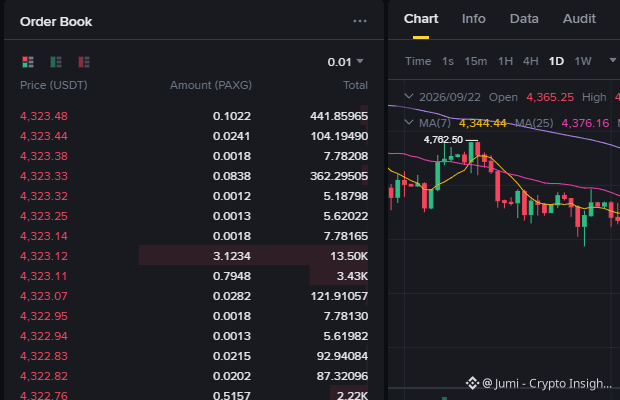
According to a report by Japan’s Kyodo News, a senior Iranian official recently said that Iran has conveyed clear conditions to the Trump administration: if the U.S. lifts the military blockade of its ports, Iran will reopen the Strait of Hormuz within “seven days.” At the same time, market risk aversion and energy pricing quickly saw unusual moves. Spot gold surged by more than $20 within 15 minutes to $4,310 per ounce, while WTI crude and Brent crude both fell by nearly $1, trading at $91.80 per barrel and $97.38 per barrel, respectively.
From a game-theory perspective, this statement signals a positive shift in the geopolitical situation—from extreme tightness toward a negotiating window. Although gold rose in the short term due to the momentum pulse from the news flow, the direct pullback in crude oil indicates that market expectations for disruption risks in the energy supply chain are cooling. The introduction of a seven-day deadline implies there is meaningful communication and room for bargaining between the two sides, and the likelihood of phased easing has risen significantly.
Technically, crude oil failed to hold above the high-level resistance and quickly retreated, effectively easing pressure from a potential second uptick in macro inflation. As long as a de-escalation path emerges for the Hormuz Strait crisis, the oil-price decline will directly improve global liquidity expectations and reduce the risk premium on long-end government bond yields, delivering an immediate effect in suppressing input-driven inflation caused by commodities.
For the crypto market, the easing of inflation expectations combined with the cooling of extreme geopolitical risks forms a typical Risk-on sentiment recovery structure. As the risk premium shifts from traditional safe assets toward liquidity markets, core crypto assets such as $BTC are likely to see capital flows return driven by a renewed appetite for risk, further strengthening the certainty of a bottoming rebound in the short term.📊
#Geopolitics #OilMarket #GoldPrice #CryptoTrading
From a game-theory perspective, this statement signals a positive shift in the geopolitical situation—from extreme tightness toward a negotiating window. Although gold rose in the short term due to the momentum pulse from the news flow, the direct pullback in crude oil indicates that market expectations for disruption risks in the energy supply chain are cooling. The introduction of a seven-day deadline implies there is meaningful communication and room for bargaining between the two sides, and the likelihood of phased easing has risen significantly.
Technically, crude oil failed to hold above the high-level resistance and quickly retreated, effectively easing pressure from a potential second uptick in macro inflation. As long as a de-escalation path emerges for the Hormuz Strait crisis, the oil-price decline will directly improve global liquidity expectations and reduce the risk premium on long-end government bond yields, delivering an immediate effect in suppressing input-driven inflation caused by commodities.
For the crypto market, the easing of inflation expectations combined with the cooling of extreme geopolitical risks forms a typical Risk-on sentiment recovery structure. As the risk premium shifts from traditional safe assets toward liquidity markets, core crypto assets such as $BTC are likely to see capital flows return driven by a renewed appetite for risk, further strengthening the certainty of a bottoming rebound in the short term.📊
#Geopolitics #OilMarket #GoldPrice #CryptoTrading