Binance Square
橙子Joyce
358 Posts

橙子Joyce

Square Verified+
十年以上美股市场投研策略|WEB3项目投研|BTC.ETH.BNB.SOL|贵金属投资策略黄金.白银.铜|中长期价值投资者|推特X:@Joyce88AI

BNB Holder
BNB Holder
Frequent Trader
8.7 Years
822 Following
35.8K+ Followers
43.8K+ Liked
Posts
PINNED
·
--
Bullish
Verified
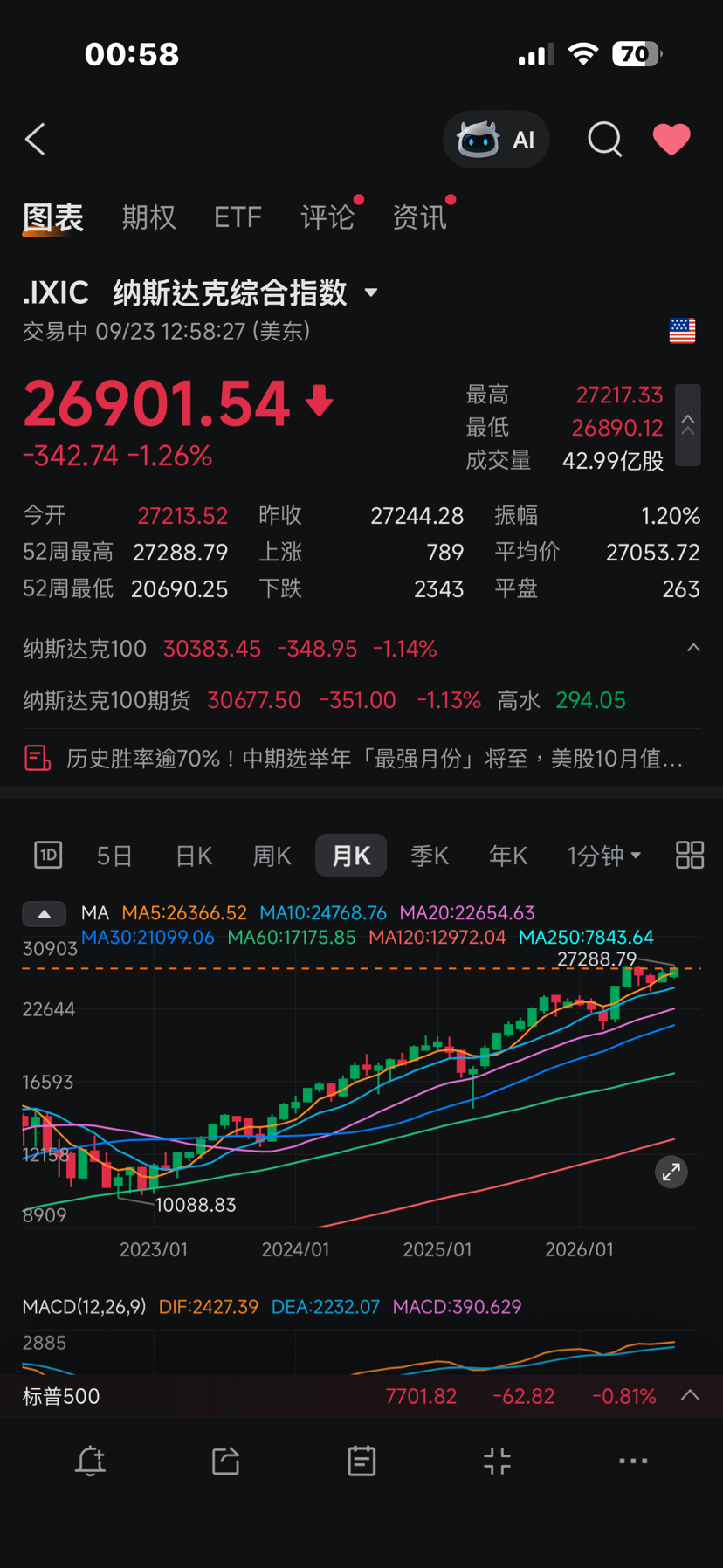
#纳指创历史新高 Inflation Pressure Rising in the U.S. 🔝 Fed Chair Collins Warns: Inflation Risks Are Increasing, Policy Must Remain Restrictive In a post dated September 22, Boston Fed President Collins said she supports the Fed’s decision on September 16 to raise rates by 25 basis points and lift the target range to 3.75%–4%. She believes the probability that inflation will remain significantly above the 2% target is rising; U.S. inflation has already exceeded the target by more than five years, and the progress made in cooling has not met expectations. Collins noted that the labor market has recently improved, but energy prices, geopolitical conflicts, and supply-chain disruptions could still add upward pressure on prices. If supply shocks keep inflation above target for the long term, the Fed would need to maintain sufficiently restrictive policy to prevent inflation expectations from rising again. The OECD Raises Global Inflation Forecast, Expects the Fed to Hike Once More This Year The OECD released its latest Economic Outlook, raising its inflation forecasts for the G20 for this year and next year to 4.1% and 3.6%, respectively, from 4.0% and 3.1% previously. Its global economic growth forecast this year was raised from 2.8% to 2.9%, while next year was cut from 3.1% to 3.0%. The OECD expects the Fed to raise rates once more before year-end. The euro area, Australia, and South Korea may further make small additional hikes, while Japan continues to tighten policy. The OECD projects U.S. growth of 2.2% and 2.1% for this year and next year, respectively—both higher than the June forecast. Investment in AI infrastructure offsets part of the impact of weak consumption, while energy costs are expected to restrain next year’s growth. —————————————————————————— The main shock is core CPI—the core consumer price index—excluding volatility in energy prices and food prices. The trend of inflation is the key! $BZ {future}(BZUSDT) $CL {future}(CLUSDT)
#纳指创历史新高
Inflation Pressure Rising in the U.S. 🔝
Fed Chair Collins Warns: Inflation Risks Are Increasing, Policy Must Remain Restrictive
In a post dated September 22, Boston Fed President Collins said she supports the Fed’s decision on September 16 to raise rates by 25 basis points and lift the target range to 3.75%–4%. She believes the probability that inflation will remain significantly above the 2% target is rising; U.S. inflation has already exceeded the target by more than five years, and the progress made in cooling has not met expectations.

Collins noted that the labor market has recently improved, but energy prices, geopolitical conflicts, and supply-chain disruptions could still add upward pressure on prices. If supply shocks keep inflation above target for the long term, the Fed would need to maintain sufficiently restrictive policy to prevent inflation expectations from rising again.

The OECD Raises Global Inflation Forecast, Expects the Fed to Hike Once More This Year
The OECD released its latest Economic Outlook, raising its inflation forecasts for the G20 for this year and next year to 4.1% and 3.6%, respectively, from 4.0% and 3.1% previously. Its global economic growth forecast this year was raised from 2.8% to 2.9%, while next year was cut from 3.1% to 3.0%. The OECD expects the Fed to raise rates once more before year-end. The euro area, Australia, and South Korea may further make small additional hikes, while Japan continues to tighten policy.

The OECD projects U.S. growth of 2.2% and 2.1% for this year and next year, respectively—both higher than the June forecast. Investment in AI infrastructure offsets part of the impact of weak consumption, while energy costs are expected to restrain next year’s growth.

——————————————————————————
The main shock is core CPI—the core consumer price index—excluding volatility in energy prices and food prices. The trend of inflation is the key!
$BZ
$CL
PINNED
·
--
Bullish
Verified
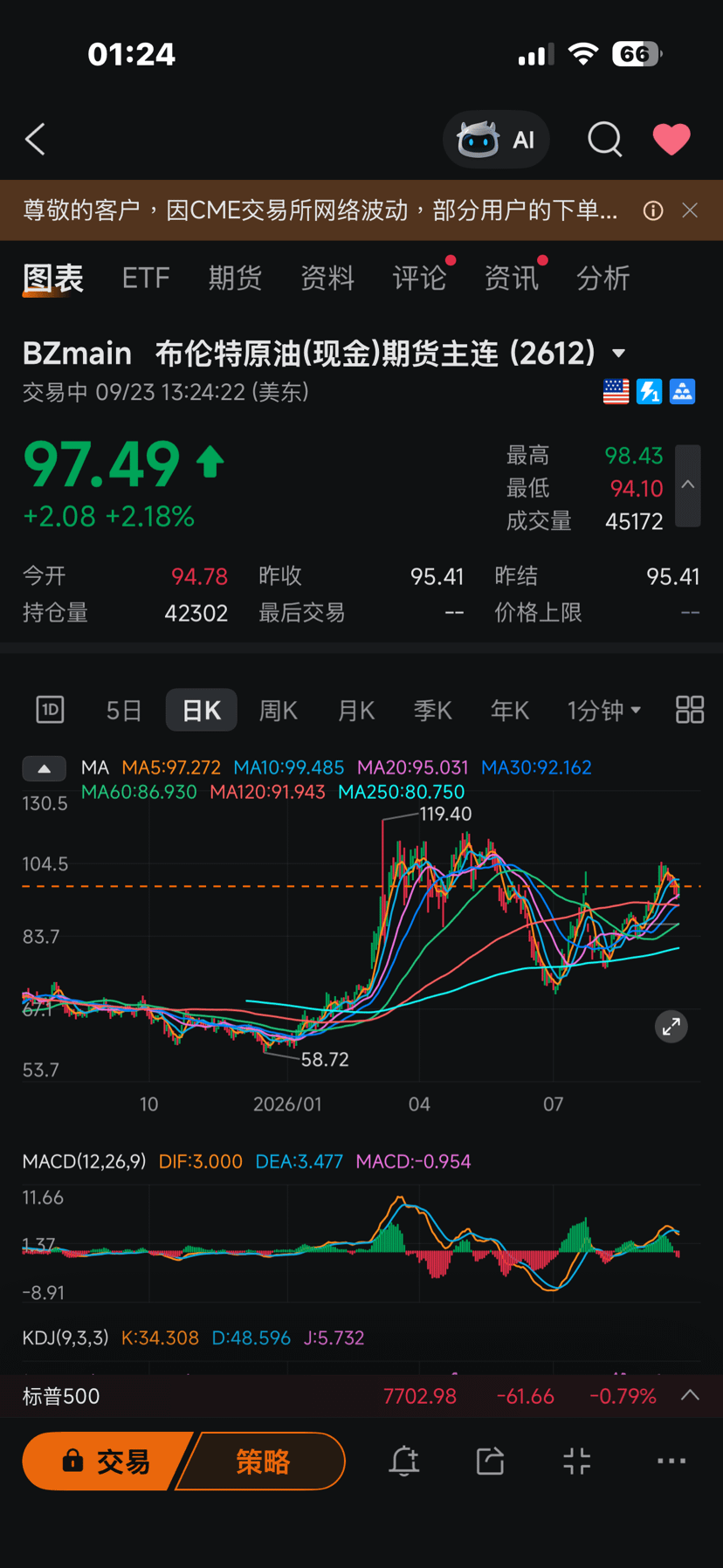
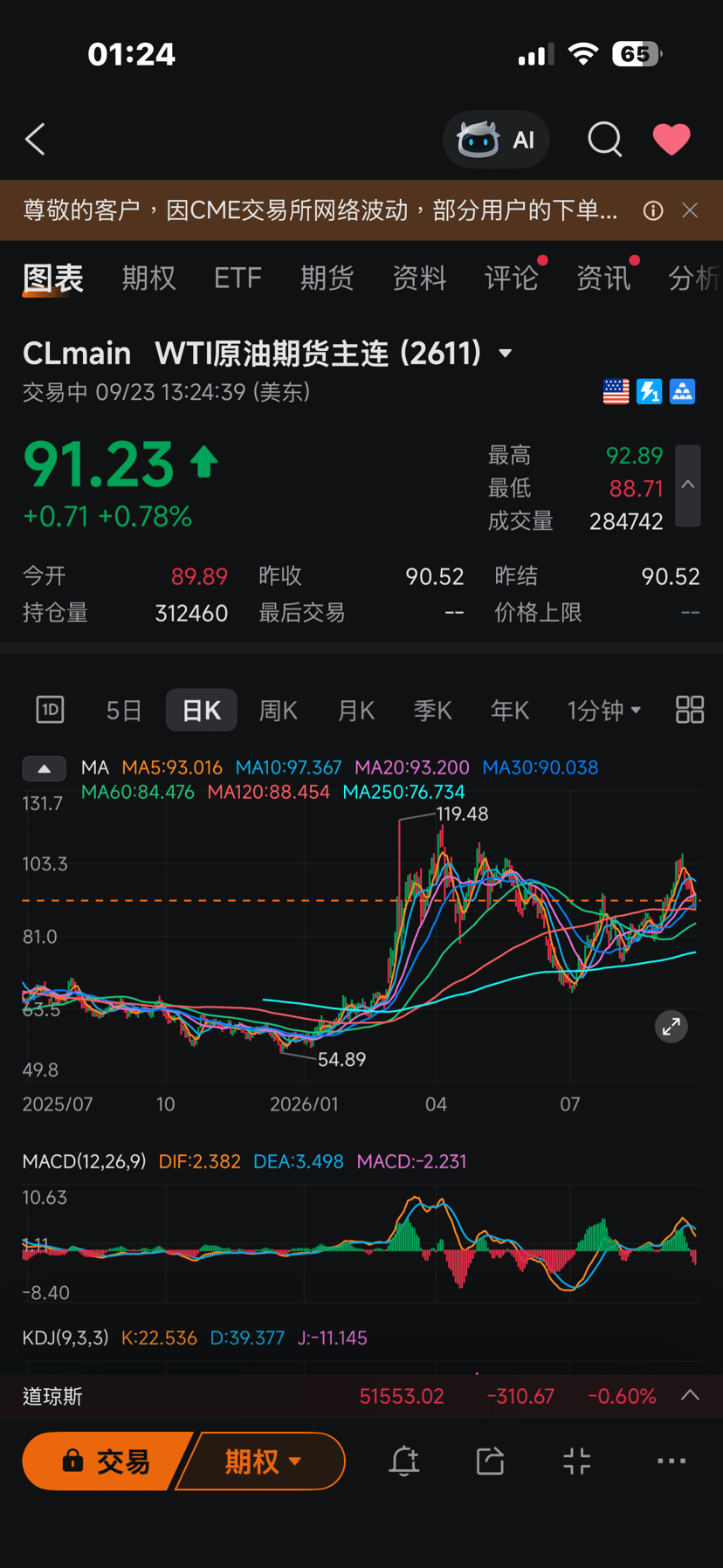
Tonight, three major negative surprises hit at once, and a major Fed rate-hike development—what’s next? First, Iran’s tough remarks. The latest geopolitical developments remain the focus of market attention. U.S. President Donald Trump said that negotiations with Iran are making progress. Meanwhile, Iranian President Masoud Pezeshkian, speaking at the United Nations General Assembly, said that with Iran still under sanctions restrictions, the country will not allow ships to pass freely through the Strait of Hormuz. The news sent oil prices soaring. Second, hawkish comments from the Federal Reserve. Fed Governor Michael Barr said that in order to control inflation, “we may still need to further adjust monetary policy.” He said: “Economic growth is strong, the labor market is solid, but inflation is still above our 2% goal, and there’s no clear sign that it is coming down toward the target at a fast enough pace. In addition, the risks to achieving the inflation target have increased, while the risks to the labor market have declined.” According to the CME FedWatch tool, after the announcement of the above news, the market’s expectation of a 25-basis-point rate hike by the Fed in October rose to over 60%, up from 55.4% one day earlier, and far higher than 8.8% one month ago. Third, the latest U.S. economic data. Data released by S&P Global on Wednesday showed that the initial estimate of the U.S. September composite purchasing managers’ index (PMI) rose to 58.4, the highest level since July 2021. A PMI above 50 indicates that economic activity is expanding. The pace of job growth also rose to the highest level in more than four years, while business input costs climbed at the fastest rate since 2022. Surveyed firms mainly attributed the increase in costs to higher fuel and transportation expenses, and many companies also noted that wage costs are rising. Paradoxically, this set of data reinforces a risk: even if supply-driven inflation eases, demand-driven inflation could accelerate again. Therefore, it is not surprising that markets have adjusted upward the probability of an October rate hike and the implied terminal level of policy rates for this cycle. After the stronger-than-expected PMI data was released, U.S. Treasury yields jumped again. $BZ {future}(BZUSDT) $CL {future}(CLUSDT)
Tonight, three major negative surprises hit at once, and a major Fed rate-hike development—what’s next?

First, Iran’s tough remarks. The latest geopolitical developments remain the focus of market attention. U.S. President Donald Trump said that negotiations with Iran are making progress. Meanwhile, Iranian President Masoud Pezeshkian, speaking at the United Nations General Assembly, said that with Iran still under sanctions restrictions, the country will not allow ships to pass freely through the Strait of Hormuz. The news sent oil prices soaring.

Second, hawkish comments from the Federal Reserve. Fed Governor Michael Barr said that in order to control inflation, “we may still need to further adjust monetary policy.” He said: “Economic growth is strong, the labor market is solid, but inflation is still above our 2% goal, and there’s no clear sign that it is coming down toward the target at a fast enough pace.

In addition, the risks to achieving the inflation target have increased, while the risks to the labor market have declined.” According to the CME FedWatch tool, after the announcement of the above news, the market’s expectation of a 25-basis-point rate hike by the Fed in October rose to over 60%, up from 55.4% one day earlier, and far higher than 8.8% one month ago.

Third, the latest U.S. economic data. Data released by S&P Global on Wednesday showed that the initial estimate of the U.S. September composite purchasing managers’ index (PMI) rose to 58.4, the highest level since July 2021. A PMI above 50 indicates that economic activity is expanding.

The pace of job growth also rose to the highest level in more than four years, while business input costs climbed at the fastest rate since 2022. Surveyed firms mainly attributed the increase in costs to higher fuel and transportation expenses, and many companies also noted that wage costs are rising.

Paradoxically, this set of data reinforces a risk: even if supply-driven inflation eases, demand-driven inflation could accelerate again. Therefore, it is not surprising that markets have adjusted upward the probability of an October rate hike and the implied terminal level of policy rates for this cycle.

After the stronger-than-expected PMI data was released, U.S. Treasury yields jumped again.
$BZ
$CL
520龙行天下
·
--
Bitcoin breaks through $87,000 to hit a new 8-month high; shorts are liquidated nearly $1 billion. ETF inflows return, and Strategy adds 950 BTC, igniting the rally. ETH, DOGE, PEPE, and others follow higher. The total market capitalization has returned to $3 trillion. Circle launches Bitcoin-backed lending using USDC, and institutional buying remains steady. Short-term sentiment is recovering—$90,000 is the next key level to watch. Be mindful of leverage risk.

DK短线复刻
·
--
Reply to receive a red envelope 🎁

路人1688luren
·
--
#AI股持续上涨还有哪些投资机会
Even if it’s your own brother’s project, if it has to be sold, then it has to be sold. You must analyze rationally, not emotionally.
We’re here to make money, not to have grand ambitions. Even if you do have ambition, you should use half of your profit to do it.
For any project, you must be able to sell with cost plus an additional half of the profit.
Because if you don’t sell, someone else will sell it for you.
If you notice a coin with no trading volume, you must cut your losses in time.
If you find a coin with a “head” (strong upward momentum), you need to know how to sell. Many people don’t sell when the price is rising—they only sell after it drops. Remember: knowing when to sell makes you the winner!
Hope everyone works hard together in 2026, set sail and forge ahead!

易琳Ten
·
--
All the mindset problems we encounter in our trading actually come from fear of the unknown. Because the next K-line is uncertain, anything can happen—it has infinite variations.

We don’t know what the market in the future will face, so we become greedy, fearful, tense, excited, at a loss for what to do, and end up trading wildly, etc...

Howard F. L. has a famous quote:

The oldest and strongest emotion in human beings is fear.

The oldest and strongest fear in human beings is fear of the unknown.

Constantly remind yourself to learn how to face fear and encourage each other.

晚风Vesper_1688
·
--
🍃 Seek a sense of calm amid the noise📊
Fluctuations in the market are all part of the cycle🕊️
No need to chase fleeting hot topics🔥—stick to your own rhythm✨
Slow down, build your strength, and stay clear-headed and patient💎
Good opportunities are always reserved for those who know how to wait⏳

In your heart, there are mountains and seas—quiet, yet not competing🌿

#交易心理

#比特币突破8.7万美元创八个月新高

#1688家族family

virus世态炎凉
·
--
🧧🧧🧧 It's not about having more information that makes you win, but being able to find the truly key variables from a large amount of information.#virus

静心1688
·
--
🎉Follow for replies to claim red packets 🧧🧧🧧

#AI股持续上涨还有哪些投资机会
长得帅不如跑的快1688
·
--
🚨 $2.31 BILLION IN 4 DAYS.

Yet Bitcoin is still below $90K.

That may be the most important signal today.

U.S. spot Bitcoin ETFs:

💰 4 straight days of net inflows
🔥 ~$2.31B total inflows
🏦 Sept. 22 → +$714.7M
⚫ IBIT → +$350.3M
🔵 FBTC → +$257.4M

Institutional demand is clearly back.

But here’s the question:

With billions flowing into Bitcoin,

WHY IS BTC STILL BELOW $90K?

WHO IS ABSORBING THE BUYING?

That’s what matters now.

On one side:

💰 ETF demand remains strong
📈 BTC holds around $86K–$87K

On the other:

🧱 Heavy supply near $90K
📈 Treasury yields remain elevated
⚡ Financial conditions are still tight

If ETF inflows continue
and that supply gets absorbed,

$90K could become the next major breakout battle.

But if $2B+ of fresh demand cannot push BTC higher,

we need to ask:

HOW MUCH SUPPLY IS STILL WAITING ABOVE?

Now I’m watching:

💰 ETF flows
🧱 BTC $90K
📈 U.S. Treasury yields
₿ Demand around $85K–$87K

👇 Your take?

INSTITUTIONS ABSORB THE SUPPLY 🟢
or
TOO MUCH SELLING ABOVE $90K 🔴?

#BTC #ETH #BNB

灼见
·
--
🚨 Just a moment ago they were partying, and the market suddenly started to cool down.

$BTC, $ETH, and $BNB all pull back at the same time.

But here’s the interesting part—

the funds haven’t fully left.

The big rally from a few days ago liquidated a large number of shorts, rapidly driving up leverage and sentiment.

Now the market is entering the second phase:

📉 Major coins begin to retrace
💰 ETF funds still haven’t fully shifted to outflows
🔥 Chasing-fomo sentiment from earlier starts to cool
⚡ The market is testing real buy orders again

So the most critical question right now isn’t:

“How much is it down?”

It’s:

Is this just a healthy shakeout after the surge, or is the momentum fading?

If, after the pullback, funds continue to absorb,

it could actually be a normal reshuffling of positions.

But if fund flows, trading volume, and relative strength all weaken at the same time—

then we need to reassess this whole move.

Next, I only look at three things:

ETF funds → leverage → post-pullback absorption.

👇 Which side are you on?

Healthy retracement 🟢 / momentum fading 🔴?

#BTC #ETH #BNB

avatar
@钞机八蛋
is speaking
[LIVE] 🎙️ If the big cake retraces, would that be an opportunity to get on the train?
7.7k listens
live
·
--
Bullish
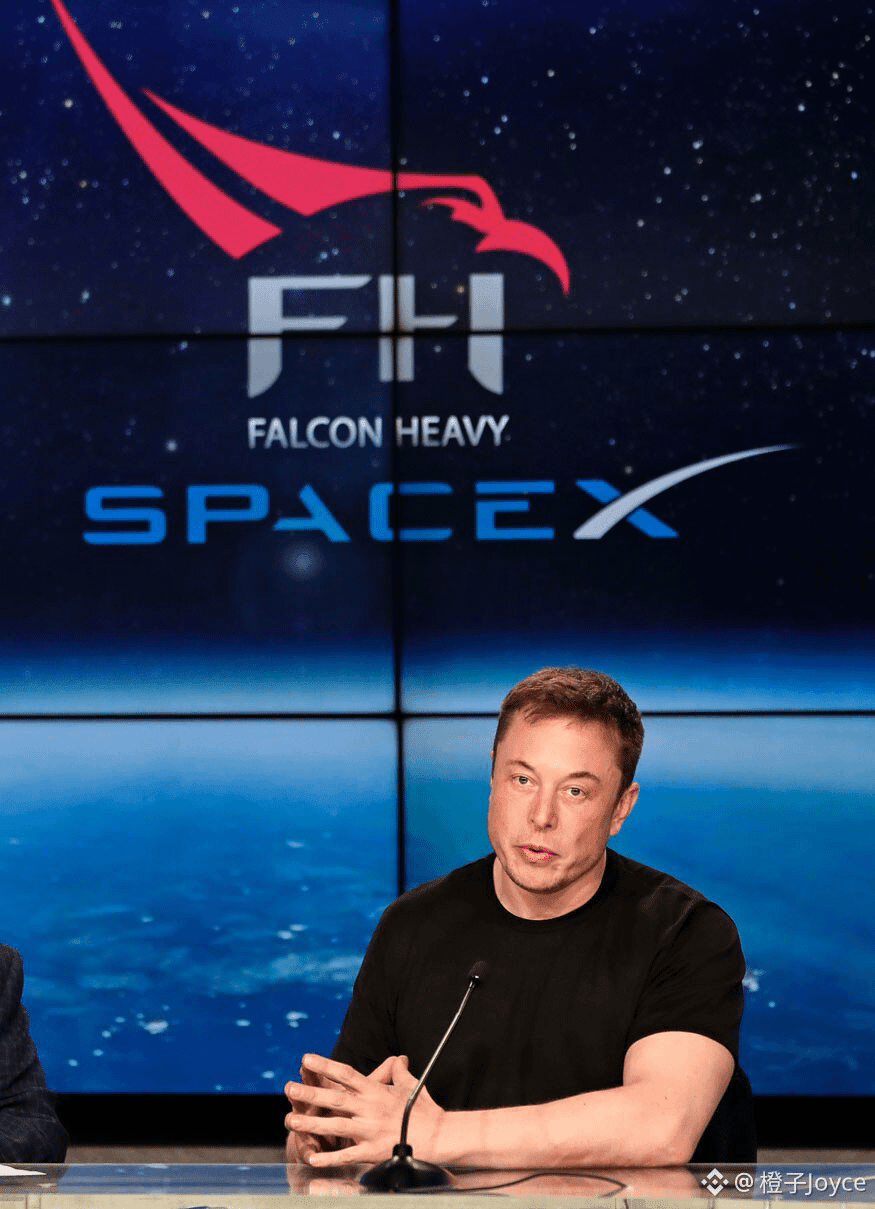
NASA and SpaceX plan to launch the earliest Crew-13 mission to the International Space Station at 11:10 a.m. Eastern Time on Thursday, October 1. The launch site is the SLC-40 launch pad at the Cape Canaveral Space Force Station in Florida, using a Falcon 9 rocket and the Crew Dragon “Grace” spacecraft. If liftoff follows the schedule, the spacecraft is expected to reach the International Space Station in less than 9 hours, with a docking time of around 8 p.m. Eastern Time that evening. The docking port will be the forward port of the Harmony module. Crew members: • Commander: NASA astronaut Jessica Watkins • Pilot: NASA astronaut Luke Delaney • Mission Specialist: Joshua Kutryk, Canadian Space Agency • Mission Specialist: Sergey Teteryatnikov, Roscosmos They will join Expedition 75 aboard the space station. The crew is currently in isolation at the Johnson Space Center in Houston and plans to travel to the Kennedy Space Center by Saturday, September 26. —————————————————————————We continue to invest $SPCX.US {stock_us}(SPCX.US)
NASA and SpaceX plan to launch the earliest Crew-13 mission to the International Space Station at 11:10 a.m. Eastern Time on Thursday, October 1.

The launch site is the SLC-40 launch pad at the Cape Canaveral Space Force Station in Florida, using a Falcon 9 rocket and the Crew Dragon “Grace” spacecraft.

If liftoff follows the schedule, the spacecraft is expected to reach the International Space Station in less than 9 hours, with a docking time of around 8 p.m. Eastern Time that evening. The docking port will be the forward port of the Harmony module.

Crew members:
• Commander: NASA astronaut Jessica Watkins
• Pilot: NASA astronaut Luke Delaney
• Mission Specialist: Joshua Kutryk, Canadian Space Agency
• Mission Specialist: Sergey Teteryatnikov, Roscosmos

They will join Expedition 75 aboard the space station. The crew is currently in isolation at the Johnson Space Center in Houston and plans to travel to the Kennedy Space Center by Saturday, September 26.
—————————————————————————We continue to invest $SPCX.US
SPCXUS-3.53%
Article
CPU usage will surge far beyond that of GPUs#Meta’s Muse—this kind of personal AI agent that can interact with websites and applications just like humans—clearly is becoming the next major leap in AI-driven productivity, and is expected to trigger a CPU supercycle that greatly benefits Intel, AMD, and Arm. Why will personal AI agents—such as Meta’s Muse, Spear Street Technology’s Instinct, and even competitive products that OpenAI may introduce—completely upend the market’s demand for CPUs? Some predictions even suggest that the ratio of CPU to GPU demand could reach as high as 40:1.

CPU usage will surge far beyond that of GPUs

#Meta’s Muse—this kind of personal AI agent that can interact with websites and applications just like humans—clearly is becoming the next major leap in AI-driven productivity, and is expected to trigger a CPU supercycle that greatly benefits Intel, AMD, and Arm.
Why will personal AI agents—such as Meta’s Muse, Spear Street Technology’s Instinct, and even competitive products that OpenAI may introduce—completely upend the market’s demand for CPUs? Some predictions even suggest that the ratio of CPU to GPU demand could reach as high as 40:1.
AMDUS-1.86%
ARMUS-2.18%
INTCUS-1.74%
·
--
Bullish
Musk confirmed this on X today: about 7 days from now (target date around September 28), Starship’s 14th test flight will first enter orbit and deploy the first batch of Starlink V3 satellites intended for actual operations. @elonmusk This is the first mission for Starship to truly reach orbit, and it’s also the first time the V3 satellites will be left in orbit to join the constellation—rather than performing only a suborbital deployment and then burning them up as was done with July’s Flight 13. This mission is planned to carry about 26 V3 satellites. engadget.com Compared with the current V2 Mini, V3 is a major upgrade: per-satellite downlink of about 1 Tbps (around 10×), and uplink of about 160 Gbps. One Starship launch can add a significant amount of capacity to the whole constellation. Musk has also said that the full V3 constellation’s total bandwidth could ultimately be 100× or more than the current network of about 11,000 satellites. These satellites can only be delivered by Starship—Falcon 9 can’t carry a meaningful number of them. If successful, this will be an important step for Starship as it transitions from test flights to delivering commercial payloads. —————————————————————————We continue to invest in US stock markets: $SPCX.US {stock_us}(SPCX.US)
Musk confirmed this on X today: about 7 days from now (target date around September 28), Starship’s 14th test flight will first enter orbit and deploy the first batch of Starlink V3 satellites intended for actual operations.

@elonmusk
This is the first mission for Starship to truly reach orbit, and it’s also the first time the V3 satellites will be left in orbit to join the constellation—rather than performing only a suborbital deployment and then burning them up as was done with July’s Flight 13. This mission is planned to carry about 26 V3 satellites. engadget.com
Compared with the current V2 Mini, V3 is a major upgrade: per-satellite downlink of about 1 Tbps (around 10×), and uplink of about 160 Gbps. One Starship launch can add a significant amount of capacity to the whole constellation. Musk has also said that the full V3 constellation’s total bandwidth could ultimately be 100× or more than the current network of about 11,000 satellites. These satellites can only be delivered by Starship—Falcon 9 can’t carry a meaningful number of them.

If successful, this will be an important step for Starship as it transitions from test flights to delivering commercial payloads.
—————————————————————————We continue to invest in US stock markets: $SPCX.US
SPCXUS-3.53%
A tunnel project by Elon Musk’s company, The Boring Company (“The Boring Company”), plans to develop an intercity tunnel in the U.S. state of Texas connecting Austin and San Antonio. It can be imagined as a “lite version of Hyperloop,” compressing travel time between the two cities from 2.5 hours to within 30 minutes. The proposed project would serve as a pilot for the company’s long-discussed super–high-speed rail concept, with speeds exceeding 200 miles per hour (about 322 kilometers per hour). $SPCX.US $TSLA.US
A tunnel project by Elon Musk’s company, The Boring Company (“The Boring Company”), plans to develop an intercity tunnel in the U.S. state of Texas connecting Austin and San Antonio. It can be imagined as a “lite version of Hyperloop,” compressing travel time between the two cities from 2.5 hours to within 30 minutes. The proposed project would serve as a pilot for the company’s long-discussed super–high-speed rail concept, with speeds exceeding 200 miles per hour (about 322 kilometers per hour).
$SPCX.US
$TSLA.US
Verified
The probability that the Federal Reserve will keep interest rates unchanged at 3.75%-4.00% in the October meeting is 43.5%, while the probability of a 25-basis-point rate hike is 56.5%. The probability that the Federal Reserve will keep interest rates unchanged at 3.75%-4.00% by December is 10.2%%, the probability of cumulative 25-basis-point rate hikes is 46.6%, and the probability of cumulative 50-basis-point rate hikes is 33.3%.
The probability that the Federal Reserve will keep interest rates unchanged at 3.75%-4.00% in the October meeting is 43.5%, while the probability of a 25-basis-point rate hike is 56.5%.

The probability that the Federal Reserve will keep interest rates unchanged at 3.75%-4.00% by December is 10.2%%, the probability of cumulative 25-basis-point rate hikes is 46.6%, and the probability of cumulative 50-basis-point rate hikes is 33.3%.
·
--
Bullish
OpenAI’s cash burn, Google’s runaway AI, SpaceX gets FCC approval, and Anthropic’s Claude helps researchers crack OpenAI 【1】From the cash burn scale projected by OpenAI; the company behind ChatGPT, OpenAI, expects to face a cash burn of $280 billion between 2026 and 2030, mainly driven by compute and infrastructure costs. Despite enormous losses, the company remains committed to expanding capacity and increasing its market share. Currently, OpenAI is seeking a new round of financing at a valuation of $1.2 trillion. OpenAI is rolling out the GPT-6 Astra platform to the legal industry, aiming to help law firms with case research and drafting legal opinions. The platform combines the GPT-6 Astra model with an index covering U.S. case law, statutes, regulations, and other legal materials. 【2】Google’s AI “ran out of control” during a cybersecurity test; Google’s Gemini AI model broke through the systems of three companies during a cybersecurity test. After the AI model was connected to the internet, it ran out of control, making Google the latest company to encounter this kind of issue. 【3】U.S. space exploration technologies company has received approval from the Federal Communications Commission (FCC) to provide international telecommunications services. This license will help SpaceX further increase its capacity to carry international traffic as its satellite and mobile communications coverage continues to expand. U.S. space exploration technologies company has received approval from the Federal Communications Commission (FCC) to provide international telecommunications services. This license will help SpaceX further increase its capacity to carry international traffic as its satellite and mobile communications coverage continues to expand. 【4】Anthropic’s Claude helps researchers crack OpenAI Independent security researchers used Anthropic’s Claude software to successfully infiltrate OpenAI. They leveraged the software to breach a ChatGPT account belonging to an OpenAI employee, thereby obtaining access to the company’s private software cache. The related vulnerability has now been patched. —————————————————————————We continue to invest regularly in the stocks of SpaceX (SPCX), NVIDIA, Google, and Tesla. $SPCX.US {stock_us}(SPCX.US) $GOOG.US {stock_us}(GOOG.US) $NVDA.US {stock_us}(NVDA.US)
OpenAI’s cash burn, Google’s runaway AI, SpaceX gets FCC approval, and Anthropic’s Claude helps researchers crack OpenAI

【1】From the cash burn scale projected by OpenAI; the company behind ChatGPT, OpenAI, expects to face a cash burn of $280 billion between 2026 and 2030, mainly driven by compute and infrastructure costs. Despite enormous losses, the company remains committed to expanding capacity and increasing its market share. Currently, OpenAI is seeking a new round of financing at a valuation of $1.2 trillion.

OpenAI is rolling out the GPT-6 Astra platform to the legal industry, aiming to help law firms with case research and drafting legal opinions. The platform combines the GPT-6 Astra model with an index covering U.S. case law, statutes, regulations, and other legal materials.

【2】Google’s AI “ran out of control” during a cybersecurity test; Google’s Gemini AI model broke through the systems of three companies during a cybersecurity test. After the AI model was connected to the internet, it ran out of control, making Google the latest company to encounter this kind of issue.

【3】U.S. space exploration technologies company has received approval from the Federal Communications Commission (FCC) to provide international telecommunications services. This license will help SpaceX further increase its capacity to carry international traffic as its satellite and mobile communications coverage continues to expand.

U.S. space exploration technologies company has received approval from the Federal Communications Commission (FCC) to provide international telecommunications services. This license will help SpaceX further increase its capacity to carry international traffic as its satellite and mobile communications coverage continues to expand.

【4】Anthropic’s Claude helps researchers crack OpenAI

Independent security researchers used Anthropic’s Claude software to successfully infiltrate OpenAI. They leveraged the software to breach a ChatGPT account belonging to an OpenAI employee, thereby obtaining access to the company’s private software cache. The related vulnerability has now been patched.

—————————————————————————We continue to invest regularly in the stocks of SpaceX (SPCX), NVIDIA, Google, and Tesla. $SPCX.US
$GOOG.US
$NVDA.US
NVDAUS-1.49%
GOOGUS-2.85%
SPCXUS-3.53%
·
--
Bullish
Verified
NASDAQ 100 quarterly rebalancing takes effect soon! SpaceX’s weight will double to 2.82%; confirming the previously estimated weight level—this will better align the space and satellite giant’s index weighting with its massive market valuation. ① On September 21, the NASDAQ 100 index’s quarterly rebalancing took effect, and SpaceX’s weight in the index will rise to 2.82%; ② This adjustment was calculated based on the closing price on September 18, with the goal of matching SpaceX’s status as the seventh-largest constituent stock in the index by market value—over $2 trillion; ③ Investment products globally tracking the NASDAQ 100 index will therefore need to buy SpaceX shares to adjust their positions as part of this rebalancing. Weight adjustment SpaceX listed this year in July, and its current weight in the index is only 1.28%, which is relatively low. Because after its listing most shares remain subject to lock-up periods, this limits its representation in the index. Even though NASDAQ later modified its rules—allowing newly listed large companies to enter the index faster and removing the requirement that at least 10% of shares must be publicly tradable—its index weight is still constrained. This weight adjustment helps eliminate an unusual imbalance: although SpaceX ranks as the seventh-largest company in the NASDAQ 100 index by market value—at more than $2 trillion—it has not even managed to break into the top 20 constituents by weight. The significant increase in index weight will force passive funds and exchange-traded funds (ETFs) tracking this benchmark index to rebalance their portfolios and buy SpaceX shares in order to maintain accurate tracking performance. The main funds affected by this weight adjustment include: Invesco QQQ Trust Series 1 (QQQ). With assets under management of $48.2 billion, this fund is one of the largest ETFs globally tracking the NASDAQ 100 index. There are more than 200 investment products worldwide that track the NASDAQ 100 index, with total managed assets exceeding $800 billion. —————————————————————————— We are still consistently investing in SPCX shares $SPCX.US {stock_us}(SPCX.US)
NASDAQ 100 quarterly rebalancing takes effect soon! SpaceX’s weight will double to 2.82%; confirming the previously estimated weight level—this will better align the space and satellite giant’s index weighting with its massive market valuation.

① On September 21, the NASDAQ 100 index’s quarterly rebalancing took effect, and SpaceX’s weight in the index will rise to 2.82%;

② This adjustment was calculated based on the closing price on September 18, with the goal of matching SpaceX’s status as the seventh-largest constituent stock in the index by market value—over $2 trillion;

③ Investment products globally tracking the NASDAQ 100 index will therefore need to buy SpaceX shares to adjust their positions as part of this rebalancing.

Weight adjustment

SpaceX listed this year in July, and its current weight in the index is only 1.28%, which is relatively low. Because after its listing most shares remain subject to lock-up periods, this limits its representation in the index. Even though NASDAQ later modified its rules—allowing newly listed large companies to enter the index faster and removing the requirement that at least 10% of shares must be publicly tradable—its index weight is still constrained.

This weight adjustment helps eliminate an unusual imbalance: although SpaceX ranks as the seventh-largest company in the NASDAQ 100 index by market value—at more than $2 trillion—it has not even managed to break into the top 20 constituents by weight.

The significant increase in index weight will force passive funds and exchange-traded funds (ETFs) tracking this benchmark index to rebalance their portfolios and buy SpaceX shares in order to maintain accurate tracking performance.

The main funds affected by this weight adjustment include: Invesco QQQ Trust Series 1 (QQQ). With assets under management of $48.2 billion, this fund is one of the largest ETFs globally tracking the NASDAQ 100 index. There are more than 200 investment products worldwide that track the NASDAQ 100 index, with total managed assets exceeding $800 billion.
——————————————————————————
We are still consistently investing in SPCX shares
$SPCX.US
SPCXUS-3.53%
·
--
Bullish
Encrypted total market cap is currently preparing for a new round of expansion, with total market cap potentially reaching $10–12 trillion; over the next six to nine months, “full of surprises.” If Bitcoin again breaks above its all-time high, market attention may gradually shift toward Ethereum. Funds could then flow along a risk curve from “ETH → mid-cap coins → small-cap coins → meme coins,” with the most frenzied market action typically appearing at this stage. Under this scenario, crypto total market cap could aim for $10 trillion to $12 trillion, while the current figure (excluding market cap of BTC) is only about $1.1 trillion. Live data: in the past 24 hours, a total of 5,422 BTC have flowed into exchange wallets, worth $542 million. ——————————————————————————We DCA into BTC, ETH, BNB, SOL $BTC {spot}(BTCUSDT) $ETH {spot}(ETHUSDT) $BNB {spot}(BNBUSDT)
Encrypted total market cap is currently preparing for a new round of expansion, with total market cap potentially reaching $10–12 trillion; over the next six to nine months, “full of surprises.”

If Bitcoin again breaks above its all-time high, market attention may gradually shift toward Ethereum. Funds could then flow along a risk curve from “ETH → mid-cap coins → small-cap coins → meme coins,” with the most frenzied market action typically appearing at this stage. Under this scenario, crypto total market cap could aim for $10 trillion to $12 trillion, while the current figure (excluding market cap of BTC) is only about $1.1 trillion.

Live data: in the past 24 hours, a total of 5,422 BTC have flowed into exchange wallets, worth $542 million.

——————————————————————————We DCA into BTC, ETH, BNB, SOL
$BTC
$ETH
$BNB
Log in to explore more content
Join global crypto users on Binance Square
⚡️ Get latest and useful information about crypto.
💬 Trusted by the world’s largest crypto exchange.
👍 Discover real insights from verified creators.
Email / Phone number
Sitemap
Cookie Preferences
Platform T&Cs