

#Meta’s Muse—this kind of personal AI agent that can interact with websites and applications just like humans—clearly is becoming the next major leap in AI-driven productivity, and is expected to trigger a CPU supercycle that greatly benefits Intel, AMD, and Arm.
Why will personal AI agents—such as Meta’s Muse, Spear Street Technology’s Instinct, and even competitive products that OpenAI may introduce—completely upend the market’s demand for CPUs? Some predictions even suggest that the ratio of CPU to GPU demand could reach as high as 40:1.
As the name suggests, Meta’s Muse is a personal AI agent that can carry out multi-step tasks on your behalf to achieve specific goals—including opening a cloud browser, browsing the web like a human, and even continuing to handle miscellaneous work in the background after you close the app. More importantly, Meta is continually expanding the available list of “connectors.” These integration interfaces can connect Muse with various applications and services, including third-party ones, unlocking entirely new capabilities along the way.
Related report: If Meta’s Muse personal agent scales up to 100 million users, then under ideal conditions it would need 1.58 million AMD Ryzen CPUs, 800 PB of memory (RAM), and 10,000 PB of solid-state drives (SSDs)
To address privacy concerns, Muse runs on a dedicated standalone cloud computer—a Confidential Virtual Machine—which includes its own browser to securely host your data and credentials. The second layer of security is called Sentinel, which continuously monitors the runtime environment to ensure the agent does not complete any transaction without Sentinel’s approval and your explicit confirmation. Meta currently provides up to 100 million free Tokens per week, with paid subscription tiers for heavy users starting at $20 per month.
This personal AI agent quickly sparked a frenzy, even making Amazon feel threatened. A typical example is that this online retail giant has just banned Muse from shopping on its website, despite Meta clearly clarifying that Muse will never see any passwords or payment details. It seems that in the AI space, the best proof you’ve succeeded is how fast potential competitors shut down your service to protect their moat.
Of course, Muse isn’t the only personal agent that’s blowing up right now. Instinct, launched by Spear Street Technology, is different: it has no traditional app or control panel—you just interact with it via text messages (iMessage or WhatsApp) and phone calls. It can connect to your email, communication software, calendar, location, screen, audio, and other devices/accounts, and it uses always-on cloud computing with preloaded credentials and browser access to carry out real-world tasks for you. Its productivity use cases range from booking or changing flights and restaurants, to medical appointments, as well as buying groceries or tickets.
What’s more, there are ongoing rumors that OpenAI may launch its own Muse competitor as soon as this week, especially after Sam Altman hinted last week that there would be a wave of product releases.
So why do personal AI agents create such a huge boost to CPU demand from companies like Intel, AMD, and Arm?
The reason is that agents like Muse require massive cloud-based virtual machines (VMs). Since these resident environments need to stay running and active even after the user closes the app, they require continuous CPU compute power to manage the operating system, memory, and background processes.
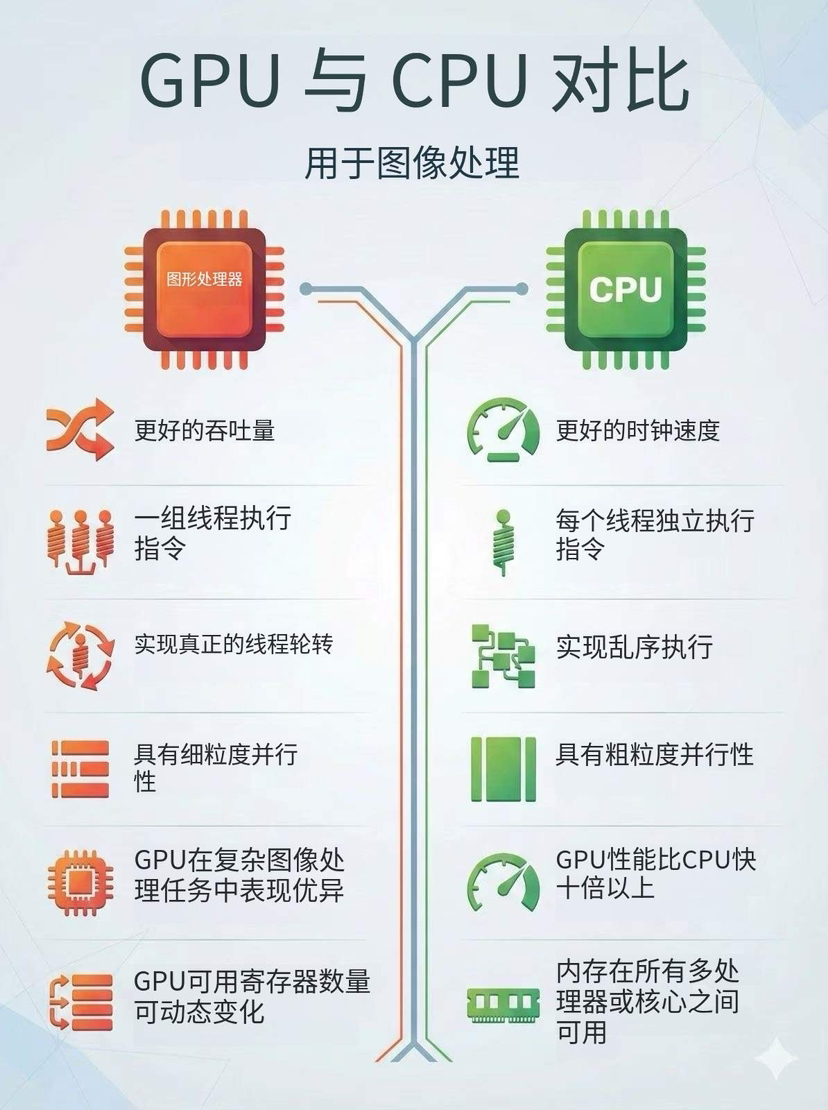
In addition, Muse can also perform complex autonomous workflows, such as cross-platform price comparisons (for a single trip, it may trigger up to 146 independent searches), automated phone calls for negotiation, and handling massive backlogged emails. To complete these tasks, the agent heavily relies on headless browser automation, API calls, and data migration—traditional software tasks that are specifically accelerated by CPU rather than GPU.
As personal agents like Muse continue to scale up, CPU demand is bound to surge explosively. Estimates suggest the CPU-to-GPU ratio will range from 4:1 to as high as 40:1! In fact, Goldman Sachs data shows that in short-term capital expenditures (CapEx), the share taken by CPUs has already surpassed that of GPUs.
Finally, Intel CEO Lip-Bu Tan further stoked market enthusiasm over a big jump in CPU demand over the weekend. He noted that Intel currently can only meet 50% of the CPU needs of leading model companies.