【CJ Market Making Notes 03/14】
When you set up the pool and hold the coins to wait for price increases, the money you make isn’t the same kind of money.
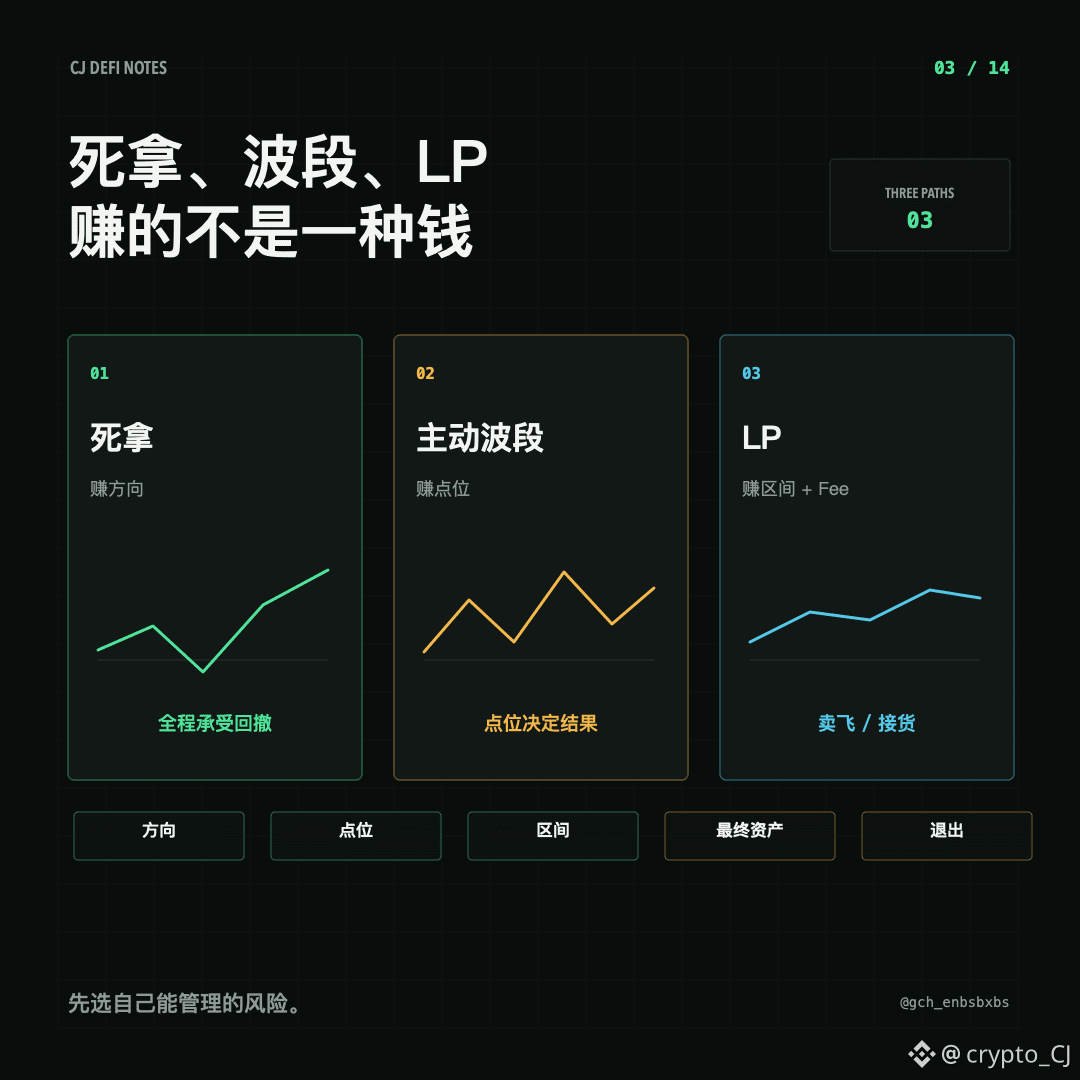
Holding coins doesn’t move—your returns mainly come from direction. If the coin rises, you profit; if it falls, you bear the entire drawdown. There’s no cash flow in the middle. Actively trading for swings can also profit from direction, but every buy and sell requires your own judgment: when to enter, when to exit, and whether you should chase it back after you sell too early (“sell high and miss”). Getting the direction right doesn’t mean you can get the timing right.
LPs break one buy-and-sell into an interval. When the price rises, the pool gradually converts the coins into U; when the price falls, the pool gradually uses U to buy coins, while also charging the Fee generated by trades. This reduces reliance on a single buy/sell point, but creates another set of problems: if the price breaks through the top of the interval, it may sell out early; if it breaks through the bottom, you might end up holding a lot of spot. After the price leaves the interval, it will stop generating trading fees.
So LPs don’t guarantee they earn more than just holding coins; they’re simply swapping one kind of risk for another. Before choosing, ask yourself: are you better at judging the big direction, or managing the interval? If, in the end, you receive the coins, are you willing to hold them? If you sell too early, can you accept it? These questions matter more than comparing your profit on a particular day.
Next article: Before becoming an LP, why you must first calculate Fee and IL?
#DeFi #LP market making
When you set up the pool and hold the coins to wait for price increases, the money you make isn’t the same kind of money.
Holding coins doesn’t move—your returns mainly come from direction. If the coin rises, you profit; if it falls, you bear the entire drawdown. There’s no cash flow in the middle. Actively trading for swings can also profit from direction, but every buy and sell requires your own judgment: when to enter, when to exit, and whether you should chase it back after you sell too early (“sell high and miss”). Getting the direction right doesn’t mean you can get the timing right.
LPs break one buy-and-sell into an interval. When the price rises, the pool gradually converts the coins into U; when the price falls, the pool gradually uses U to buy coins, while also charging the Fee generated by trades. This reduces reliance on a single buy/sell point, but creates another set of problems: if the price breaks through the top of the interval, it may sell out early; if it breaks through the bottom, you might end up holding a lot of spot. After the price leaves the interval, it will stop generating trading fees.
So LPs don’t guarantee they earn more than just holding coins; they’re simply swapping one kind of risk for another. Before choosing, ask yourself: are you better at judging the big direction, or managing the interval? If, in the end, you receive the coins, are you willing to hold them? If you sell too early, can you accept it? These questions matter more than comparing your profit on a particular day.
Next article: Before becoming an LP, why you must first calculate Fee and IL?
#DeFi #LP market making