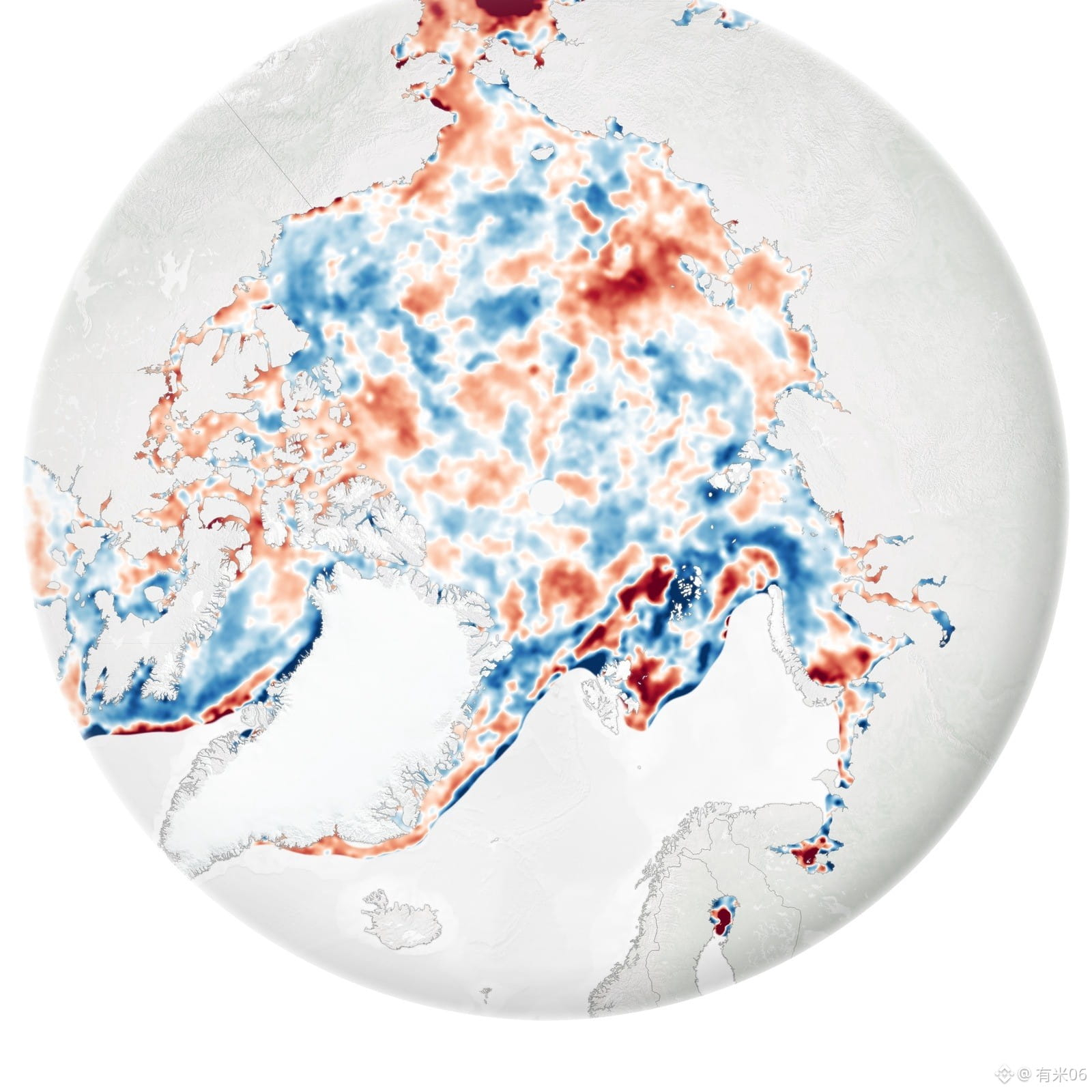
The Arctic sea ice “melting season” has been extended by about 40 days—yet over the past ten or so years, it seems to have first been checked.
Satellite records led by NASA (1979–2023): the melt season has lengthened, mainly because freeze-up happens later in autumn, not because breakup starts earlier in spring. Starting around 2010, however, the average length has roughly stabilized, while year-to-year variability has increased. Research suggests that changes in cloud cover are part of the cause—some areas receive less sunlight.
The figure is a change-rate panel from today’s NASA Earth Observatory image, showing 2010–2023—red indicates longer, blue indicates shorter. The author also cautions: north of Greenland and near the Canadian Arctic Archipelago, there is still thicker multi-year ice remaining, and if it continues to thin, another round of rapid extension may not be impossible.
Figure: NASA EO / Michala Garrison (data from Boisvert et al.)
#北极 #海冰