
周周1688
1.5k Posts

周周1688
 Square Verified+
1688品牌创始人 ‖ BNB布道者 ‖ 晚上19:00-22:00直播 ‖ KOL宣发&项目推广‖ 💗推特X:zzhou1688
High-Frequency Trader
9.1 Years
1.3K+ Following
100.9K+ Followers
157.1K+ Liked
Posts
All
Quotes
Videos
Live



心月势不可挡
·
--
🔩Working Life|Screw Tightening at Work
On the road to making a living, don’t give up your passion
We’ve got to work hard—still, don’t lose the joy ✨
On the road to making a living, don’t give up your passion
We’ve got to work hard—still, don’t lose the joy ✨

·
--
🎙️ Learn to wait patiently and find the right trading method for yourself

End
02 h 07 m 38 s
3.5k
13

寿山福禄Luffy
·
--
Does this picture look like the crypto world? Paying a devastating price for that sweet temptation—so in the crypto world, the first thing to look at is safety, and only then profit. Making money isn’t easy. Without losing money, go and earn that reliable, secure kind of money 💰


正乾商学--四条2
·
--
26.09.22 light rain
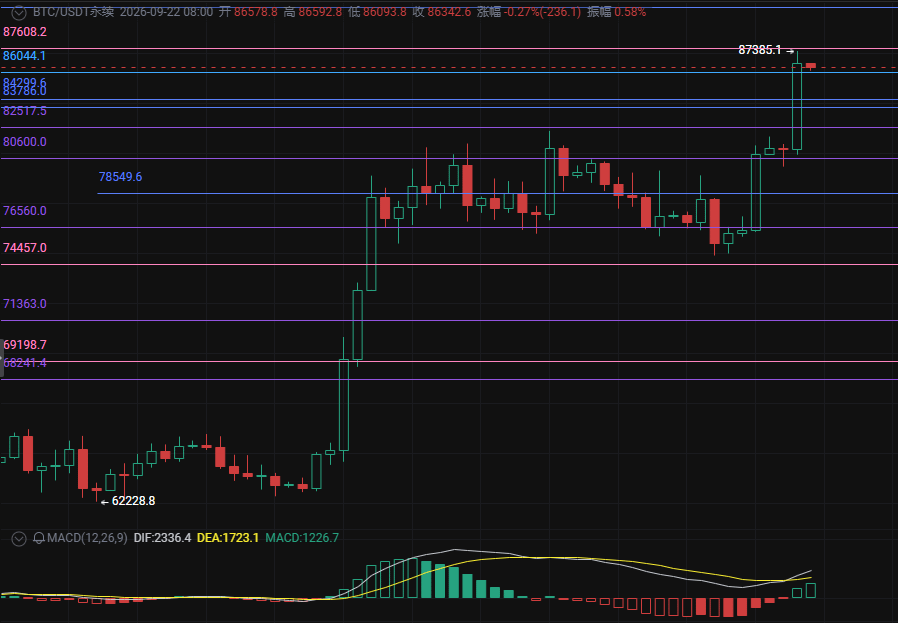
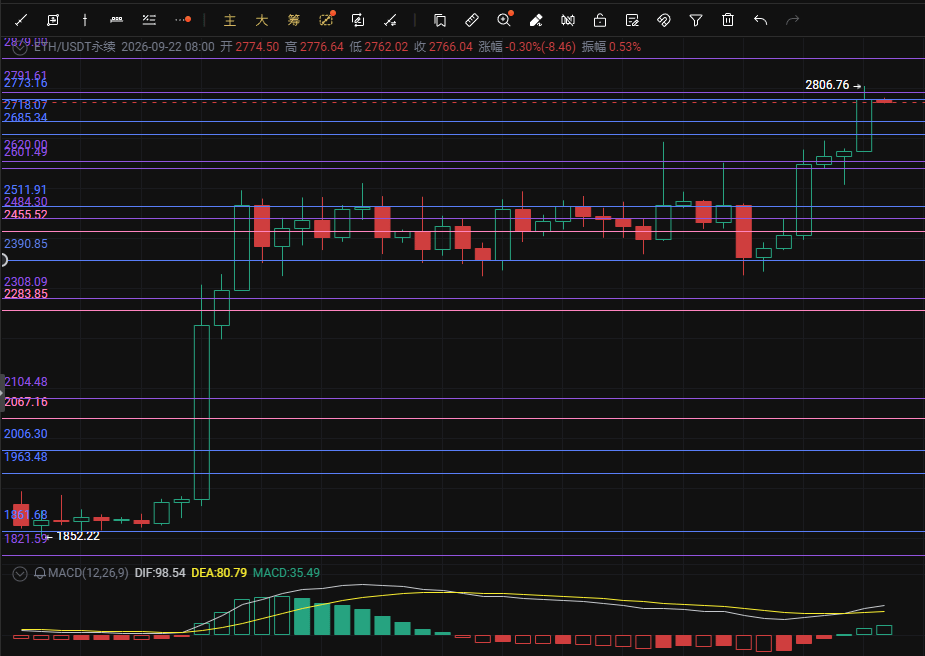
Yesterday BTC broke above 86,000 again, reached around 87,300 in the early hours, with a gain of over 7%. US spot BTC ETFs saw roughly $433M in net inflows with money staying put; Strategy also bought about 950 BTC.
This strong breakout—driven by liquidations on the short side, heightened short-term market enthusiasm, and the renewed return of ETF capital—means the next focus is whether ETF inflows will continue, and whether the price can hold above 86,000.
Recent strategy:
① Pressure zone above 86,800–87,600. Don’t chase longs; you can short temporarily, then look for a long after a pullback.
② 84,600–85,500 pullback zone. Pay close attention and wait for confirmation.
③ 83,600–84,200: relatively strong support. You can try a long position with a small size.
④ 80,600–81,300. If it breaks 82,500, and then pulls back to this zone, it’s a support level on a higher time frame and also a potential trend reversal point—be cautious, cautious, and even more cautious.
⑤ If 80,000 breaks, it suggests longs are weakening and the structure is weakening as well, with the possibility that shorts take control.
#比特币突破8.5万美元
Yesterday BTC broke above 86,000 again, reached around 87,300 in the early hours, with a gain of over 7%. US spot BTC ETFs saw roughly $433M in net inflows with money staying put; Strategy also bought about 950 BTC.
This strong breakout—driven by liquidations on the short side, heightened short-term market enthusiasm, and the renewed return of ETF capital—means the next focus is whether ETF inflows will continue, and whether the price can hold above 86,000.
Recent strategy:
① Pressure zone above 86,800–87,600. Don’t chase longs; you can short temporarily, then look for a long after a pullback.
② 84,600–85,500 pullback zone. Pay close attention and wait for confirmation.
③ 83,600–84,200: relatively strong support. You can try a long position with a small size.
④ 80,600–81,300. If it breaks 82,500, and then pulls back to this zone, it’s a support level on a higher time frame and also a potential trend reversal point—be cautious, cautious, and even more cautious.
⑤ If 80,000 breaks, it suggests longs are weakening and the structure is weakening as well, with the possibility that shorts take control.
#比特币突破8.5万美元

路人1688luren
·
--
Institutions can now borrow money using large pancakes (BTC) without having to sell.
Circle launched a new service today: institutions can use Bitcoin as collateral to borrow $USDC . The process isn’t complicated—first convert BTC into its own cirBTC (1:1 wrapped), then stake it as collateral. The loan goes through lending protocols like Morpho, and afterward it will be connected to Aave. Custody is handled by Circle National Trust, and the chain used is its own $ARC plus Ethereum.
My first reaction: this is basically opening another door for institutions that don’t want to sell their coins. Previously, if they needed cash, they had to sell; now they can pledge the coins and borrow instead. Pair that with today’s BTC price crossing 85,000 and everyone scrambling to buy—it’s a pretty delicate timing. #Circle推出机构比特币抵押借贷
Circle launched a new service today: institutions can use Bitcoin as collateral to borrow $USDC . The process isn’t complicated—first convert BTC into its own cirBTC (1:1 wrapped), then stake it as collateral. The loan goes through lending protocols like Morpho, and afterward it will be connected to Aave. Custody is handled by Circle National Trust, and the chain used is its own $ARC plus Ethereum.
My first reaction: this is basically opening another door for institutions that don’t want to sell their coins. Previously, if they needed cash, they had to sell; now they can pledge the coins and borrow instead. Pair that with today’s BTC price crossing 85,000 and everyone scrambling to buy—it’s a pretty delicate timing. #Circle推出机构比特币抵押借贷




蒋雅琪1368
·
--
This world isn’t about who’s faster
$BNB 🧧
It’s about endurance and resolve
All the beauty in the world
is worth taking time to enjoy—slowly, step by step
$BNB 🧧
It’s about endurance and resolve
All the beauty in the world
is worth taking time to enjoy—slowly, step by step


奕泽YIZZE
·
--
When there are things you cannot do, turn instead to yourself to seek the answer.


橙子Joyce
·
--
BullishThe “crypto winter” that has lasted nearly a year has come to an end, and this may mark what could be the strongest and longest bull run in cryptocurrency history.
Over the past 5 days, Bitcoin has gained more than 7%, and over the past 3 months its rise has approached 35%. From a technical standpoint, as long as the support level around $750,000 is held, bulls could push further into the $900,000 area.
This rebound comes against the backdrop of the Digital Assets Market Clarity Act failing to pass the Senate via a procedural vote. It breaks the simplistic logic that “legislative failure is a bearish signal,” and the market has begun reassessing the true impact of regulatory uncertainty.
Capital flows back: the core logic of crypto spring:
The key basis for the end of the “crypto winter” is not simply a price rebound, but a divergence between price and fundamentals.
During the recent period when crypto asset prices fell, the industry’s fundamentals did not deteriorate in tandem. On-chain activity increased, and large financial institutions such as BlackRock further participated in the digital asset market—forming a pattern of “cyclical declines in prices paired with structural improvements in fundamentals.”
It is expected that crypto asset prices may further catch up to changes in fundamentals later this year.
The $900,000 level becomes the next point to watch
On a longer time horizon, Bitcoin has still not fully exited the prior correction.
Bitcoin reached an all-time high of around $1.26 million in October last year, was then cut roughly in half, and fell to a low of about $576,000 in early July this year. Even with the strong rebound recently, the current price remains about one-third below the historical high.
This suggests that the current rebound is more like a repair phase coming out of a deep correction, rather than a confirmation that a new cycle’s all-time high has begun.
Whether Bitcoin can effectively break through the $900,000 mark will be a key observation point to test the “realness” of crypto spring:
If price meets resistance near $900,000 and pulls back, the market may need to reassess the sustainability of capital rotation;
If it breaks through on heavy volume, it will further strengthen the macro view that “the strongest and longest bull run in history” is underway.
Going forward, you can watch the Federal Reserve’s interest-rate path and where long-end U.S. Treasury yields are headed—they remain the core macro variables influencing crypto asset valuations.
——————We continue to invest via DCA in BNB, BTC, ETH, and SOL
$BTC
$BNB
$SOL
Over the past 5 days, Bitcoin has gained more than 7%, and over the past 3 months its rise has approached 35%. From a technical standpoint, as long as the support level around $750,000 is held, bulls could push further into the $900,000 area.
This rebound comes against the backdrop of the Digital Assets Market Clarity Act failing to pass the Senate via a procedural vote. It breaks the simplistic logic that “legislative failure is a bearish signal,” and the market has begun reassessing the true impact of regulatory uncertainty.
Capital flows back: the core logic of crypto spring:
The key basis for the end of the “crypto winter” is not simply a price rebound, but a divergence between price and fundamentals.
During the recent period when crypto asset prices fell, the industry’s fundamentals did not deteriorate in tandem. On-chain activity increased, and large financial institutions such as BlackRock further participated in the digital asset market—forming a pattern of “cyclical declines in prices paired with structural improvements in fundamentals.”
It is expected that crypto asset prices may further catch up to changes in fundamentals later this year.
The $900,000 level becomes the next point to watch
On a longer time horizon, Bitcoin has still not fully exited the prior correction.
Bitcoin reached an all-time high of around $1.26 million in October last year, was then cut roughly in half, and fell to a low of about $576,000 in early July this year. Even with the strong rebound recently, the current price remains about one-third below the historical high.
This suggests that the current rebound is more like a repair phase coming out of a deep correction, rather than a confirmation that a new cycle’s all-time high has begun.
Whether Bitcoin can effectively break through the $900,000 mark will be a key observation point to test the “realness” of crypto spring:
If price meets resistance near $900,000 and pulls back, the market may need to reassess the sustainability of capital rotation;
If it breaks through on heavy volume, it will further strengthen the macro view that “the strongest and longest bull run in history” is underway.
Going forward, you can watch the Federal Reserve’s interest-rate path and where long-end U.S. Treasury yields are headed—they remain the core macro variables influencing crypto asset valuations.
——————We continue to invest via DCA in BNB, BTC, ETH, and SOL
$BTC
$BNB
$SOL

慢就是快Mike
·
--
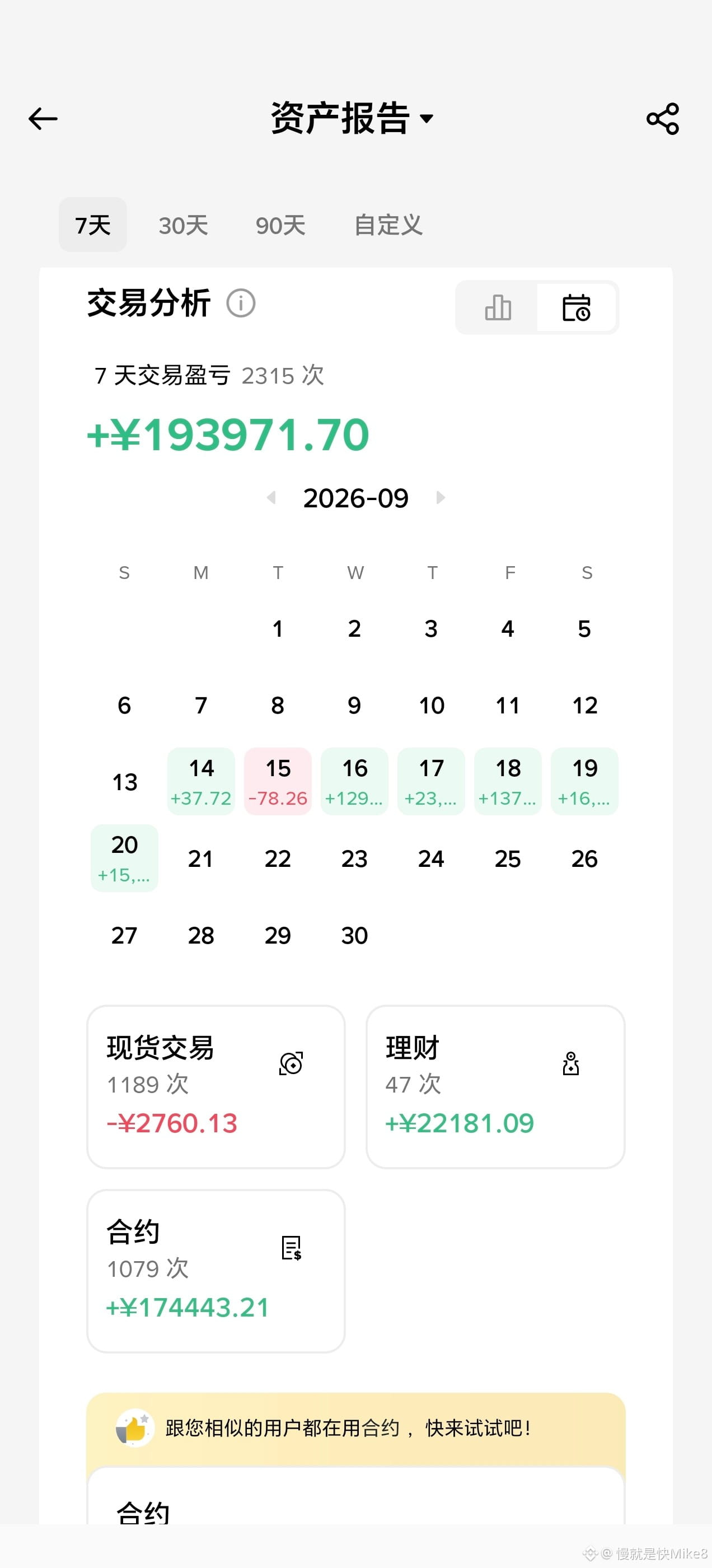
$DOGE This wave, brothers—are you feeling comfortable?!

灼见
·
--
🚨 BTC breaks through $86K.
Highest in 8 months.
But the most important question now isn’t:
“How much more can BTC rise?”
Instead, it’s:
How real is this breakout?
Over the past few days, BTC has repeatedly cleared:
₿ $80K
₿ $82K
₿ $85K
₿ $86K
At the same time:
💰 The latest trading day net inflow into US spot BTC ETFs is about $433M
🏦 Strategy bought another 950 BTC last week
📈 BTC has reclaimed key long-term moving averages
🔥 Short squeeze pressure is accelerating the breakout
So the real question is now:
Is $80K–$82K NOW SUPPORT?
Because in a truly strong market,
it’s not about prices continuing to break resistance.
It’s about:
after the breakout, key levels are no longer given back to the shorts.
If $80K–$82K truly completes the resistance→support flip,
the next bigger battle in the market may be near $89K.
But if BTC quickly falls back below $82K,
then the leverage and short-squeeze components in this rally may be larger than we think.
Right now, I’m watching:
📍 $80K–$82K support
🎯 Resistance near $89K
💰 ETF flows for the next trading day
🔥 Whether leverage is quickly building back up
👇 What do you think?
Real breakout 🟢
or
a leverage-driven move 🔴?
#BTC #ETH #BNB
Highest in 8 months.
But the most important question now isn’t:
“How much more can BTC rise?”
Instead, it’s:
How real is this breakout?
Over the past few days, BTC has repeatedly cleared:
₿ $80K
₿ $82K
₿ $85K
₿ $86K
At the same time:
💰 The latest trading day net inflow into US spot BTC ETFs is about $433M
🏦 Strategy bought another 950 BTC last week
📈 BTC has reclaimed key long-term moving averages
🔥 Short squeeze pressure is accelerating the breakout
So the real question is now:
Is $80K–$82K NOW SUPPORT?
Because in a truly strong market,
it’s not about prices continuing to break resistance.
It’s about:
after the breakout, key levels are no longer given back to the shorts.
If $80K–$82K truly completes the resistance→support flip,
the next bigger battle in the market may be near $89K.
But if BTC quickly falls back below $82K,
then the leverage and short-squeeze components in this rally may be larger than we think.
Right now, I’m watching:
📍 $80K–$82K support
🎯 Resistance near $89K
💰 ETF flows for the next trading day
🔥 Whether leverage is quickly building back up
👇 What do you think?
Real breakout 🟢
or
a leverage-driven move 🔴?
#BTC #ETH #BNB


熙熙xixi
·
--
People who trade inevitably develop a few occupational quirks.
Let me start with a few of my own:
First, my phone is always on ring— even when I sleep. I’m afraid that when the market moves, I’ll miss something if I don’t hear it. Sometimes the phone vibrates in the middle of the night, and I immediately wake up, reach for it, and check the quotes. Other times it’s just some junk text message, but I’m already awake and can’t fall back asleep for half the night.
Second, I eat extremely fast. When I was trading futures, if the market moved, I wouldn’t have time to eat at all. I’d just shove a couple of bites in and then stare at the screen. Even now, when things aren’t as tense, I still eat quickly—I can’t change it. When I have meals with friends, they’re still slowly chatting, and I’ve already finished. Then I just sit there and wait.
Third, I’m sensitive to red and green. If I go to a supermarket and see price tags that are red or green, the first thing that pops into my mind is the candlestick chart. While driving and waiting at a red light, when it turns green, the very first word that comes to mind is “it broke through.” Sounds pretty ridiculous, but it’s really a conditioned reflex.
And fourth, I don’t like talking trade with people. In real life, when others ask what I do, I say I work in internet-related things, or that I’m doing investments—I don’t get into details. It’s not that I don’t want to talk; it’s just that once I explain, nobody really understands. And when I talk about market conditions with people outside the circle, the more I talk, the more exhausting it gets.
What about you? After you started trading, what bad habit or “quirk” did you end up with?
Come chat in the room and let’s see whether everyone’s symptoms are the same.
#BinanceSquare #BTC #交易者日常 #Trading心得分享
Let me start with a few of my own:
First, my phone is always on ring— even when I sleep. I’m afraid that when the market moves, I’ll miss something if I don’t hear it. Sometimes the phone vibrates in the middle of the night, and I immediately wake up, reach for it, and check the quotes. Other times it’s just some junk text message, but I’m already awake and can’t fall back asleep for half the night.
Second, I eat extremely fast. When I was trading futures, if the market moved, I wouldn’t have time to eat at all. I’d just shove a couple of bites in and then stare at the screen. Even now, when things aren’t as tense, I still eat quickly—I can’t change it. When I have meals with friends, they’re still slowly chatting, and I’ve already finished. Then I just sit there and wait.
Third, I’m sensitive to red and green. If I go to a supermarket and see price tags that are red or green, the first thing that pops into my mind is the candlestick chart. While driving and waiting at a red light, when it turns green, the very first word that comes to mind is “it broke through.” Sounds pretty ridiculous, but it’s really a conditioned reflex.
And fourth, I don’t like talking trade with people. In real life, when others ask what I do, I say I work in internet-related things, or that I’m doing investments—I don’t get into details. It’s not that I don’t want to talk; it’s just that once I explain, nobody really understands. And when I talk about market conditions with people outside the circle, the more I talk, the more exhausting it gets.
What about you? After you started trading, what bad habit or “quirk” did you end up with?
Come chat in the room and let’s see whether everyone’s symptoms are the same.
#BinanceSquare #BTC #交易者日常 #Trading心得分享


·
--
🎙️ Build the Binance Plaza, hold BNB|On Tuesday, BTC returns to the 86,000 level, all markets stay in the green— is the bull really back? Let’s chat~

End
04 h 57 m 33 s
9.6k
37


正乾商学--四条2
·
--
Are you really suited to make a living by trading?
Part Six
⑥ Finally, ask yourself one more question
Do you really spend a lot of time every day learning and analyzing?
Many people ask me:
“Why don’t I have results even after trading for a year?”
But if you dig in carefully:
How many hours do you actually spend learning every day?
Do you do a review afterward?
Do you keep a trading log?
Do you track your win rate, profit-to-loss ratio, and maximum drawdown?
Do you analyze what kinds of market conditions you are most likely to make mistakes in?
In the end, you’ll find that:
In fact, many people don’t really do it.
So some people say:
“I’m not good at trading, so trading isn’t for me.”
I think that conclusion was reached too quickly.
You should first ask yourself:
Have I really built a trading environment that suits me?
Have I really found a trading approach that fits my personality?
Have I really put in enough time to learn?
Have I systematically verified my method?
If these questions still haven’t been resolved,
then it’s time to say:
“Trading isn’t working.”
Actually, it’s still too early.
Finally, what I want to say is:
Many people understand “successful trading” as:
Finding a magical indicator.
But in reality, truly long-term, stable trading is more like a complete system:
your income structure
+your lifestyle
+your trading
+your personality
+a trading style that suits you
+knowledge
+risk management
+mental resilience
As long as any one of these elements has been a problem for a long time,
it may eventually show up in your trading results.
So before asking:
“Can I get rich by trading?”
first ask yourself:
“Is my current life really already prepared for me to become a trader?”
This may be far more important than learning another indicator.
If you’re interested in trading, feel free to leave a comment in the comment section or join the chat room to exchange ideas and learn together and grow together!
#Paradigm披露持有ZEC #Paradigm披露持有ZEC
Part Six
⑥ Finally, ask yourself one more question
Do you really spend a lot of time every day learning and analyzing?
Many people ask me:
“Why don’t I have results even after trading for a year?”
But if you dig in carefully:
How many hours do you actually spend learning every day?
Do you do a review afterward?
Do you keep a trading log?
Do you track your win rate, profit-to-loss ratio, and maximum drawdown?
Do you analyze what kinds of market conditions you are most likely to make mistakes in?
In the end, you’ll find that:
In fact, many people don’t really do it.
So some people say:
“I’m not good at trading, so trading isn’t for me.”
I think that conclusion was reached too quickly.
You should first ask yourself:
Have I really built a trading environment that suits me?
Have I really found a trading approach that fits my personality?
Have I really put in enough time to learn?
Have I systematically verified my method?
If these questions still haven’t been resolved,
then it’s time to say:
“Trading isn’t working.”
Actually, it’s still too early.
Finally, what I want to say is:
Many people understand “successful trading” as:
Finding a magical indicator.
But in reality, truly long-term, stable trading is more like a complete system:
your income structure
+your lifestyle
+your trading
+your personality
+a trading style that suits you
+knowledge
+risk management
+mental resilience
As long as any one of these elements has been a problem for a long time,
it may eventually show up in your trading results.
So before asking:
“Can I get rich by trading?”
first ask yourself:
“Is my current life really already prepared for me to become a trader?”
This may be far more important than learning another indicator.
If you’re interested in trading, feel free to leave a comment in the comment section or join the chat room to exchange ideas and learn together and grow together!
#Paradigm披露持有ZEC #Paradigm披露持有ZEC


Log in to explore more content