


As market attention cooled on oil prices, Bitcoin rose to break above $85,000 for the first time since January.

Bitcoin (BTC) kicked off the new week at its highest level in nearly eight months, with bulls pushing the market toward $85,000.
Key points:
On Monday, the price of Bitcoin reached $85,248, the highest level since January 29.
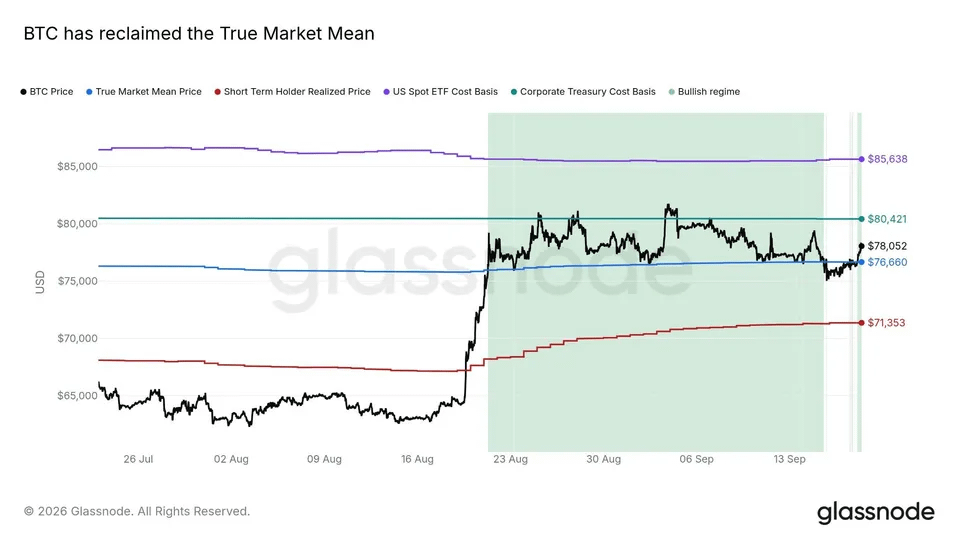
Bitcoin’s price action is nearing the breakeven point for U.S. spot Bitcoin ETF investors, approaching $86,000.
Markets are closely watching oil prices below $94 per barrel and bond yields, as talk outside is centered on U.S.-Iran war diplomacy.
Bitcoin’s weekly closing price breaks above $85,000
Bitcoin is facing a critical breakout, with the price reaching $85,000 and setting a 33-week high. After BTC/USD closed higher on Sunday’s weekly close at $81,120, it continued to rise, reaching the highest level since the week of May 4.
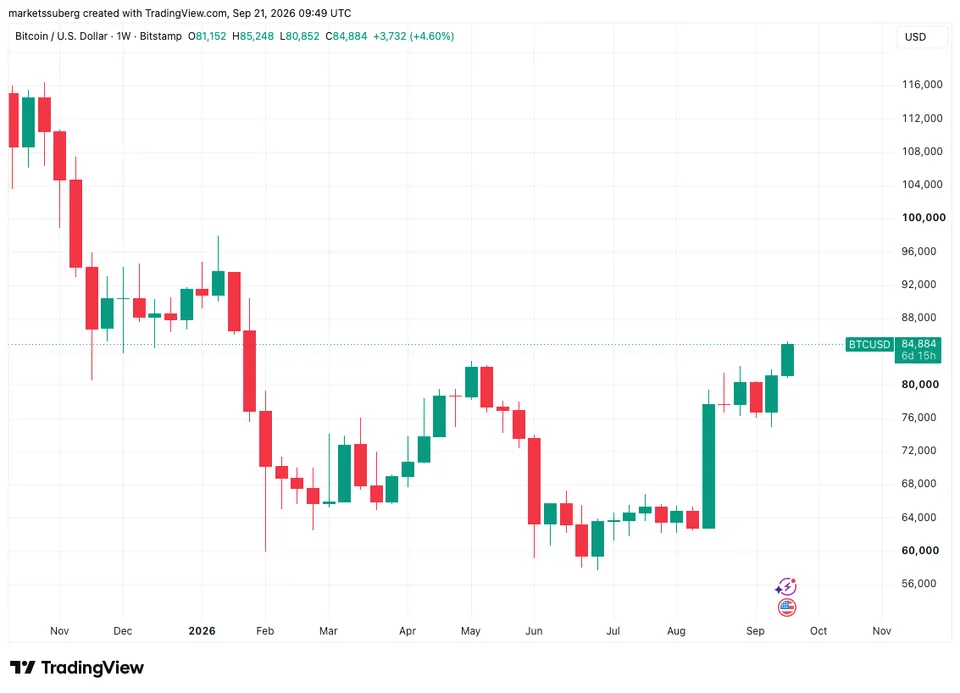
As a result, liquidations surged among crypto short positions, with the total liquidation across cryptocurrencies exceeding $600 million within 24 hours.
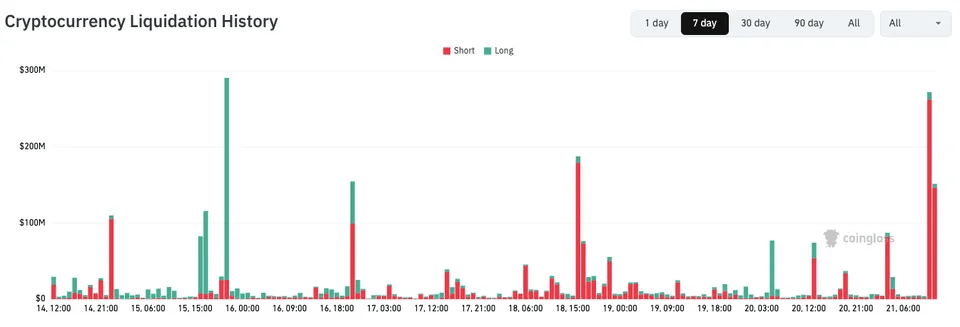
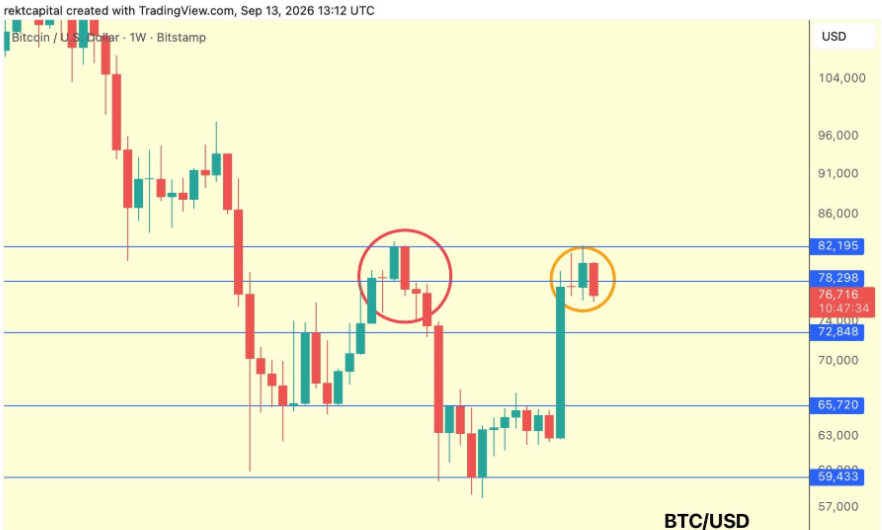
The recent rally has led many market participants to question whether the price can hold above the prior high of $82,950 set in May. Last week, bitcoin was described as facing a “critical moment” after its price briefly fell below that level.
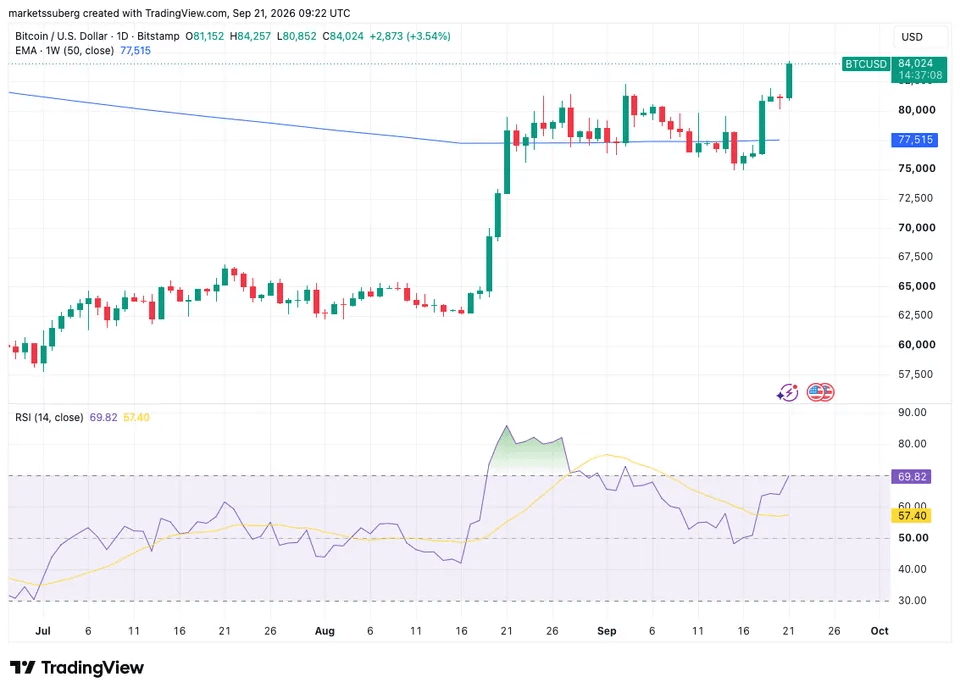
A bearish divergence appeared in the Relative Strength Index (RSI) on the daily chart: while the indicator made a new high, the price also made a new high. He said this indicates a lack of underlying momentum supporting the highs, increasing the risk of a sudden reversal.
As the bitcoin price rebounded to $84,000, the daily Relative Strength Index (RSI) has neared 70, approaching the “overbought” zone. Bitcoin has also reclaimed the 50-week moving average (EMA) at $77,769; this moving average had previously been viewed as a key prerequisite for prices to continue rising.
Bitcoin ETF investors are nearing the breakeven point
Various investor groups have also returned to overall profitability, including bitcoin corporate bonds, whose holding cost is about $80,500. Currently, the bitcoin price is nearing the cost basis of spot bitcoin ETF investors in the U.S., which stands at $85,638.
Bitcoin exchange-traded products have performed strongly this week, as investors added to their bitcoin holdings while the bitcoin price rose to $81,000. U.S. ETFs saw net inflows of $435 million on Friday, the largest single-day inflow since September 3.
Although the (CLARITY Act) failed to pass in the Senate last week, on Thursday the two major U.S. regulators—the Securities and Exchange Commission (SEC) and the Commodity Futures Trading Commission (CFTC)—advanced crypto-related policy. This boosted crypto stocks and seemed to lift investor sentiment as well, with net inflows into crypto ETFs of $159 million on the day.
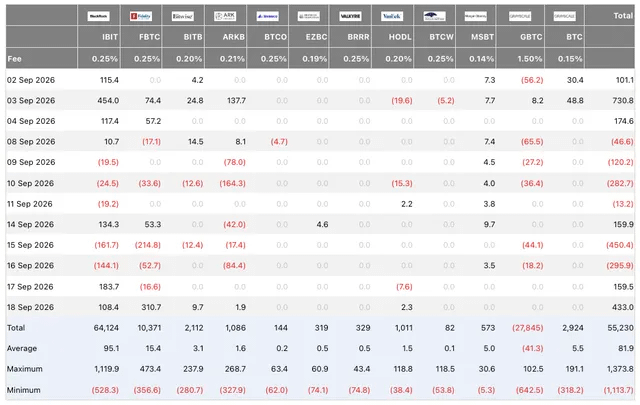
Unlike before, the largest bitcoin ETF—BlackRock’s iShares Bitcoin Trust (IBIT)—has not captured the majority share of inflows. Instead, most investors have piled into Fidelity’s Wise Origin Bitcoin Fund (FBTC), which has seen total inflows of $310 million. In its analysis of recent market dynamics, on-chain analytics platform CryptoQuant discusses this shift in the composition of net ETF inflows.
“Therefore, the key change is not just the ETF’s proactive activity, but a clear reallocation of leadership in fund flows: on September 3, IBIT’s net inflow was nearly six times that of FBTC, and by September 18, FBTC’s net inflow was nearly three times that of IBIT. ”
Tepper hinted at having talks with Iran, while oil prices fell.
This week, U.S. macroeconomic data has been relatively calm, and market focus quickly shifted to the oil market as inflation expectations for the remainder of 2026 are being revised higher.
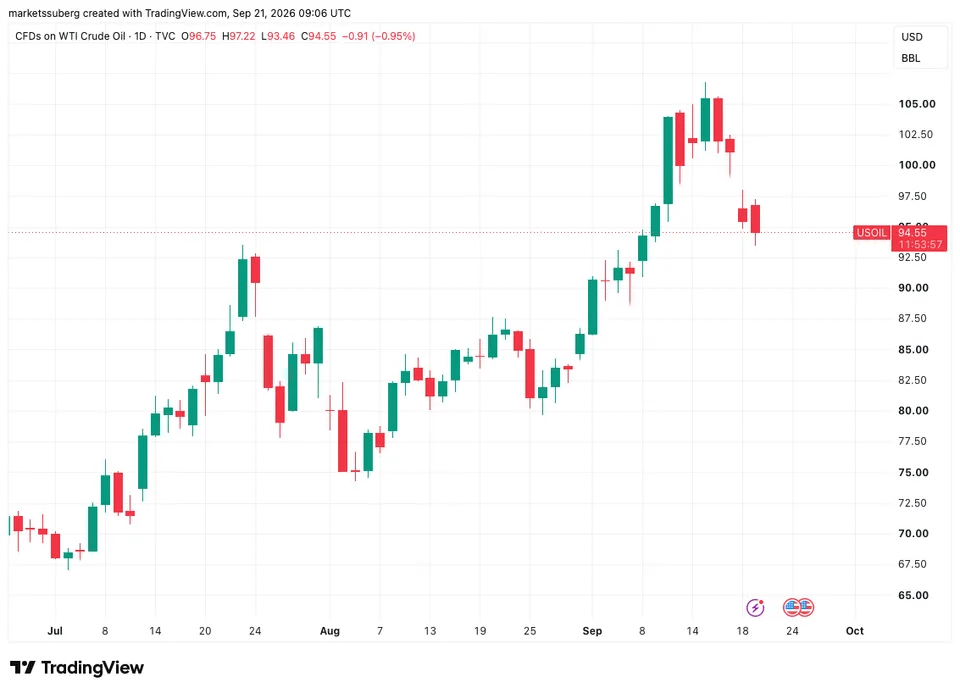
After WTI crude oil prices surged above $100 per barrel last week, they fell back below $94 on Monday, driven by hopes for new diplomatic efforts to resolve the situation in the Middle East.
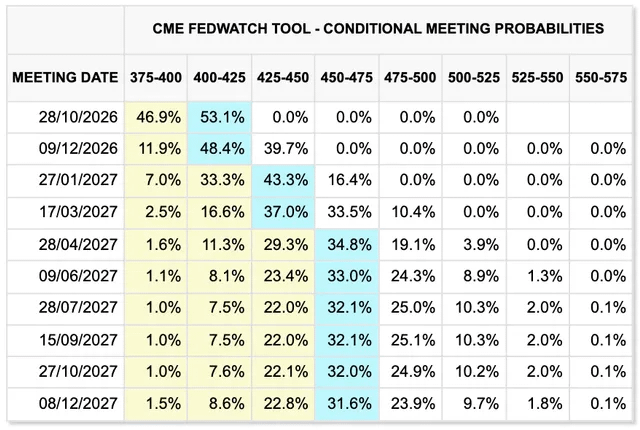
Market expectations are that the Federal Reserve will raise rates two more times in 2026.
The closure of multiple oil shipping routes has had a knock-on effect on global fuel prices. Although central banks in various countries are tightening monetary policy by raising interest rates, the full impact of the supply shock has not yet fully emerged. Last week, Saudi Arabia warned the European Union that its refineries will be unable to receive crude oil in October.
The market currently expects the Federal Reserve to raise rates again by 0.25% at its October meeting. As of Monday, the probability of that happening is 53%. CME data also shows that the likelihood of a third 0.25% rate hike by the end of the year is close to 40%.
As yields cool off, the stock market will likely sustain its upward trend.
On Monday, as oil prices dropped and borrowing costs fell, U.S. Treasury yields continued to retreat from their decades-high levels.
On Monday, the yield on the U.S. 30-year Treasury note was 5.301%, down from the 5.425% peak hit on September 11, when the yield was at its highest level since June 2004.
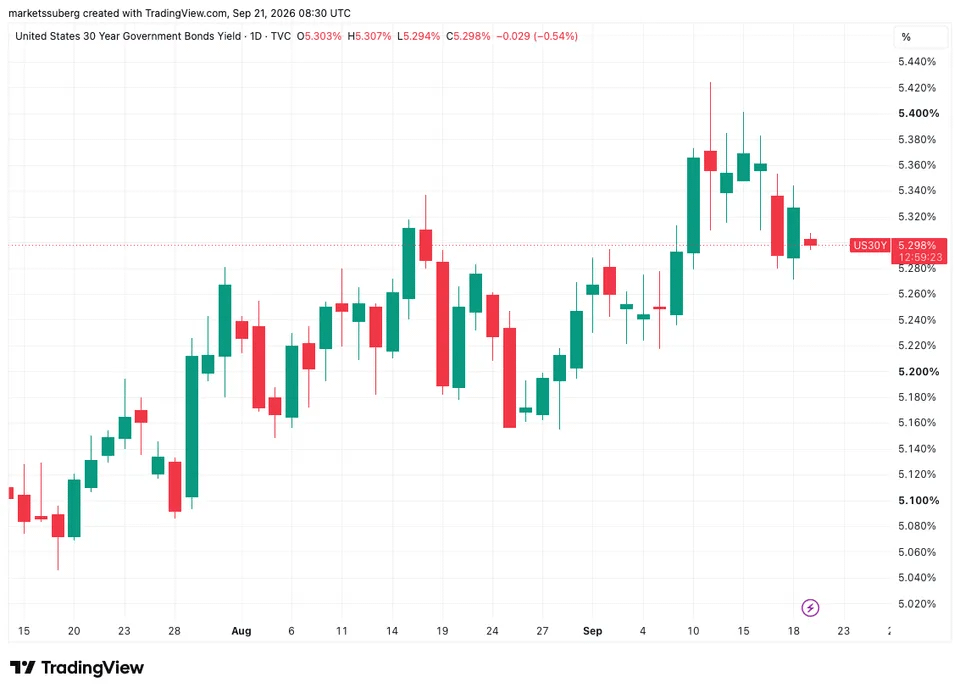
After the U.S. bond market intervention plan was announced in August, bitcoin market participants responded positively and have continued to watch for any events related to yields.
“Perhaps the market thinks these measures are unfavorable for the U.S. dollar, thereby pushing funds back into dollar-hedging instruments such as gold and bitcoin.”
In a tightening macro environment, stocks may still retain their advantages.
“Although investors are all watching the impact of the Federal Reserve’s rate-hike cycle on the S&P 500, signs of strong economic growth should help sustain companies’ earnings outlook. As long as the Federal Reserve hikes rates at a steady pace without hurting the economic growth outlook, the stock market’s upward momentum should continue.”