#solanacutstargetslottimeto250ms
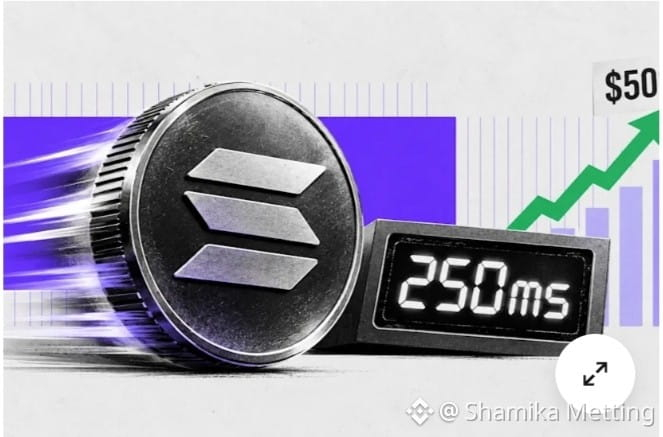
🚨 Solana reduced the targeted block time to 250 milliseconds ⚡️
The internal system clock on the Solana mainnet achieved a major leap, as the blockchain protocol managed to cut the targeted block time by 17%, from 300 milliseconds down to 250 milliseconds.
More up-to-date market data: the network can now process 4 blocks per second instead of 3.3. This leads to faster state updates and a tighter price channel around exchange events, while maintaining a high level of responsiveness for automated market maker platforms.
Pre-capacity momentum: this adjustment does not give the blockchain higher overall capacity to execute transactions. The network reduced the number of transactions allowed per block by a similar degree within the SIMD-0525 proposal in order to maintain stability. As a result, Solana can only produce smaller blocks more frequently than before.
End of 200 milliseconds: the 250-millisecond target is, in practice, a closely watched milestone. If the network can demonstrate equivalent stability while allowing the leader control window for one second without major skips, it could move to lower latency with a 200-millisecond target.
Will this development cement SOL’s position as the preferred cryptocurrency/asset for DeFi trading, or are there reasons for concern? Let’s discuss!
Please stay tuned
#SolanaCutsTargetSlotTimeTo250ms #Solana #SOL #CryptoTrading
$SOL $SAGA $ZETA
🚨 Solana reduced the targeted block time to 250 milliseconds ⚡️
The internal system clock on the Solana mainnet achieved a major leap, as the blockchain protocol managed to cut the targeted block time by 17%, from 300 milliseconds down to 250 milliseconds.
More up-to-date market data: the network can now process 4 blocks per second instead of 3.3. This leads to faster state updates and a tighter price channel around exchange events, while maintaining a high level of responsiveness for automated market maker platforms.
Pre-capacity momentum: this adjustment does not give the blockchain higher overall capacity to execute transactions. The network reduced the number of transactions allowed per block by a similar degree within the SIMD-0525 proposal in order to maintain stability. As a result, Solana can only produce smaller blocks more frequently than before.
End of 200 milliseconds: the 250-millisecond target is, in practice, a closely watched milestone. If the network can demonstrate equivalent stability while allowing the leader control window for one second without major skips, it could move to lower latency with a 200-millisecond target.
Will this development cement SOL’s position as the preferred cryptocurrency/asset for DeFi trading, or are there reasons for concern? Let’s discuss!
Please stay tuned
#SolanaCutsTargetSlotTimeTo250ms #Solana #SOL #CryptoTrading
$SOL $SAGA $ZETA