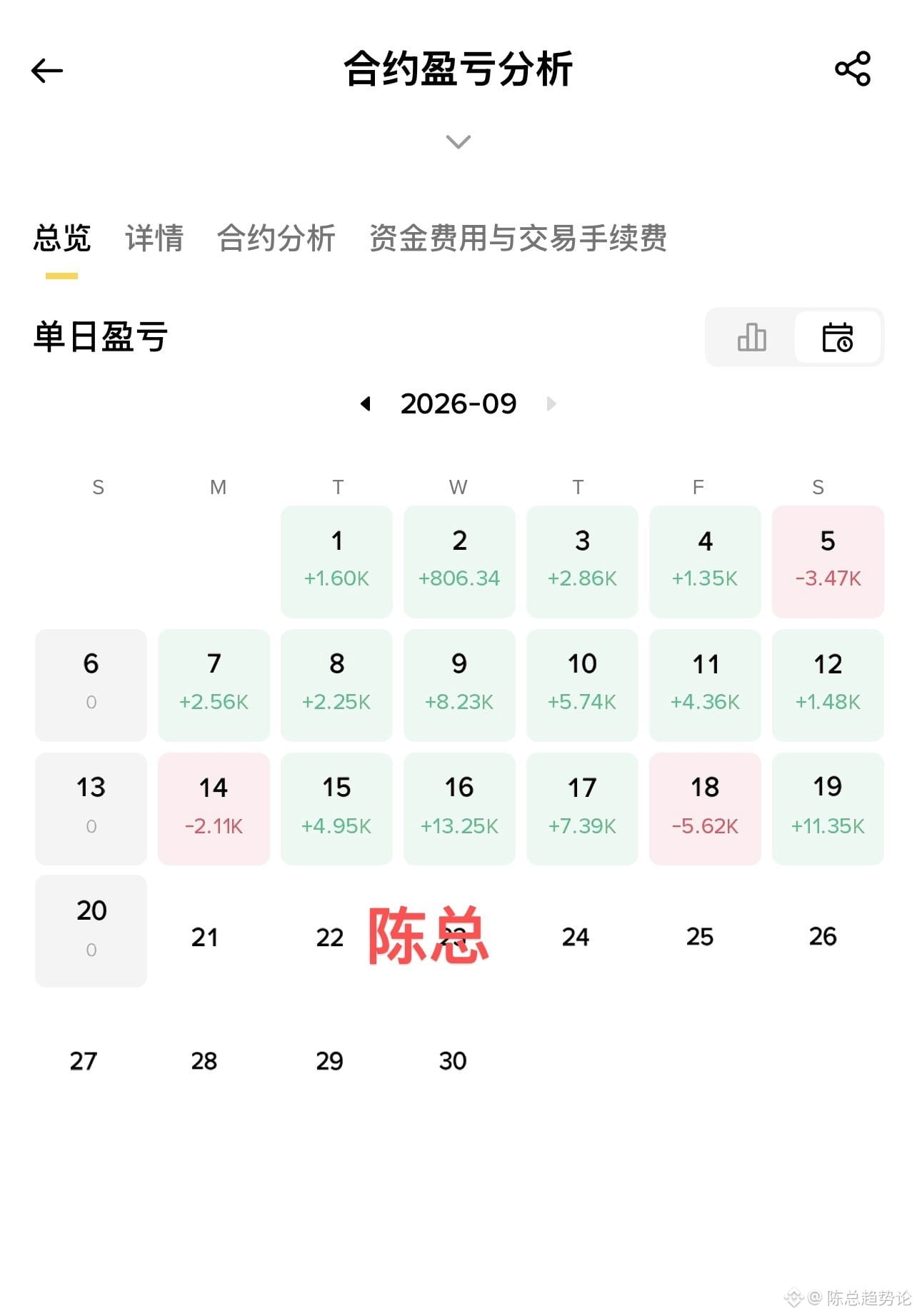
The biggest pitfall for small-capital traders—the one you’re most likely to fall into—is being so fixated on making a single trade that you think you can turn fate around in one shot.
When your account only has a few thousand USDT (U), many people don’t spend their days thinking about how to steadily accumulate gains. Instead, they obsess over how to quickly multiply by ten. The more urgently you chase speed, the more likely you are to chase high after it’s already pumped, go all-in and gamble, and constantly switch coins and tinker at random. In the end, you miss the big opportunities, and your principal gets whittled down to almost nothing.
I know a friend who trades. When he first entered, his principal wasn’t much either. Later, he managed to grow his account little by little—not because he caught some 100x miracle coin, but because he set himself an extremely practical small goal: first, steadily grow the account to 10,000 U.
The reason is simple. When your capital base is too small, what you should “fight for” is not an ultra-high return rate—you should focus on staying alive. Once your account has a foundation, position management becomes easier to implement, your margin for error increases, and you won’t get crippled by one or two bad trades.
His trading approach has always been straightforward: he doesn’t chase popular coins that have already surged to the sky. Instead, he waits and monitors in advance for new directions that are still in the low range and where capital has quietly started to build positions. When the market isn’t paying attention, he observes quietly. Only after the trend becomes clearly established does he enter—he never waits until the whole internet is calling out trades before rushing in to take the bag.
He never puts all his capital into a full position. Each time, he uses only part of the funds to test. If the direction is correct, he gradually adds. If the price action and his prediction diverge, he cuts losses immediately to lock in the loss, keeping his “ammo” for the next opportunity.
He also has a particularly steady habit: he never ties all his hopes to a single coin. After taking a wave of profits, he puts some of it in his pocket first, then turns around to look for the next certainty-driven opportunity. His account grows slowly through compounding, and he’s never fantasized about achieving financial freedom with just one trade.
The crypto market is never short of myths about a sudden overnight explosion—but for the people who truly grow small capital into a larger one, it’s never a matter of gambling your luck. It’s all about steady timing and disciplined execution.
Guard your principal, manage your positions, take profit when you earn it, admit mistakes when you lose—repeatedly putting simple rules into practice is far more likely to take you to the end than daydreaming about getting rich overnight.
When your account only has a few thousand USDT (U), many people don’t spend their days thinking about how to steadily accumulate gains. Instead, they obsess over how to quickly multiply by ten. The more urgently you chase speed, the more likely you are to chase high after it’s already pumped, go all-in and gamble, and constantly switch coins and tinker at random. In the end, you miss the big opportunities, and your principal gets whittled down to almost nothing.
I know a friend who trades. When he first entered, his principal wasn’t much either. Later, he managed to grow his account little by little—not because he caught some 100x miracle coin, but because he set himself an extremely practical small goal: first, steadily grow the account to 10,000 U.
The reason is simple. When your capital base is too small, what you should “fight for” is not an ultra-high return rate—you should focus on staying alive. Once your account has a foundation, position management becomes easier to implement, your margin for error increases, and you won’t get crippled by one or two bad trades.
His trading approach has always been straightforward: he doesn’t chase popular coins that have already surged to the sky. Instead, he waits and monitors in advance for new directions that are still in the low range and where capital has quietly started to build positions. When the market isn’t paying attention, he observes quietly. Only after the trend becomes clearly established does he enter—he never waits until the whole internet is calling out trades before rushing in to take the bag.
He never puts all his capital into a full position. Each time, he uses only part of the funds to test. If the direction is correct, he gradually adds. If the price action and his prediction diverge, he cuts losses immediately to lock in the loss, keeping his “ammo” for the next opportunity.
He also has a particularly steady habit: he never ties all his hopes to a single coin. After taking a wave of profits, he puts some of it in his pocket first, then turns around to look for the next certainty-driven opportunity. His account grows slowly through compounding, and he’s never fantasized about achieving financial freedom with just one trade.
The crypto market is never short of myths about a sudden overnight explosion—but for the people who truly grow small capital into a larger one, it’s never a matter of gambling your luck. It’s all about steady timing and disciplined execution.
Guard your principal, manage your positions, take profit when you earn it, admit mistakes when you lose—repeatedly putting simple rules into practice is far more likely to take you to the end than daydreaming about getting rich overnight.