The Islamic Revolutionary Guard Corps says the war’s geographic space can expand, and Middle East conflict boundaries are being redrawn
Geopolitical tensions in the Middle East have recently escalated significantly. The Islamic Revolutionary Guard Corps of Iran’s public statement that “there is still room for war to expand geographically” signals that the boundaries of regional conflict are being redefined. This remark is not an isolated outburst of emotion, but is embedded in the broader backdrop of deepening global great-power competition and the spillover of regional conflicts. When the potential scope of military action is no longer confined to the homeland or traditional allied circles, but is clearly aimed at a wider geographic reach, the market’s implicit assumption that the conflict is “manageable” begins to erode. At the same time, political agendas on both sides of the Atlantic are also shifting subtly. French President Emmanuel Macron’s remarks about supporting Canada to become an “associate member” of the European Union reveal a reshuffling within the Western camp in terms of security architecture and economic integration. This aggressive geopolitical posture—moving in parallel with the restructuring of Western alliance frameworks—creates the most complex mix of risks in the current macro environment. For asset pricing, this is no longer just short-term volatility driven by a single event, but a multi-layer stress test on global supply-chain resilience, the security of energy transportation corridors, and the policy independence of major economies.
At the level of specific facts, the material clearly records two key points. First, Iran’s Islamic Revolutionary Guard Corps publicly claims that, in terms of geography, the current state of war still has room to expand. This directly defines the potential direction of conflict evolution—from localized confrontation toward broader regional projection. Second, on the 20th, French President Macron issued a statement explicitly saying France supports Canada and the EU moving closer together, and it specifically supports Canada becoming an “associate member” of the EU. This timing, coupled with the stance taken by the relevant parties, indicates a non-traditional exploration within the EU regarding how to define membership, as well as a deep intention by France and Canada to bind politically and economically through integration. Although these two pieces of information appear to belong to two different domains—Middle East geopolitics and European politics—they both point to an acceleration in the reconstruction of the international order amid a backdrop of contracting global risk appetite. Iran’s stance focuses on adversarial security expansion, while France’s focuses on exclusive political and economic integration; together, they underscore the current trend toward bloc formation in international relations.
This set of facts has far-reaching and non-linear effects on asset pricing and risk appetite. First, the Iranian Revolutionary Guard Corps’ discussion of “room for geographic expansion” directly challenges the risk-premium logic for energy markets such as crude oil and natural gas. If the conflict expands from around the Persian Gulf to wider geographic regions, other critical logistics nodes beyond the Strait of Hormuz—such as Red Sea shipping routes or energy facilities along the Mediterranean coast—will face greater uncertainty. This risk is not simply a supply interruption; it effectively leads to a repricing of global energy trade routes. Market participants will need to reassess transportation costs, insurance rates, and how difficult it is to obtain alternative energy sources. This will push up the center of gravity of volatility in energy prices, and then—through inflation expectations—feed into the bond yield curve, squeezing valuation space for growth assets. Second, Macron’s statement supporting Canada as an “associate member” of the EU suggests that Western major economies are building a tighter economic-security community. The introduction of the “associate member” concept may mean that the EU and Canada will form more exclusionary arrangements with higher barriers regarding trade rules, technical standards, and supply-chain security. For multinational companies that rely on the free flow of capital globally, such deep regional integration increases compliance costs and operational complexity, which could lead to greater fragmentation in capital flows. In terms of risk appetite, investors’ pricing of “deglobalization” risk will become even more sensitive. Companies whose operations are highly concentrated in a single region or depend on complex cross-border supply chains may see their credit spreads widen, while firms with localized production capabilities and advantages in resource self-sufficiency may receive relatively stronger valuation support.
Next, the market should closely monitor changes in several key indicators and definitions to test the direction of the above logic. First, it is important to see whether Iran will translate “room for geographic expansion” into specific military deployments or diplomatic pressure actions—especially regarding the level of protection for strategic assets in non-traditional theaters—and whether there are clear signs of military mobilization among neighboring countries. Any mention of specific geographic coordinates or an expansion in the scope of military exercises is a direct signal of conflict escalation. Second, pay attention to negotiation progress between the EU and Canada on the specific rights and obligations of “associate membership,” especially the detailed provisions regarding a tariff union, digital market access, and agreements on key mineral supplies. The degree to which these provisions are implemented will directly determine the depth of economic integration within the West and the extent of any crowding-out effects on external economies. In addition, watch for changes by major central banks—before and after the release of inflation data—in how they describe the transmission mechanism of geopolitical risk. If central banks begin frequently referencing how supply-chain disruptions affect inflation persistence and, as a result, adjust their interest-rate paths, it would signal that geopolitical risk has officially entered the core framework of monetary policy considerations. Finally, monitor shifts in the positioning structure of global commodity futures markets, especially the concentration of speculative long positions in energy and agricultural products. This often reflects the extreme degree of market expectations for future supply shortages. By tracking these micro-structural and policy details, we can more accurately gauge the actual magnitude of the macroeconomic impact caused by current geopolitical tensions, enabling more forward-looking adjustments in asset allocation.
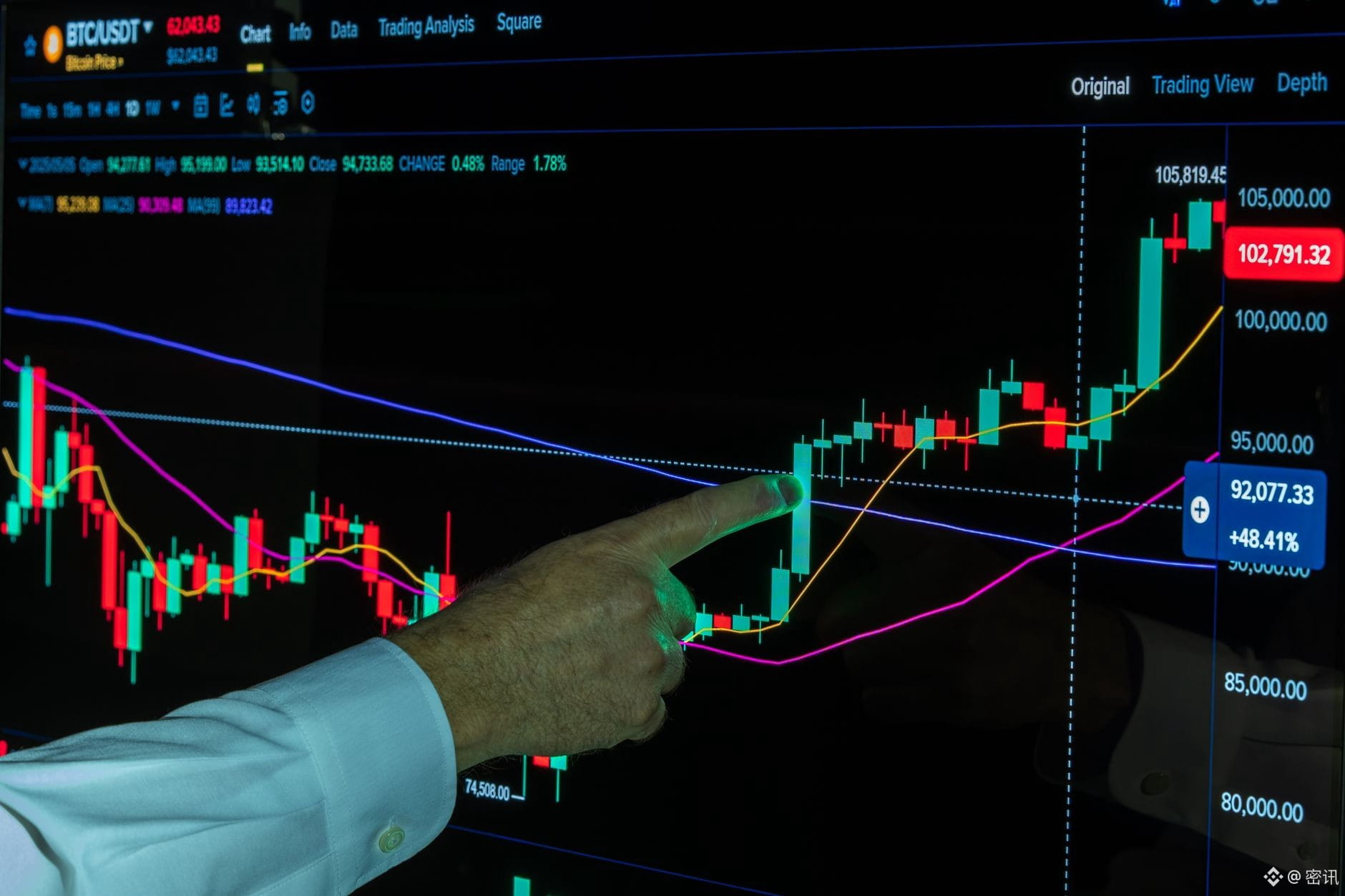
Follow me—next time, don’t miss the quick read of the trading screen in my next post.
Geopolitical tensions in the Middle East have recently escalated significantly. The Islamic Revolutionary Guard Corps of Iran’s public statement that “there is still room for war to expand geographically” signals that the boundaries of regional conflict are being redefined. This remark is not an isolated outburst of emotion, but is embedded in the broader backdrop of deepening global great-power competition and the spillover of regional conflicts. When the potential scope of military action is no longer confined to the homeland or traditional allied circles, but is clearly aimed at a wider geographic reach, the market’s implicit assumption that the conflict is “manageable” begins to erode. At the same time, political agendas on both sides of the Atlantic are also shifting subtly. French President Emmanuel Macron’s remarks about supporting Canada to become an “associate member” of the European Union reveal a reshuffling within the Western camp in terms of security architecture and economic integration. This aggressive geopolitical posture—moving in parallel with the restructuring of Western alliance frameworks—creates the most complex mix of risks in the current macro environment. For asset pricing, this is no longer just short-term volatility driven by a single event, but a multi-layer stress test on global supply-chain resilience, the security of energy transportation corridors, and the policy independence of major economies.
At the level of specific facts, the material clearly records two key points. First, Iran’s Islamic Revolutionary Guard Corps publicly claims that, in terms of geography, the current state of war still has room to expand. This directly defines the potential direction of conflict evolution—from localized confrontation toward broader regional projection. Second, on the 20th, French President Macron issued a statement explicitly saying France supports Canada and the EU moving closer together, and it specifically supports Canada becoming an “associate member” of the EU. This timing, coupled with the stance taken by the relevant parties, indicates a non-traditional exploration within the EU regarding how to define membership, as well as a deep intention by France and Canada to bind politically and economically through integration. Although these two pieces of information appear to belong to two different domains—Middle East geopolitics and European politics—they both point to an acceleration in the reconstruction of the international order amid a backdrop of contracting global risk appetite. Iran’s stance focuses on adversarial security expansion, while France’s focuses on exclusive political and economic integration; together, they underscore the current trend toward bloc formation in international relations.
This set of facts has far-reaching and non-linear effects on asset pricing and risk appetite. First, the Iranian Revolutionary Guard Corps’ discussion of “room for geographic expansion” directly challenges the risk-premium logic for energy markets such as crude oil and natural gas. If the conflict expands from around the Persian Gulf to wider geographic regions, other critical logistics nodes beyond the Strait of Hormuz—such as Red Sea shipping routes or energy facilities along the Mediterranean coast—will face greater uncertainty. This risk is not simply a supply interruption; it effectively leads to a repricing of global energy trade routes. Market participants will need to reassess transportation costs, insurance rates, and how difficult it is to obtain alternative energy sources. This will push up the center of gravity of volatility in energy prices, and then—through inflation expectations—feed into the bond yield curve, squeezing valuation space for growth assets. Second, Macron’s statement supporting Canada as an “associate member” of the EU suggests that Western major economies are building a tighter economic-security community. The introduction of the “associate member” concept may mean that the EU and Canada will form more exclusionary arrangements with higher barriers regarding trade rules, technical standards, and supply-chain security. For multinational companies that rely on the free flow of capital globally, such deep regional integration increases compliance costs and operational complexity, which could lead to greater fragmentation in capital flows. In terms of risk appetite, investors’ pricing of “deglobalization” risk will become even more sensitive. Companies whose operations are highly concentrated in a single region or depend on complex cross-border supply chains may see their credit spreads widen, while firms with localized production capabilities and advantages in resource self-sufficiency may receive relatively stronger valuation support.
Next, the market should closely monitor changes in several key indicators and definitions to test the direction of the above logic. First, it is important to see whether Iran will translate “room for geographic expansion” into specific military deployments or diplomatic pressure actions—especially regarding the level of protection for strategic assets in non-traditional theaters—and whether there are clear signs of military mobilization among neighboring countries. Any mention of specific geographic coordinates or an expansion in the scope of military exercises is a direct signal of conflict escalation. Second, pay attention to negotiation progress between the EU and Canada on the specific rights and obligations of “associate membership,” especially the detailed provisions regarding a tariff union, digital market access, and agreements on key mineral supplies. The degree to which these provisions are implemented will directly determine the depth of economic integration within the West and the extent of any crowding-out effects on external economies. In addition, watch for changes by major central banks—before and after the release of inflation data—in how they describe the transmission mechanism of geopolitical risk. If central banks begin frequently referencing how supply-chain disruptions affect inflation persistence and, as a result, adjust their interest-rate paths, it would signal that geopolitical risk has officially entered the core framework of monetary policy considerations. Finally, monitor shifts in the positioning structure of global commodity futures markets, especially the concentration of speculative long positions in energy and agricultural products. This often reflects the extreme degree of market expectations for future supply shortages. By tracking these micro-structural and policy details, we can more accurately gauge the actual magnitude of the macroeconomic impact caused by current geopolitical tensions, enabling more forward-looking adjustments in asset allocation.
Follow me—next time, don’t miss the quick read of the trading screen in my next post.