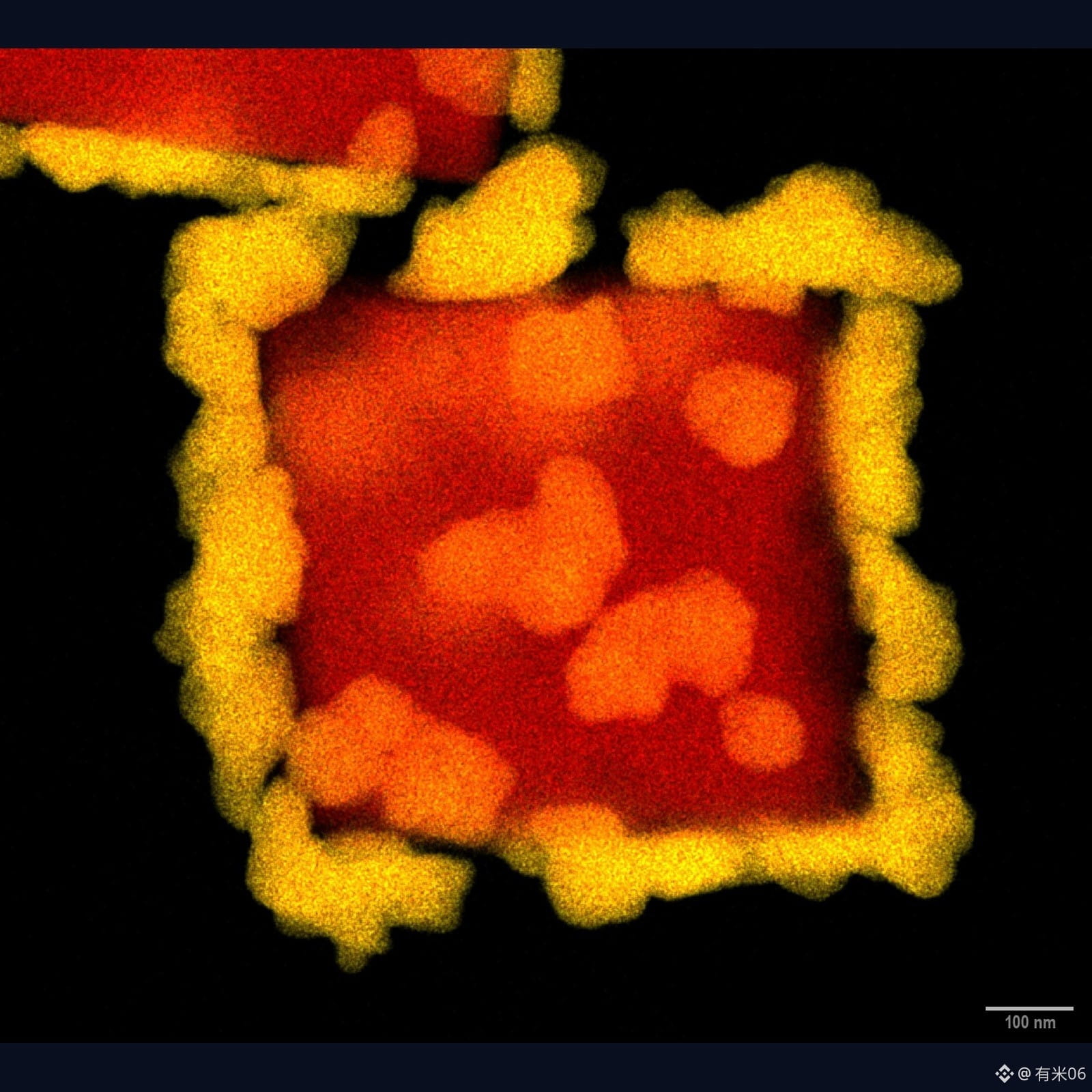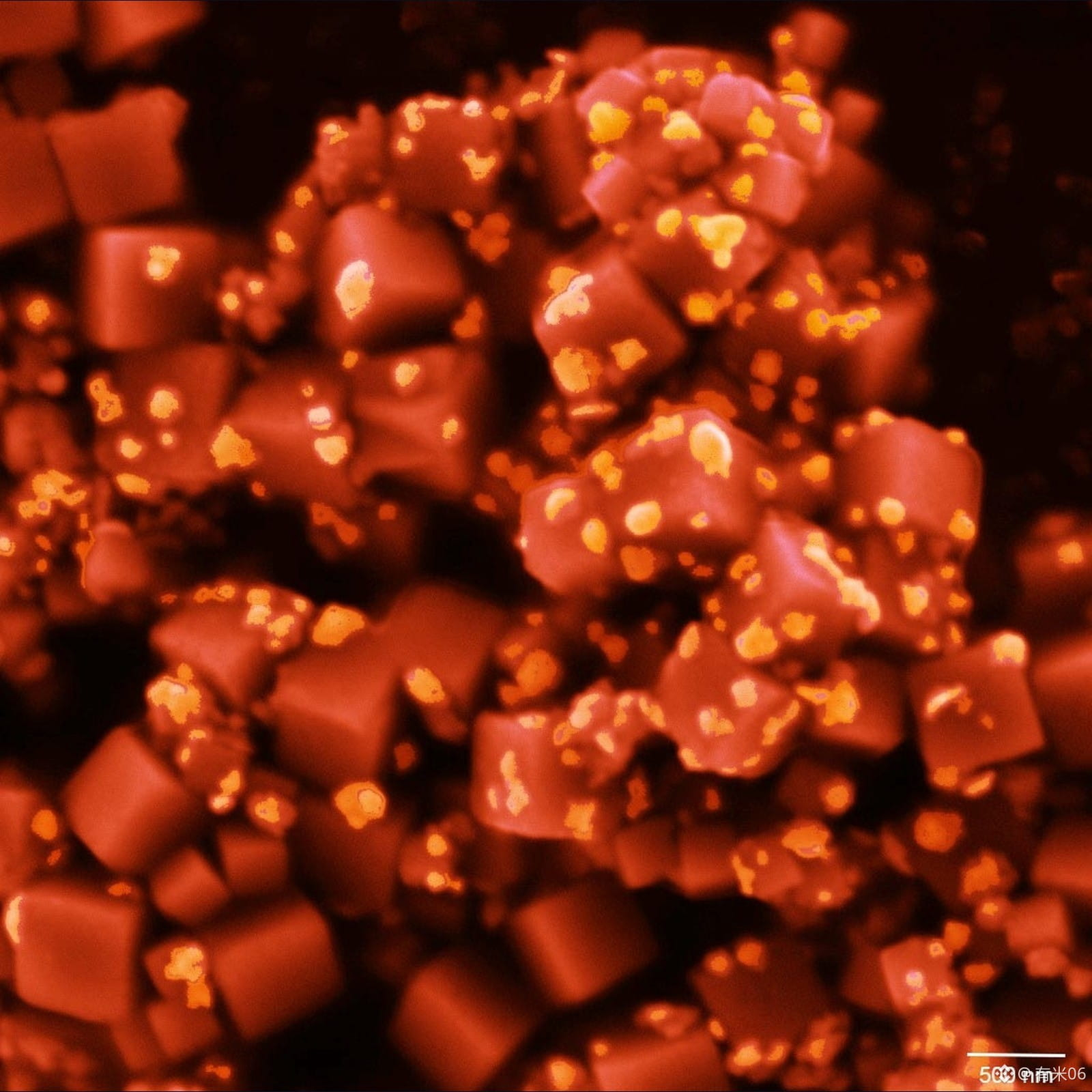
Instant conclusion: In the same gold deposition reaction, changing the “viewing” beam leads to two different nanostructures—photon beams prefer hollow gold boxes, while electron beams prefer gold shells/clusters on copper cubes.
The Institute of Nuclear Physics of the Polish Academy of Sciences (IFJ PAN) used liquid-phase transmission electron microscopy (LC-TEM, electrons) and liquid-phase electrochemical scanning transmission X-ray microscopy (EL-STXM, soft X-ray photons) to observe an electroless replacement reaction between copper oxide nanocubes and chloroauric acid. Under photon illumination, the final outcome is more often gold-rich hollow nanoboxes. Under electron irradiation, gold mainly accumulates on the surface of the copper-oxide cubes, while the cubes themselves do not obviously disappear.
The proposed explanation is that the electron beam makes the local environment more acidic, which suppresses the dissolution of copper oxide and favors the reduction and deposition of gold ions. In contrast, the photon beam does not lower the pH as strongly, making it easier for gold to deposit while copper oxide also oxidizes and dissolves—thus leaving behind hollow gold boxes.
Paper: Small (DOI 10.1002/smll.75209); the IFJ press release dated 2026-09-16 matches the coverage from EurekAlert/phys.org. Reminder: when observing in liquid phase at close range, the imaging beam itself also alters the reaction pathway.
Figure: IFJ PAN (EDX false color: golden/yellow for gold, copper red; SEM colored cubes), non-AI
#纳米技术 #科研
The Institute of Nuclear Physics of the Polish Academy of Sciences (IFJ PAN) used liquid-phase transmission electron microscopy (LC-TEM, electrons) and liquid-phase electrochemical scanning transmission X-ray microscopy (EL-STXM, soft X-ray photons) to observe an electroless replacement reaction between copper oxide nanocubes and chloroauric acid. Under photon illumination, the final outcome is more often gold-rich hollow nanoboxes. Under electron irradiation, gold mainly accumulates on the surface of the copper-oxide cubes, while the cubes themselves do not obviously disappear.
The proposed explanation is that the electron beam makes the local environment more acidic, which suppresses the dissolution of copper oxide and favors the reduction and deposition of gold ions. In contrast, the photon beam does not lower the pH as strongly, making it easier for gold to deposit while copper oxide also oxidizes and dissolves—thus leaving behind hollow gold boxes.
Paper: Small (DOI 10.1002/smll.75209); the IFJ press release dated 2026-09-16 matches the coverage from EurekAlert/phys.org. Reminder: when observing in liquid phase at close range, the imaging beam itself also alters the reaction pathway.
Figure: IFJ PAN (EDX false color: golden/yellow for gold, copper red; SEM colored cubes), non-AI
#纳米技术 #科研