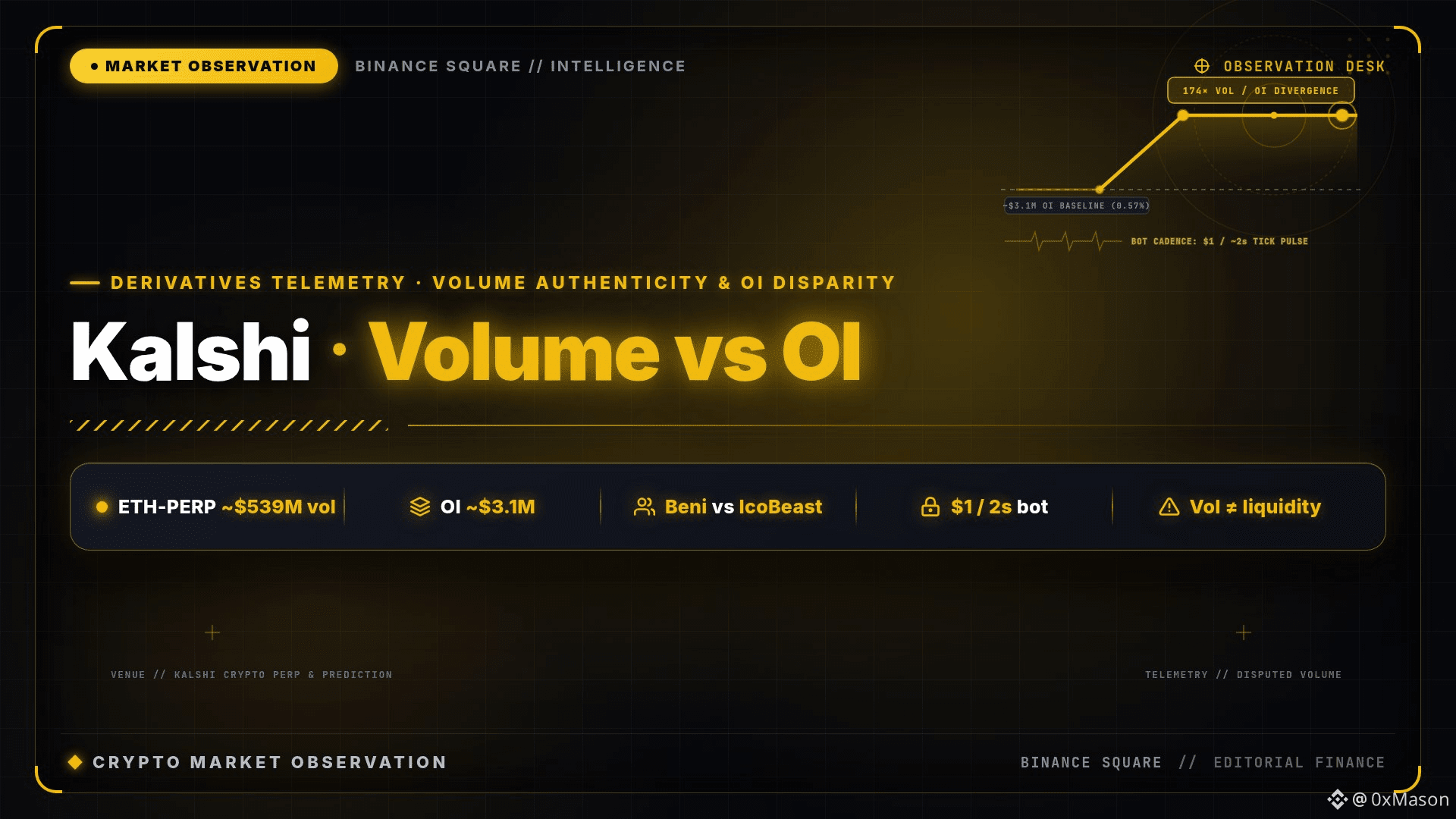
Kalshi trading volume drama: 539M trades vs 3.1M OI
Kalshi inflated the trading volume on the promotional page to make it look good—doesn’t mean the order book really has that much exposure.
Earlier, quant Beni called it out: Kalshi’s ETH-PERP 24-hour trading volume at one point was about $539M, while open interest was only around 3.1M—two orders of magnitude difference between volume and OI. Kalshi crypto head IcoBeast fired back: don’t mix up crypto prediction markets with perpetuals. On the prediction-market side there’s no rebate; for perps, market-maker incentives exist on CME, Hyperliquid, and Binance as well.
Even more striking is a market trader Daniel Sapkota translated from Mamdani: “2028 Democratic presidential candidate” — from August 1 to September 19, about one $1 buy-sell round trip every ~2 seconds, totaling roughly $2M, and the bots are still running. Similar pacing also shows up in parlays, sports, and the Fed rates markets—and those volumes are then used to tell growth stories.
Low OI, high volume—don’t call it “hype” yet. Promotional messaging and order-book structure aren’t the same thing. Before you can get the per-trade execution details, don’t treat these numbers as a liquidity belief.
Kalshi inflated the trading volume on the promotional page to make it look good—doesn’t mean the order book really has that much exposure.
Earlier, quant Beni called it out: Kalshi’s ETH-PERP 24-hour trading volume at one point was about $539M, while open interest was only around 3.1M—two orders of magnitude difference between volume and OI. Kalshi crypto head IcoBeast fired back: don’t mix up crypto prediction markets with perpetuals. On the prediction-market side there’s no rebate; for perps, market-maker incentives exist on CME, Hyperliquid, and Binance as well.
Even more striking is a market trader Daniel Sapkota translated from Mamdani: “2028 Democratic presidential candidate” — from August 1 to September 19, about one $1 buy-sell round trip every ~2 seconds, totaling roughly $2M, and the bots are still running. Similar pacing also shows up in parlays, sports, and the Fed rates markets—and those volumes are then used to tell growth stories.
Low OI, high volume—don’t call it “hype” yet. Promotional messaging and order-book structure aren’t the same thing. Before you can get the per-trade execution details, don’t treat these numbers as a liquidity belief.