Analyst: Off-exchange OTC reserves fall to a historic low; Bitcoin seller liquidity is running out
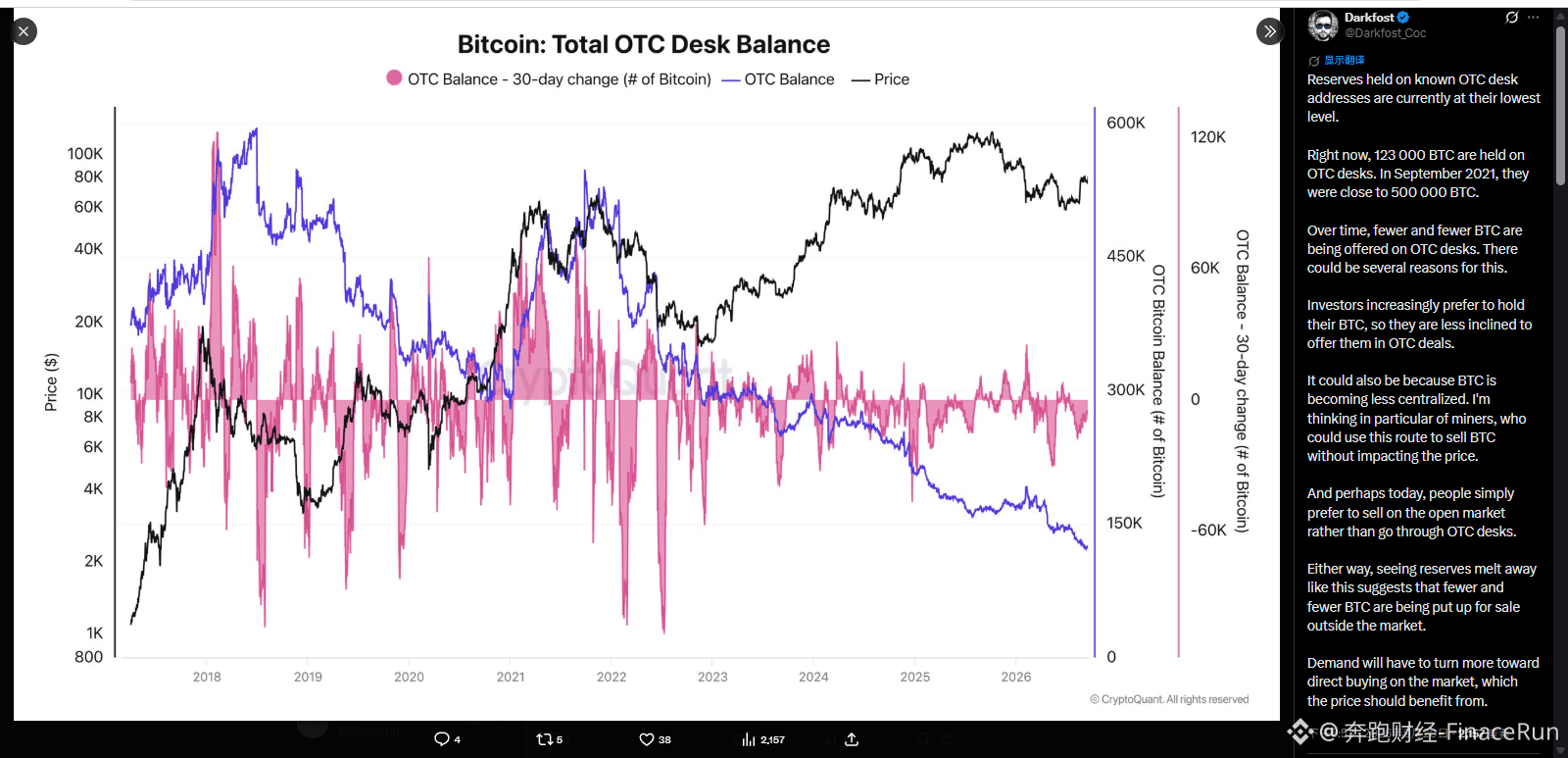
On September 21, CryptoQuant analyst Darkfost published the latest on-chain observation data on the X platform, noting that the Bitcoin reserves held by known OTC (over-the-counter) platform addresses have fallen to the lowest level in history.
The data shows that current OTC platforms hold only about 123,000 Bitcoins. In September 2021, this figure was close to 500,000—an approximately 75% decline over four years.
Darkfost said this trend is driven by multiple factors. First, investors are increasingly choosing to hold Bitcoin long term rather than sell it off in the OTC market, which directly reduces the supply available to OTC platforms.
Second, entities such as mining companies may no longer choose to sell Bitcoin through OTC channels, avoiding the direct impact that their selling activity could have on Bitcoin’s price.
In addition, as Bitcoin’s decentralization increases, some holders are more inclined to trade directly on public markets, further diverting volume away from OTC business.
Regardless of the specific reasons, Darkfost believes that the continued shrinking of OTC reserves indicates that the amount of Bitcoin available for sale in the market is becoming increasingly scarce, and that off-exchange OTC reserves are gradually drying up.
In this situation, large buyers with demand are forced to turn to the public market to buy directly, thereby providing strong support to Bitcoin’s price. This shift in supply-and-demand dynamics is directly transferring buying pressure to the spot market.
#场外OTC储备
On September 21, CryptoQuant analyst Darkfost published the latest on-chain observation data on the X platform, noting that the Bitcoin reserves held by known OTC (over-the-counter) platform addresses have fallen to the lowest level in history.
The data shows that current OTC platforms hold only about 123,000 Bitcoins. In September 2021, this figure was close to 500,000—an approximately 75% decline over four years.
Darkfost said this trend is driven by multiple factors. First, investors are increasingly choosing to hold Bitcoin long term rather than sell it off in the OTC market, which directly reduces the supply available to OTC platforms.
Second, entities such as mining companies may no longer choose to sell Bitcoin through OTC channels, avoiding the direct impact that their selling activity could have on Bitcoin’s price.
In addition, as Bitcoin’s decentralization increases, some holders are more inclined to trade directly on public markets, further diverting volume away from OTC business.
Regardless of the specific reasons, Darkfost believes that the continued shrinking of OTC reserves indicates that the amount of Bitcoin available for sale in the market is becoming increasingly scarce, and that off-exchange OTC reserves are gradually drying up.
In this situation, large buyers with demand are forced to turn to the public market to buy directly, thereby providing strong support to Bitcoin’s price. This shift in supply-and-demand dynamics is directly transferring buying pressure to the spot market.
#场外OTC储备