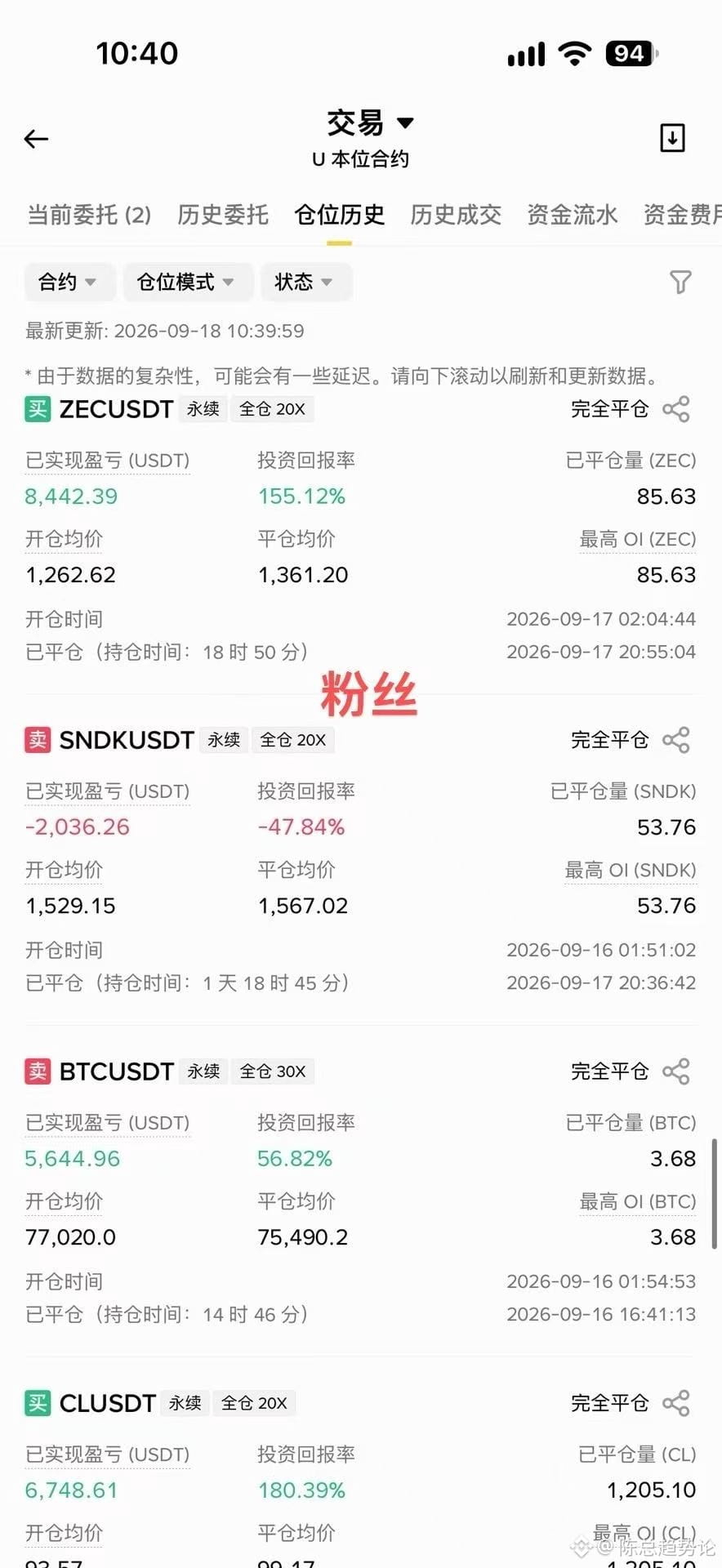
When I’m leading people, the thing I often repeat is: don’t just obsess over doubling all the time. Those who are able to grow their principal usually rely on a few key windows within the year—when opportunities arise, they can act decisively, wait patiently, and know when to step back at the right time.
Many people start with just 10,000, fantasizing about turning it into 1 million or 10 million quickly. In the end, they chase highs and cut lows all day long. Their principal doesn’t grow, and they become exhausted from being worn down by the market.
To grow a small capital, I only focus on three things:
First, seize opportunities.
You don’t have to be profitable every day. In a year, the big moves are only a handful of times. Most of the time, I’d rather test the waters with a small position—or even stay entirely in cash—than make blind moves just for the sake of trading.
Second, manage position size reasonably.
In ordinary market conditions, don’t arbitrarily go heavy. Only when the trend, key levels, and volume/price all align should you consider increasing your position size according to a pre-planned plan. If you make a mistake, stop immediately—never try to salvage a losing situation by adding more.
Third, execute strictly.
Many people aren’t actually unable to read the market—they just can’t hold their positions. They take profit of 20% and rush to sell, and once there’s even a slight loss, they start cutting positions irrationally. Before entering, you should plan your take-profit and stop-loss levels. When the market comes, you carry out the plan.
Growing an account isn’t about making big profits every day. It’s about making fewer mistakes with small opportunities, taking bigger positions when the real big opportunities arrive, and knowing how to step back once you’ve made the gains.
Don’t treat a comeback like a one-time gamble. As long as the principal is still there, you can always wait for the market conditions that truly are worth acting on.#以太坊突破2700美元
Opportunities, position sizing, and execution—none of these can be missing. Follow me, and I’ll explain these three points in detail to you.
Many people start with just 10,000, fantasizing about turning it into 1 million or 10 million quickly. In the end, they chase highs and cut lows all day long. Their principal doesn’t grow, and they become exhausted from being worn down by the market.
To grow a small capital, I only focus on three things:
First, seize opportunities.
You don’t have to be profitable every day. In a year, the big moves are only a handful of times. Most of the time, I’d rather test the waters with a small position—or even stay entirely in cash—than make blind moves just for the sake of trading.
Second, manage position size reasonably.
In ordinary market conditions, don’t arbitrarily go heavy. Only when the trend, key levels, and volume/price all align should you consider increasing your position size according to a pre-planned plan. If you make a mistake, stop immediately—never try to salvage a losing situation by adding more.
Third, execute strictly.
Many people aren’t actually unable to read the market—they just can’t hold their positions. They take profit of 20% and rush to sell, and once there’s even a slight loss, they start cutting positions irrationally. Before entering, you should plan your take-profit and stop-loss levels. When the market comes, you carry out the plan.
Growing an account isn’t about making big profits every day. It’s about making fewer mistakes with small opportunities, taking bigger positions when the real big opportunities arrive, and knowing how to step back once you’ve made the gains.
Don’t treat a comeback like a one-time gamble. As long as the principal is still there, you can always wait for the market conditions that truly are worth acting on.#以太坊突破2700美元
Opportunities, position sizing, and execution—none of these can be missing. Follow me, and I’ll explain these three points in detail to you.