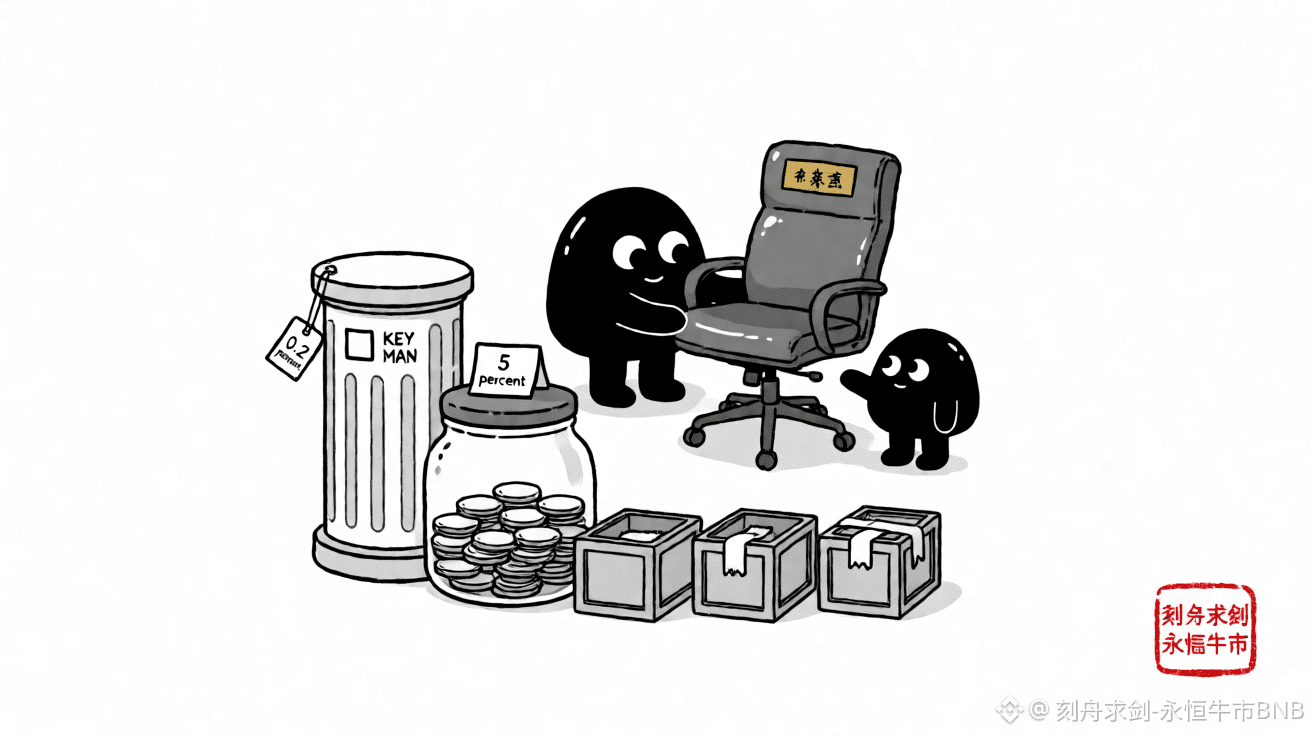
September 18: Two readings that don’t match. In the trading day before the news was released, Class A shares fell first—down 2.1%. On the day of the announcement, they dropped only about 0.2%. A 96-year-old chairman turned in the seat he’d held for 56 years, and the market barely priced it in.
The handover document is a division-of-labor sheet: the son takes over as chairman, guarding the culture and values; the CEO runs operations. He then shifts to a ceremonial title and keeps a board seat. He compares his son’s role to a “policy that never wants to pay a claim”—the important things aren’t on the balance sheet.
Another column is the money. At the end of Q2, cash plus short-term Treasuries were about $36.55 billion. The same week, the 10-year Treasury yield climbed above 5%, giving this idle cash its first respectable return.
I lay out the crypto-side readings from the same day: Bitcoin was up about 6%, topping $80,000, with one BTC exchanging for roughly 140 BNB. Behind the prices are interest rates and terms.
The three Binance spot products are listed according to “where idle funds go.” Platform tokens convert quarterly profits into supply reduction: on July 15, 1,615,827 tokens were burned, about $932 million, bringing total supply down to about 133 million. Ethereum takes the idle portion and stakes it—more than 40 million tokens are deployed. Bitcoin earns no interest; it’s only custodied and wrapped into products. Together, they map to operations, service fees, and nothing being generated. Berkshire is the fourth category, holding cash at a 5% short-debt yield. The difference comes down to whether anyone is making a judgment on that money’s return—ironically, the most similar is the burn column, and even that relies on a company’s judgment.
That’s where the reading ends. In these two markets, they handle things differently: the traditional side prices in early and removes early. The crypto side, by design, never had that mechanism. The line for falsification is clear. If, one or two quarters later, that $36.55 billion is clearly down, and the crypto side’s spot products see directional capital flows like the treasury-company side, then I’m viewing the interface between the two markets too narrowly. If cash continues to pile into short-term debt and the money here continues to run according to terms and interest rates, then this reading won’t change. That 5% yield is someone else’s. To have idle cash earn interest, Binance writes out the investment-product categories and rules clearly.
This article is a record of viewpoints and does not constitute investment advice.$CELR
$ONE
$EPIC
#巴菲特卸任伯克希尔董事长
The handover document is a division-of-labor sheet: the son takes over as chairman, guarding the culture and values; the CEO runs operations. He then shifts to a ceremonial title and keeps a board seat. He compares his son’s role to a “policy that never wants to pay a claim”—the important things aren’t on the balance sheet.
Another column is the money. At the end of Q2, cash plus short-term Treasuries were about $36.55 billion. The same week, the 10-year Treasury yield climbed above 5%, giving this idle cash its first respectable return.
I lay out the crypto-side readings from the same day: Bitcoin was up about 6%, topping $80,000, with one BTC exchanging for roughly 140 BNB. Behind the prices are interest rates and terms.
The three Binance spot products are listed according to “where idle funds go.” Platform tokens convert quarterly profits into supply reduction: on July 15, 1,615,827 tokens were burned, about $932 million, bringing total supply down to about 133 million. Ethereum takes the idle portion and stakes it—more than 40 million tokens are deployed. Bitcoin earns no interest; it’s only custodied and wrapped into products. Together, they map to operations, service fees, and nothing being generated. Berkshire is the fourth category, holding cash at a 5% short-debt yield. The difference comes down to whether anyone is making a judgment on that money’s return—ironically, the most similar is the burn column, and even that relies on a company’s judgment.
That’s where the reading ends. In these two markets, they handle things differently: the traditional side prices in early and removes early. The crypto side, by design, never had that mechanism. The line for falsification is clear. If, one or two quarters later, that $36.55 billion is clearly down, and the crypto side’s spot products see directional capital flows like the treasury-company side, then I’m viewing the interface between the two markets too narrowly. If cash continues to pile into short-term debt and the money here continues to run according to terms and interest rates, then this reading won’t change. That 5% yield is someone else’s. To have idle cash earn interest, Binance writes out the investment-product categories and rules clearly.
This article is a record of viewpoints and does not constitute investment advice.$CELR
$ONE
$EPIC
#巴菲特卸任伯克希尔董事长