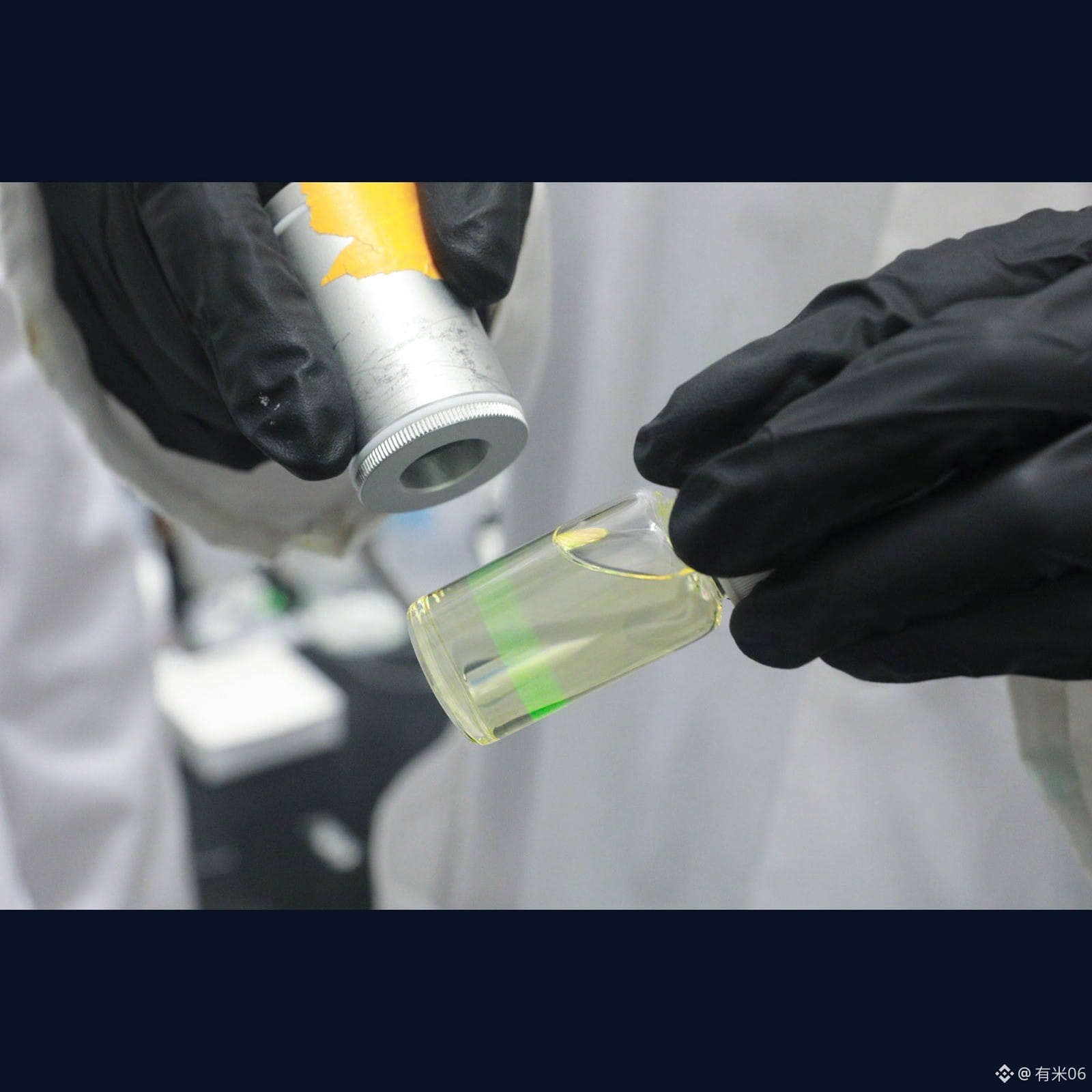
With a near-infrared laser flash, a vial lights up with a slice of fluorescent green. — The University of Toronto’s Faculty of Applied Science and Engineering has made “upconversion” dye-sensitized nanoparticles shine: even a cheap laser can “lift” low-energy photons into a higher-energy green light signal.
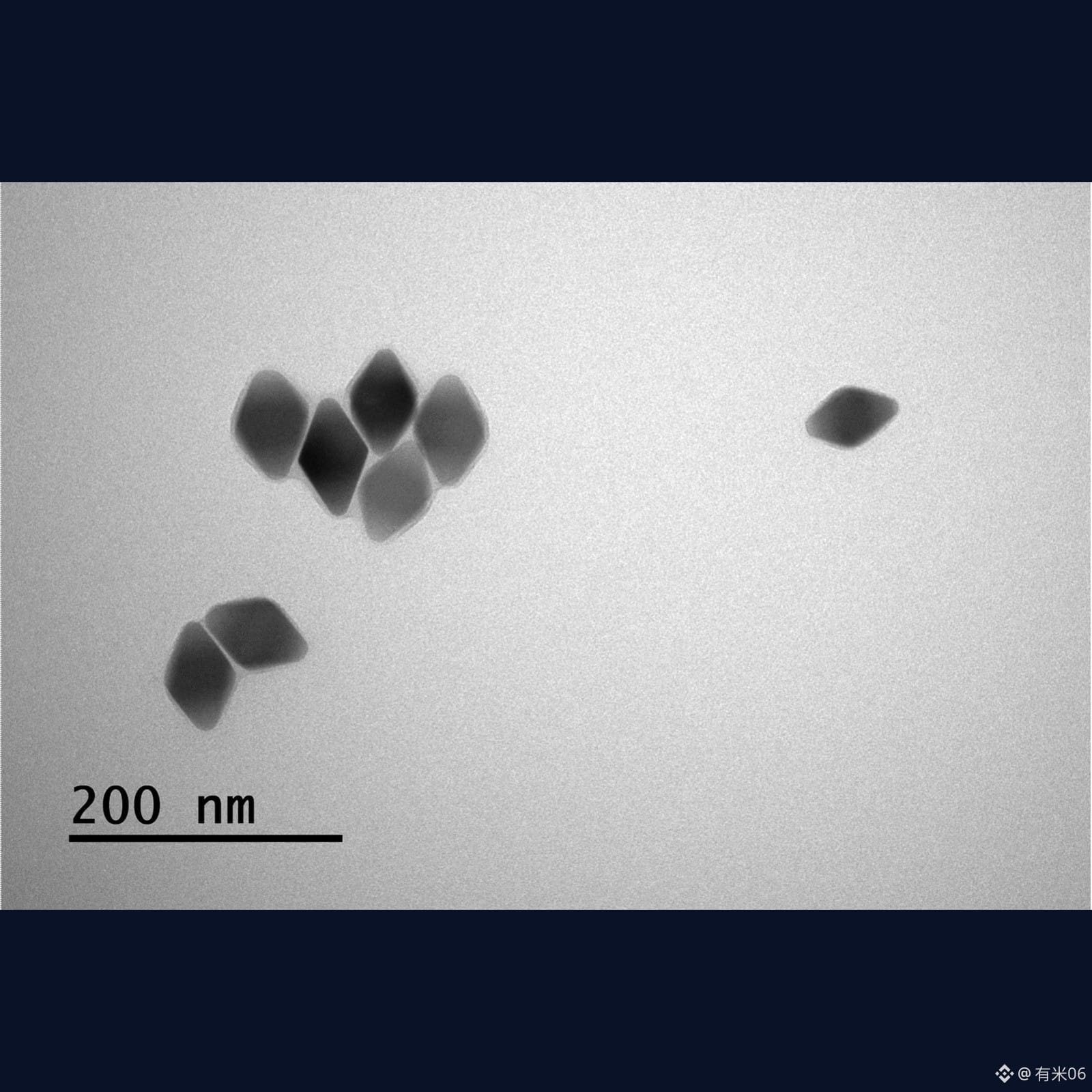
According to U of T Engineering’s press release and the journal <i>JACS</i> (DOI 10.1021/jacs.6c07018): earlier schemes put ytterbium/erbium into sodium yttrium fluoride hexagonal crystals. If the ytterbium is too dense, it “pulls back” the green light that should have been emitted (reverse energy transfer). The team replaced the host with a lithium–lutetium fluoride matrix and built a diamond-like 3D core–shell–shell structure, with the ytterbium concentration increasing inward, allowing energy to flow into erbium in almost a one-way manner. Press release claims: about 150× brighter than non-sensitized upconversion particles; under the same excitation, about 50× brighter than some partially optimized versions of the old structure. It can also distinguish structural isomers—same atoms, different arrangements—useful for detecting trace contaminants from pharmaceutical impurities, underground-water pollutants, or for low-cost laser spot checks. It’s still a proof-of-principle, and the mass-production pathway is still in progress.
Independent verification: ScienceDaily 2026-09-20, Nanowerk with the same wording.
Figure: U of T press release experiment green light + TEM diamond-like particles (Jiaze Wu); not AI.
Data as of: JACS DOI 10.1021/jacs.6c07018 (Crossref 2026-09-09); U of T press release 2026-09-11; ScienceDaily 2026-09-20
#纳米 #research
According to U of T Engineering’s press release and the journal <i>JACS</i> (DOI 10.1021/jacs.6c07018): earlier schemes put ytterbium/erbium into sodium yttrium fluoride hexagonal crystals. If the ytterbium is too dense, it “pulls back” the green light that should have been emitted (reverse energy transfer). The team replaced the host with a lithium–lutetium fluoride matrix and built a diamond-like 3D core–shell–shell structure, with the ytterbium concentration increasing inward, allowing energy to flow into erbium in almost a one-way manner. Press release claims: about 150× brighter than non-sensitized upconversion particles; under the same excitation, about 50× brighter than some partially optimized versions of the old structure. It can also distinguish structural isomers—same atoms, different arrangements—useful for detecting trace contaminants from pharmaceutical impurities, underground-water pollutants, or for low-cost laser spot checks. It’s still a proof-of-principle, and the mass-production pathway is still in progress.
Independent verification: ScienceDaily 2026-09-20, Nanowerk with the same wording.
Figure: U of T press release experiment green light + TEM diamond-like particles (Jiaze Wu); not AI.
Data as of: JACS DOI 10.1021/jacs.6c07018 (Crossref 2026-09-09); U of T press release 2026-09-11; ScienceDaily 2026-09-20
#纳米 #research