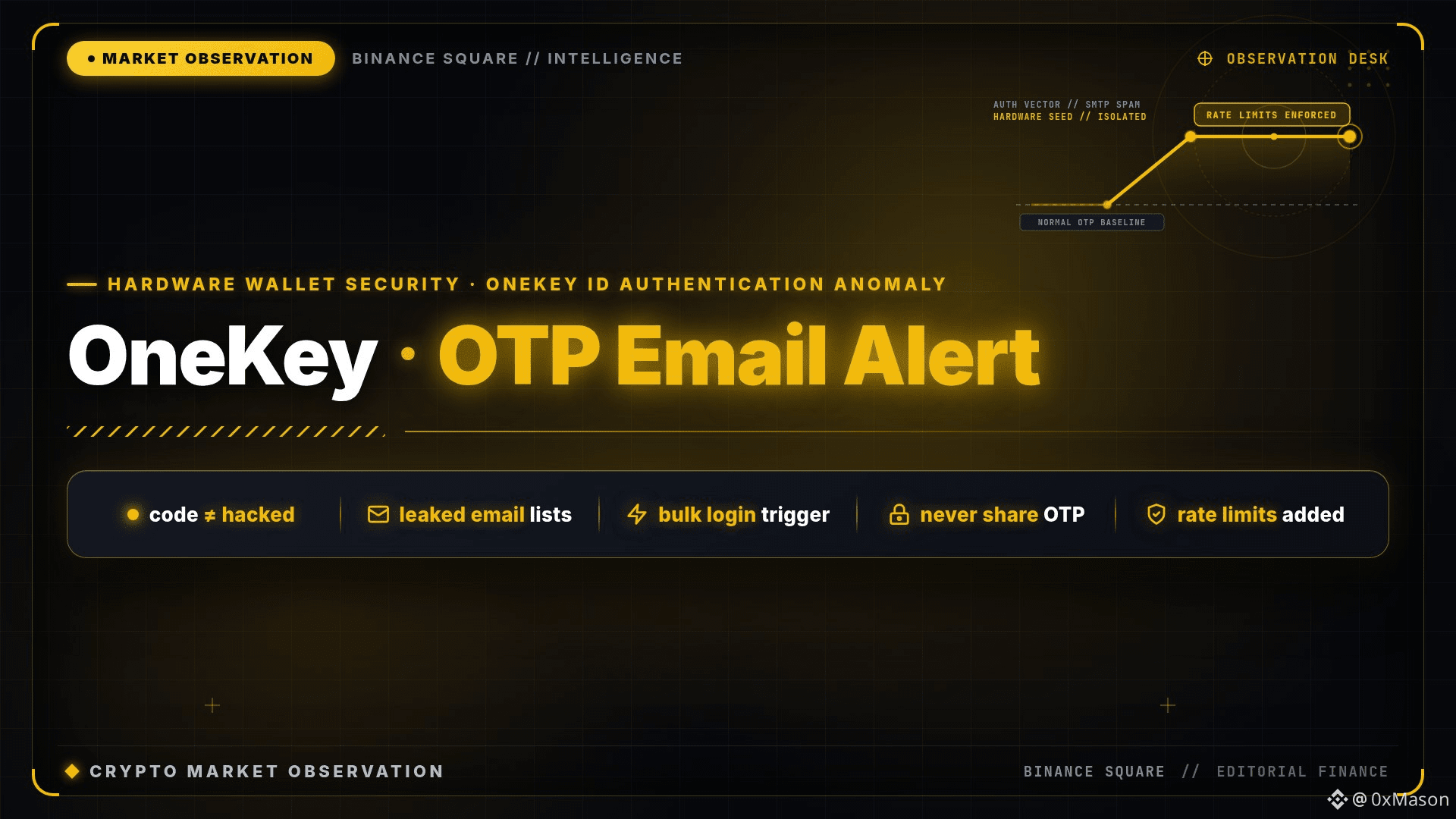
OneKey Verification Code: Email being spammed ≠ Account being hacked
If you didn’t log in, yet a OneKey ID verification code suddenly pops up—it doesn’t mean your wallet has already been accessed.
Just recently, the official said: someone obtained leaks/exposed email lists from other sources, then used them to mass-hit the login and registration endpoints to trigger verification-code emails. The requester can’t get the codes, and the accounts themselves aren’t compromised. They’ve already added sending limits.
The truly dangerous part is the next email posing as “customer support” that tricks you into sending back the six-digit code. The hardware seed never goes through this email. If you didn’t initiate it, just delete it—don’t play along as a helpful citizen.
If you didn’t log in, yet a OneKey ID verification code suddenly pops up—it doesn’t mean your wallet has already been accessed.
Just recently, the official said: someone obtained leaks/exposed email lists from other sources, then used them to mass-hit the login and registration endpoints to trigger verification-code emails. The requester can’t get the codes, and the accounts themselves aren’t compromised. They’ve already added sending limits.
The truly dangerous part is the next email posing as “customer support” that tricks you into sending back the six-digit code. The hardware seed never goes through this email. If you didn’t initiate it, just delete it—don’t play along as a helpful citizen.