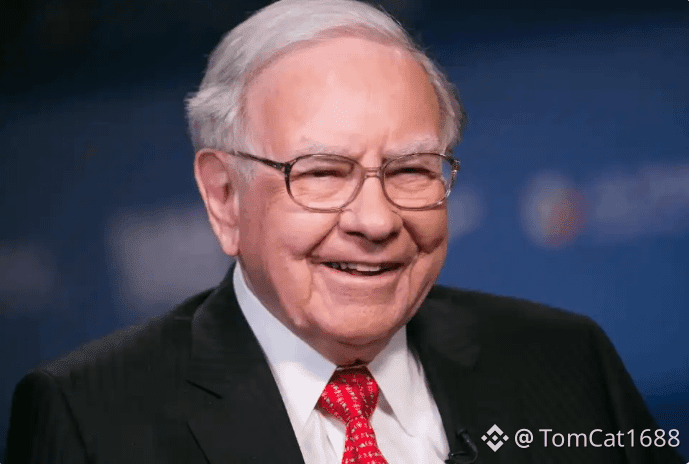
#巴菲特卸任伯克希尔董事长
96-year-old stock god turns around. Berkshire Hathaway instantly loses favor.
Berkshire Hathaway's chairman and CEO officially steps down as chairman, transitioning to honorary chairman. His eldest son, Howard, takes over as chairman, while Greg Abel continues to run operations. The moment the news broke, the market voted with its feet: Berkshire Class A shares fell 2.10% on the day, and Class B shares dropped 2.04%.
But what really stings isn’t just that one day. This year alone, Berkshire’s share price has risen only about 1%, while the S&P 500 surged more than 11% over the same period. The “Buffett premium” has been steadily fading since 2025, when he announced he would step down as CEO. Over the past year, the stock is down more than 20%, underperforming the broader market by roughly 10 percentage points. Investors are asking a brutal question: without Buffett, is Berkshire still worth that premium?
The impact on U.S. stocks is already visible on the tape. Abel takes over a massive machine holding roughly $365.5 billion in cash and short-term Treasuries. In the first half of the year, he net-bought about $12 billion in stocks, including a $10 billion private investment in Alphabet. But the cash burn rate is far slower than what the market expected. What investors are worried about is this: in the post-Buffett era, can the company’s capital allocation efficiency continue the myth?
The real signal is only one: the baton is passed, but discipline doesn’t loosen. Buffett said, “The Old Man Time is always the winner, but he has always been very generous to me.” The subtext is—markets may celebrate wildly, but the pendulum of value investing won’t change its rhythm because one person leaves
96-year-old stock god turns around. Berkshire Hathaway instantly loses favor.
Berkshire Hathaway's chairman and CEO officially steps down as chairman, transitioning to honorary chairman. His eldest son, Howard, takes over as chairman, while Greg Abel continues to run operations. The moment the news broke, the market voted with its feet: Berkshire Class A shares fell 2.10% on the day, and Class B shares dropped 2.04%.
But what really stings isn’t just that one day. This year alone, Berkshire’s share price has risen only about 1%, while the S&P 500 surged more than 11% over the same period. The “Buffett premium” has been steadily fading since 2025, when he announced he would step down as CEO. Over the past year, the stock is down more than 20%, underperforming the broader market by roughly 10 percentage points. Investors are asking a brutal question: without Buffett, is Berkshire still worth that premium?
The impact on U.S. stocks is already visible on the tape. Abel takes over a massive machine holding roughly $365.5 billion in cash and short-term Treasuries. In the first half of the year, he net-bought about $12 billion in stocks, including a $10 billion private investment in Alphabet. But the cash burn rate is far slower than what the market expected. What investors are worried about is this: in the post-Buffett era, can the company’s capital allocation efficiency continue the myth?
The real signal is only one: the baton is passed, but discipline doesn’t loosen. Buffett said, “The Old Man Time is always the winner, but he has always been very generous to me.” The subtext is—markets may celebrate wildly, but the pendulum of value investing won’t change its rhythm because one person leaves