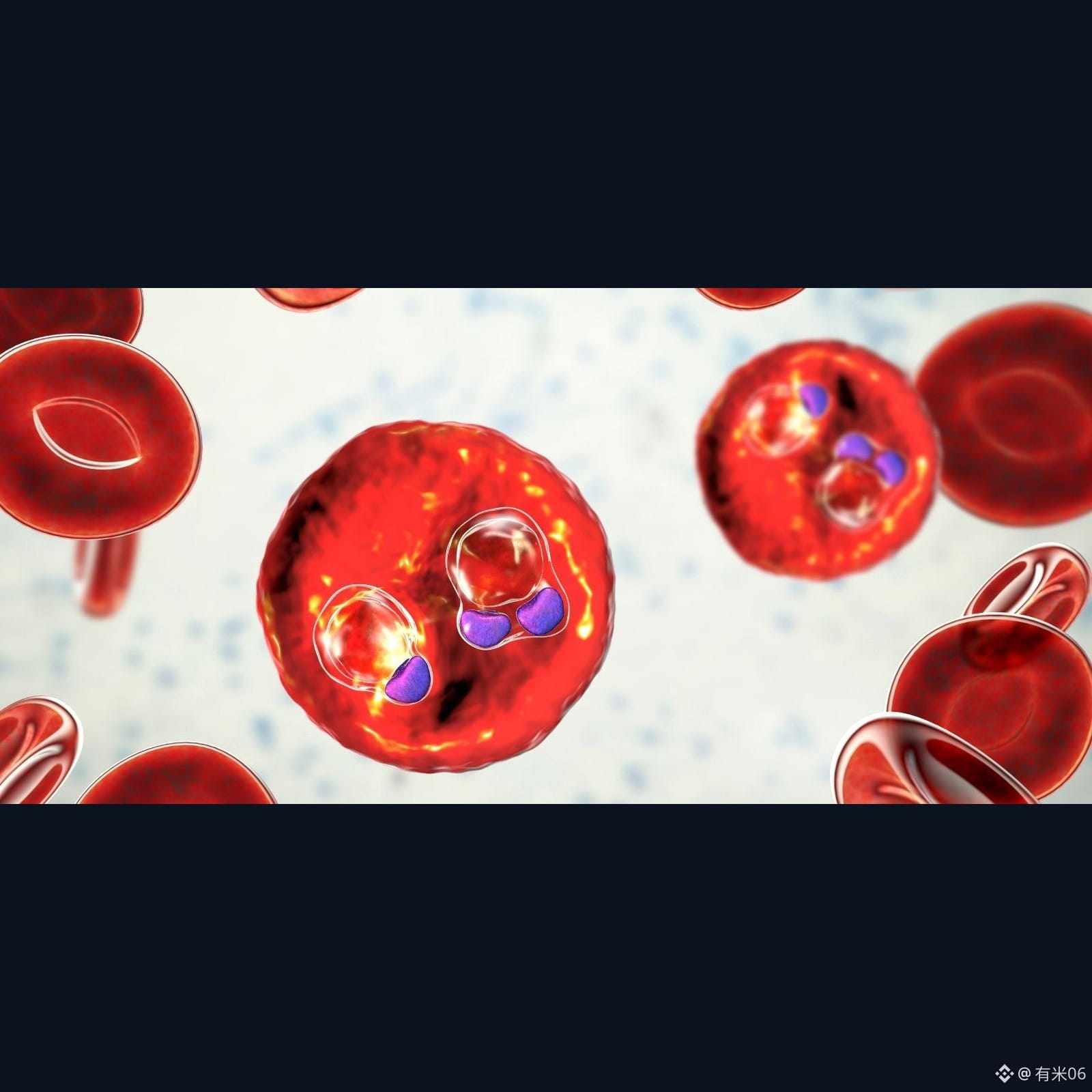
Malaria parasites are actually quite good at “reading the air”—when the host’s internal environment turns worse, they work even harder to produce the sexual stage (gametocytes), which can be carried away by mosquitoes.
A study led by the Barcelona Institute for Global Health (ISGlobal), published in Nature Microbiology, has pulled apart this switching mechanism: nutrient deprivation, the antimalarial drug DHA, and simulated fever—three different stressors all take the same route, affecting gdv1 / ap2-g. The hub protein AP2-HS responds to stress and recruits GDV1 to initiate gametocyte development. At the same time, GDV1 also induces its own antisense (gdv1-as) to apply the brakes, so it doesn’t run too long and end up killing itself.
Mechanism research ≠ already new drugs or clinical approaches.
Figure: ISGlobal press material—schematic of malaria parasite infection of red blood cells (not AI)
Data as of: Nature Microbiology DOI 10.1038/s41564-026-02473-6; ISGlobal press material 2026-09-18; phys.org / MedicalXpress 2026-09-19
#疟疾 #Research
A study led by the Barcelona Institute for Global Health (ISGlobal), published in Nature Microbiology, has pulled apart this switching mechanism: nutrient deprivation, the antimalarial drug DHA, and simulated fever—three different stressors all take the same route, affecting gdv1 / ap2-g. The hub protein AP2-HS responds to stress and recruits GDV1 to initiate gametocyte development. At the same time, GDV1 also induces its own antisense (gdv1-as) to apply the brakes, so it doesn’t run too long and end up killing itself.
Mechanism research ≠ already new drugs or clinical approaches.
Figure: ISGlobal press material—schematic of malaria parasite infection of red blood cells (not AI)
Data as of: Nature Microbiology DOI 10.1038/s41564-026-02473-6; ISGlobal press material 2026-09-18; phys.org / MedicalXpress 2026-09-19
#疟疾 #Research