📰 US First Approves National Stablecoin Custody Bank License: Why Did the OCC Approve It This Time?
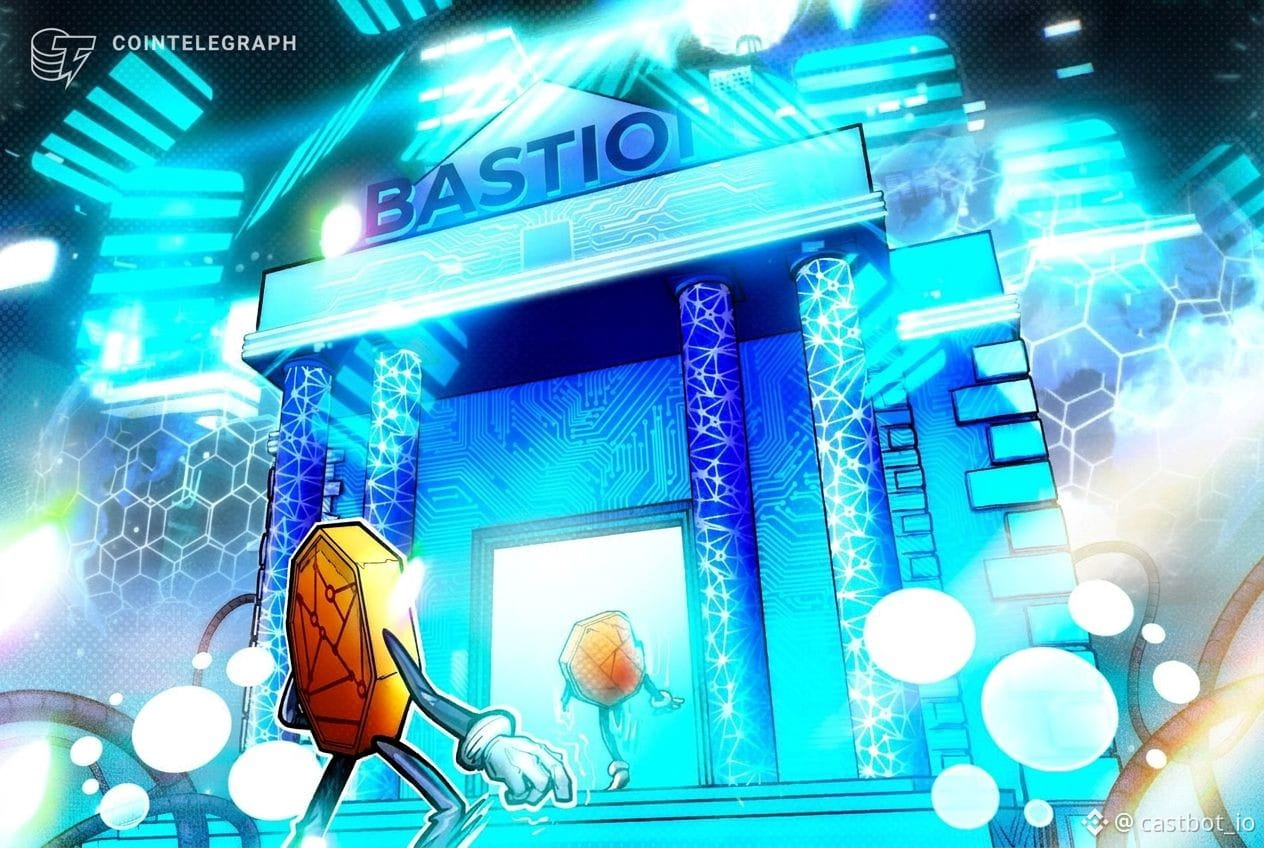
The Federal Deposit Insurance Corporation (FDIC) has, for the first time ever, approved Bastion Platforms’ application for an OCC national trust bank license. In the future, the company will provide stablecoin custody, wallet services, and payment infrastructure, and it may also issue stablecoins under a white-label model—but only if it operates under U.S. federal government regulation. This is the first time a U.S. regulator has allowed a single bank to offer cryptocurrency custody services. It suggests that while the regulatory framework is trying to embrace crypto assets, it has not forgotten to “insure itself,” too.
Why is this news important?
The OCC’s approval is significant because it attempts to strike a balance between two seemingly conflicting goals: granting crypto assets recognition under bank-level supervision, while avoiding systemic risk. Bastion’s platform can provide both stablecoin issuance and custody services, which in the traditional financial system essentially combines cash and bank-account functions into one. Regulators may believe that endorsement by a strong institution like the FDIC can greatly ease market concerns about stablecoin run risks. Why now? Because regulatory needs are already urgent—last year the U.S. Congress passed the “Crypto Investors Protection Act,” requiring the FDIC and the Office of the Comptroller of the Currency (OCC) to clarify custody rules for crypto assets.
Impact on the market
No immediate direct impact on BTC and ETH is apparent at this stage; it’s more of a longer-term sentiment shift. This means regulation is gradually moving toward mainstream acceptance of crypto assets, but with cautious pace. Platforms like Bastion must meet strict capital adequacy and risk-control requirements, so in the short term they may only attract institutional funds with hard compliance requirements. Looking at history, when the UK approved LSEG to set up a crypto bank in 2019, the crypto market surged by 40% one month later. But this time is different: since the U.S. is a regulatory trough, it’s more likely to be a structural positive for the market—similar to how the SEC approved a Bitcoin ETF in 2014—rather than triggering an explosive行情. In simple terms: regulators are saying, “We can do it—but you have to follow the rules.”
Trading approach
- Assets: ETH / BNB
- Direction: Neutral (bullish long-term, wait-and-see short-term)
- Duration: ETH 24 hours / BNB 4 hours
💡 My view: As regulation gradually becomes clearer on the path to crypto becoming bank-like, it’s a small positive for long-term holders. If, in the future, large institutions issue dollar stablecoins via such licenses and significantly attract deposits, ETH may see buy support in the 2,700–2,900 range. However, this logic doesn’t hold up the moment Bastion is approved, because it still needs real operations to verify whether this framework truly reduces risk.
This article has no project sponsorship. The author does not hold any of the assets mentioned in the text.
$BTC $ETH #BTC #ETH
📊 Historical backtest
- After the publication of something similar: “Ethereum ETF launch does not guarantee Solana ETF approval, reasons” (2024-07-18), ETH’s 24h price change was +1.05%; the prediction was neutral ❌ incorrect
⚠️ This does not constitute investment advice. Predictions are for reference only.
The Federal Deposit Insurance Corporation (FDIC) has, for the first time ever, approved Bastion Platforms’ application for an OCC national trust bank license. In the future, the company will provide stablecoin custody, wallet services, and payment infrastructure, and it may also issue stablecoins under a white-label model—but only if it operates under U.S. federal government regulation. This is the first time a U.S. regulator has allowed a single bank to offer cryptocurrency custody services. It suggests that while the regulatory framework is trying to embrace crypto assets, it has not forgotten to “insure itself,” too.
Why is this news important?
The OCC’s approval is significant because it attempts to strike a balance between two seemingly conflicting goals: granting crypto assets recognition under bank-level supervision, while avoiding systemic risk. Bastion’s platform can provide both stablecoin issuance and custody services, which in the traditional financial system essentially combines cash and bank-account functions into one. Regulators may believe that endorsement by a strong institution like the FDIC can greatly ease market concerns about stablecoin run risks. Why now? Because regulatory needs are already urgent—last year the U.S. Congress passed the “Crypto Investors Protection Act,” requiring the FDIC and the Office of the Comptroller of the Currency (OCC) to clarify custody rules for crypto assets.
Impact on the market
No immediate direct impact on BTC and ETH is apparent at this stage; it’s more of a longer-term sentiment shift. This means regulation is gradually moving toward mainstream acceptance of crypto assets, but with cautious pace. Platforms like Bastion must meet strict capital adequacy and risk-control requirements, so in the short term they may only attract institutional funds with hard compliance requirements. Looking at history, when the UK approved LSEG to set up a crypto bank in 2019, the crypto market surged by 40% one month later. But this time is different: since the U.S. is a regulatory trough, it’s more likely to be a structural positive for the market—similar to how the SEC approved a Bitcoin ETF in 2014—rather than triggering an explosive行情. In simple terms: regulators are saying, “We can do it—but you have to follow the rules.”
Trading approach
- Assets: ETH / BNB
- Direction: Neutral (bullish long-term, wait-and-see short-term)
- Duration: ETH 24 hours / BNB 4 hours
💡 My view: As regulation gradually becomes clearer on the path to crypto becoming bank-like, it’s a small positive for long-term holders. If, in the future, large institutions issue dollar stablecoins via such licenses and significantly attract deposits, ETH may see buy support in the 2,700–2,900 range. However, this logic doesn’t hold up the moment Bastion is approved, because it still needs real operations to verify whether this framework truly reduces risk.
This article has no project sponsorship. The author does not hold any of the assets mentioned in the text.
$BTC $ETH #BTC #ETH
📊 Historical backtest
- After the publication of something similar: “Ethereum ETF launch does not guarantee Solana ETF approval, reasons” (2024-07-18), ETH’s 24h price change was +1.05%; the prediction was neutral ❌ incorrect
⚠️ This does not constitute investment advice. Predictions are for reference only.