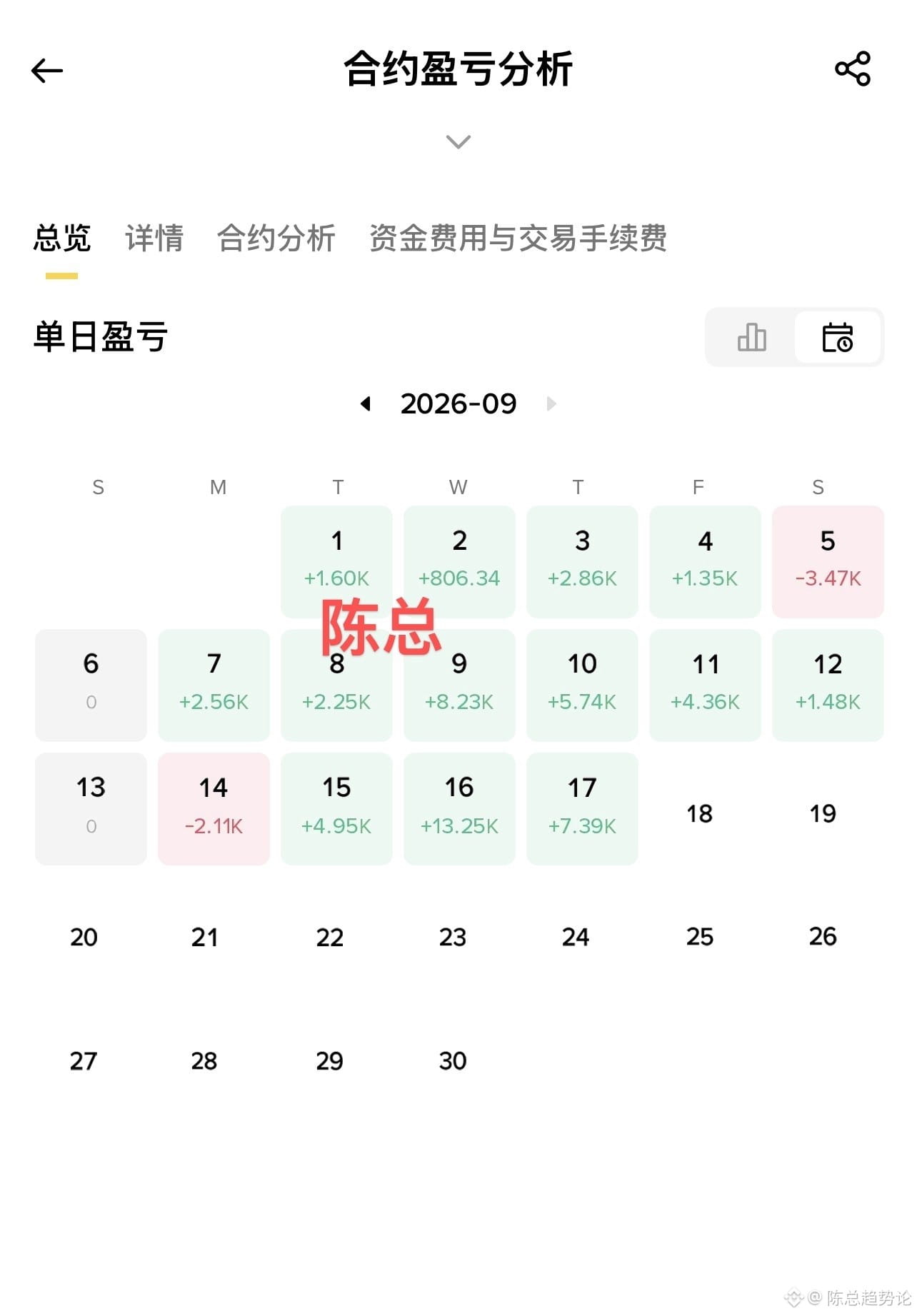
I used to stare at the market for more than ten hours a day, and I still ended up losing. Later, I spent only a few minutes each day, and I only traded when there were suitable signals—then my account actually became more and more stable. Trading is something you have to do against human nature.
When I first got into this circle, I thought that the more you watch and the more indicators you have, the more opportunities there must be. But after losing money, I finally understood: what usually cools your account is “trying to get involved in everything.”
Now my trading is pretty simple:
First, focus only on familiar patterns. When the stock price rises, pulls back, and then breaks out on increased volume—only then do I consider entering. If the pattern breaks, I exit immediately. I don’t stubbornly hold, I don’t blindly average down, and I definitely don’t keep going just to save face.
Second, plan take-profit and stop-loss in advance. Before entering, I know clearly the maximum I can afford to lose and the point at which I should take profit. When you make decisions on the fly, people tend to get greedy and refuse to cut losses.
Third, simplify the indicators. These days, I mainly watch the trend and key moving averages. Everything else I can turn off, I turn off. If there’s no signal, no matter how long you stare, it won’t help.
Fourth, turn profits into real money. Even if the account numbers look great, they’re still just imaginary unless you withdraw. With staged profits, I proactively take part of them out. I only leave in the market the money that can withstand fluctuations.
After doing this for a while, I realized stable profitable traders all become “lazy.” They don’t mess around in every market move, and they don’t fantasize about eating the whole run from start to finish. They only do the segment they can clearly understand. If they’re wrong, they admit it; if they’re right, they hold it—and they take profit when it’s time.
When the market is clear to me, I go all in. When I can’t read it, I wait honestly. Follow me—trading really isn’t that hard.
When I first got into this circle, I thought that the more you watch and the more indicators you have, the more opportunities there must be. But after losing money, I finally understood: what usually cools your account is “trying to get involved in everything.”
Now my trading is pretty simple:
First, focus only on familiar patterns. When the stock price rises, pulls back, and then breaks out on increased volume—only then do I consider entering. If the pattern breaks, I exit immediately. I don’t stubbornly hold, I don’t blindly average down, and I definitely don’t keep going just to save face.
Second, plan take-profit and stop-loss in advance. Before entering, I know clearly the maximum I can afford to lose and the point at which I should take profit. When you make decisions on the fly, people tend to get greedy and refuse to cut losses.
Third, simplify the indicators. These days, I mainly watch the trend and key moving averages. Everything else I can turn off, I turn off. If there’s no signal, no matter how long you stare, it won’t help.
Fourth, turn profits into real money. Even if the account numbers look great, they’re still just imaginary unless you withdraw. With staged profits, I proactively take part of them out. I only leave in the market the money that can withstand fluctuations.
After doing this for a while, I realized stable profitable traders all become “lazy.” They don’t mess around in every market move, and they don’t fantasize about eating the whole run from start to finish. They only do the segment they can clearly understand. If they’re wrong, they admit it; if they’re right, they hold it—and they take profit when it’s time.
When the market is clear to me, I go all in. When I can’t read it, I wait honestly. Follow me—trading really isn’t that hard.