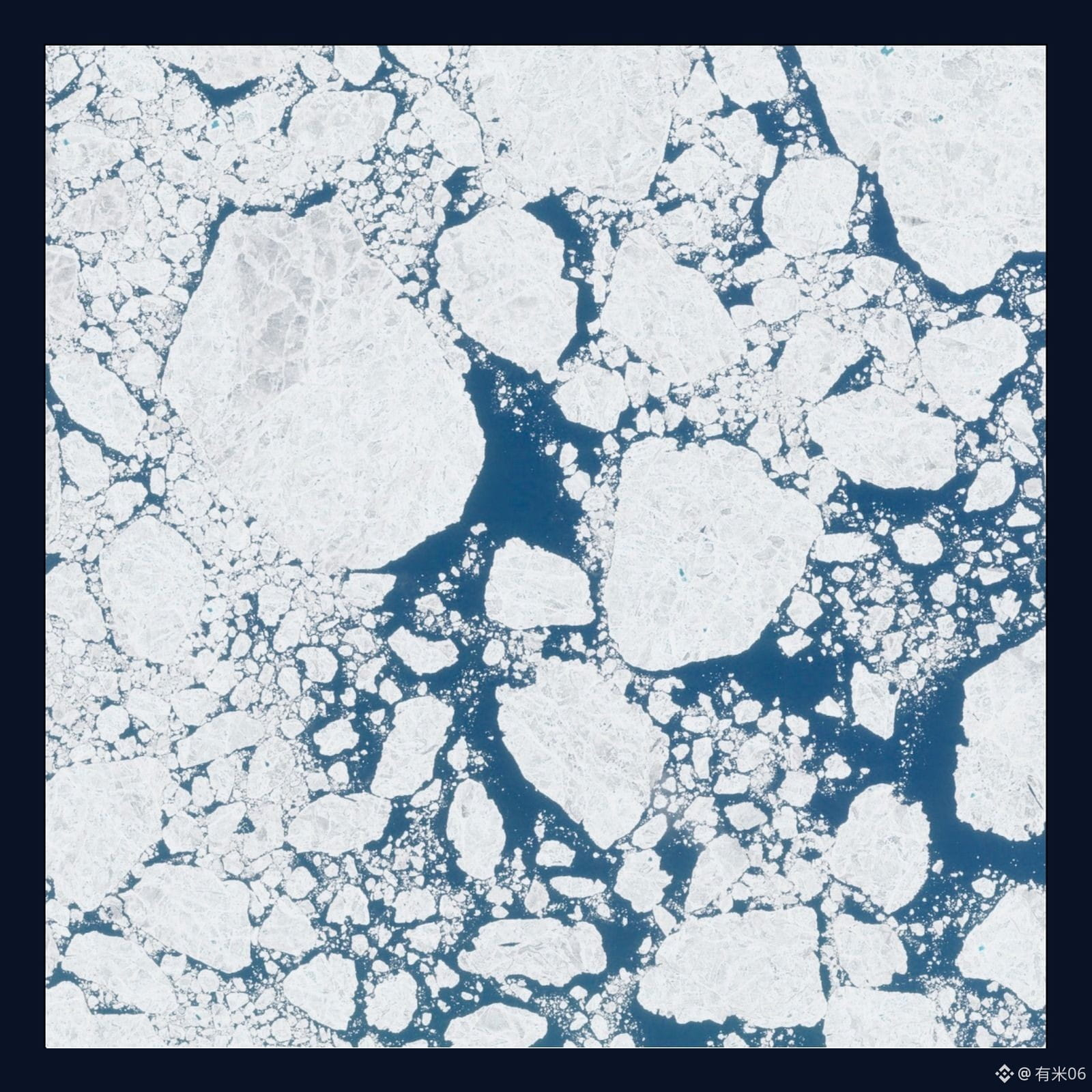
One-shot takeaway: Arctic sea ice is “moving strangely,” and it may not be due to odd winds—ice floes collide with each other, changing their speeds and the tempo of diffusion.
According to an UC Riverside press release (2026-09-16) and a *Physical Review Letters* paper (DOI 10.1103/g8y2-8ytt, Editors' Suggestion): most Arctic sea ice exists as individual floating ice floes (floe) that are pushed by the wind as they drift. Older models often account only for wind, which can’t explain the real velocity distributions and tends to overestimate diffusion. The UCR team (Shaddy / Greaney / Rallabandi) built a stochastic discrete-element model: the floes behave like particles colliding with one another on the ocean surface. When the ice is dense, they collide more frequently than wind forcing would suggest; each collision dissipates part of the wind’s energy. Using wind conditions and ice conditions measured across the Fram Strait (between Greenland and Svalbard), the team found that diffusion rates, velocity distributions, and changes in motion over timescales from hours to days all match—so long as you include the “collisions” ingredient.
Independent verification: EurekAlert (2026-09-15) and ScienceDaily (2026-09-17) report the same story. The authors note that the framework can help climate models represent collective behavior of “small ice floes” within larger-scale simulations, but this paper does not directly forecast where the ice will go in the future.
Figure: UCR press-release comparison graphic (real floes vs a disk-pile schematic) + cropped aerial footage of drifting ice floes; not AI
Data current through: PRL DOI 10.1103/g8y2-8ytt; UCR press release 2026-09-16; EurekAlert 2026-09-15
#北极 #research