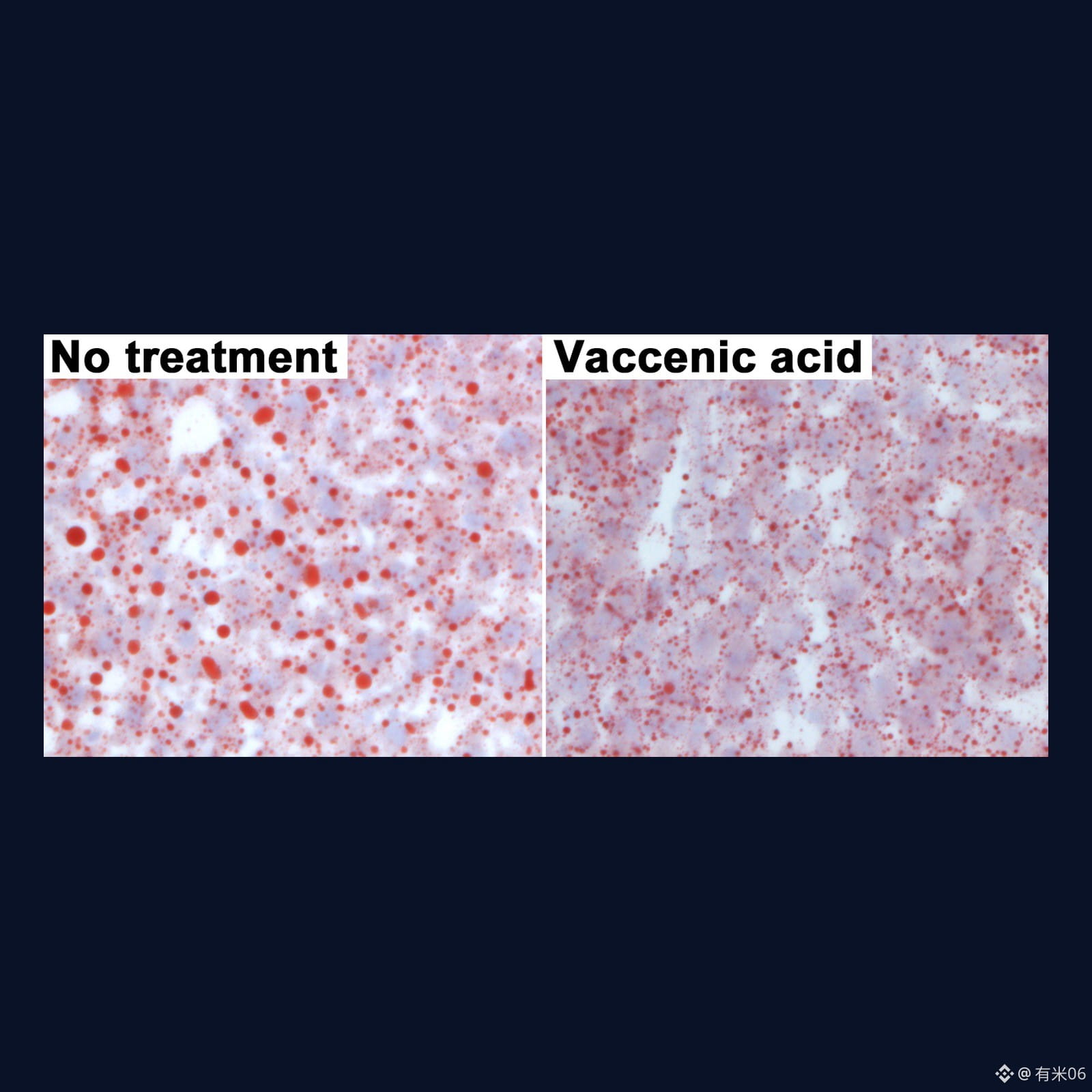
Konstanz University has put it beyond doubt this time: the LRH-1 “liver receptor” that’s turned on by cracking open the liver isn’t necessarily a molecule made by the human body itself—it’s a kind of bacterial fatty acid—vaccenic acid.
LRH-1 (NR5A2) is involved in inflammation, metabolism, and is also linked to tumors. It was found long ago in the gut-liver axis, but the ligand that actually binds to it has always been hard to identify. The Thomas Brunner / Anna Pia Plazzo team discovered that probiotics can produce these kinds of molecules; in the rumen of ruminant animals, bacteria also make vaccenic acid, which then enters our gut through meat and milk. In mouse experiments, after administering vaccenic acid, blood sugar and blood lipids decreased, and fatty liver also improved.
The paper is published in EMBO Molecular Medicine (DOI 10.1038/s44321-026-00516-3). The figure is from the press kit: liver fat staining—left: untreated, right: after vaccenic acid treatment (red staining; Credit: Anna Pia Plazzo).
#科学 #微生物学 #metabolism