
橙子Joyce
355 Posts

橙子Joyce
 Square Verified+
十年以上美股市场投研策略|WEB3项目投研|BTC.ETH.BNB.SOL|贵金属投资策略黄金.白银.铜|中长期价值投资者|推特X:@Joyce88AI

BNB Holder
Frequent Trader
8.7 Years
819 Following
35.5K+ Followers
43.6K+ Liked
Posts
All
Quotes
Videos
Live
PINNED

CZ_ANUU
·
--
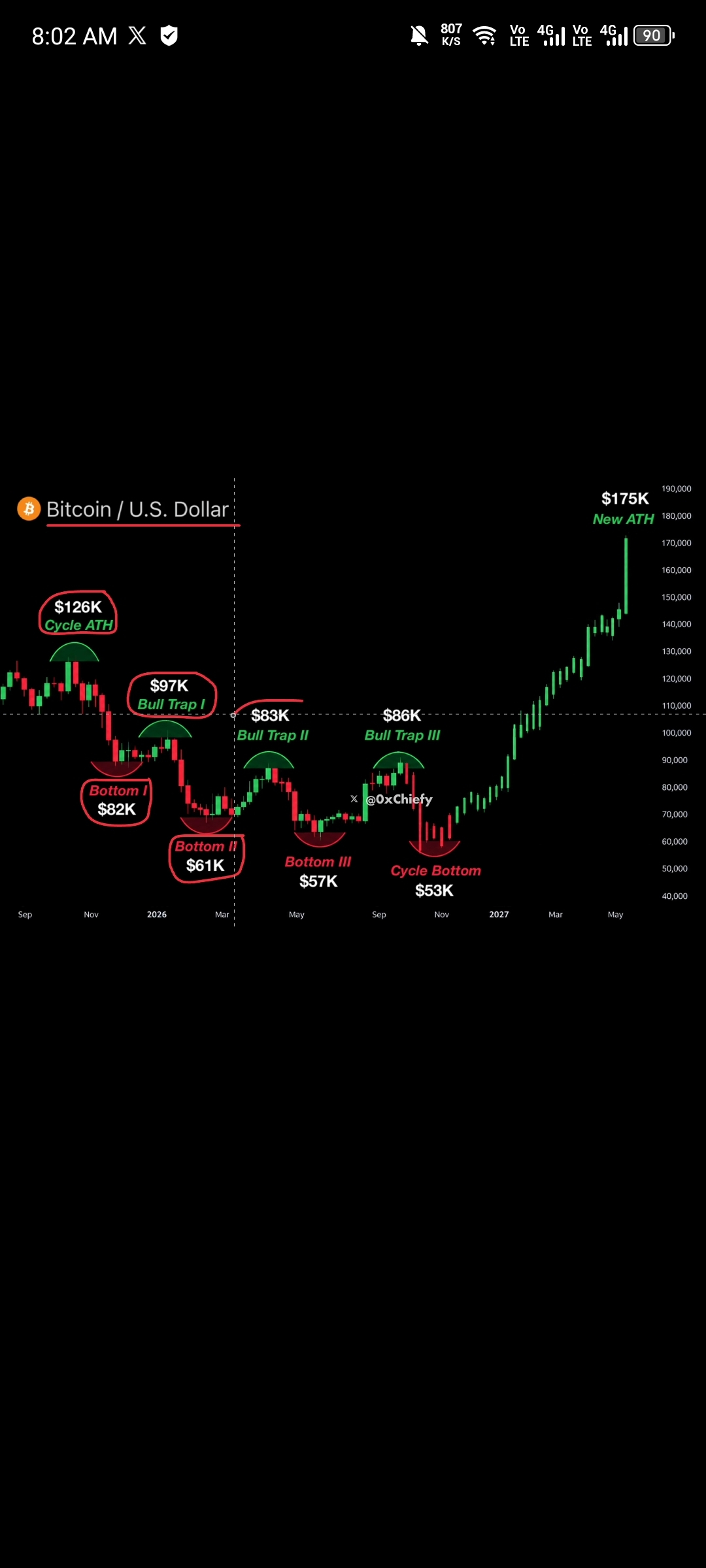
BullishWARNING: THE FINAL BULL TRAP IS HERE
Last week, I warned you Bitcoin would pump to $86K.
And now, we’re following the exact pattern I called.
The plan hasn’t changed:
$86K → $70K → $61K → $53K
Save this post and check back later.
Quick reminder:
I publicly called Bitcoin’s $17K bottom in 2022 and the $126K top in 2025.
Then I called the $58K local bottom in 2026.
My next call will be posted here first.
Follow and turn on notifications.
Last week, I warned you Bitcoin would pump to $86K.
And now, we’re following the exact pattern I called.
The plan hasn’t changed:
$86K → $70K → $61K → $53K
Save this post and check back later.
Quick reminder:
I publicly called Bitcoin’s $17K bottom in 2022 and the $126K top in 2025.
Then I called the $58K local bottom in 2026.
My next call will be posted here first.
Follow and turn on notifications.

奕泽YIZZE
·
--
When there are things you cannot do, turn instead to yourself to seek the answer.


路人1688luren
·
--
Institutions can now borrow money using large pancakes (BTC) without having to sell.
Circle launched a new service today: institutions can use Bitcoin as collateral to borrow $USDC . The process isn’t complicated—first convert BTC into its own cirBTC (1:1 wrapped), then stake it as collateral. The loan goes through lending protocols like Morpho, and afterward it will be connected to Aave. Custody is handled by Circle National Trust, and the chain used is its own $ARC plus Ethereum.
My first reaction: this is basically opening another door for institutions that don’t want to sell their coins. Previously, if they needed cash, they had to sell; now they can pledge the coins and borrow instead. Pair that with today’s BTC price crossing 85,000 and everyone scrambling to buy—it’s a pretty delicate timing. #Circle推出机构比特币抵押借贷
Circle launched a new service today: institutions can use Bitcoin as collateral to borrow $USDC . The process isn’t complicated—first convert BTC into its own cirBTC (1:1 wrapped), then stake it as collateral. The loan goes through lending protocols like Morpho, and afterward it will be connected to Aave. Custody is handled by Circle National Trust, and the chain used is its own $ARC plus Ethereum.
My first reaction: this is basically opening another door for institutions that don’t want to sell their coins. Previously, if they needed cash, they had to sell; now they can pledge the coins and borrow instead. Pair that with today’s BTC price crossing 85,000 and everyone scrambling to buy—it’s a pretty delicate timing. #Circle推出机构比特币抵押借贷




virus世态炎凉
·
--
🧧🧧🧧 After you learn how to read on-chain data, you’ll realize the way the market tells stories is completely different from before.#virus



慢就是快Mike
·
--
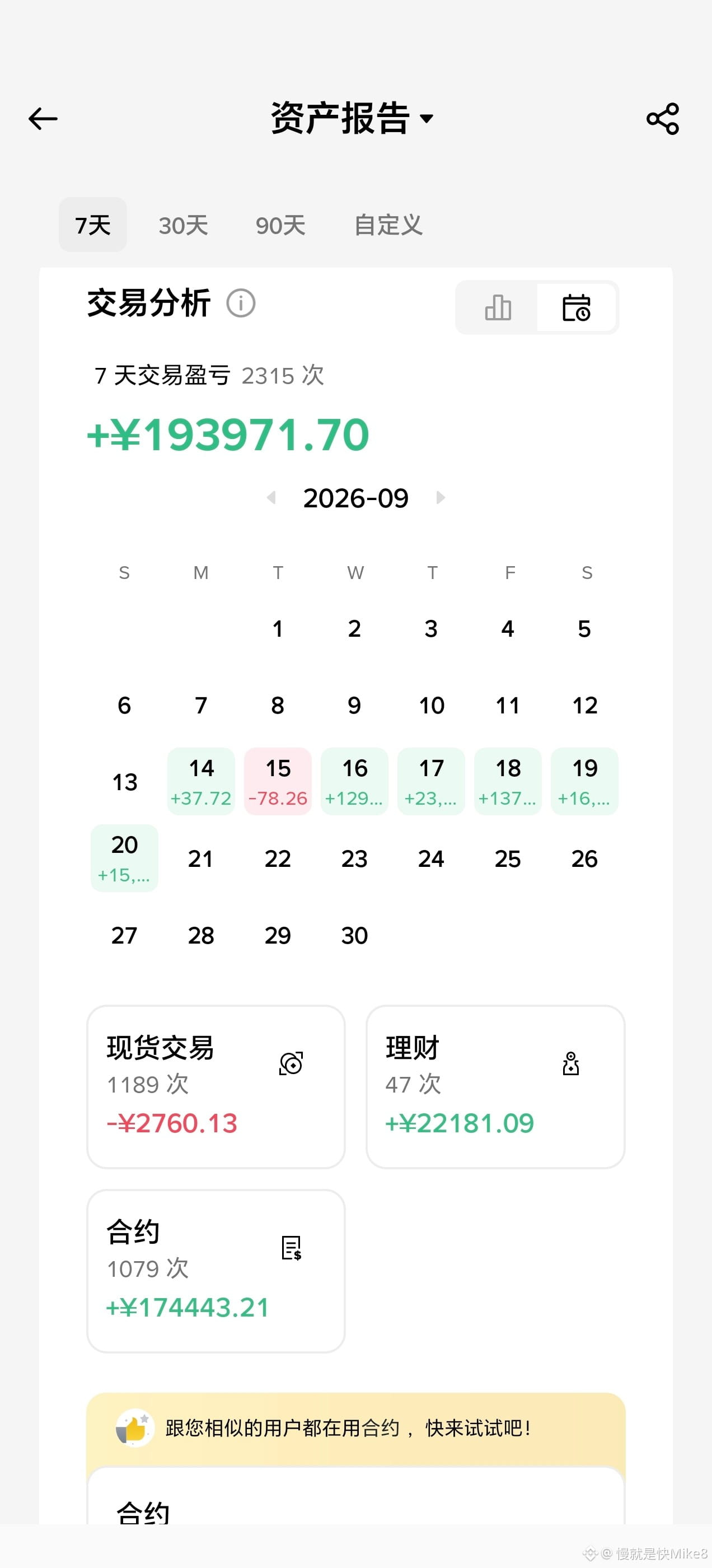
$DOGE This wave, brothers—are you feeling comfortable?!


晚风Vesper_1688
·
--
【Live Preview|Butterfly C President ➕ Top 100 Community Building】
🦋 Special live stream starts every day✨
⏰ Time: 15:00—17:30 (afternoon)
📍 Live room: Evening Breeze Vesper_1688 (Binance live room)
📈 In a choppy market, Butterfly C President continues to pursue extreme deflation and real token burns, moving forward steadily through community consensus 💪
📊 Key topics of the live stream: interpreting deflation data, alliance planning, track upgrades, and long-term ecosystem value 🌱.
You’re welcome to join on time, and wait together for the cycle to bloom 🦋🌟
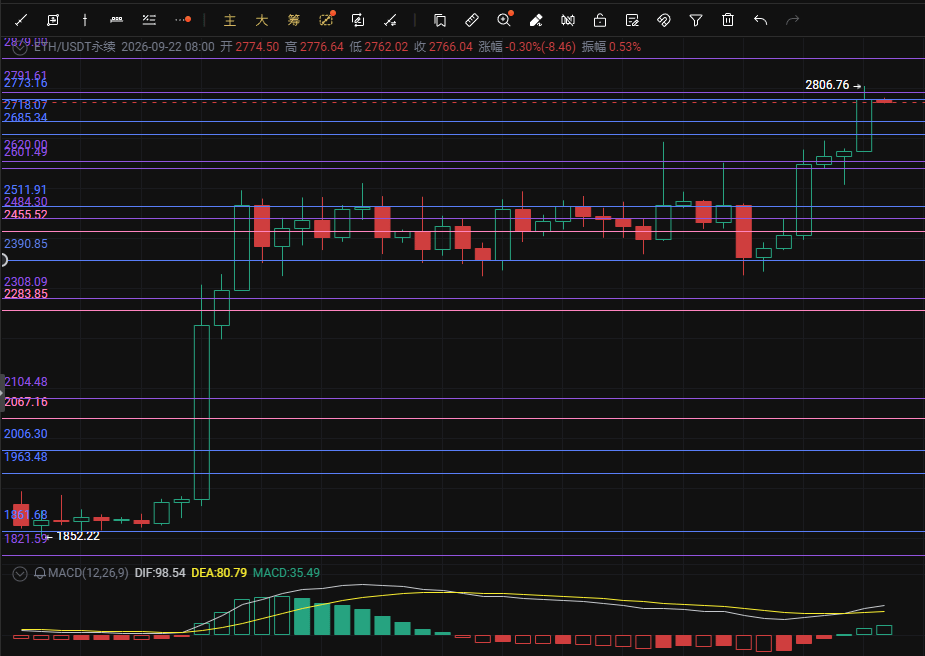
#以太坊突破2700美元
#1688家族family
🦋 Special live stream starts every day✨
⏰ Time: 15:00—17:30 (afternoon)
📍 Live room: Evening Breeze Vesper_1688 (Binance live room)
📈 In a choppy market, Butterfly C President continues to pursue extreme deflation and real token burns, moving forward steadily through community consensus 💪
📊 Key topics of the live stream: interpreting deflation data, alliance planning, track upgrades, and long-term ecosystem value 🌱.
You’re welcome to join on time, and wait together for the cycle to bloom 🦋🌟
#以太坊突破2700美元
#1688家族family



正乾商学--四条2
·
--
26.09.22 light rain
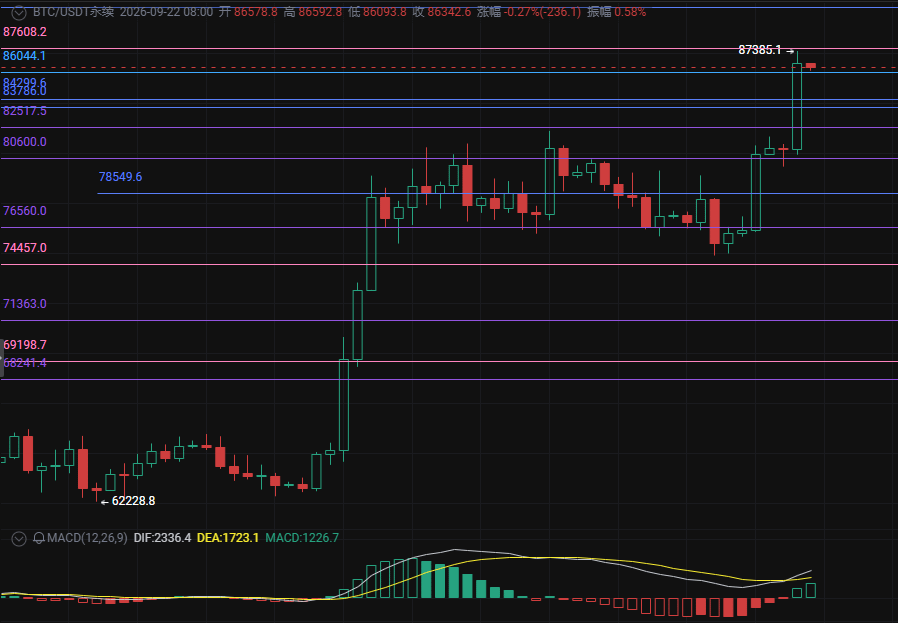
Yesterday BTC broke above 86,000 again, reached around 87,300 in the early hours, with a gain of over 7%. US spot BTC ETFs saw roughly $433M in net inflows with money staying put; Strategy also bought about 950 BTC.
This strong breakout—driven by liquidations on the short side, heightened short-term market enthusiasm, and the renewed return of ETF capital—means the next focus is whether ETF inflows will continue, and whether the price can hold above 86,000.
Recent strategy:
① Pressure zone above 86,800–87,600. Don’t chase longs; you can short temporarily, then look for a long after a pullback.
② 84,600–85,500 pullback zone. Pay close attention and wait for confirmation.
③ 83,600–84,200: relatively strong support. You can try a long position with a small size.
④ 80,600–81,300. If it breaks 82,500, and then pulls back to this zone, it’s a support level on a higher time frame and also a potential trend reversal point—be cautious, cautious, and even more cautious.
⑤ If 80,000 breaks, it suggests longs are weakening and the structure is weakening as well, with the possibility that shorts take control.
#比特币突破8.5万美元
Yesterday BTC broke above 86,000 again, reached around 87,300 in the early hours, with a gain of over 7%. US spot BTC ETFs saw roughly $433M in net inflows with money staying put; Strategy also bought about 950 BTC.
This strong breakout—driven by liquidations on the short side, heightened short-term market enthusiasm, and the renewed return of ETF capital—means the next focus is whether ETF inflows will continue, and whether the price can hold above 86,000.
Recent strategy:
① Pressure zone above 86,800–87,600. Don’t chase longs; you can short temporarily, then look for a long after a pullback.
② 84,600–85,500 pullback zone. Pay close attention and wait for confirmation.
③ 83,600–84,200: relatively strong support. You can try a long position with a small size.
④ 80,600–81,300. If it breaks 82,500, and then pulls back to this zone, it’s a support level on a higher time frame and also a potential trend reversal point—be cautious, cautious, and even more cautious.
⑤ If 80,000 breaks, it suggests longs are weakening and the structure is weakening as well, with the possibility that shorts take control.
#比特币突破8.5万美元
灼见
·
--
🚨 BTC breaks through $86K.
Highest in 8 months.
But the most important question now isn’t:
“How much more can BTC rise?”
Instead, it’s:
How real is this breakout?
Over the past few days, BTC has repeatedly cleared:
₿ $80K
₿ $82K
₿ $85K
₿ $86K
At the same time:
💰 The latest trading day net inflow into US spot BTC ETFs is about $433M
🏦 Strategy bought another 950 BTC last week
📈 BTC has reclaimed key long-term moving averages
🔥 Short squeeze pressure is accelerating the breakout
So the real question is now:
Is $80K–$82K NOW SUPPORT?
Because in a truly strong market,
it’s not about prices continuing to break resistance.
It’s about:
after the breakout, key levels are no longer given back to the shorts.
If $80K–$82K truly completes the resistance→support flip,
the next bigger battle in the market may be near $89K.
But if BTC quickly falls back below $82K,
then the leverage and short-squeeze components in this rally may be larger than we think.
Right now, I’m watching:
📍 $80K–$82K support
🎯 Resistance near $89K
💰 ETF flows for the next trading day
🔥 Whether leverage is quickly building back up
👇 What do you think?
Real breakout 🟢
or
a leverage-driven move 🔴?
#BTC #ETH #BNB
Highest in 8 months.
But the most important question now isn’t:
“How much more can BTC rise?”
Instead, it’s:
How real is this breakout?
Over the past few days, BTC has repeatedly cleared:
₿ $80K
₿ $82K
₿ $85K
₿ $86K
At the same time:
💰 The latest trading day net inflow into US spot BTC ETFs is about $433M
🏦 Strategy bought another 950 BTC last week
📈 BTC has reclaimed key long-term moving averages
🔥 Short squeeze pressure is accelerating the breakout
So the real question is now:
Is $80K–$82K NOW SUPPORT?
Because in a truly strong market,
it’s not about prices continuing to break resistance.
It’s about:
after the breakout, key levels are no longer given back to the shorts.
If $80K–$82K truly completes the resistance→support flip,
the next bigger battle in the market may be near $89K.
But if BTC quickly falls back below $82K,
then the leverage and short-squeeze components in this rally may be larger than we think.
Right now, I’m watching:
📍 $80K–$82K support
🎯 Resistance near $89K
💰 ETF flows for the next trading day
🔥 Whether leverage is quickly building back up
👇 What do you think?
Real breakout 🟢
or
a leverage-driven move 🔴?
#BTC #ETH #BNB


周周1688
·
--
Good morning
A new day, a day of good luck 💗
$BNB
#比特币突破8.5万美元
A new day, a day of good luck 💗
$BNB
#比特币突破8.5万美元


大丽7613
·
--
This is badass!
The Clarity Act was rejected, but the SEC opened an even bigger door for Bitcoin?
Just last Wednesday, after Congress flat-out rejected Clarity, the SEC suddenly made a move and rolled out a five-year “innovation exemption,” allowing eligible platforms to truly move U.S. exchange-listed stocks like Apple and Nvidia onto the blockchain for trading—including dividends and voting rights.
In other words, whether the Clarity Act passes or not doesn’t matter. I’ll just treat it as if it passed—because the SEC says so!
Look at this—this is official, national-level backing, and the market has already answered immediately: Bitcoin is back above $80,000, rising more than 5% at one point during the day. Crypto-related stocks rebounded in sync. Add the recent positive developments from a U.S.-China meeting, and the trend immediately starts to reverse. Bitcoin then quickly tests the major double-top resistance again around $82,000.
What’s even more interesting is that before the SEC’s announcement, the always-stubborn JPMorgan quietly flipped its stance. It said: Bitcoin ETFs are currently still weighed down by a whole bunch of shorts and hedging positions. Once those positions ease and begin to unwind, Bitcoin’s upside momentum could even be more ferocious than gold.
So the situation right now is this:
Congressional legislation can’t get through for the time being, so the SEC and CFTC will push forward using their regulatory authority instead—and the end result is the same!
On top of that, Clairty will also review the decision again in a few months. By then, the crypto market will definitely catch another wave of heat—could we be talking about a 10,000-point surge?
The Clarity Act was rejected, but the SEC opened an even bigger door for Bitcoin?
Just last Wednesday, after Congress flat-out rejected Clarity, the SEC suddenly made a move and rolled out a five-year “innovation exemption,” allowing eligible platforms to truly move U.S. exchange-listed stocks like Apple and Nvidia onto the blockchain for trading—including dividends and voting rights.
In other words, whether the Clarity Act passes or not doesn’t matter. I’ll just treat it as if it passed—because the SEC says so!
Look at this—this is official, national-level backing, and the market has already answered immediately: Bitcoin is back above $80,000, rising more than 5% at one point during the day. Crypto-related stocks rebounded in sync. Add the recent positive developments from a U.S.-China meeting, and the trend immediately starts to reverse. Bitcoin then quickly tests the major double-top resistance again around $82,000.
What’s even more interesting is that before the SEC’s announcement, the always-stubborn JPMorgan quietly flipped its stance. It said: Bitcoin ETFs are currently still weighed down by a whole bunch of shorts and hedging positions. Once those positions ease and begin to unwind, Bitcoin’s upside momentum could even be more ferocious than gold.
So the situation right now is this:
Congressional legislation can’t get through for the time being, so the SEC and CFTC will push forward using their regulatory authority instead—and the end result is the same!
On top of that, Clairty will also review the decision again in a few months. By then, the crypto market will definitely catch another wave of heat—could we be talking about a 10,000-point surge?
@大丽7613
is speaking[LIVE] 🎙️ Live trading together, AMA
7.5k listens

钞机八蛋
·
--
[Ended] 🎙️ The Ox Is Here / Everyone Board the Train?
9.9k listens

SPCXUS+0.42%
Verified

NVDAUS-0.50%
GOOGUS+0.59%
SPCXUS+0.42%
Verified

SPCXUS+0.42%

Partly True
Log in to explore more content