

The most important thing—the story about “4 billion new ONE” is more complicated than Binance’s warning suggests. In August, Harmony was indeed hacked: initially it was reported that an unauthorized minting of approximately 4 billion ONE took place, which amounted to about 26% of the then-circulating supply. A significant portion of these coins ended up on exchanges, and ONE then fell by about 40%.
But then Harmony found that the scale of the technical vulnerability was even bigger: the cross-shard receipt replay issue allowed confirmations to be reused and ONE to be created without the corresponding debit. Harmony released an emergency patch, and then rolled the network back to the state before the exploit—meaning the consequences of forged-mint at the main-network level were undone.
And this is what matters for the current price.
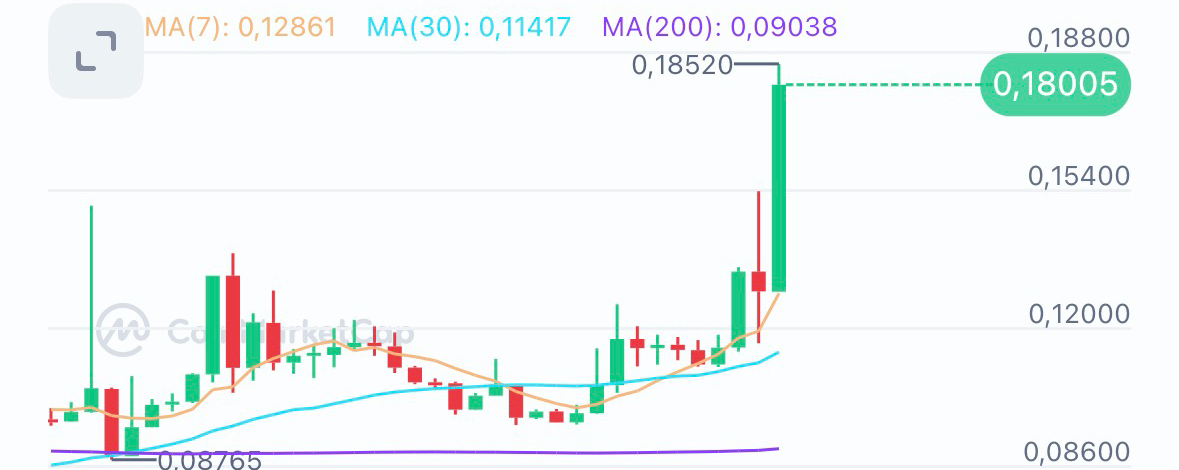
After the catastrophic drop, the market for a while was valuing ONE almost like a “dead” asset. On September 15, the price was around $0.000697, on September 16 there was a jump of about 55%, and today the move continued.
With such an initial setup, even a relatively small inflow of capital is enough for the price to move by dozens of percent.
There’s also a second major factor: Harmony plans to give up its own Layer-1 and migrate ONE to Ethereum as an ERC-20. The project proposes to do a final snapshot, issue ONE on Ethereum, and move exchange listings there. At the same time, it is stated that the total supply and the emission schedule must remain unchanged.
So the market is now effectively trading not Harmony’s old story, but a speculation around:
exploit → massive collapse → rollback → migration to Ethereum → extremely low capitalization → a sudden surge of speculative volume.
And then a third factor appears—short squeeze. After the exploit, the closure of L1, and the natural expectation of a very strong bearish positioning, I haven’t yet found sufficiently reliable up-to-date data on Binance Futures OI/liquidations to claim that short liquidations are the main driver of today’s +163%, but the structure of the move looks like that: a sharp acceleration after the initial break plus a huge increase in trading volume. This is a hypothesis, not a confirmed fact.