


Fear that is familiar to everyone: “What if I put money in—and lose it?”
If you’ve ever thought about this before transferring your first money to a crypto exchange, that’s normal. Moreover, it’s healthy caution. For many, crypto still sounds like something that “has nothing real behind it”—just numbers on a screen.
And that’s normal—but you have a way to make sure yourself. You can verify Binance’s reliability hands-on, in a couple of minutes. In this article, we’ll cover what Proof of Reserves is, why it matters specifically to you, and we’ll walk you step by step through where to click to verify that your money is indeed backed.
What is Proof of Reserves
Proof of Reserves (PoR) is proof of reserves. Put simply: a public confirmation that users’ funds are backed by real coins 1:1. That means for every USDT dollar you have on Binance, there’s a real USDT in the exchange’s reserve. For every Bitcoin you have—there’s a real Bitcoin.
How it works
PoR relies on cryptography, but the idea is simple, and it can really be understood without technical education.
Step one—balance snapshot. Binance “takes a photo” of all users’ balances at a specific moment in time.
Step two—overall fingerprint. All these millions are condensed into one single overall “fingerprint”—as if they were melted into one final number. You can see the total amount of funds, but you can’t see who has how much. Your balance is included in the verification, but your personal numbers remain hidden—and you can’t see other users’ either.
Step three—honest math. On top of that, a mathematical method is applied to confirm that all balances were added correctly and that no user has a hidden “minus” that would reduce the overall debt the exchange owes to people.
The result. Binance compares two things: how many coins are actually in its wallets (this is visible on the blockchain, publicly) and how much the exchange owes users. If reserves are no less than liabilities—everything is backed. This metric is called the coverage ratio, and for key assets it stays above 100%. That means Binance has even more reserves than it owes users.
How to check it yourself—step-by-step guide
Now the most important part. Everything described above can be checked personally, and it takes just a couple of minutes. There are two levels of verification: general (available to everyone) and personal (for your account).
Level 1. General reserves verification (without logging into your account)
Step 1. Open the Proof of Reserves page on the Binance website
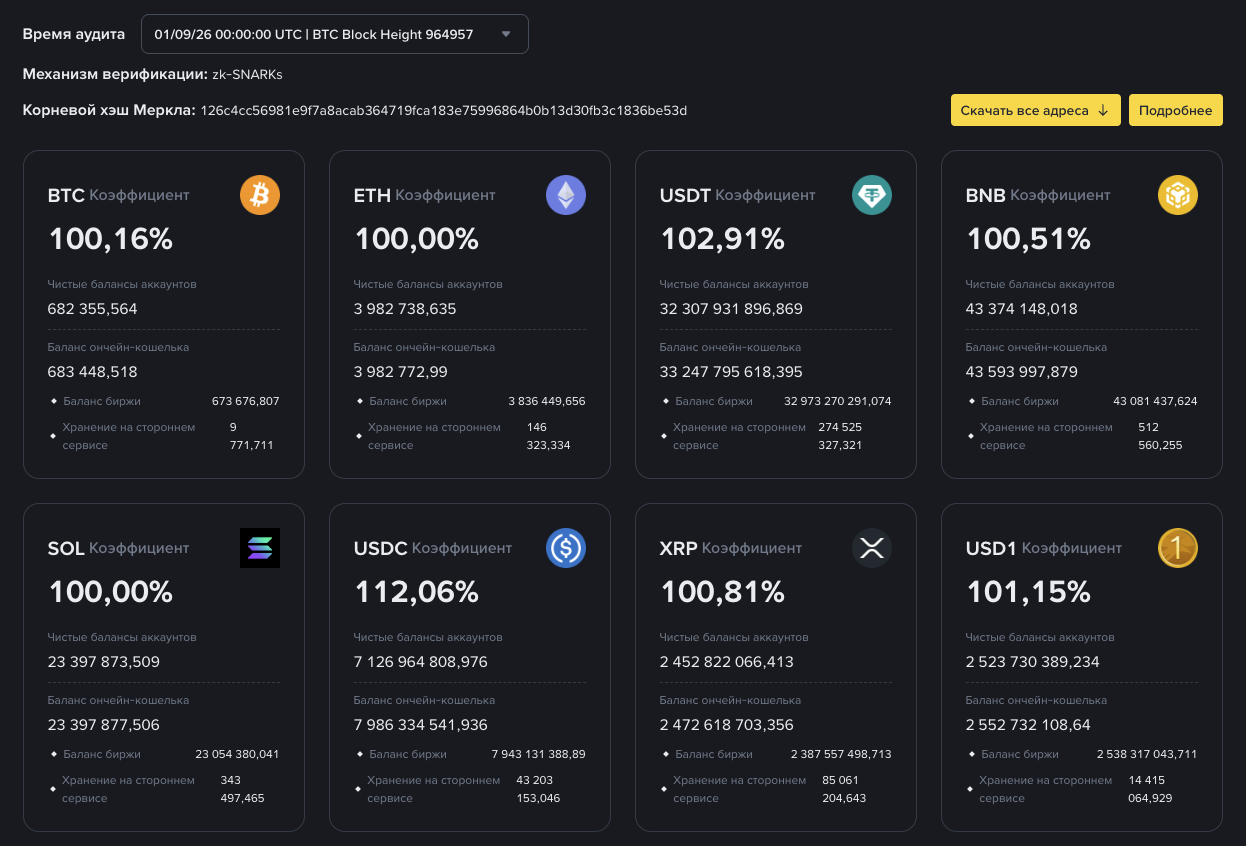
Step 2. On the page, you’ll see a list of assets (BTC, ETH, USDT, and others) and next to each one the coverage ratio. Pay attention that for key coins it’s higher than 100%.
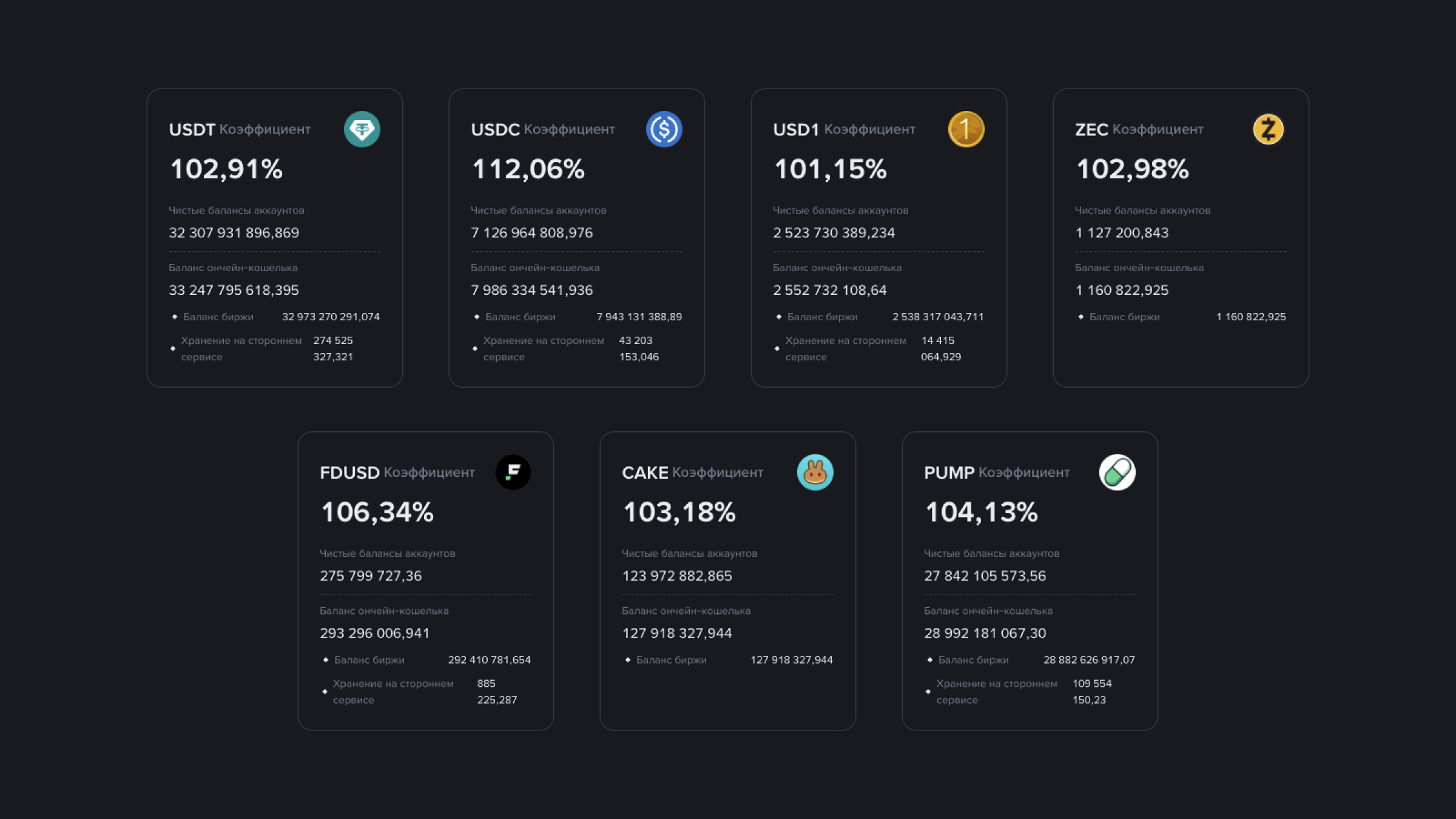 Asset table with coverage ratios, arrow pointing to the number >100%
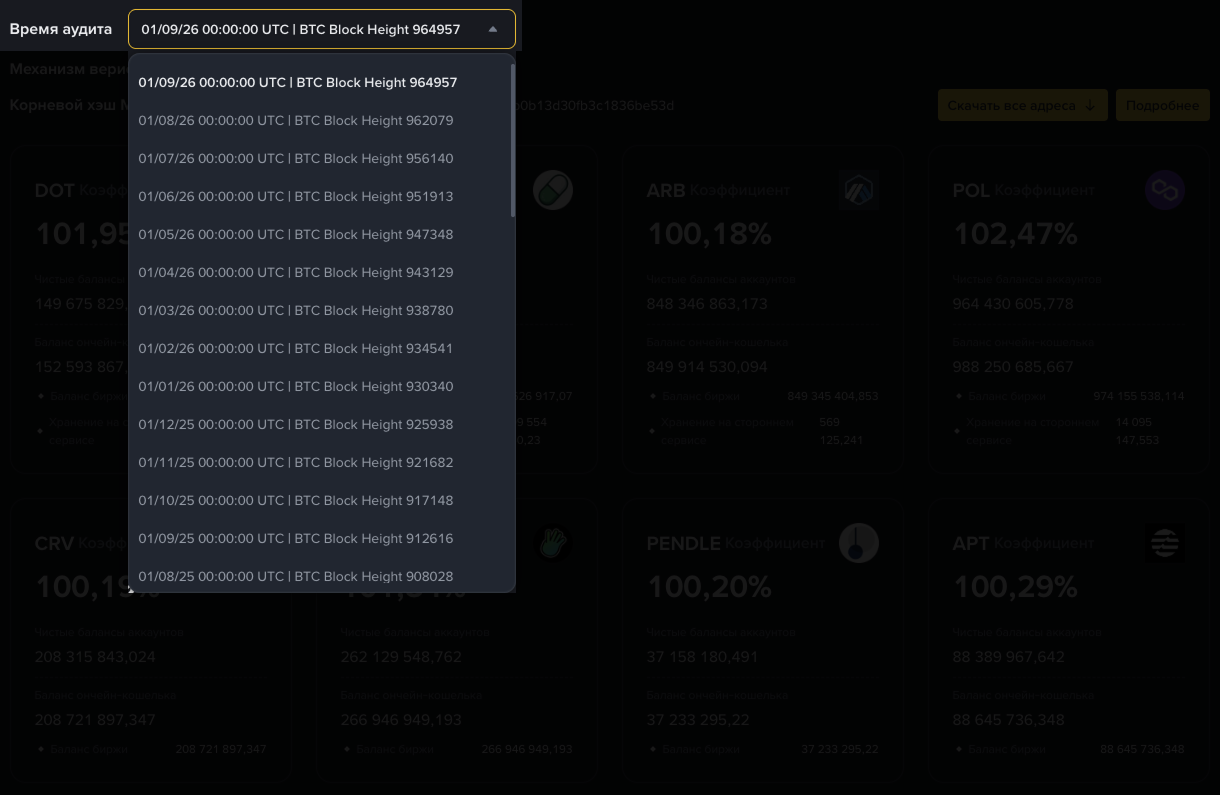
Step 3. You can also see the date of the latest report here. Binance publishes these reports regularly, every month—that means it’s not a one-time check, but an ongoing practice.
Level 2. Personal verification of your balance (with account login)
This is the moment when you make sure that it’s your funds specifically that were included in the verification—not some general nice picture, but your actual balance.
Step 1. Log in to your Binance account on the official website.
Step 2. Go to the Wallet section and go to Verification.
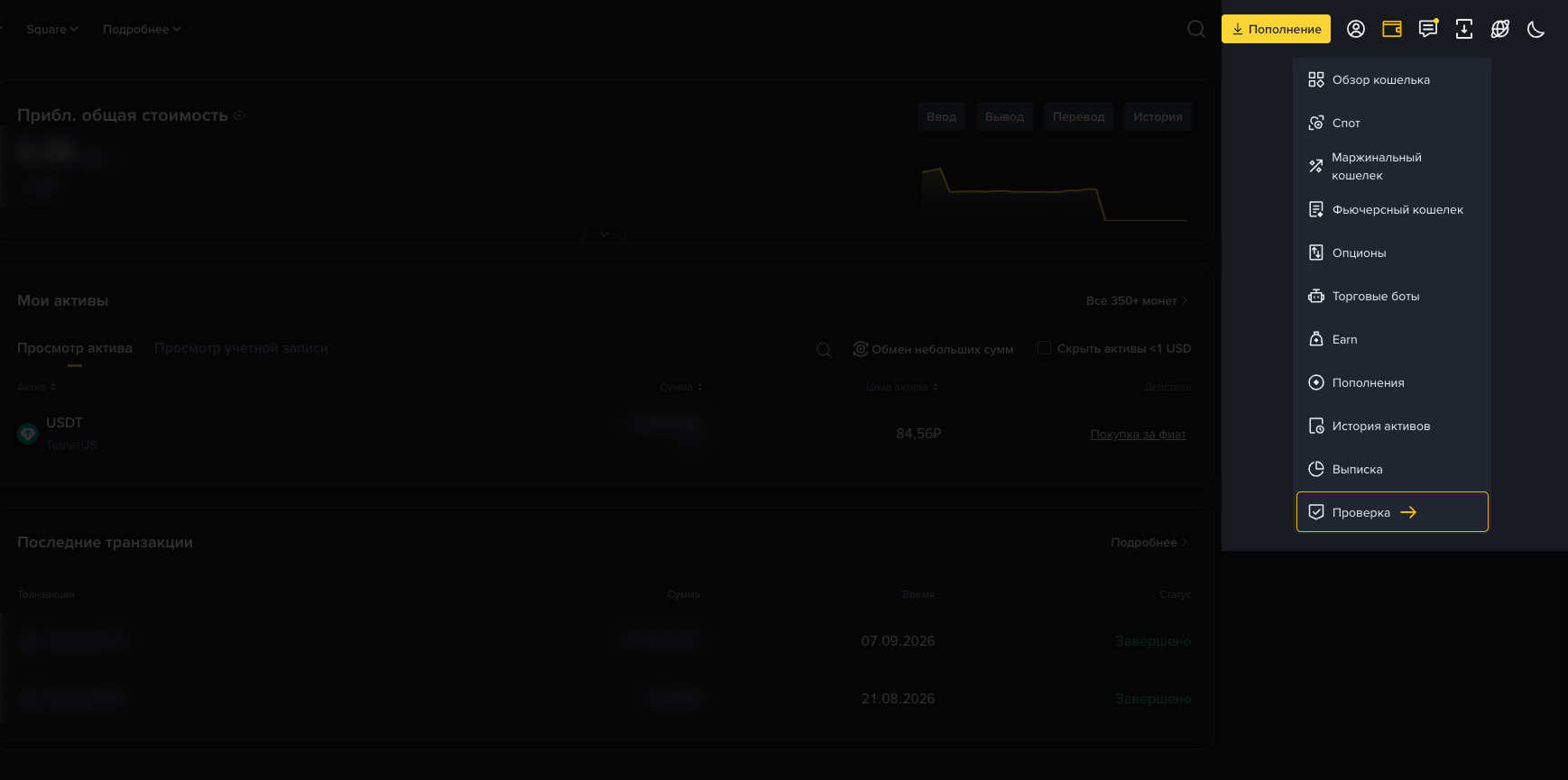
Step 3. Choose the latest available audit and the required verification date.
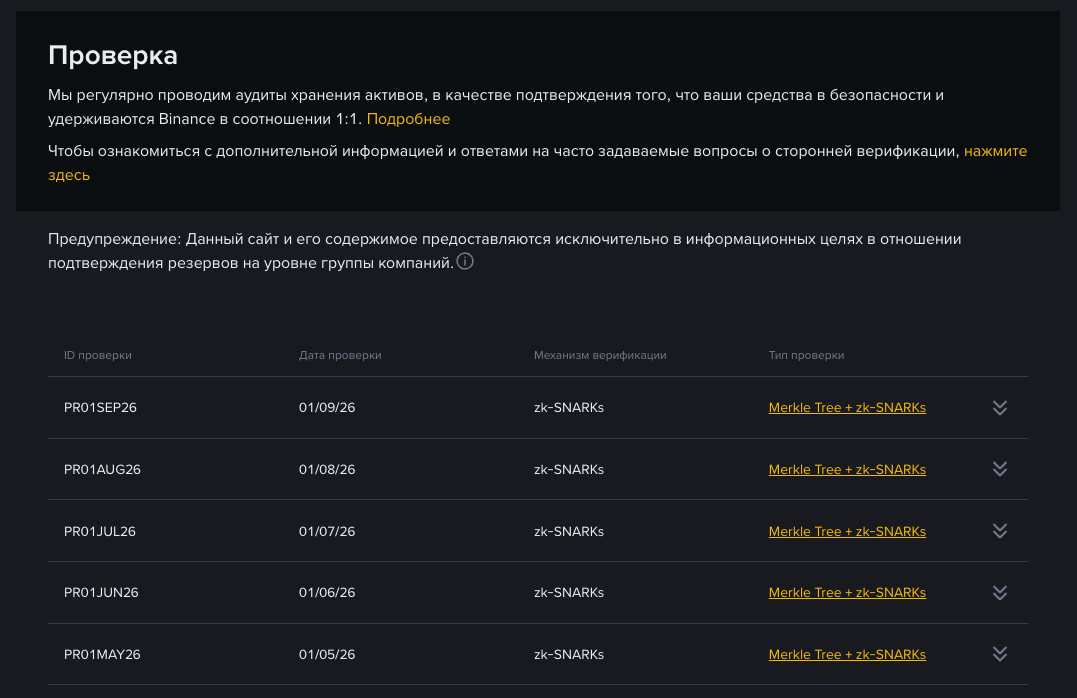
Step 4. On the page that opens, you’ll see your personal Record ID and Merkle Leaf—unique identifiers linked to your account and to this specific snapshot. It also shows which assets were included in the verification and what your balance was at the time of the snapshot.
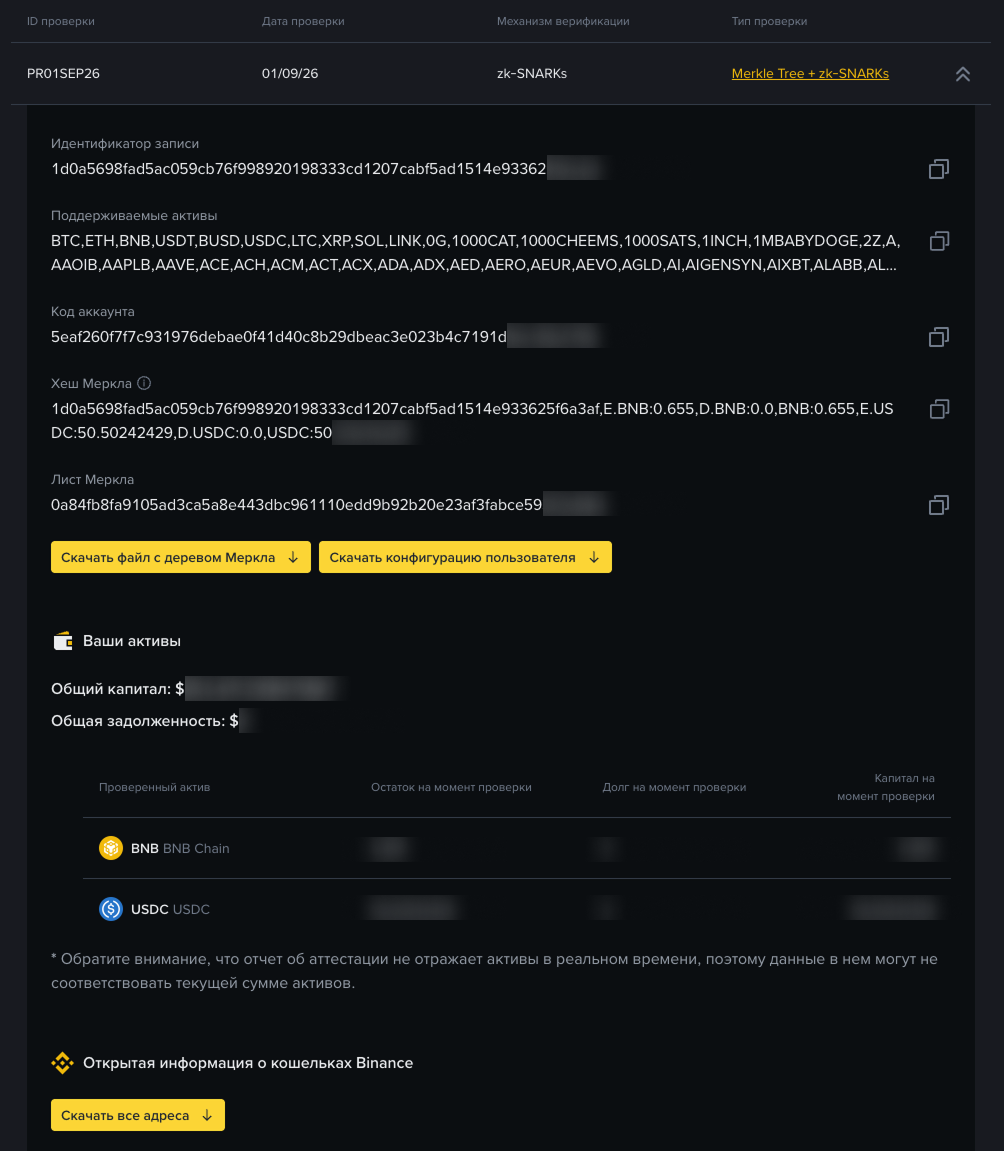
Step 5. Using this Record ID, you can independently confirm that your balance was indeed accounted for in the overall reserves report. If you want, you can download the data from the page for your own reconciliation.
Done. You’ve just verified that your money on Binance is actually backed—independently, without promises.
Why this matters
Trust in crypto isn’t built on words and advertising. It’s built on the ability to verify. Proof of Reserves is exactly the tool that turns the question “can you trust the exchange?” from the realm of belief into the realm of facts.
You don’t need to be a programmer or understand cryptography. Just open the page, look at the numbers, and if you want, check your personal balance. Everything is open and accessible to anyone, 24/7.
You don’t have to trust blindly. You can verify.
Follow our social media to learn more useful information, take part in activities, and join the discussion in our community:
News on Telegram | Telegram community | Instagram | YouTube | X
This material is for educational purposes and is not financial advice. For the latest coverage ratios and the date of the most recent report, see the official page Proof of Reserves—data is updated regularly.