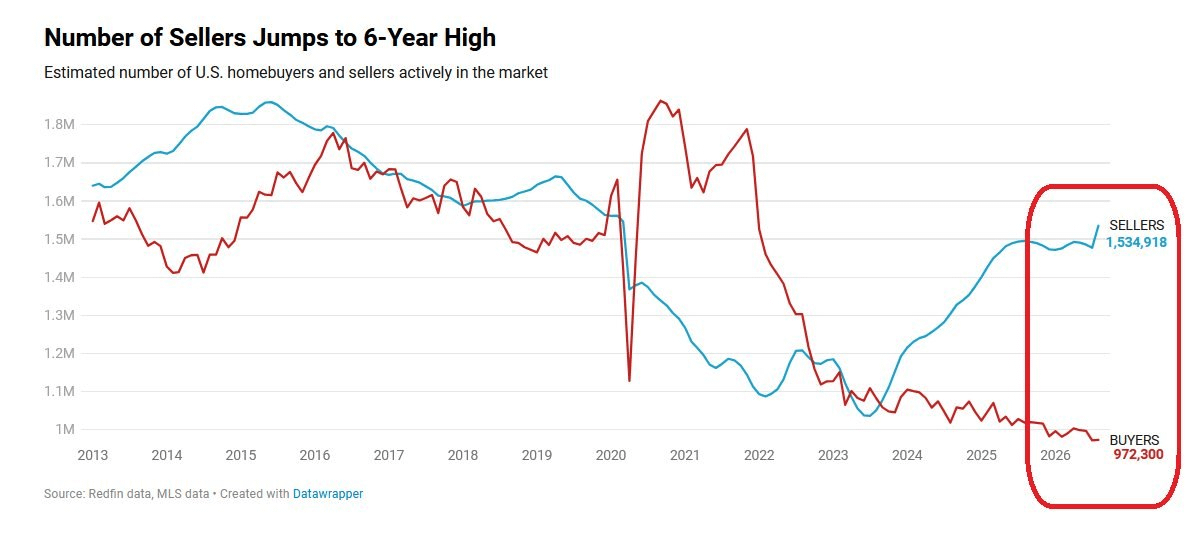
The American real estate market has just recorded the largest excess of sellers over buyers in history.
In August there were 1,534,918 active sellers and 972,300 buyers.
A difference of 562,618 people.
Record high for the series.
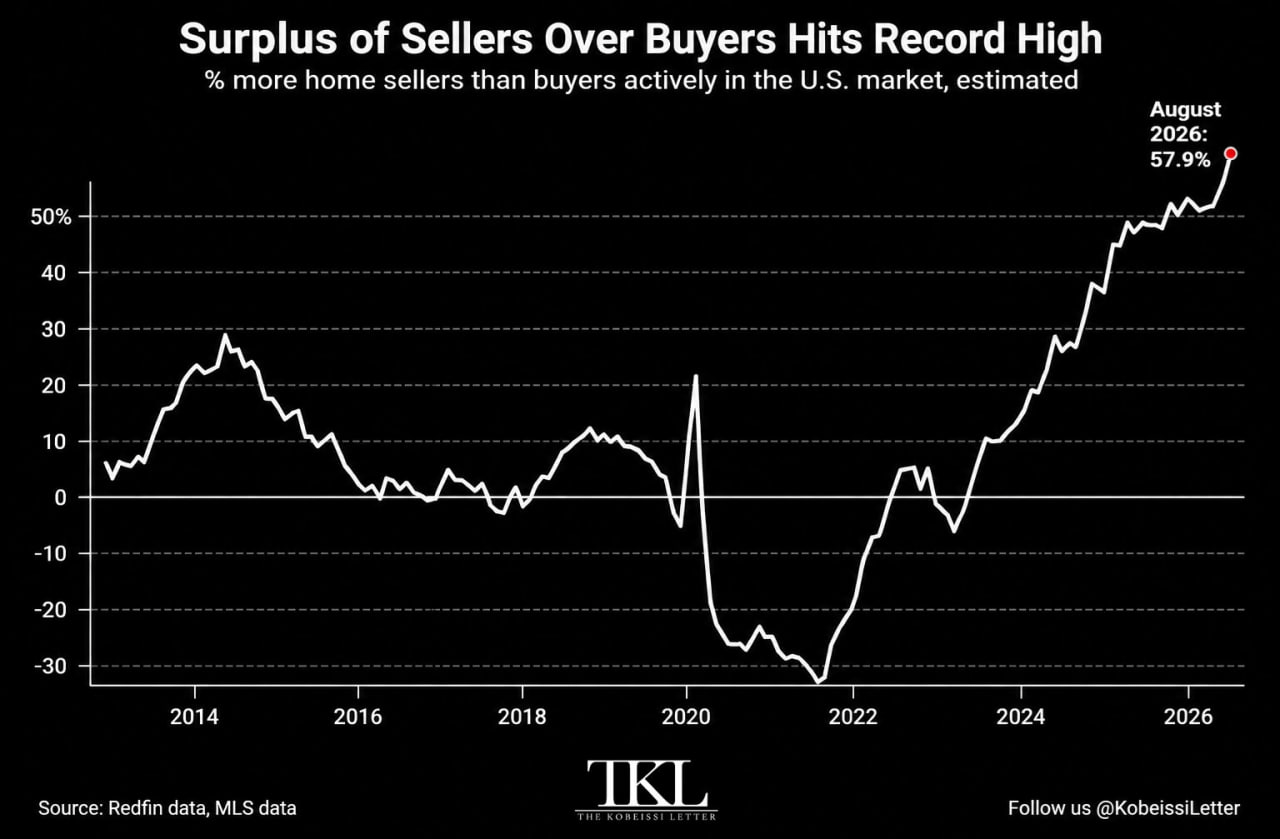
In percentage terms, there were 57.9% more sellers than buyers. In the previous month, it was 52.1%.
The jump in sellers in a single month was also the largest ever recorded since 2013.
And buyers barely moved. They remained at the second-lowest level in the series of all time.
36 of the 49 main U.S. markets are buyer’s markets.
Nashville has 139% more sellers than buyers. Miami, 138%. Houston, 131%.
The reason isn’t a mystery.
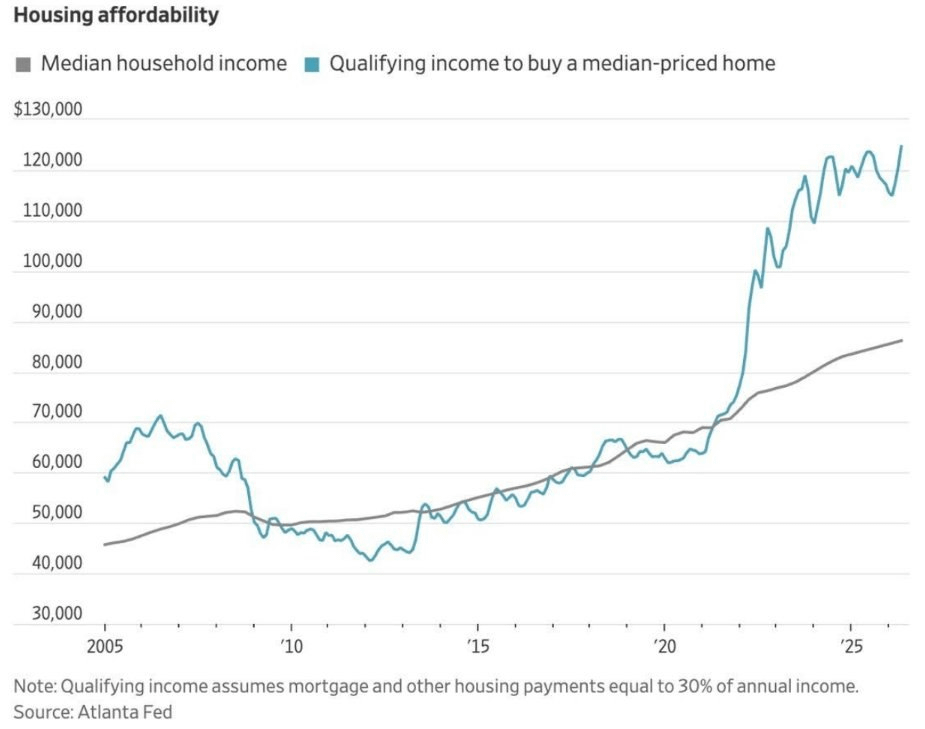
To buy a median home in the U.S. today, you need an income of about $123 thousand per year.
The median income of American households is about $85 thousand.
Until 2021, these two lines were basically stuck together. Whoever had the median income could buy the median home.
Today, you’re short by almost $40 thousand in income to reach the same property.
The American buyer isn’t waiting for the right moment. He’s been pushed out of the market.
Now combine that with today’s FOMC meeting.
Real estate is the main channel through which monetary policy reaches the real economy. Interest rates rise, mortgage rates rise, and the buyer disappears.
But the buyer disappeared before the tightening even started.
The Fed is about to tighten a market that’s already tight to the limit.
And there’s an irony inside the index that it says it’s fighting.
Housing is the largest component of the U.S. core CPI.
A real estate market with a record number of sellers and a low number of buyers brings down home and rent prices with a lag of a few quarters.
In other words, the largest component of the core is already working in the Fed’s favor by itself.
Raising rates here won’t accelerate this disinflation. It accelerates the breaking of activity that comes with it.
This is the same constraint that shows up in the interest cost of debt, in the energy shock, and now in real estate.
The Fed can make an adjustment. It can’t sustain a long cycle of rate hikes. I’ve already talked about that here in my profile.
And when a central bank runs out of space on both sides, who ends up setting the price is the Treasury.
Debt issuance composition, long-term debt buybacks, duration management.
Bitcoin may feel it in the short term with this hawkish cycle narrative, but the market will soon realize that fiscal math is the dominant one.
Are you paying attention to this?