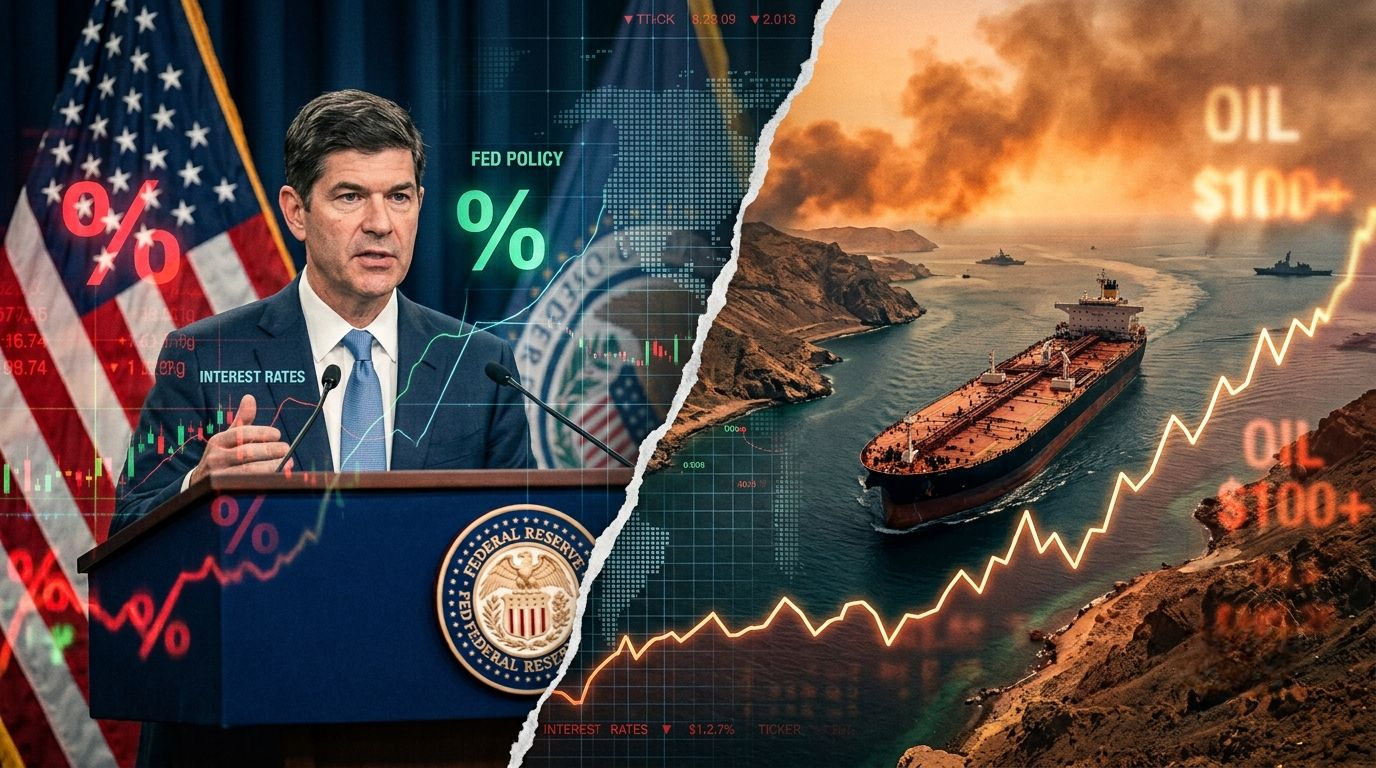
Headlines are buzzing with loud claims about the «Hormuz Strait blockade» and geopolitics. And although the phrase about «the Fed not reopening shipping routes» sounds nice, it turns a blind eye to the real market mechanism.
The Fed raises rates not to extract barrels or to send tankers through conflict zones. Rates work through demand.
How it works in practice:
High oil ($100+)> growth in production costs, logistics, and fuel.
A tight Fed policy > expensive credit, a slowdown in business activity, and cooling consumer demand.
The end result > recession fears reduce global demand for energy, which ultimately pushes down the price of oil.
The Fed can’t create new oil, but it can squeeze the economy so that this oil simply becomes unnecessary to anyone at that price. Indeed, for markets (especially crypto) this is the worst-case scenario: high inflation driven by raw materials forces regulators to keep rates elevated for longer than planned, draining liquidity from risky assets.
But don’t confuse helplessness with a plan. The Fed hits what it can reach — consumers’ pockets.
#FedRateWatch #ZcashRises6%
#BitcoinFalls4%
$BTC
$CL $BZ
The Fed raises rates not to extract barrels or to send tankers through conflict zones. Rates work through demand.
How it works in practice:
High oil ($100+)> growth in production costs, logistics, and fuel.
A tight Fed policy > expensive credit, a slowdown in business activity, and cooling consumer demand.
The end result > recession fears reduce global demand for energy, which ultimately pushes down the price of oil.
The Fed can’t create new oil, but it can squeeze the economy so that this oil simply becomes unnecessary to anyone at that price. Indeed, for markets (especially crypto) this is the worst-case scenario: high inflation driven by raw materials forces regulators to keep rates elevated for longer than planned, draining liquidity from risky assets.
But don’t confuse helplessness with a plan. The Fed hits what it can reach — consumers’ pockets.
#FedRateWatch #ZcashRises6%
#BitcoinFalls4%
$BTC
$CL $BZ