
Mira小白桃
565 Posts

Mira小白桃
推特X:xiaobaitao05,越南胡志明,边学Web3边看市场,每下午准时开播陪你聊行情和热点, 分享学习心得, 陪新手一起成长

BNB Holder
High-Frequency Trader
4.1 Months
257 Following
16.4K+ Followers
2.2K+ Liked
Posts
All
Quotes
Videos
Live

PINNED



Leo - F0
·
--
Bullish🧧🧧🔥GOOD MORNING FROM DUBAİ, FAMİLY.🔥🧧🧧
I told you to buy $ZEC 💛 when it was at $30.
As I told you before, $ZEC 💛 will be 3K.💎
$BTC 🔥🔥🧧🧧
#1688家族family 💚 @周周1688
#比特币突破8万美元 #ZcashRises6% #xrp #zec
I told you to buy $ZEC 💛 when it was at $30.
As I told you before, $ZEC 💛 will be 3K.💎
$BTC 🔥🔥🧧🧧
#1688家族family 💚 @周周1688
#比特币突破8万美元 #ZcashRises6% #xrp #zec

Mira小白桃
·
--
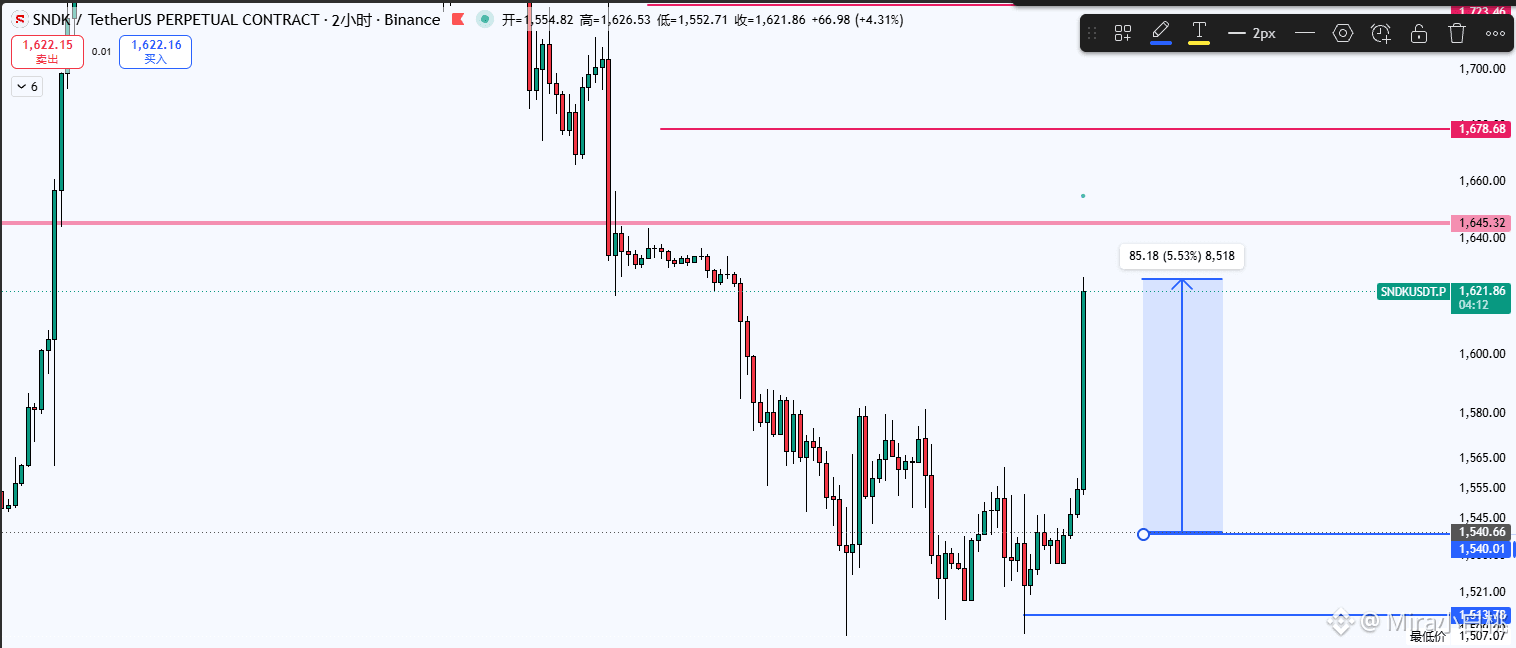
$SNDK Hey everyone, about Sandisk 1450—if it hasn't broken through, that's still not an M head!
But you still need to be cautious because the key area wasn’t touched.
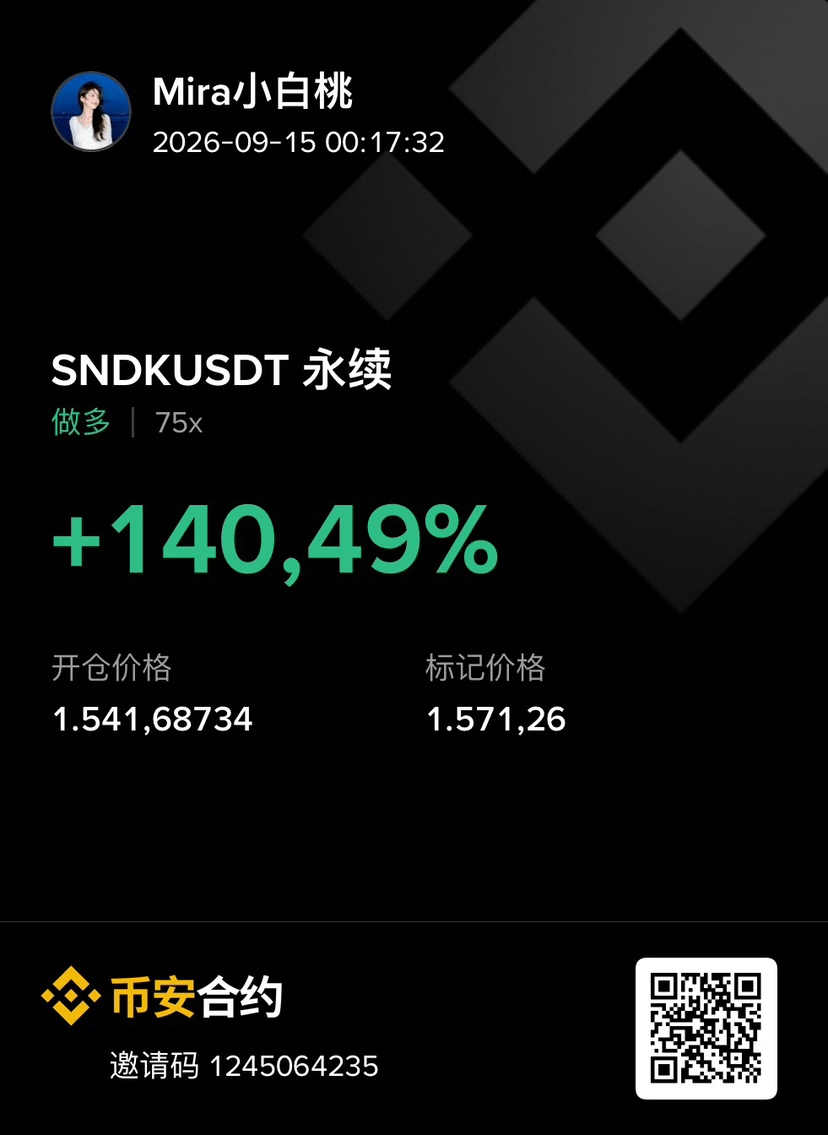
For Sandisk 1525-1550, I’ve kept telling you during the live stream to pay attention to this zone. Next, you’ll be taking profit with your operations 😁
Tomorrow we’ll livestream as usual. Don’t forget to come to the live room at 4:30 PM!
$SNDK
But you still need to be cautious because the key area wasn’t touched.
For Sandisk 1525-1550, I’ve kept telling you during the live stream to pay attention to this zone. Next, you’ll be taking profit with your operations 😁
Tomorrow we’ll livestream as usual. Don’t forget to come to the live room at 4:30 PM!
$SNDK

慢就是快Mike
·
--
$ETH Will the rate hike affect the bull market???
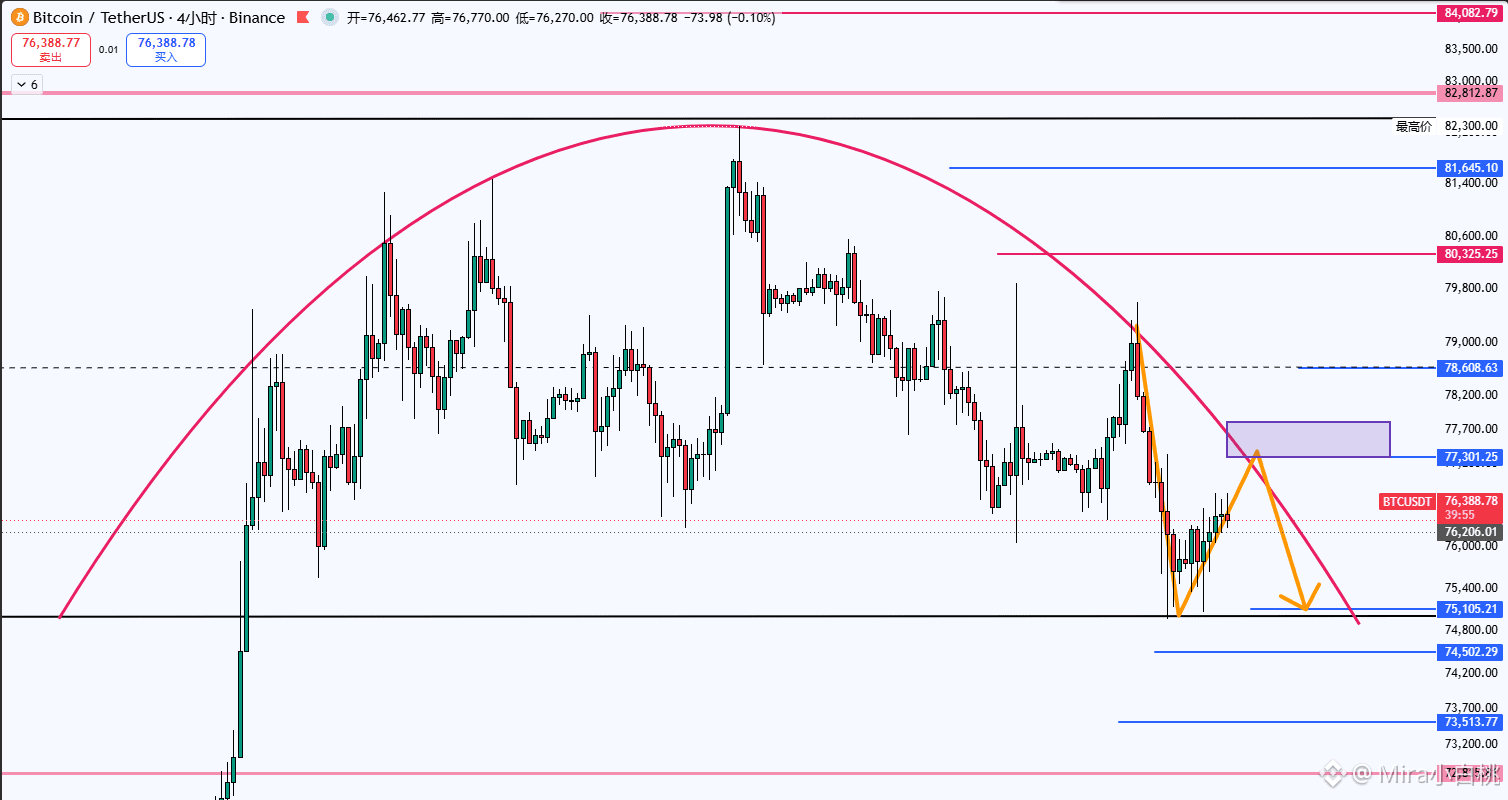
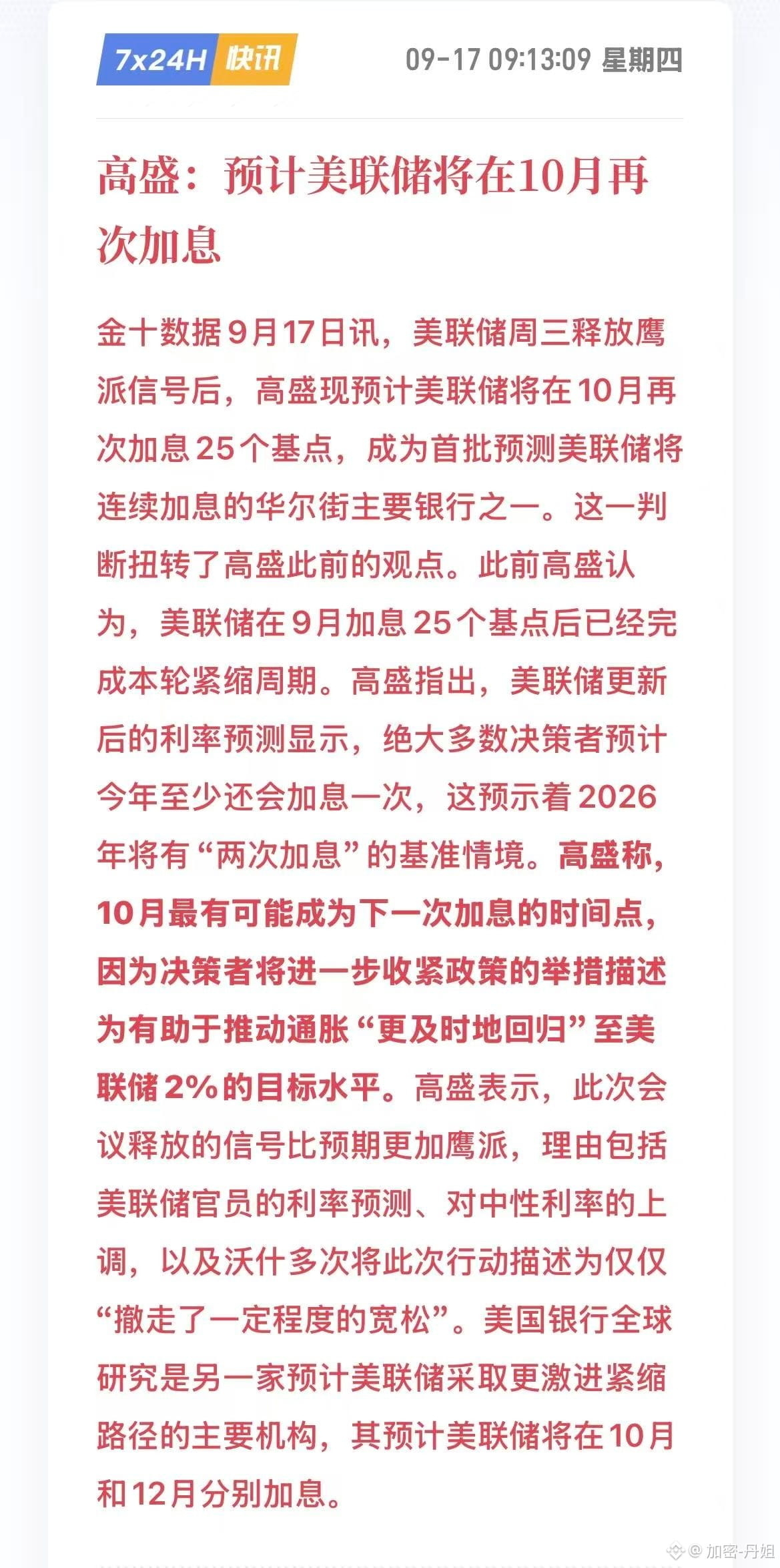
Last night, the Fed raised rates by 25 basis points as expected, bringing the federal funds rate to 3.75%–4%. After the news was released, BTC didn’t fall—rather, it rebounded, briefly reclaiming $76,000. ETH also followed with a bounce. But Dan Jie believes that what’s truly worth watching now isn’t the 25 basis points themselves, but what the Fed is planning to do next.
This time the hike was within expectations, and the market had already priced in the negative news in advance. So when the announcement landed, short-covering showed up, and it’s not surprising that BTC was pushed up.
However, judging from the policy signals, inflation is still on the high side, and the dot plot hasn’t fully shifted toward easing. By the end of 2026, the median rate is still around 3.9%.
Last night, the Fed raised rates by 25 basis points as expected, bringing the federal funds rate to 3.75%–4%. After the news was released, BTC didn’t fall—rather, it rebounded, briefly reclaiming $76,000. ETH also followed with a bounce. But Dan Jie believes that what’s truly worth watching now isn’t the 25 basis points themselves, but what the Fed is planning to do next.
This time the hike was within expectations, and the market had already priced in the negative news in advance. So when the announcement landed, short-covering showed up, and it’s not surprising that BTC was pushed up.
However, judging from the policy signals, inflation is still on the high side, and the dot plot hasn’t fully shifted toward easing. By the end of 2026, the median rate is still around 3.9%.


心月势不可挡
·
--
It isn’t a flood of panic to raise interest rates, but it will change the price of capital and the ranking of assets.
In a low-interest-rate environment, many assets can be supported by liquidity; once rates rise, the market will evaluate profits, valuations, and risks more seriously. For investors, what truly matters isn’t predicting every rate hike, but assessing whether the interest-rate core will remain higher for the long term—and whether corporate earnings can absorb the increase in funding costs.
In a low-interest-rate environment, many assets can be supported by liquidity; once rates rise, the market will evaluate profits, valuations, and risks more seriously. For investors, what truly matters isn’t predicting every rate hike, but assessing whether the interest-rate core will remain higher for the long term—and whether corporate earnings can absorb the increase in funding costs.



正乾商学--四条2
·
--
Are you really suited to make a living by trading?
Serial [5]
⑤ Only after you solve the first four questions will you truly stand at the starting line of trading
Pay attention.
What I covered earlier—
income sources, daily routine, time you can trade, trading instruments, your personal character, your trading style…
All of it is just to help you reach: the starting line.
Not the finish line.
Only after you’ve truly reached the starting line do you begin the part everyone is most familiar with:
learning.
And not learning one or two indicators;
not stopping once you know what support and resistance are.
You must first gain broad understanding of:
Scalping—very short-term trading / scalp trading: frequent trades within a very short time (seconds to minutes) to profit from small price fluctuations
Day Trading: opening and closing positions on the same day, without holding overnight
Swing Trading: capturing market swings over several days to a few weeks, aiming to profit from swing trends
Trend Following: trading in line with the market’s main direction—for example, going long in an uptrend and short in a downtrend
Breakout Trading: entering the market when price breaks through a key resistance or support level
Mean Reversion: trading that assumes when price deviates from normal levels, it will return to the average value, seeking opportunities from that
Technical Analysis: analyzing the market through candlesticks, indicators, volume, and price structure
Fundamental Analysis: studying a project’s value—such as the team, economic data, industry development, and more
Macro: macroeconomic analysis studying how the global economic environment (interest rates, inflation, the US dollar, policies, etc.) affects the market
Risk Management: controlling trading risk, including stop-losses, position sizes, and capital protection
Position Sizing: position management—deciding how much capital to risk or allocate to each trade based on your account size and risk
Trading Psychology: managing emotions, discipline, and execution ability to prevent fear and greed from affecting your trading
Then test them one by one.
You must personally know:
what suits you.
what doesn’t suit you.
This is not something others can tell you directly.
If you’re interested in trading, feel free to leave a comment in the comment section or join the chat room to exchange ideas—learn together and grow together!
#美联储加息25基点美股收跌
Serial [5]
⑤ Only after you solve the first four questions will you truly stand at the starting line of trading
Pay attention.
What I covered earlier—
income sources, daily routine, time you can trade, trading instruments, your personal character, your trading style…
All of it is just to help you reach: the starting line.
Not the finish line.
Only after you’ve truly reached the starting line do you begin the part everyone is most familiar with:
learning.
And not learning one or two indicators;
not stopping once you know what support and resistance are.
You must first gain broad understanding of:
Scalping—very short-term trading / scalp trading: frequent trades within a very short time (seconds to minutes) to profit from small price fluctuations
Day Trading: opening and closing positions on the same day, without holding overnight
Swing Trading: capturing market swings over several days to a few weeks, aiming to profit from swing trends
Trend Following: trading in line with the market’s main direction—for example, going long in an uptrend and short in a downtrend
Breakout Trading: entering the market when price breaks through a key resistance or support level
Mean Reversion: trading that assumes when price deviates from normal levels, it will return to the average value, seeking opportunities from that
Technical Analysis: analyzing the market through candlesticks, indicators, volume, and price structure
Fundamental Analysis: studying a project’s value—such as the team, economic data, industry development, and more
Macro: macroeconomic analysis studying how the global economic environment (interest rates, inflation, the US dollar, policies, etc.) affects the market
Risk Management: controlling trading risk, including stop-losses, position sizes, and capital protection
Position Sizing: position management—deciding how much capital to risk or allocate to each trade based on your account size and risk
Trading Psychology: managing emotions, discipline, and execution ability to prevent fear and greed from affecting your trading
Then test them one by one.
You must personally know:
what suits you.
what doesn’t suit you.
This is not something others can tell you directly.
If you’re interested in trading, feel free to leave a comment in the comment section or join the chat room to exchange ideas—learn together and grow together!
#美联储加息25基点美股收跌
·
--
🎙️ Let's talk about today's market trend
End
03 h 06 m 57 s
1.1k
3

·
--
🎙️ It’s dropping again—what should you pay attention to on the 16th?
End
02 h 32 m 18 s
1.2k
2

Mira小白桃
·
--
$SNDK Shandong Capital: which way will it go next? 1450 is the key!
Recently, this SNDK rally has been really strong.
AI storage, NAND demand, and tight supply—these fundamental drivers are still in place, so many analysts remain bullish on SNDK in the medium to long term, and some institutions have already set target prices above 2000 USD.
But what I care about more right now is the technical picture.
Because SNDK has been rejected twice in a row around 1830, structurally it looks very much like a potential double top (M pattern).
So going forward, I’ll focus on the following level:
⚠️ Around 1450
This is the very important zone that I consider the current line between bulls and bears.
If 1450 holds:
Then the current pullback, in my view, should be understood as a normal correction after an upswing.
And if price then reclaims it:
1580 → 1650 → 1680
The short-term structure will start to repair.
If it breaks further:
1720 → 1760 → 1800
Then there will be a chance to challenge the previous high at 1830 again.
Once 1830 breaks out with volume and holds,
this M-pattern structure will fail, and the market will have room to move higher.
🚨 But what if 1450 breaks down?
At that point, my thinking will be completely different.
If 1450 breaks down effectively, and the rebound cannot get back above it,
then this potential M pattern needs to be watched very closely for downside risk.
Below, I’ll keep an eye on:
1400 → 1250 → around 1200.
That means:
If 1450 doesn’t break, I’m still biased bullish.
If 1450 breaks, I’ll defend first.
That’s the simplest judgment I have on SNDK right now.
🍑 My trading plan:
🟢 Stabilizes above 1450 → continue to observe long opportunities
🟢 Breaks above 1680 → short-term strength returns
🟢 Breaks above 1760—1800 → then watch 1830
🔥 Breaks above 1830 with volume → M pattern fails; look higher
🔴 Breaks below 1450 effectively → give up blindly chasing longs; protect against further pullback
I won’t ignore the risks from the technical side just because I’m bullish on the fundamentals.
And I also won’t directly deny the long-term AI storage thesis just because of a short-term pullback.
The market doesn’t need us to guess the answer.
If 1450 holds, we trade with the bulls.
If 1450 breaks, we first protect our principal.
The above is only my personal view, my trading logic, and my market perspective.
Recently, this SNDK rally has been really strong.
AI storage, NAND demand, and tight supply—these fundamental drivers are still in place, so many analysts remain bullish on SNDK in the medium to long term, and some institutions have already set target prices above 2000 USD.
But what I care about more right now is the technical picture.
Because SNDK has been rejected twice in a row around 1830, structurally it looks very much like a potential double top (M pattern).
So going forward, I’ll focus on the following level:
⚠️ Around 1450
This is the very important zone that I consider the current line between bulls and bears.
If 1450 holds:
Then the current pullback, in my view, should be understood as a normal correction after an upswing.
And if price then reclaims it:
1580 → 1650 → 1680
The short-term structure will start to repair.
If it breaks further:
1720 → 1760 → 1800
Then there will be a chance to challenge the previous high at 1830 again.
Once 1830 breaks out with volume and holds,
this M-pattern structure will fail, and the market will have room to move higher.
🚨 But what if 1450 breaks down?
At that point, my thinking will be completely different.
If 1450 breaks down effectively, and the rebound cannot get back above it,
then this potential M pattern needs to be watched very closely for downside risk.
Below, I’ll keep an eye on:
1400 → 1250 → around 1200.
That means:
If 1450 doesn’t break, I’m still biased bullish.
If 1450 breaks, I’ll defend first.
That’s the simplest judgment I have on SNDK right now.
🍑 My trading plan:
🟢 Stabilizes above 1450 → continue to observe long opportunities
🟢 Breaks above 1680 → short-term strength returns
🟢 Breaks above 1760—1800 → then watch 1830
🔥 Breaks above 1830 with volume → M pattern fails; look higher
🔴 Breaks below 1450 effectively → give up blindly chasing longs; protect against further pullback
I won’t ignore the risks from the technical side just because I’m bullish on the fundamentals.
And I also won’t directly deny the long-term AI storage thesis just because of a short-term pullback.
The market doesn’t need us to guess the answer.
If 1450 holds, we trade with the bulls.
If 1450 breaks, we first protect our principal.
The above is only my personal view, my trading logic, and my market perspective.
Log in to explore more content