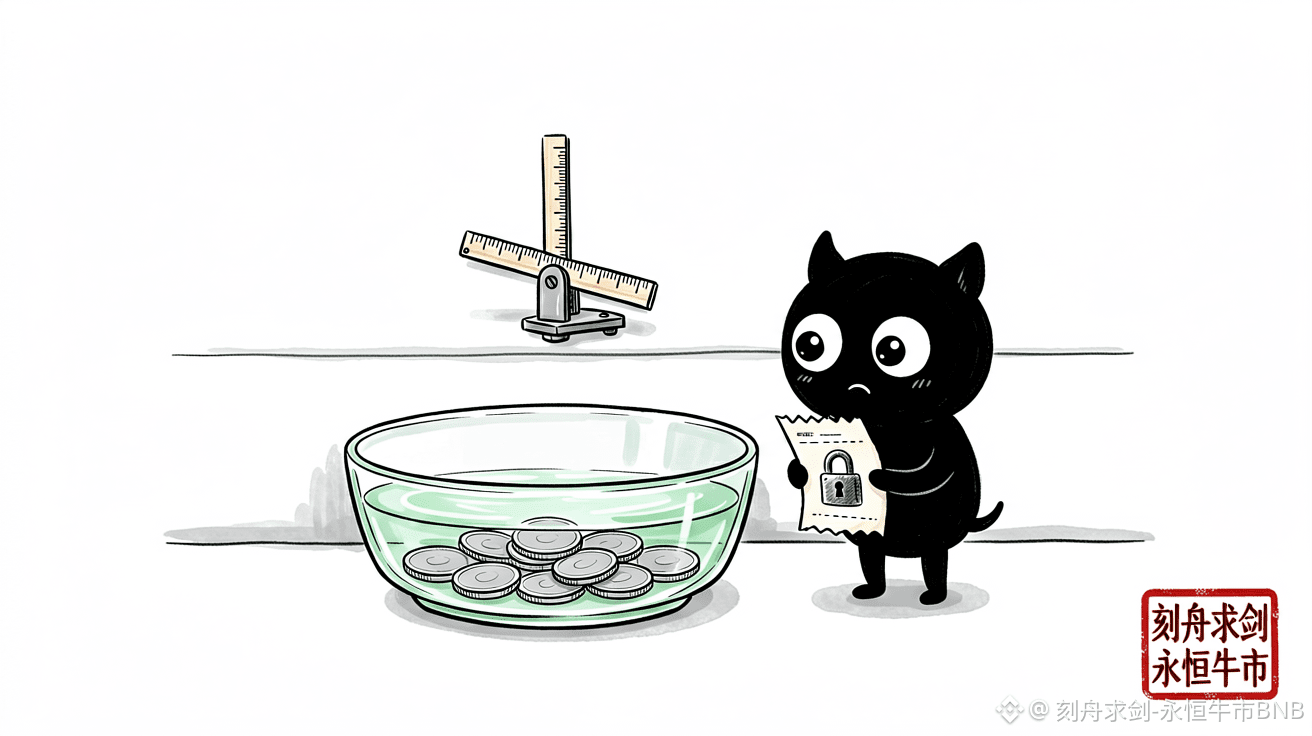
When I translated Near’s incentive-plan details, I ran into an uncommon design: the rewards will be distributed, but to turn them into usable, active assets, you must wait until the price stays above a certain line for three consecutive days. The payout is executed automatically by the contract, while the redemption threshold is tied to market pricing.
Near writes the trigger conditions into the protocol: when the locked amount for the “confidential intent” tier reaches $70 million, a snapshot is automatically generated—no voting is required, and there’s no team-driven timing. Right now, that tier is locked with just over $60 million; it’s only a few tens of millions of dollars away from the threshold. The first round of rewards reserves about 333,000 tokens. To claim them, a wallet must have a history of private exchange activity, and there’s a per-user cap of 2%. Put together, these terms amount to a visible, mechanical buy order: the closer it gets to the threshold, the more urgently the locked-in positions pile in to grab a spot.
On the other side, the readings are much smaller. On September 13, the official disclosure said the number of tokens staked on Near’s confidential artificial intelligence cloud surpassed 500,000, enabling the release of over 40 closed-source models—when converted, that’s nominally over $1 million. The cumulative count of operations at the chain abstraction layer broke 50 million on September 8, and intent routing cumulative deal value reached $27 billion.
My judgment comes down to this: a market re-pricing above a $3 billion valuation isn’t supported by demand that has already paid—it looks more like the event of the threshold approaching itself. The crack is hidden in the redemption conditions: the first round of rewards is initially locked as a claim certificate, and only becomes transferable tokens after the average price holds at $3.33 for three straight days. The capital pushing the locked amount upward is also betting on whether it can hold up to the condition. If the condition isn’t met, the certificates can’t be redeemed, and the incremental capital coming in to secure a position loses the reason to stay.
On Binance, Near and the platform token BNB are listed in the same spot trading area—you can trade them and also place them into wealth-management products. Discussion on the Binance marketplace has become more like a black box. Testing this claim only requires one readout: after the threshold is triggered, does the locked amount in the confidential intent pool remain in place? If it does—while the staking size on the confidential artificial intelligence cloud and the intent deal value both rise by the same order of magnitude—then real demand is what absorbs this slope, and everything I said above would be invalid on the spot. This article is a record of viewpoints and does not constitute investment advice.$NEAR
$ZEC #美联储加息是否已成定局
Near writes the trigger conditions into the protocol: when the locked amount for the “confidential intent” tier reaches $70 million, a snapshot is automatically generated—no voting is required, and there’s no team-driven timing. Right now, that tier is locked with just over $60 million; it’s only a few tens of millions of dollars away from the threshold. The first round of rewards reserves about 333,000 tokens. To claim them, a wallet must have a history of private exchange activity, and there’s a per-user cap of 2%. Put together, these terms amount to a visible, mechanical buy order: the closer it gets to the threshold, the more urgently the locked-in positions pile in to grab a spot.
On the other side, the readings are much smaller. On September 13, the official disclosure said the number of tokens staked on Near’s confidential artificial intelligence cloud surpassed 500,000, enabling the release of over 40 closed-source models—when converted, that’s nominally over $1 million. The cumulative count of operations at the chain abstraction layer broke 50 million on September 8, and intent routing cumulative deal value reached $27 billion.
My judgment comes down to this: a market re-pricing above a $3 billion valuation isn’t supported by demand that has already paid—it looks more like the event of the threshold approaching itself. The crack is hidden in the redemption conditions: the first round of rewards is initially locked as a claim certificate, and only becomes transferable tokens after the average price holds at $3.33 for three straight days. The capital pushing the locked amount upward is also betting on whether it can hold up to the condition. If the condition isn’t met, the certificates can’t be redeemed, and the incremental capital coming in to secure a position loses the reason to stay.
On Binance, Near and the platform token BNB are listed in the same spot trading area—you can trade them and also place them into wealth-management products. Discussion on the Binance marketplace has become more like a black box. Testing this claim only requires one readout: after the threshold is triggered, does the locked amount in the confidential intent pool remain in place? If it does—while the staking size on the confidential artificial intelligence cloud and the intent deal value both rise by the same order of magnitude—then real demand is what absorbs this slope, and everything I said above would be invalid on the spot. This article is a record of viewpoints and does not constitute investment advice.$NEAR
$ZEC #美联储加息是否已成定局