


#Circle $ARGUS
Circle (stock ticker: CRCL) is at a critical juncture: its fundamentals are solid, but its stock price is under pressure amid twists and turns in regulatory legislation. At the same time, its flagship Arc mainnet has just gone live, facing the real-world test of “institutional positioning” versus “meme speculation.”
📊 Financial snapshot: Revenue shows steady growth, but the revenue structure is highly singular.
Circle’s revenue is still growing, but its profit is extremely dependent on interest from reserves (accounting for about 95%).
· 2026 Q1: Revenue was $694 million (YoY +20%). USDC circulation volume surpassed $77 billion, but net profit fell by 15%.
· 2026 Q2: Revenue $701 million (YoY +6.57%), net profit $48.22 million (YoY +110%), beating expectations.
📉 Stock performance: Regulatory headwinds compress valuation
Recently, the stock has been under tremendous pressure. As of September 15, 2026, CRCL closed at $86.30, down 11.41% in a single day. The immediate trigger was the CLARITY Act failing to pass in the Senate. Circle, as the most direct market barometer for the bill, saw the stock tumble on the news. The current market cap is about $23.798 billion. Its 52-week high was $159.47, and it is currently trading relatively low.
🚀 Arc mainnet: a collision between institutional traits and meme reality
The Arc mainnet officially launched on September 16, 2026. Its core positioning is “the economic operating system of the internet.”
· Founding validators: including 11 global financial giants such as BlackRock, Visa, Mastercard, DTCC, ICE (parent company of the NYSE), and Standard Chartered.
· Tokenomics: ARC’s initial total supply is 10 billion tokens—60% allocated to the ecosystem, and Circle itself receives 25%.
· Core mechanism: USDC is used as the native gas token, with transaction costs denominated in USD—fully eliminating volatility from native token price swings.
· Day-one ecosystem: DeFi blue chips such as Aave, Uniswap, Curve, Morpho, and major entry points like Binance Wallet, OKX Wallet, and MetaMask are all supported simultaneously.
· Key tension: Arc’s institutional DNA (validators are regulated giants) naturally clashes with meme speculation culture. Before the mainnet went live, a large number of meme traders had already positioned themselves, preparing for the “massive-volume行情 on day one.” That is precisely a direct stress test of Arc’s sub-second finality consensus and the validators’ ability to withstand reputational pressure.
📈 USDC on-chain activity
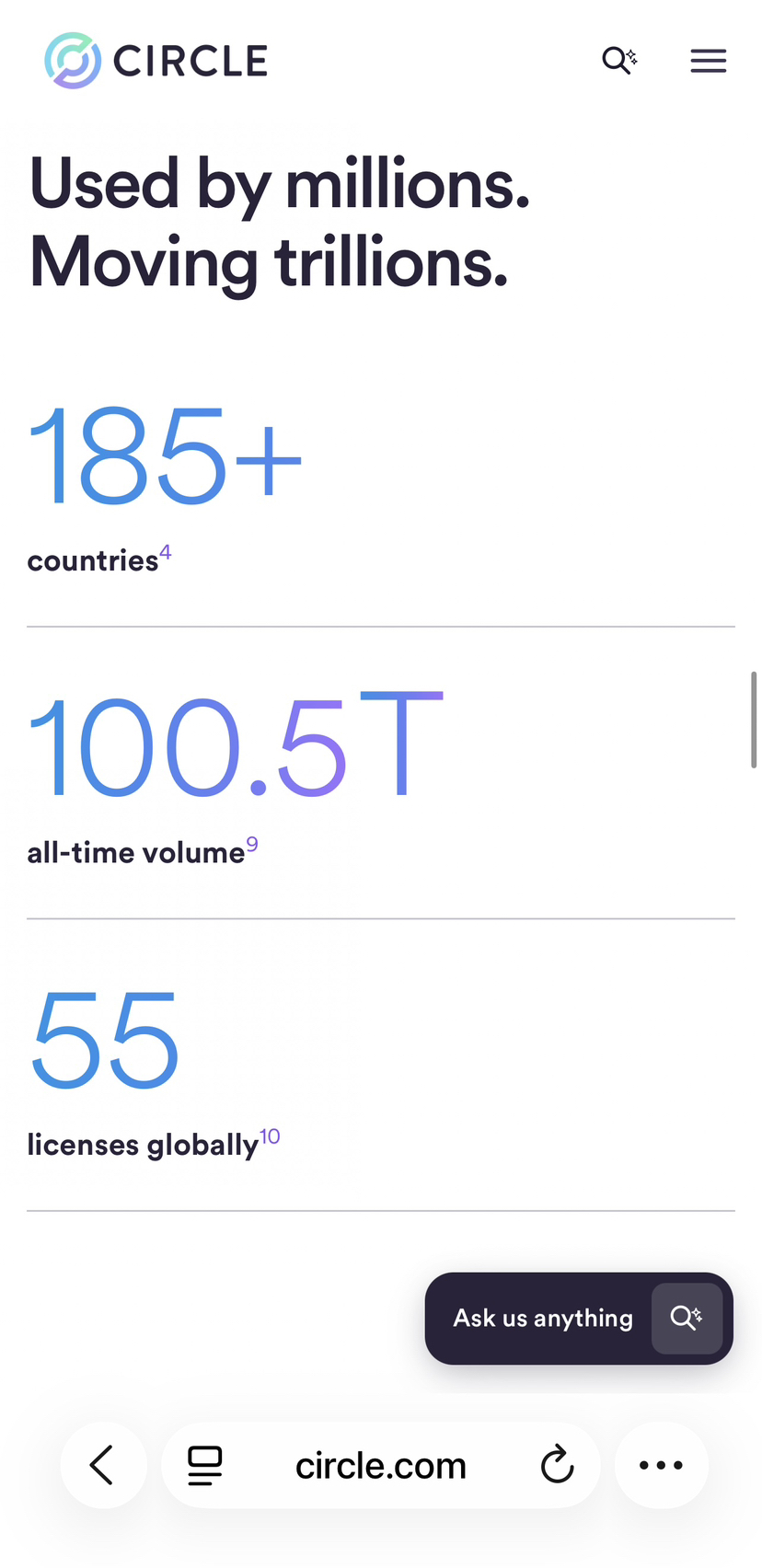
· On-chain transaction volume: 2026 Q2 reached $148 billion (YoY +151%); cumulative on-chain transaction volume has already surpassed $1 trillion.
· Velocity: annualized circulation velocity of about 741 times.
🏛️ Regulatory milestone: Secured a national trust bank license
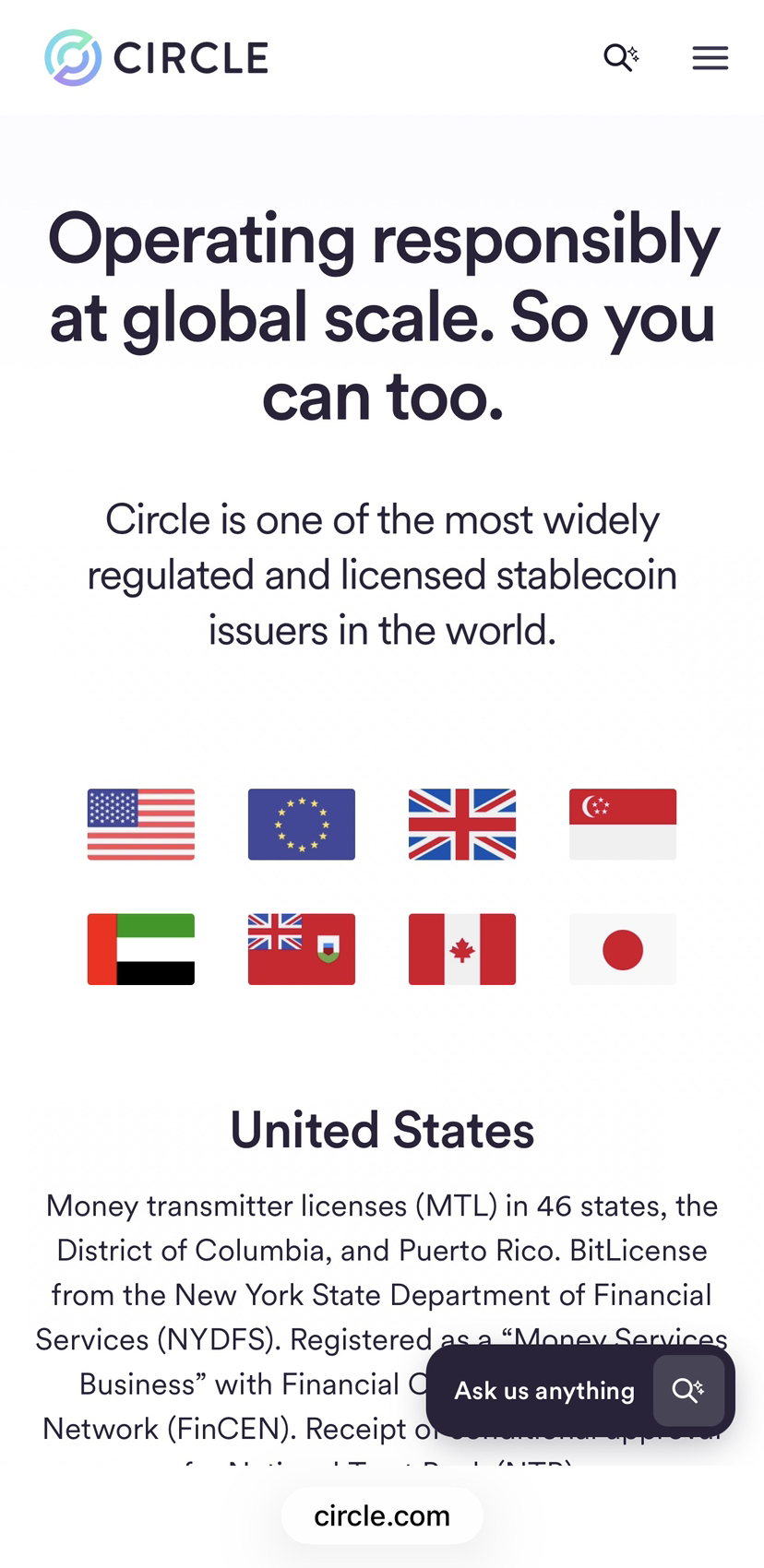
In July 2026, Circle received the unconditional final approval from the U.S. Office of the Comptroller of the Currency (OCC) and established Circle National Trust, becoming one of the first stablecoin issuers to formally enter the U.S. federal banking regulatory framework. It then further obtained a limited-purpose trust license from the New York State Department of Financial Services (NYDFS). This series of actions has significantly strengthened its regulatory moat.
💎 Summary
Circle’s current core narrative is: leverage federal-bank-level compliance credentials to operate an institutional-grade settlement chain that uses USDC as gas. Its financial foundation (USDC supply and on-chain transaction volume) is solid, but the stock’s short-term volatility is highly tied to the U.S. stablecoin legislative process. After the Arc mainnet launches, whether it can strike a balance between “institutional adoption” and “meme speculation” will be the key test of its long-term value.
Circle is ambitious and has a big-picture mindset—sure, you can trust it.
Whether this chain can run a $500 million “mega” project is the question—wait and see.
Does not constitute financial advice. DYOR