On a day like today, every chart looks red. BTC down. ETH down. Most altcoins down. It's easy to just see "market crashed" and move on.
But there's a more useful question: which coins fell less?
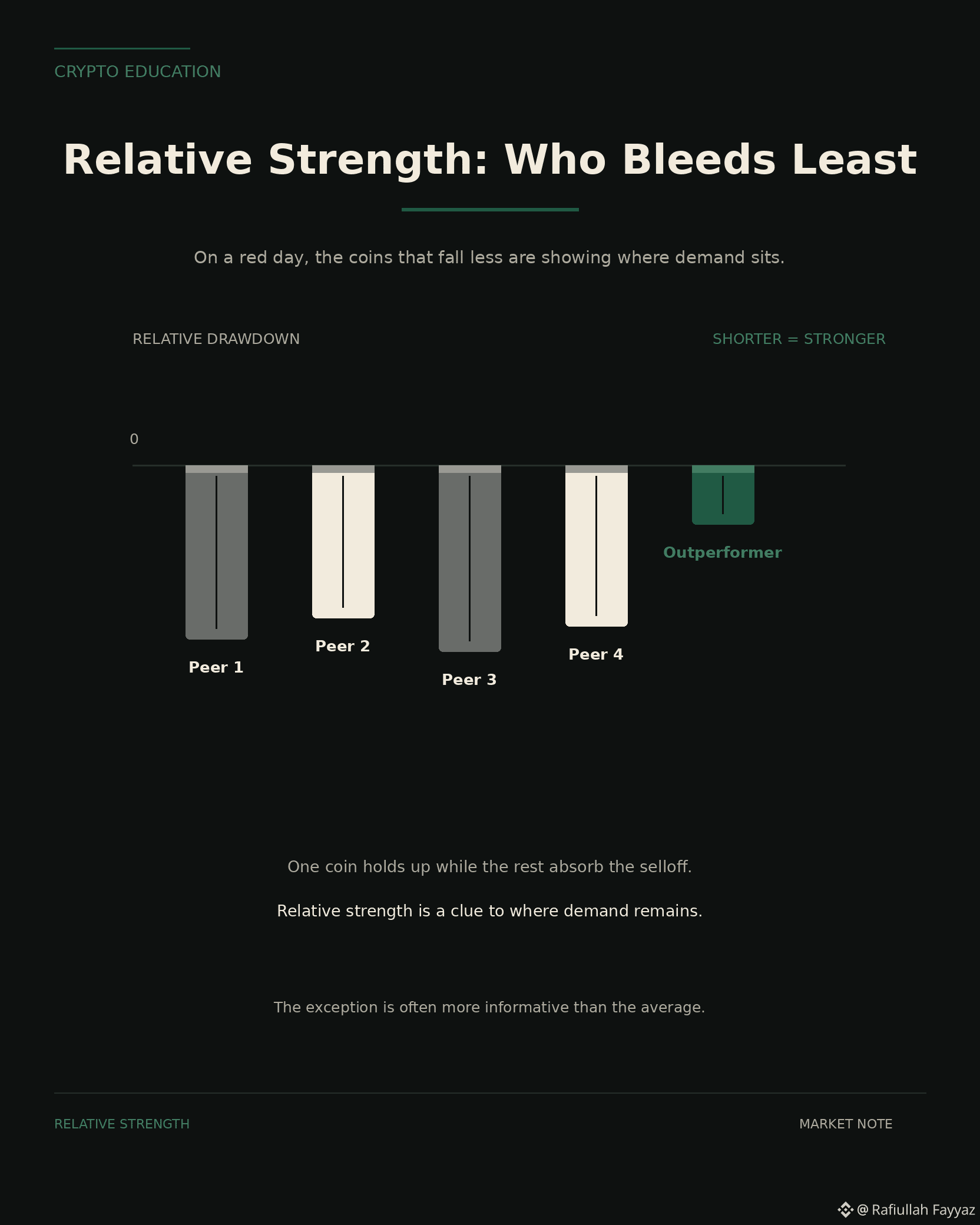
Relative strength isn't about a coin going up while everything else drops. It's about a coin holding up better than its peers when the market sells off.
If BTC drops 4% and a coin drops 2%, that's relative strength. It doesn't mean the coin is "good." It means sellers aren't hitting it as hard.
Why this matters: when the market recovers, coins with relative strength often recover faster. They've already shown there's demand below current prices.
How to spot it: compare the 24-hour performance of coins in the same sector. If most DeFi tokens are down 8% but one is only down 3%, that's worth asking about.
Today's selloff is a filter. The coins bleeding the least are the ones to put on your research list.
#CryptoEducation #RelativeStrength #Binance
But there's a more useful question: which coins fell less?
Relative strength isn't about a coin going up while everything else drops. It's about a coin holding up better than its peers when the market sells off.
If BTC drops 4% and a coin drops 2%, that's relative strength. It doesn't mean the coin is "good." It means sellers aren't hitting it as hard.
Why this matters: when the market recovers, coins with relative strength often recover faster. They've already shown there's demand below current prices.
How to spot it: compare the 24-hour performance of coins in the same sector. If most DeFi tokens are down 8% but one is only down 3%, that's worth asking about.
Today's selloff is a filter. The coins bleeding the least are the ones to put on your research list.
#CryptoEducation #RelativeStrength #Binance