
灼见
895 Posts
灼见
灼见|K线只是表象,人心才是博弈的终点。
13年实战沉淀,拒绝废话,只做最硬核的技术拆解与宏观透视。帮你看清下一步。如果你厌倦了噪音,这里是你的最后一站。
Open Trade

BTC Holder
Occasional Trader
8.5 Years
409 Following
24.8K+ Followers
7.6K+ Liked
Posts
Portfolio
All
Quotes
Videos
Live

心月势不可挡
·
--
In the forest brook winding paths, I sit quietly and listen to the flowing water.
I hold a book and take a light sip, stealing half a day of leisure from passing life.
I ask nothing about the dust and bustle—only enjoy this moment of calm 🍃
I hold a book and take a light sip, stealing half a day of leisure from passing life.
I ask nothing about the dust and bustle—only enjoy this moment of calm 🍃



橙子Joyce
·
--
BullishWill the Federal Reserve raise rates as expected this week? Wall Street is debating: will it end the U.S. stock bull market?
After an unexpectedly strong U.S. CPI report came out last Friday, traders generally expect the Federal Reserve to begin raising rates at this week’s policy meeting—marking the first rate hike in more than three years.
Historically, previous rounds of rate hikes have offered a reference point for today’s market. Based on past experience (though history of course can’t guarantee the future), U.S. stocks may first weaken, then rebound.
Among the six tightening cycles since 1994, during the first four months after the rate-hike cycle began, the S&P 500’s average return was negative.
This suggests that once the “rate-hike shoe” drops, U.S. stocks may look lackluster through the beginning of next year.
As of the close last Friday, the benchmark U.S. equity index, the S&P 500, is up nearly 12% year to date. Strong corporate earnings and a fairly resilient economy have provided solid support for bulls in the stock market.
If you extend the time horizon, the S&P 500’s performance tends to improve gradually: in the 12 months after the start of a rate-hiking cycle, the index’s average return is close to 7%, with a median return of about 11%. (Using median-based statistics helps remove distortions from extreme outliers—for example, the index surged more than 40% after hikes began in March 1997.)
If the Federal Reserve implements a rate hike this Wednesday, it will be the first hike since July 2023—when the Fed raised rates to a range of 5.25% to 5.50%.
Currently, the federal funds rate in the U.S. is at 3.50% to 3.75%. According to the CME Group’s FedWatch tool, futures traders currently assign an 86% probability to a 25-basis-point hike this week.
One positive factor for the market is that mega-scale cloud service providers are still driving growth in excess returns through large-scale AI spending. The S&P 500 component stocks’ forecast for earnings growth in 2027 is expected to reach double digits. If the outlook for AI spending remains unchanged, it may be enough to offset any cooling in optimistic sentiment caused by the rate hikes.
Another bright spot for equities is that although inflation remains sticky, it appears to be slowing. The inflation rate has fallen from a May peak of 4.2%. This should allow the Federal Reserve to take a more gradual approach, and the data shows that the pace of rate hikes is crucial for stock performance—slower pacing gives investors more time to absorb policy changes!
$BZ
$CL
Energy
After an unexpectedly strong U.S. CPI report came out last Friday, traders generally expect the Federal Reserve to begin raising rates at this week’s policy meeting—marking the first rate hike in more than three years.
Historically, previous rounds of rate hikes have offered a reference point for today’s market. Based on past experience (though history of course can’t guarantee the future), U.S. stocks may first weaken, then rebound.
Among the six tightening cycles since 1994, during the first four months after the rate-hike cycle began, the S&P 500’s average return was negative.
This suggests that once the “rate-hike shoe” drops, U.S. stocks may look lackluster through the beginning of next year.
As of the close last Friday, the benchmark U.S. equity index, the S&P 500, is up nearly 12% year to date. Strong corporate earnings and a fairly resilient economy have provided solid support for bulls in the stock market.
If you extend the time horizon, the S&P 500’s performance tends to improve gradually: in the 12 months after the start of a rate-hiking cycle, the index’s average return is close to 7%, with a median return of about 11%. (Using median-based statistics helps remove distortions from extreme outliers—for example, the index surged more than 40% after hikes began in March 1997.)
If the Federal Reserve implements a rate hike this Wednesday, it will be the first hike since July 2023—when the Fed raised rates to a range of 5.25% to 5.50%.
Currently, the federal funds rate in the U.S. is at 3.50% to 3.75%. According to the CME Group’s FedWatch tool, futures traders currently assign an 86% probability to a 25-basis-point hike this week.
One positive factor for the market is that mega-scale cloud service providers are still driving growth in excess returns through large-scale AI spending. The S&P 500 component stocks’ forecast for earnings growth in 2027 is expected to reach double digits. If the outlook for AI spending remains unchanged, it may be enough to offset any cooling in optimistic sentiment caused by the rate hikes.
Another bright spot for equities is that although inflation remains sticky, it appears to be slowing. The inflation rate has fallen from a May peak of 4.2%. This should allow the Federal Reserve to take a more gradual approach, and the data shows that the pace of rate hikes is crucial for stock performance—slower pacing gives investors more time to absorb policy changes!
$BZ
$CL
Energy

好运来Hawk
·
--
Bullish$Hawk 佛 only guides those who are destined/“fated” to it! #Hawk doesn’t expect everyone to understand it or be able to hold onto it!
#Hawk only guides those who have wisdom and are worthy of it❗️
#Hawk only guides those who have wisdom and are worthy of it❗️



貓咪喵 Hawk
·
--
#Hawk
No matter if you’re a bull or a bear,
if you’re an eagle, I’m a cat—my little kitty.
No matter if you’re a bull or a bear,
if you’re an eagle, I’m a cat—my little kitty.



Mira小白桃
·
--
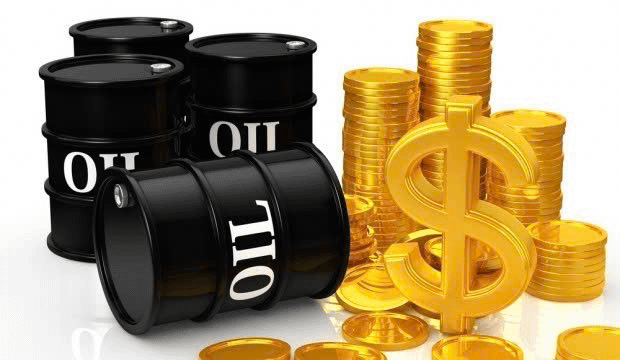
Crude Oil Rises—Why Is Gold Under Pressure Instead?
Recently, the market has been influenced at the same time by geopolitical risks, energy prices, and expectations for Federal Reserve policy.
At present, Brent crude is around $107, while WTI is around $105. Oil prices have remained at elevated levels. What the market is most worried about is not crude oil itself, but its impact on inflation expectations.
The logic is simple:
Oil prices rise → inflation pressure increases → the Fed’s room to cut rates is constrained → U.S. Treasury yields rise → gold comes under pressure.
So right now, gold is being pulled by two forces:
On one hand, safe-haven demand driven by geopolitical conditions supports gold;
On the other hand, higher oil prices boost inflation and rate-expectation pressures that suppress gold.
That’s also why you can’t simply understand it as:
“Geopolitical risk rises = gold must rise.”
In reality, gold’s short-term price action still depends on the U.S. dollar and U.S. Treasury yields.
Currently, the 10-year Treasury yield is already around 5%. If yields continue to move higher, gold’s short-term downside pressure could increase further.
Next, I will focus on three variables:
First, crude oil.
If oil prices keep rising quickly, inflation expectations may heat up further.
Second, Treasury yields.
If the 10-year yield keeps moving higher, gold may continue to be weighed down.
Third, the Federal Reserve.
Today’s FOMC rate decision is only the first step; more important is the policy guidance/signals after the meeting.
If the Fed releases more hawkish signals:
A stronger dollar and firmer yields → gold faces pressure.
If the policy statement is not as hawkish as the market expected:
Yields fall back → gold receives support.
So my view on gold now won’t be based solely on geopolitical news.
Crude oil determines inflation expectations, interest rates determine the cost of capital, and risk-off/safe-haven sentiment determines how much support is underneath gold.
Only when all three factors move at the same time is the key to understanding this round of the gold market.
$XAU
$CL
$BZ
Recently, the market has been influenced at the same time by geopolitical risks, energy prices, and expectations for Federal Reserve policy.
At present, Brent crude is around $107, while WTI is around $105. Oil prices have remained at elevated levels. What the market is most worried about is not crude oil itself, but its impact on inflation expectations.
The logic is simple:
Oil prices rise → inflation pressure increases → the Fed’s room to cut rates is constrained → U.S. Treasury yields rise → gold comes under pressure.
So right now, gold is being pulled by two forces:
On one hand, safe-haven demand driven by geopolitical conditions supports gold;
On the other hand, higher oil prices boost inflation and rate-expectation pressures that suppress gold.
That’s also why you can’t simply understand it as:
“Geopolitical risk rises = gold must rise.”
In reality, gold’s short-term price action still depends on the U.S. dollar and U.S. Treasury yields.
Currently, the 10-year Treasury yield is already around 5%. If yields continue to move higher, gold’s short-term downside pressure could increase further.
Next, I will focus on three variables:
First, crude oil.
If oil prices keep rising quickly, inflation expectations may heat up further.
Second, Treasury yields.
If the 10-year yield keeps moving higher, gold may continue to be weighed down.
Third, the Federal Reserve.
Today’s FOMC rate decision is only the first step; more important is the policy guidance/signals after the meeting.
If the Fed releases more hawkish signals:
A stronger dollar and firmer yields → gold faces pressure.
If the policy statement is not as hawkish as the market expected:
Yields fall back → gold receives support.
So my view on gold now won’t be based solely on geopolitical news.
Crude oil determines inflation expectations, interest rates determine the cost of capital, and risk-off/safe-haven sentiment determines how much support is underneath gold.
Only when all three factors move at the same time is the key to understanding this round of the gold market.
$XAU
$CL
$BZ
加倉妹
·
--
Believe in yourself and move forward bravely!
Every effort will never be in vain, and every step of坚持 is accumulating strength. Don’t be afraid to go slow—only fear stopping; as long as you have a dream in your heart, you will surely be able to step into your own精彩人生!😊
Every effort will never be in vain, and every step of坚持 is accumulating strength. Don’t be afraid to go slow—only fear stopping; as long as you have a dream in your heart, you will surely be able to step into your own精彩人生!😊


乘风Sunshine
·
--
U.S. crypto bill failed to pass on September 15: the real negative is more than just a 4% drop in Bitcoin
If I had to pick a keyword for the crypto market on September 15, 2026, I would choose:
“Expectation fell short.”
On September 15, local time, the U.S. Senate held a crucial procedural vote on the (CLARITY Act) (Digital Asset Market Structure Act). It ultimately failed to reach the 60-vote threshold needed to advance.
This is not an ordinary bill.
The reason the market has high hopes for it is that it is trying to solve one of the most core problems in the U.S. crypto industry: who should regulate crypto assets, and what kinds of tokens are securities versus what kinds of assets are commodities.
“Expectation fell short.”
On September 15, local time, the U.S. Senate held a crucial procedural vote on the (CLARITY Act) (Digital Asset Market Structure Act). It ultimately failed to reach the 60-vote threshold needed to advance.
This is not an ordinary bill.
The reason the market has high hopes for it is that it is trying to solve one of the most core problems in the U.S. crypto industry: who should regulate crypto assets, and what kinds of tokens are securities versus what kinds of assets are commodities.


正乾商学--四条2
·
--
Are you really suited to making a living by trading?
Part Four
④ Is your personality suited to your current trading style?
This is also a very important question.
Everyone’s personality is different.
Some people are very impatient.
Some people have a lot of patience.
Some people like to see results quickly.
Some people can keep their position for several weeks and feel absolutely no anxiety.
So different people are naturally suited to different trading approaches.
For example:
People who are relatively fast and make decisions quickly
may be better suited for:
Scalping / ultra-short-term trading
because you like to judge quickly, execute quickly, and exit quickly.
People with a medium-paced rhythm
may be better suited for:
Day Trading / intraday trading
You don’t need to make decisions in just seconds or minutes,
but you also don’t need to hold your J-structure positions for days or even weeks.
People who are more patient and don’t like frequent trading
may be better suited for:
Swing Trading / swing trading
You’re willing to wait,
and you can also accept “not doing anything today.”
But many people’s biggest problem is that they force themselves to do a type of trading that doesn’t match their personality at all.
A person who is extremely impatient
yet forces themselves to do swing trading for two months.
Every day they want to open the exchange to check,
every day they want to adjust,
and in the end, they turn an originally correct trade into a bad one.
Or someone who naturally thinks more slowly and likes thorough analysis
but forces themselves to do one-minute K;Scalping.
That is also very painful.
So don’t start by asking:
“Which trading style is the most profitable?”
You should ask first:
“Which trading style is the best fit for me?”
If you’re interested in trading, feel free to leave a message in the comments or join the chat room to exchange ideas—learn together and grow together!
#比特币跌至7.6万美元
#美联储加息是否已成定局
Part Four
④ Is your personality suited to your current trading style?
This is also a very important question.
Everyone’s personality is different.
Some people are very impatient.
Some people have a lot of patience.
Some people like to see results quickly.
Some people can keep their position for several weeks and feel absolutely no anxiety.
So different people are naturally suited to different trading approaches.
For example:
People who are relatively fast and make decisions quickly
may be better suited for:
Scalping / ultra-short-term trading
because you like to judge quickly, execute quickly, and exit quickly.
People with a medium-paced rhythm
may be better suited for:
Day Trading / intraday trading
You don’t need to make decisions in just seconds or minutes,
but you also don’t need to hold your J-structure positions for days or even weeks.
People who are more patient and don’t like frequent trading
may be better suited for:
Swing Trading / swing trading
You’re willing to wait,
and you can also accept “not doing anything today.”
But many people’s biggest problem is that they force themselves to do a type of trading that doesn’t match their personality at all.
A person who is extremely impatient
yet forces themselves to do swing trading for two months.
Every day they want to open the exchange to check,
every day they want to adjust,
and in the end, they turn an originally correct trade into a bad one.
Or someone who naturally thinks more slowly and likes thorough analysis
but forces themselves to do one-minute K;Scalping.
That is also very painful.
So don’t start by asking:
“Which trading style is the most profitable?”
You should ask first:
“Which trading style is the best fit for me?”
If you’re interested in trading, feel free to leave a message in the comments or join the chat room to exchange ideas—learn together and grow together!
#比特币跌至7.6万美元
#美联储加息是否已成定局

K大宝
·
--
[Replay] 🎙️ Maintain ecological balance and build Binance Square
04 h 20 m 28 s · 11.1k listens

光明社区-赫方
·
--
Take a brief pause in life’s busyness, and steal a moment of quiet. Let go of worldly distractions, close your eyes to rest and recharge, and gather strength to return to everyday life amid the bustle of the world.


杨乐-光明社区
·
--
Every immortal has their own mountain,
and every bodhisattva has their own temple.
You must have your own place of practice.
This is a remedy of great value.
Good morning 🌻
and every bodhisattva has their own temple.
You must have your own place of practice.
This is a remedy of great value.
Good morning 🌻


周周1688
·
--
Finally breaking 100,000 followers 🚀🚀
Thank you, Binance Square
Thank you to everyone who supports Zhouzhou, brothers and sisters
Stay true to our hearts and minds; we walk together all the way
Love you all 💗💗
#1688家族family
@CZ
@币安广场
Thank you, Binance Square
Thank you to everyone who supports Zhouzhou, brothers and sisters
Stay true to our hearts and minds; we walk together all the way
Love you all 💗💗
#1688家族family
@CZ
@币安广场



长得帅不如跑的快1688
·
--
🚨 Tonight, don’t just stare at the BTC chart.
Something potentially much more important is happening in Washington.
$BTC continues to battle around the $77,000 area.
Treasury yields have pushed around 5%, oil remains elevated, and expectations for a Fed rate hike are extremely high.
Normally:
YIELDS ↑ + RATE EXPECTATIONS ↑ + MACRO PRESSURE ↑
should make life difficult for risk assets.
Yet Bitcoin still hasn’t completely broken down.
And that’s what makes tonight interesting.
Crypto is about to face two major tests:
🇺🇸 CLARITY ACT: THE 60-VOTE TEST
⬇️
🏦 FED: THE LIQUIDITY TEST
This isn’t simply another “good news vs. bad news” trade.
It’s:
REGULATION + LIQUIDITY BEING STRESS-TESTED TOGETHER.
I’m not even focused on whether BTC immediately returns to $80K.
I’m watching three reactions:
① What does BTC do AFTER the CLARITY result?
② If bad news hits, can $77K be reclaimed quickly?
③ If BTC stabilizes, does capital start front-running ETH, BNB and higher-beta assets?
That third one matters.
Because sometimes the next phase of a Crypto rally doesn’t begin with Bitcoin exploding higher every day.
It begins when:
BTC STOPS FALLING — AND CAPITAL STARTS LOOKING FOR MORE BETA.
So tonight I’m not calling the top.
I’m not calling the bottom.
I’m watching one simple signal:
IF ALL THIS PRESSURE CAN’T PUSH THE MARKET LOWER, WHERE DOES IT GO NEXT?
Sometimes the better question isn’t:
“Why isn’t Bitcoin pumping?”
It’s:
“WHY CAN’T THEY PUSH IT DOWN?”
Tonight’s U.S. session may give us the answer.
👇 What are you watching tonight?
BTC 🟠 / CLARITY 🇺🇸 / FED 🏦
#BTC #ETH #BNB
Something potentially much more important is happening in Washington.
$BTC continues to battle around the $77,000 area.
Treasury yields have pushed around 5%, oil remains elevated, and expectations for a Fed rate hike are extremely high.
Normally:
YIELDS ↑ + RATE EXPECTATIONS ↑ + MACRO PRESSURE ↑
should make life difficult for risk assets.
Yet Bitcoin still hasn’t completely broken down.
And that’s what makes tonight interesting.
Crypto is about to face two major tests:
🇺🇸 CLARITY ACT: THE 60-VOTE TEST
⬇️
🏦 FED: THE LIQUIDITY TEST
This isn’t simply another “good news vs. bad news” trade.
It’s:
REGULATION + LIQUIDITY BEING STRESS-TESTED TOGETHER.
I’m not even focused on whether BTC immediately returns to $80K.
I’m watching three reactions:
① What does BTC do AFTER the CLARITY result?
② If bad news hits, can $77K be reclaimed quickly?
③ If BTC stabilizes, does capital start front-running ETH, BNB and higher-beta assets?
That third one matters.
Because sometimes the next phase of a Crypto rally doesn’t begin with Bitcoin exploding higher every day.
It begins when:
BTC STOPS FALLING — AND CAPITAL STARTS LOOKING FOR MORE BETA.
So tonight I’m not calling the top.
I’m not calling the bottom.
I’m watching one simple signal:
IF ALL THIS PRESSURE CAN’T PUSH THE MARKET LOWER, WHERE DOES IT GO NEXT?
Sometimes the better question isn’t:
“Why isn’t Bitcoin pumping?”
It’s:
“WHY CAN’T THEY PUSH IT DOWN?”
Tonight’s U.S. session may give us the answer.
👇 What are you watching tonight?
BTC 🟠 / CLARITY 🇺🇸 / FED 🏦
#BTC #ETH #BNB


王仔大王
·
--
Since the banquet can’t be avoided, then raise your cup to socialize and make sure favors are delivered properly—our bottom line won’t retreat. $NVDAB

Quoted content has been removed

慢就是快Mike
·
--
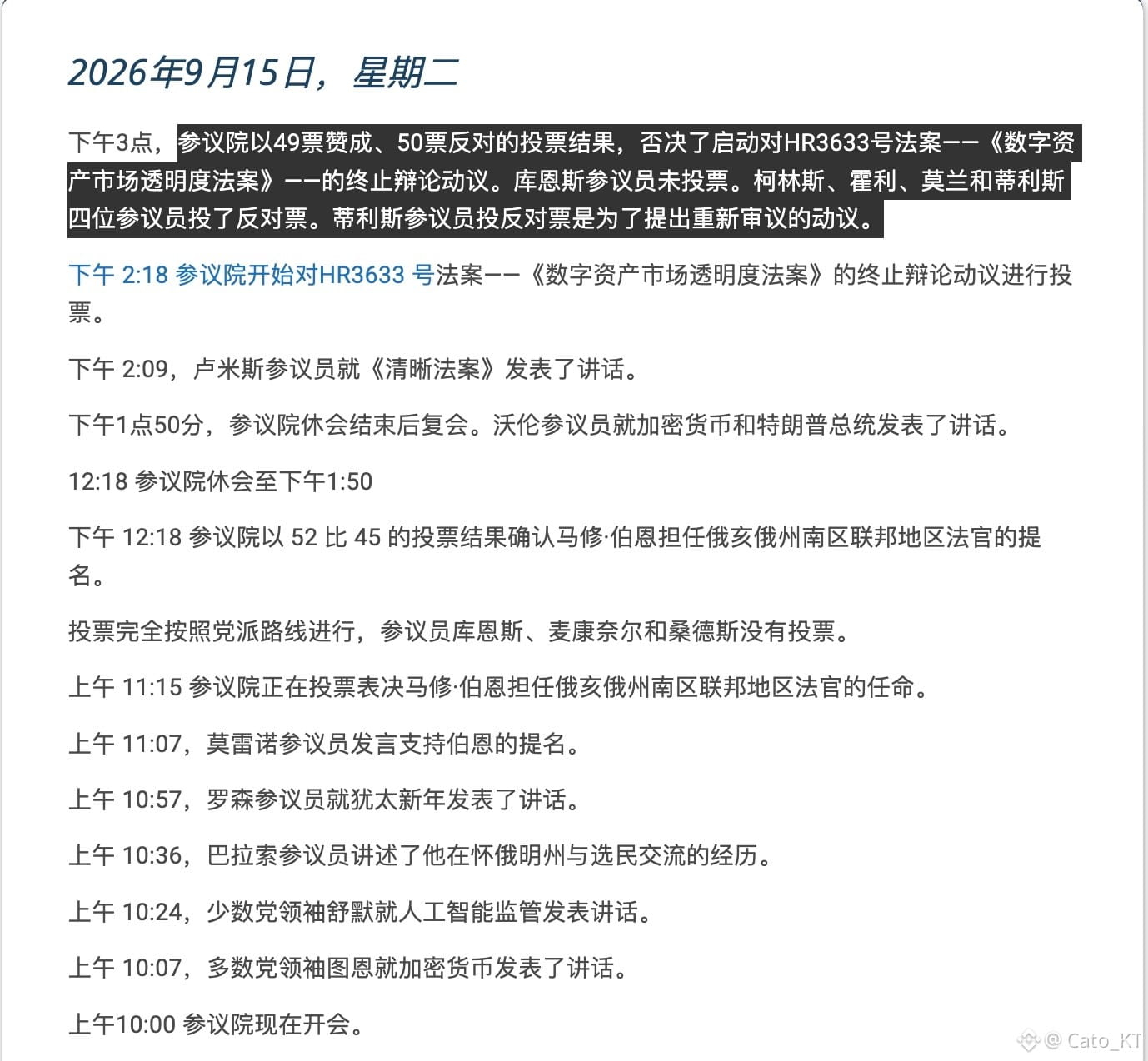
$XAU Let’s review tonight’s proposed vote result for the “Clear Bill.” In the end, 49 votes were in favor, 50 against—out of 99 total voters.
Clearly, this outcome is not simply because it didn’t reach 60 votes. Ultimately, it ended in temporary failure. Evidently, the threshold for pushing the bill is still quite high, making it a tough challenge.
Currently, there are 53 seats for the Republican Party in the Senate, 45 for the Democrats, and 2 for independents. This means that if the Republicans fully back it, they could at least secure 53 support votes.
But the real outcome directly contradicts that. Not only did the Democrats oppose it, but the Republicans also were not fully united in support—4 Republicans voted against.
Now look at the chart. Before the vote results came out, the broader market had already started a sharp pullback, indicating that the main funds likely weren’t optimistic, or had already anticipated the result in advance. Right now, it’s best not to rush in early to buy the dip or short. Wait until tomorrow’s rate-hike results are released, and then enter based on the K-line trend—it’ll be better!
Clearly, this outcome is not simply because it didn’t reach 60 votes. Ultimately, it ended in temporary failure. Evidently, the threshold for pushing the bill is still quite high, making it a tough challenge.
Currently, there are 53 seats for the Republican Party in the Senate, 45 for the Democrats, and 2 for independents. This means that if the Republicans fully back it, they could at least secure 53 support votes.
But the real outcome directly contradicts that. Not only did the Democrats oppose it, but the Republicans also were not fully united in support—4 Republicans voted against.
Now look at the chart. Before the vote results came out, the broader market had already started a sharp pullback, indicating that the main funds likely weren’t optimistic, or had already anticipated the result in advance. Right now, it’s best not to rush in early to buy the dip or short. Wait until tomorrow’s rate-hike results are released, and then enter based on the K-line trend—it’ll be better!


king Gulfam
·
--
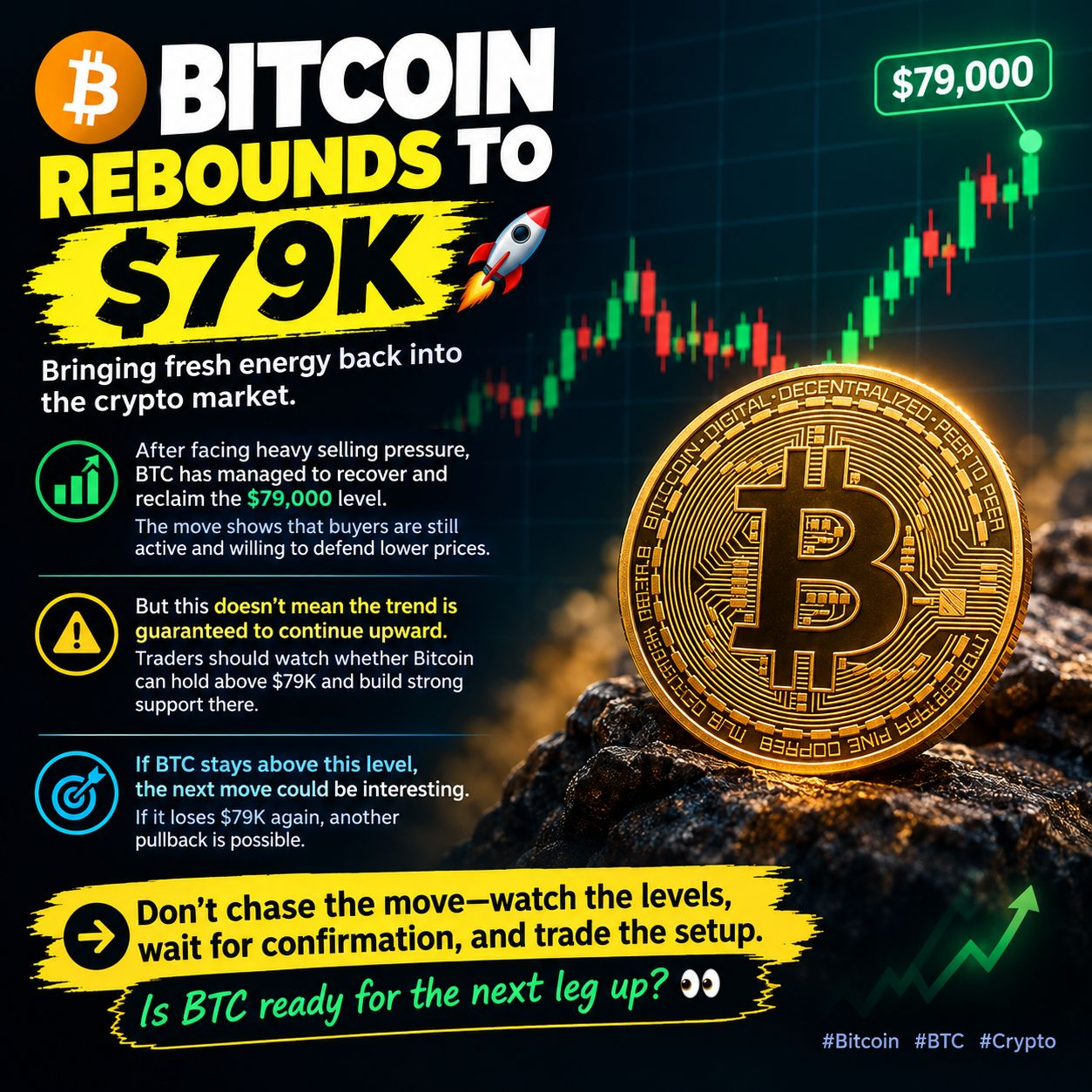
#BitcoinReboundsTo$79K
Bitcoin rebounds to $79K, bringing fresh energy back into the crypto market. 🚀
After facing heavy selling pressure, BTC has managed to recover and reclaim the $79,000 level.
The move shows that buyers are still active and willing to defend lower prices.
But this doesn’t mean the trend is guaranteed to continue upward. Traders should watch whether Bitcoin can hold above $79K and build strong support there.
If BTC stays above this level, the next move could be interesting. If it loses $79K again, another pullback is possible.
Don’t chase the move—watch the levels, wait for confirmation, and trade the setup. Is BTC ready for the next leg up? 👀
$AIN
$AKE
$POWER
Bitcoin rebounds to $79K, bringing fresh energy back into the crypto market. 🚀
After facing heavy selling pressure, BTC has managed to recover and reclaim the $79,000 level.
The move shows that buyers are still active and willing to defend lower prices.
But this doesn’t mean the trend is guaranteed to continue upward. Traders should watch whether Bitcoin can hold above $79K and build strong support there.
If BTC stays above this level, the next move could be interesting. If it loses $79K again, another pullback is possible.
Don’t chase the move—watch the levels, wait for confirmation, and trade the setup. Is BTC ready for the next leg up? 👀
$AIN
$AKE
$POWER

Syco 疯子
·
--
💫💖🌹 Hey there, 🔥A Poem about humanity in a digital world
On #BİNANCE just like anywhere else, crowds rush where it’s hot.
A drama, a drop, a tear and everyone’s watching.
People feast on misfortune as if suffering shines brighter than light.
They share the lies,
they comment on the scams,
they amplify the noise of chaos.
But when you offer them
a sweet word,
a bit of peace,
a breath of beauty…
they walk on by.
Kindness 💖 doesn’t make a sound, so it stays invisible.
Yet, it’s what saves us.
People click faster on the drops than on peace.
Dramas explode,
lies circulate,
scams make more noise
than a sweet word.
Kindness?
Invisible.
A like?
Too slow.
But the real strength
is to keep sowing beauty
in a world that cheers for chaos.
Have a great day
Kindly ✨️
#Syco 🌹💖💫 $BTC $HOME
On #BİNANCE just like anywhere else, crowds rush where it’s hot.
A drama, a drop, a tear and everyone’s watching.
People feast on misfortune as if suffering shines brighter than light.
They share the lies,
they comment on the scams,
they amplify the noise of chaos.
But when you offer them
a sweet word,
a bit of peace,
a breath of beauty…
they walk on by.
Kindness 💖 doesn’t make a sound, so it stays invisible.
Yet, it’s what saves us.
People click faster on the drops than on peace.
Dramas explode,
lies circulate,
scams make more noise
than a sweet word.
Kindness?
Invisible.
A like?
Too slow.
But the real strength
is to keep sowing beauty
in a world that cheers for chaos.
Have a great day
Kindly ✨️
#Syco 🌹💖💫 $BTC $HOME

Mira小白桃
·
--
Crude Oil Rises—Why Is Gold Under Pressure Instead?
Recently, the market has been influenced at the same time by geopolitical risks, energy prices, and expectations for Federal Reserve policy.
At present, Brent crude is around $107, while WTI is around $105. Oil prices have remained at elevated levels. What the market is most worried about is not crude oil itself, but its impact on inflation expectations.
The logic is simple:
Oil prices rise → inflation pressure increases → the Fed’s room to cut rates is constrained → U.S. Treasury yields rise → gold comes under pressure.
So right now, gold is being pulled by two forces:
On one hand, safe-haven demand driven by geopolitical conditions supports gold;
On the other hand, higher oil prices boost inflation and rate-expectation pressures that suppress gold.
That’s also why you can’t simply understand it as:
“Geopolitical risk rises = gold must rise.”
In reality, gold’s short-term price action still depends on the U.S. dollar and U.S. Treasury yields.
Currently, the 10-year Treasury yield is already around 5%. If yields continue to move higher, gold’s short-term downside pressure could increase further.
Next, I will focus on three variables:
First, crude oil.
If oil prices keep rising quickly, inflation expectations may heat up further.
Second, Treasury yields.
If the 10-year yield keeps moving higher, gold may continue to be weighed down.
Third, the Federal Reserve.
Today’s FOMC rate decision is only the first step; more important is the policy guidance/signals after the meeting.
If the Fed releases more hawkish signals:
A stronger dollar and firmer yields → gold faces pressure.
If the policy statement is not as hawkish as the market expected:
Yields fall back → gold receives support.
So my view on gold now won’t be based solely on geopolitical news.
Crude oil determines inflation expectations, interest rates determine the cost of capital, and risk-off/safe-haven sentiment determines how much support is underneath gold.
Only when all three factors move at the same time is the key to understanding this round of the gold market.
$XAU
$CL
$BZ
Recently, the market has been influenced at the same time by geopolitical risks, energy prices, and expectations for Federal Reserve policy.
At present, Brent crude is around $107, while WTI is around $105. Oil prices have remained at elevated levels. What the market is most worried about is not crude oil itself, but its impact on inflation expectations.
The logic is simple:
Oil prices rise → inflation pressure increases → the Fed’s room to cut rates is constrained → U.S. Treasury yields rise → gold comes under pressure.
So right now, gold is being pulled by two forces:
On one hand, safe-haven demand driven by geopolitical conditions supports gold;
On the other hand, higher oil prices boost inflation and rate-expectation pressures that suppress gold.
That’s also why you can’t simply understand it as:
“Geopolitical risk rises = gold must rise.”
In reality, gold’s short-term price action still depends on the U.S. dollar and U.S. Treasury yields.
Currently, the 10-year Treasury yield is already around 5%. If yields continue to move higher, gold’s short-term downside pressure could increase further.
Next, I will focus on three variables:
First, crude oil.
If oil prices keep rising quickly, inflation expectations may heat up further.
Second, Treasury yields.
If the 10-year yield keeps moving higher, gold may continue to be weighed down.
Third, the Federal Reserve.
Today’s FOMC rate decision is only the first step; more important is the policy guidance/signals after the meeting.
If the Fed releases more hawkish signals:
A stronger dollar and firmer yields → gold faces pressure.
If the policy statement is not as hawkish as the market expected:
Yields fall back → gold receives support.
So my view on gold now won’t be based solely on geopolitical news.
Crude oil determines inflation expectations, interest rates determine the cost of capital, and risk-off/safe-haven sentiment determines how much support is underneath gold.
Only when all three factors move at the same time is the key to understanding this round of the gold market.
$XAU
$CL
$BZ
Log in to explore more content