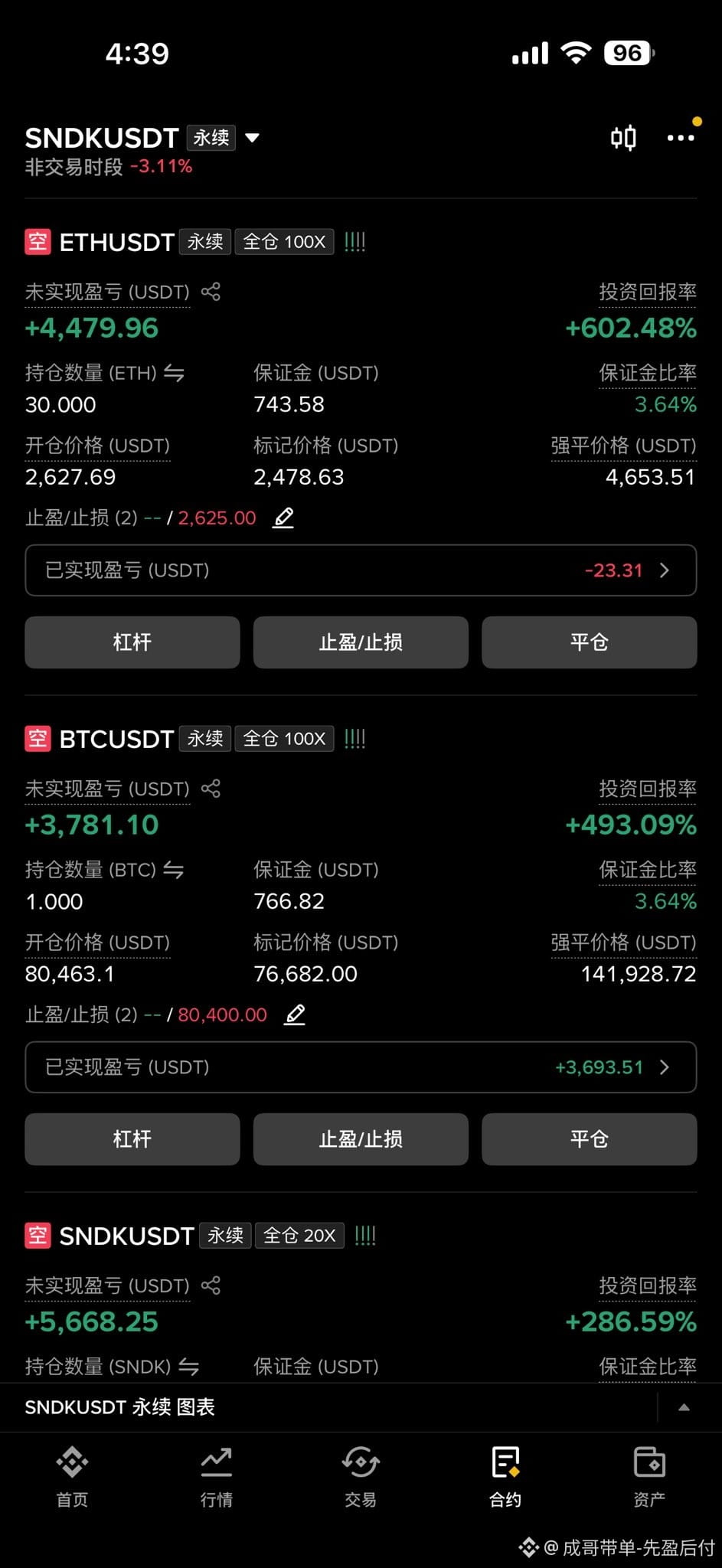
I’ve seen too many of these people: they see a coin consolidating sideways for two or three days, the candles are kind of flat, and they get so excited they think, “This is about to build up for a big move—go all-in.” Results—within half an hour, a single bearish candle comes down and won’t even give you time to catch your breath.
Then there’s another kind: the coin has been down for half a month, and they think, “This spot is surely oversold by now.” They can’t resist and go to catch the falling knife. They catch it, only to find it breaks down—below the new low there’s still another new low. They end up trapped so badly they don’t even have the courage to cut losses.
Stop blaming luck. The market doesn’t “pick on you” with just a few bucks. It’s not that the market is against you—it’s that you only watch whether the price is high or low. Behind the price, what trend is standing there? You didn’t even look.
Here’s a painfully real example: a coin goes from 100 to 200. You think it’s too expensive and don’t buy. It pulls back to 150, and your eyes light up: “Three-tenths cheaper—buy!” You jump in. But it keeps sliding to 120 before you realize: you didn’t buy the bottom—you bought the halfway point after it already ran up.
Remember this: “cheap” is not a reason to buy. The position is. A daily uptrend, moving averages in a bullish alignment, and a pullback to key support—that’s what a real entry point looks like. When the trend turns downward, every rebound is a chance to exit.
Before opening a trade, don’t daydream about doubling. First ask yourself: if this trade is wrong, what’s the maximum it can cost you? Set your stop-loss properly. When you lose—admit it; when you win—keep it.
If you want to dig deep into the crypto world but can’t find a starting point, and you want to get started quickly by understanding the information edge, come chat with me in my chatroom to exchange ideas—get a firsthand stream of insights and in-depth analysis!
Then there’s another kind: the coin has been down for half a month, and they think, “This spot is surely oversold by now.” They can’t resist and go to catch the falling knife. They catch it, only to find it breaks down—below the new low there’s still another new low. They end up trapped so badly they don’t even have the courage to cut losses.
Stop blaming luck. The market doesn’t “pick on you” with just a few bucks. It’s not that the market is against you—it’s that you only watch whether the price is high or low. Behind the price, what trend is standing there? You didn’t even look.
Here’s a painfully real example: a coin goes from 100 to 200. You think it’s too expensive and don’t buy. It pulls back to 150, and your eyes light up: “Three-tenths cheaper—buy!” You jump in. But it keeps sliding to 120 before you realize: you didn’t buy the bottom—you bought the halfway point after it already ran up.
Remember this: “cheap” is not a reason to buy. The position is. A daily uptrend, moving averages in a bullish alignment, and a pullback to key support—that’s what a real entry point looks like. When the trend turns downward, every rebound is a chance to exit.
Before opening a trade, don’t daydream about doubling. First ask yourself: if this trade is wrong, what’s the maximum it can cost you? Set your stop-loss properly. When you lose—admit it; when you win—keep it.
If you want to dig deep into the crypto world but can’t find a starting point, and you want to get started quickly by understanding the information edge, come chat with me in my chatroom to exchange ideas—get a firsthand stream of insights and in-depth analysis!