𝗔 𝗱𝗔𝗽𝗽 𝗰𝗮𝗻 𝗴𝗲𝗻𝗲𝗿𝗮𝘁𝗲 𝗺𝗼𝗿𝗲 𝘁𝗵𝗮𝗻 𝘁𝗿𝗮𝗻𝘀𝗮𝗰𝘁𝗶𝗼𝗻𝘀.
𝗜𝘁 𝗰𝗮𝗻 𝗴𝗲𝗻𝗲𝗿𝗮𝘁𝗲 𝗻𝗲𝘁𝘄𝗼𝗿𝗸 𝘁𝗲𝗹𝗲𝗺𝗲𝘁𝗿𝘆.
That is an interesting way to look at BitFlip on InterLink's Taj Mahal Testnet.
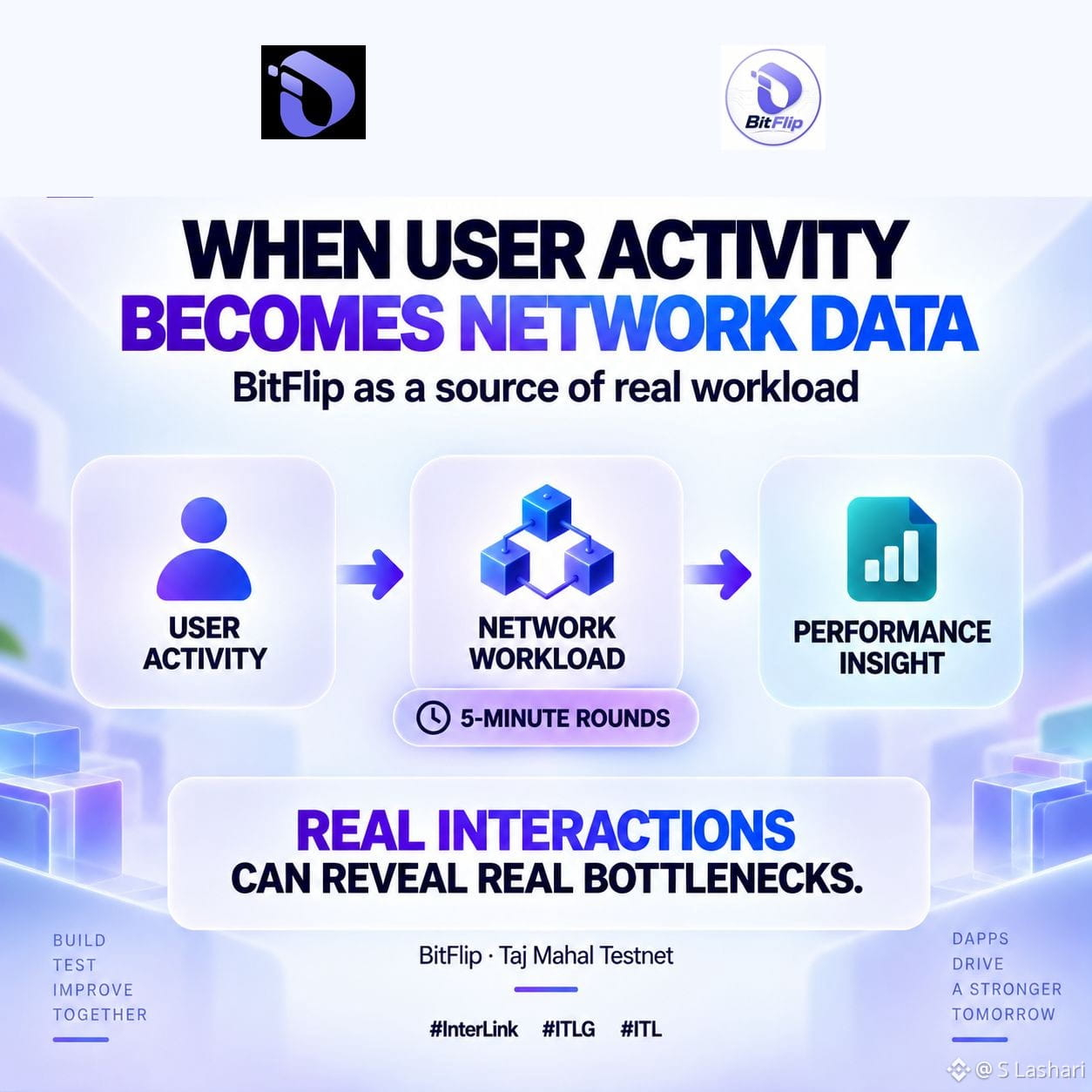
BitFlip operates in recurring 5-minute rounds. Users interact, predictions are recorded, rounds lock and results settle onchain.
For a user, those are application actions.
For the underlying blockchain, they're also repeated opportunities to observe how the system behaves under changing demand.
InterLink's latest Testnet guide says BitFlip is being used primarily as a stress test, helping evaluate concurrent transaction processing and whether finality holds under genuine user activity.
That creates a useful feedback loop:
User activity
→ Network workload
→ Performance observations
→ Bottlenecks discovered
→ Infrastructure improvements
This is different from generating a large number of synthetic transactions in a controlled benchmark.
Real users don't necessarily behave predictably.
They arrive at different moments, interact simultaneously and create changing workloads.
That doesn't make BitFlip a complete measure of blockchain performance. One dApp represents only one workload pattern, and testnet performance shouldn't automatically be treated as proof of future mainnet performance.
But it does provide something valuable:
application-level behavior under actual usage conditions.
That's why working testnet dApps matter beyond demonstrating that smart contracts function.
They can turn user interaction into information developers can use to understand the network itself.
The transaction is the activity.
The behavior around it is the telemetry.
#InterLink #ITLG #ITL #InterlinkBitFlip
𝗜𝘁 𝗰𝗮𝗻 𝗴𝗲𝗻𝗲𝗿𝗮𝘁𝗲 𝗻𝗲𝘁𝘄𝗼𝗿𝗸 𝘁𝗲𝗹𝗲𝗺𝗲𝘁𝗿𝘆.
That is an interesting way to look at BitFlip on InterLink's Taj Mahal Testnet.
BitFlip operates in recurring 5-minute rounds. Users interact, predictions are recorded, rounds lock and results settle onchain.
For a user, those are application actions.
For the underlying blockchain, they're also repeated opportunities to observe how the system behaves under changing demand.
InterLink's latest Testnet guide says BitFlip is being used primarily as a stress test, helping evaluate concurrent transaction processing and whether finality holds under genuine user activity.
That creates a useful feedback loop:
User activity
→ Network workload
→ Performance observations
→ Bottlenecks discovered
→ Infrastructure improvements
This is different from generating a large number of synthetic transactions in a controlled benchmark.
Real users don't necessarily behave predictably.
They arrive at different moments, interact simultaneously and create changing workloads.
That doesn't make BitFlip a complete measure of blockchain performance. One dApp represents only one workload pattern, and testnet performance shouldn't automatically be treated as proof of future mainnet performance.
But it does provide something valuable:
application-level behavior under actual usage conditions.
That's why working testnet dApps matter beyond demonstrating that smart contracts function.
They can turn user interaction into information developers can use to understand the network itself.
The transaction is the activity.
The behavior around it is the telemetry.
#InterLink #ITLG #ITL #InterlinkBitFlip