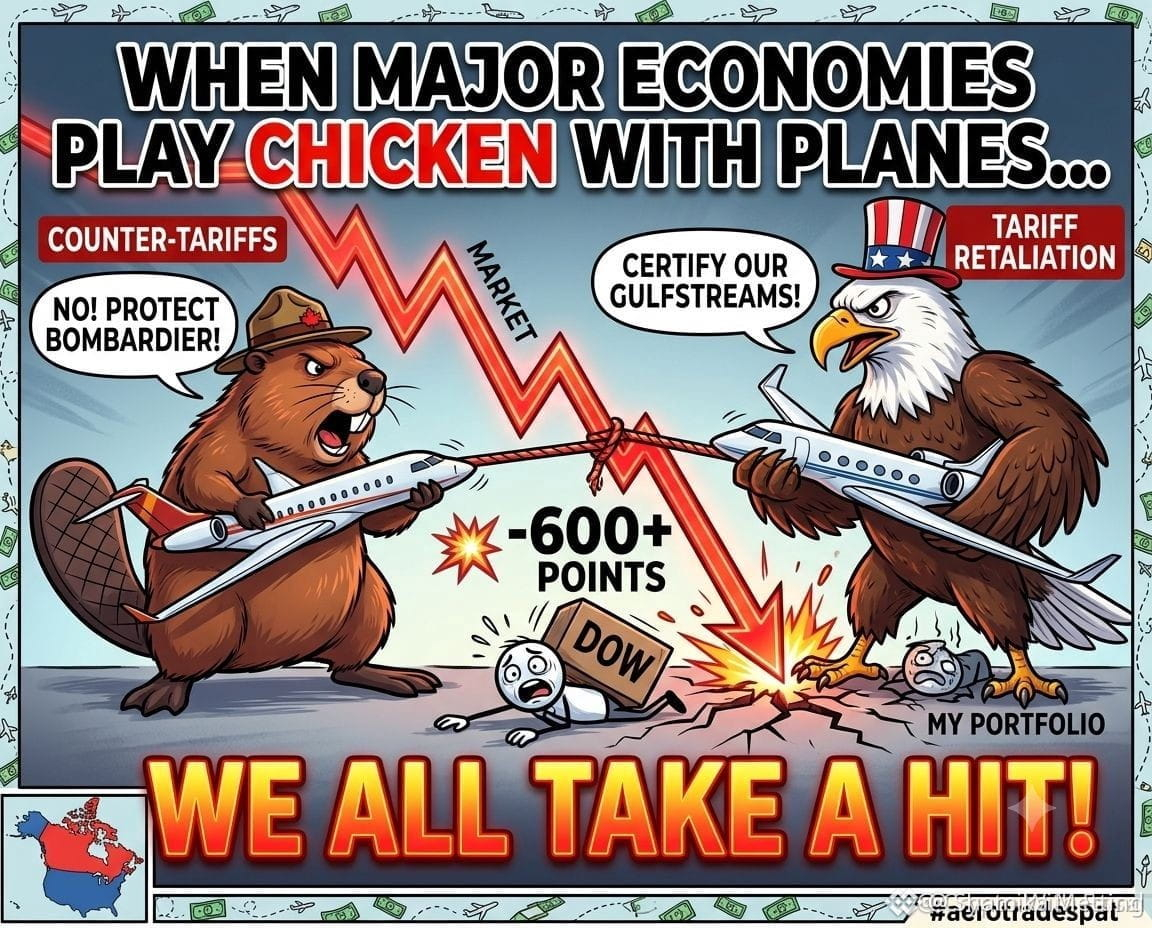
#dowfallsover600points
Wall Street just took a big hit—and this time we can’t blame it on interest rates or bad earnings reports. The Dow Jones fell by more than 600 points—down over 1%—dragging both the S&P 500 and the Nasdaq with it. 📉
So what’s the drama about? ✈️
It’s a cross-border tug-of-war over aircraft. President Trump threatened to ban Canadian aircraft maker Bombardier from the U.S. market after Canada refused to approve U.S.-manufactured Gulfstream aircraft. This standoff sent Bombardier’s stock tumbling by nearly 7%, dealing a heavy blow to both aviation and industrial sectors.
And it’s not happening in isolation either. Trade tensions were already escalating, after Canada recently imposed retaliatory duties/fees on roughly $20 billion worth of U.S. goods.
The bigger picture:
When major economies start imposing tariffs, the damage doesn’t stay confined to a single industry. It spreads like a wave—disrupting supply chains, impacting companies’ earnings outlooks, and changing investors’ appetite for risk overall. With global markets already grappling with plenty of geopolitical chaos, this new point of friction in trade policy gives investors yet another major reason to stay cautious.
Please keep following
$USELESS
Wall Street just took a big hit—and this time we can’t blame it on interest rates or bad earnings reports. The Dow Jones fell by more than 600 points—down over 1%—dragging both the S&P 500 and the Nasdaq with it. 📉
So what’s the drama about? ✈️
It’s a cross-border tug-of-war over aircraft. President Trump threatened to ban Canadian aircraft maker Bombardier from the U.S. market after Canada refused to approve U.S.-manufactured Gulfstream aircraft. This standoff sent Bombardier’s stock tumbling by nearly 7%, dealing a heavy blow to both aviation and industrial sectors.
And it’s not happening in isolation either. Trade tensions were already escalating, after Canada recently imposed retaliatory duties/fees on roughly $20 billion worth of U.S. goods.
The bigger picture:
When major economies start imposing tariffs, the damage doesn’t stay confined to a single industry. It spreads like a wave—disrupting supply chains, impacting companies’ earnings outlooks, and changing investors’ appetite for risk overall. With global markets already grappling with plenty of geopolitical chaos, this new point of friction in trade policy gives investors yet another major reason to stay cautious.
Please keep following
$USELESS