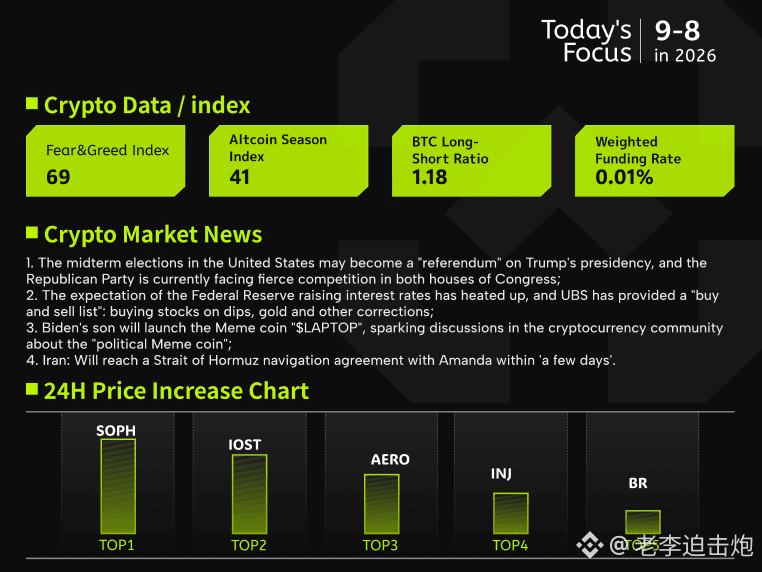
【September 8 Global Market News and Data Analysis】
1. The U.S. midterm elections may effectively serve as a “referendum” on Trump’s presidency; the Republican Party is currently facing fierce competition in both the House and the Senate;
2. Expectations of further rate hikes by the Federal Reserve are heating up. UBS has issued a “buy-sell list”: buy stocks on dips, and consider pullbacks in gold and others;
3. Biden’s son will launch the Meme coin LAPTOP, sparking heated discussion in the crypto community about “political Meme coins.”;
4. Iran: within “a few days,” it plans to reach a deal with Oman on a transit/navigation agreement for the Strait of Hormuz.
In August, the U.S. added 162,000 jobs, far exceeding expectations of 55,000, marking the strongest performance since March. The unemployment rate stayed steady at 4.1%. After the data was released, market pricing for a 25-basis-point Fed hike in September rose to around 60%. UBS notes that whether tightening is driven by stronger economic growth or by persistent inflation will have very different effects on portfolios. UBS continues to be bullish on stocks, favoring themes such as AI, power/energy resources, and longevity. In the bond segment, it shifts toward higher value-for-money high-quality intermediate-to-longer-term issues.
Under a backdrop of a strong economy combined with tightening, UBS expects the U.S. dollar may remain strong. It suggests reducing dollar exposure when the dollar strengthens. In the short term, gold is pressured by real interest rates and the dollar; it recommends positioning after pullbacks. For the crypto market, some analysis suggests that each Bitcoin new-all-time-high cycle is shortening. Based on the previous cycle estimate, the peak would be no later than February 2028, but this time the bottoming appears to arrive about 3–4 months earlier. New highs may occur as early as late Q4 2027, and in November Bitcoin has the potential to break above $126,000. If rate hikes are driven by growth rather than by stagflation pressures, a stronger dollar may temporarily suppress risk appetite. However, BTC pullbacks may happen earlier and the cycle may run faster, which in the medium term could provide a stronger revaluation and upside elasticity.
1. The U.S. midterm elections may effectively serve as a “referendum” on Trump’s presidency; the Republican Party is currently facing fierce competition in both the House and the Senate;
2. Expectations of further rate hikes by the Federal Reserve are heating up. UBS has issued a “buy-sell list”: buy stocks on dips, and consider pullbacks in gold and others;
3. Biden’s son will launch the Meme coin LAPTOP, sparking heated discussion in the crypto community about “political Meme coins.”;
4. Iran: within “a few days,” it plans to reach a deal with Oman on a transit/navigation agreement for the Strait of Hormuz.
In August, the U.S. added 162,000 jobs, far exceeding expectations of 55,000, marking the strongest performance since March. The unemployment rate stayed steady at 4.1%. After the data was released, market pricing for a 25-basis-point Fed hike in September rose to around 60%. UBS notes that whether tightening is driven by stronger economic growth or by persistent inflation will have very different effects on portfolios. UBS continues to be bullish on stocks, favoring themes such as AI, power/energy resources, and longevity. In the bond segment, it shifts toward higher value-for-money high-quality intermediate-to-longer-term issues.
Under a backdrop of a strong economy combined with tightening, UBS expects the U.S. dollar may remain strong. It suggests reducing dollar exposure when the dollar strengthens. In the short term, gold is pressured by real interest rates and the dollar; it recommends positioning after pullbacks. For the crypto market, some analysis suggests that each Bitcoin new-all-time-high cycle is shortening. Based on the previous cycle estimate, the peak would be no later than February 2028, but this time the bottoming appears to arrive about 3–4 months earlier. New highs may occur as early as late Q4 2027, and in November Bitcoin has the potential to break above $126,000. If rate hikes are driven by growth rather than by stagflation pressures, a stronger dollar may temporarily suppress risk appetite. However, BTC pullbacks may happen earlier and the cycle may run faster, which in the medium term could provide a stronger revaluation and upside elasticity.