
🇨🇦⚠️ Canada Hits US Goods With Tariffs Up to 50%: Trade War Risk Rises ⚠️🇨🇦
At the border, the trucks kept moving. But behind the routine traffic, a new economic barrier quietly changed the cost of doing business between two deeply connected economies.
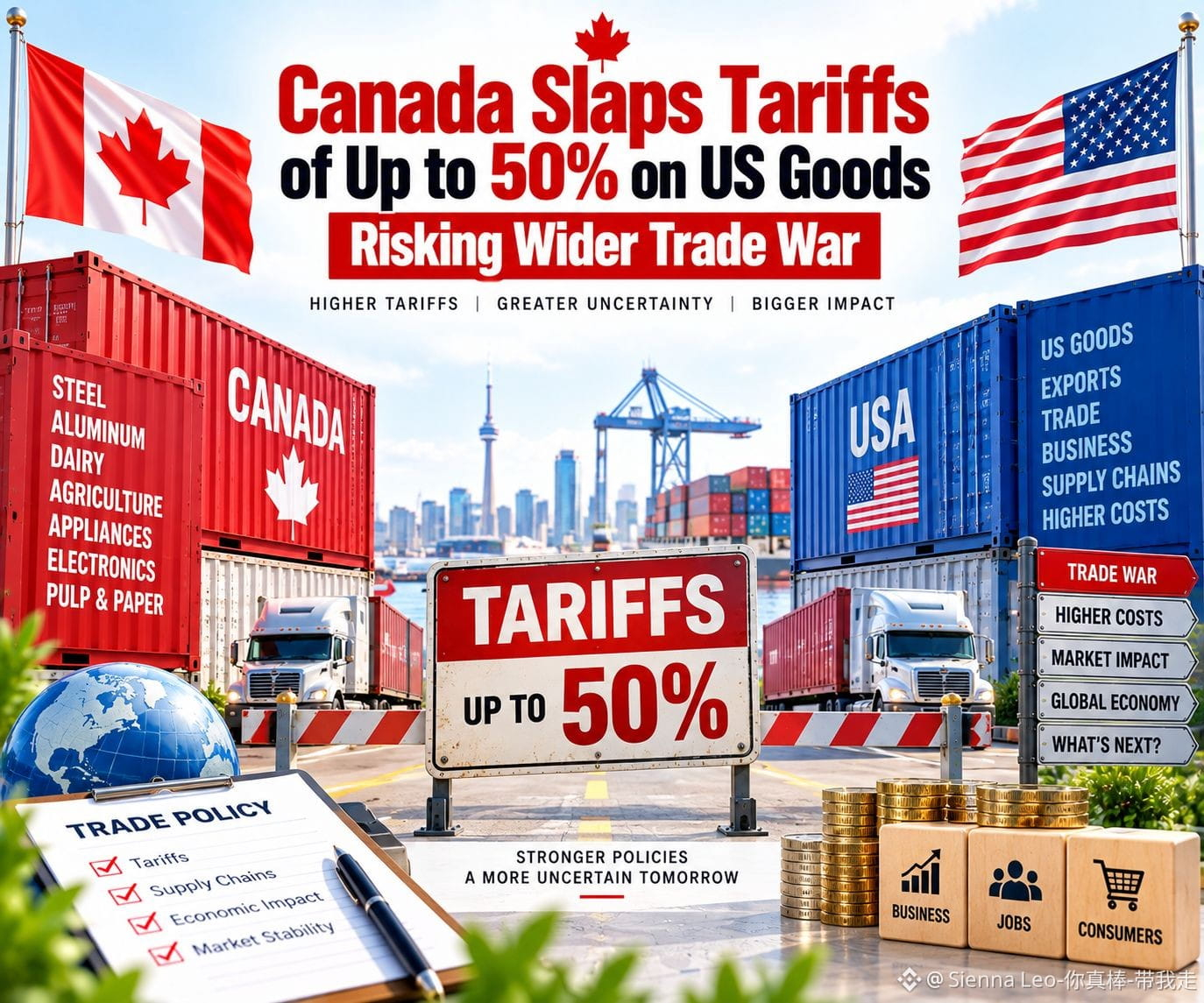
Canada’s retaliatory tariffs are now in force, covering about C$27.6 billion of U.S. imports with rates of 15%, 25%, and 50%. The measures target sectors including steel, aluminum, dairy, appliances, agricultural equipment, pulp and paper, and electronics.
This is not an isolated tariff announcement. Canada is matching U.S. Section 338 tariffs after Washington imposed a 50% tariff on C$27.6 billion of Canadian goods, turning the dispute into a direct tit-for-tat confrontation.
The economic question is what happens next. Higher import costs can pressure companies, supply chains and consumers, while prolonged uncertainty can make businesses more cautious about investment and hiring.
Markets may also react to the wider risk. Trade escalation can affect inflation expectations, currencies, equities and overall investor appetite for risk.
But there is another side. Tariffs can create negotiating leverage, and Canada has deliberately focused its measures on goods already affected by U.S. trade actions.
The key signal now is whether Washington and Ottawa return to negotiations or move toward another round of retaliation.
For investors, the headline is important, but the duration of the dispute may matter even more.
When trade barriers rise this quickly, markets eventually ask one question: who pays the final bill?
❓Do you think these tariffs will force a faster trade agreement, or push North American markets into a deeper period of uncertainty?
Disclaimer: Educational content only, not financial advice. Always conduct your own research.
#TradeWar #Canada #StockMarket #Write2Earn #GrowWithSAC $SOPH $IOST $INJ
At the border, the trucks kept moving. But behind the routine traffic, a new economic barrier quietly changed the cost of doing business between two deeply connected economies.
Canada’s retaliatory tariffs are now in force, covering about C$27.6 billion of U.S. imports with rates of 15%, 25%, and 50%. The measures target sectors including steel, aluminum, dairy, appliances, agricultural equipment, pulp and paper, and electronics.
This is not an isolated tariff announcement. Canada is matching U.S. Section 338 tariffs after Washington imposed a 50% tariff on C$27.6 billion of Canadian goods, turning the dispute into a direct tit-for-tat confrontation.
The economic question is what happens next. Higher import costs can pressure companies, supply chains and consumers, while prolonged uncertainty can make businesses more cautious about investment and hiring.
Markets may also react to the wider risk. Trade escalation can affect inflation expectations, currencies, equities and overall investor appetite for risk.
But there is another side. Tariffs can create negotiating leverage, and Canada has deliberately focused its measures on goods already affected by U.S. trade actions.
The key signal now is whether Washington and Ottawa return to negotiations or move toward another round of retaliation.
For investors, the headline is important, but the duration of the dispute may matter even more.
When trade barriers rise this quickly, markets eventually ask one question: who pays the final bill?
❓Do you think these tariffs will force a faster trade agreement, or push North American markets into a deeper period of uncertainty?
Disclaimer: Educational content only, not financial advice. Always conduct your own research.
#TradeWar #Canada #StockMarket #Write2Earn #GrowWithSAC $SOPH $IOST $INJ