
橙子Joyce
237 Posts

橙子Joyce
 Square Verified+
价值投资者:以十年为单位投资美股及BTC.ETH.BNB.SOL.推特X:@Joyce88ai

SOL Holder
Frequent Trader
8.7 Years
765 Following
33.4K+ Followers
41.5K+ Liked
Posts
All
Quotes
Videos
Live
PINNED
Verified
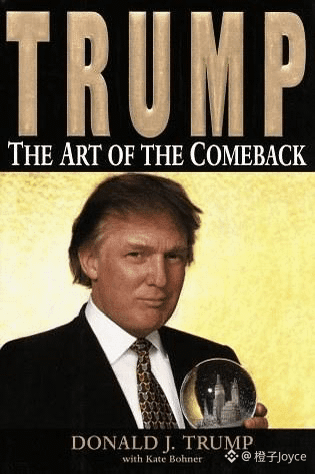
Underestimated Risks in the U.S. Midterm Elections?
The market is seriously underestimating the risk that the results of the U.S. midterm elections could be challenged, triggering political and legal disputes. At the same time, hedging costs on Wall Street have fallen to their lowest level of the year, and the implied volatility of S&P 500 put options for November has dropped below 15%, creating a low-cost window to buy protection early.
The probability that the election results could be disputed, or even spark political turmoil, is being severely underestimated by the market, and current pricing in the options market does not fully reflect this tail risk.
As the market calmed in August, the implied volatility of S&P 500 put options has fallen significantly from its July highs. The calmer the market, the cheaper protection becomes; but once election risk is truly priced into assets, volatility could rise rapidly, and the cost of hedging at that point would increase markedly.
The core logic is built on the current polling situation. Polls generally show Trump’s approval rating slipping, Democrats likely to regain control of the House, and Republicans expected to keep their Senate majority.
What the market is truly overlooking is not the election result itself, but the political and legal disputes that could emerge if the result is challenged. If the final outcome is unfavorable to Trump, the market is severely underestimating the likelihood that Trump would react strongly and challenge results in certain districts.
In that scenario, Trump may launch legal challenges to every “contested” district, delaying the certification process and triggering a wave of media coverage around disputes such as “what happens next” and claims that the election was “stolen.”
This political uncertainty could ultimately spill over into financial markets and drive volatility sharply higher. For markets, the most dangerous outcome is not necessarily that one side wins, but that the election result remains unconfirmed for an extended period, creating persistent uncertainty.
The market is seriously underestimating the risk that the results of the U.S. midterm elections could be challenged, triggering political and legal disputes. At the same time, hedging costs on Wall Street have fallen to their lowest level of the year, and the implied volatility of S&P 500 put options for November has dropped below 15%, creating a low-cost window to buy protection early.
The probability that the election results could be disputed, or even spark political turmoil, is being severely underestimated by the market, and current pricing in the options market does not fully reflect this tail risk.
As the market calmed in August, the implied volatility of S&P 500 put options has fallen significantly from its July highs. The calmer the market, the cheaper protection becomes; but once election risk is truly priced into assets, volatility could rise rapidly, and the cost of hedging at that point would increase markedly.
The core logic is built on the current polling situation. Polls generally show Trump’s approval rating slipping, Democrats likely to regain control of the House, and Republicans expected to keep their Senate majority.
What the market is truly overlooking is not the election result itself, but the political and legal disputes that could emerge if the result is challenged. If the final outcome is unfavorable to Trump, the market is severely underestimating the likelihood that Trump would react strongly and challenge results in certain districts.
In that scenario, Trump may launch legal challenges to every “contested” district, delaying the certification process and triggering a wave of media coverage around disputes such as “what happens next” and claims that the election was “stolen.”
This political uncertainty could ultimately spill over into financial markets and drive volatility sharply higher. For markets, the most dangerous outcome is not necessarily that one side wins, but that the election result remains unconfirmed for an extended period, creating persistent uncertainty.

PINNED

橙子Joyce
·
--
Underestimated Risks in the U.S. Midterm Elections?
The market is seriously underestimating the risk that the results of the U.S. midterm elections could be challenged, triggering political and legal disputes. At the same time, hedging costs on Wall Street have fallen to their lowest level of the year, and the implied volatility of S&P 500 put options for November has dropped below 15%, creating a low-cost window to buy protection early.
The probability that the election results could be disputed, or even spark political turmoil, is being severely underestimated by the market, and current pricing in the options market does not fully reflect this tail risk.
As the market calmed in August, the implied volatility of S&P 500 put options has fallen significantly from its July highs. The calmer the market, the cheaper protection becomes; but once election risk is truly priced into assets, volatility could rise rapidly, and the cost of hedging at that point would increase markedly.
The core logic is built on the current polling situation. Polls generally show Trump’s approval rating slipping, Democrats likely to regain control of the House, and Republicans expected to keep their Senate majority.
What the market is truly overlooking is not the election result itself, but the political and legal disputes that could emerge if the result is challenged. If the final outcome is unfavorable to Trump, the market is severely underestimating the likelihood that Trump would react strongly and challenge results in certain districts.
In that scenario, Trump may launch legal challenges to every “contested” district, delaying the certification process and triggering a wave of media coverage around disputes such as “what happens next” and claims that the election was “stolen.”
This political uncertainty could ultimately spill over into financial markets and drive volatility sharply higher. For markets, the most dangerous outcome is not necessarily that one side wins, but that the election result remains unconfirmed for an extended period, creating persistent uncertainty.
The market is seriously underestimating the risk that the results of the U.S. midterm elections could be challenged, triggering political and legal disputes. At the same time, hedging costs on Wall Street have fallen to their lowest level of the year, and the implied volatility of S&P 500 put options for November has dropped below 15%, creating a low-cost window to buy protection early.
The probability that the election results could be disputed, or even spark political turmoil, is being severely underestimated by the market, and current pricing in the options market does not fully reflect this tail risk.
As the market calmed in August, the implied volatility of S&P 500 put options has fallen significantly from its July highs. The calmer the market, the cheaper protection becomes; but once election risk is truly priced into assets, volatility could rise rapidly, and the cost of hedging at that point would increase markedly.
The core logic is built on the current polling situation. Polls generally show Trump’s approval rating slipping, Democrats likely to regain control of the House, and Republicans expected to keep their Senate majority.
What the market is truly overlooking is not the election result itself, but the political and legal disputes that could emerge if the result is challenged. If the final outcome is unfavorable to Trump, the market is severely underestimating the likelihood that Trump would react strongly and challenge results in certain districts.
In that scenario, Trump may launch legal challenges to every “contested” district, delaying the certification process and triggering a wave of media coverage around disputes such as “what happens next” and claims that the election was “stolen.”
This political uncertainty could ultimately spill over into financial markets and drive volatility sharply higher. For markets, the most dangerous outcome is not necessarily that one side wins, but that the election result remains unconfirmed for an extended period, creating persistent uncertainty.

橙子Joyce
·
--
Underestimated Risks in the U.S. Midterm Elections?
The market is seriously underestimating the risk that the results of the U.S. midterm elections could be challenged, triggering political and legal disputes. At the same time, hedging costs on Wall Street have fallen to their lowest level of the year, and the implied volatility of S&P 500 put options for November has dropped below 15%, creating a low-cost window to buy protection early.
The probability that the election results could be disputed, or even spark political turmoil, is being severely underestimated by the market, and current pricing in the options market does not fully reflect this tail risk.
As the market calmed in August, the implied volatility of S&P 500 put options has fallen significantly from its July highs. The calmer the market, the cheaper protection becomes; but once election risk is truly priced into assets, volatility could rise rapidly, and the cost of hedging at that point would increase markedly.
The core logic is built on the current polling situation. Polls generally show Trump’s approval rating slipping, Democrats likely to regain control of the House, and Republicans expected to keep their Senate majority.
What the market is truly overlooking is not the election result itself, but the political and legal disputes that could emerge if the result is challenged. If the final outcome is unfavorable to Trump, the market is severely underestimating the likelihood that Trump would react strongly and challenge results in certain districts.
In that scenario, Trump may launch legal challenges to every “contested” district, delaying the certification process and triggering a wave of media coverage around disputes such as “what happens next” and claims that the election was “stolen.”
This political uncertainty could ultimately spill over into financial markets and drive volatility sharply higher. For markets, the most dangerous outcome is not necessarily that one side wins, but that the election result remains unconfirmed for an extended period, creating persistent uncertainty.
The market is seriously underestimating the risk that the results of the U.S. midterm elections could be challenged, triggering political and legal disputes. At the same time, hedging costs on Wall Street have fallen to their lowest level of the year, and the implied volatility of S&P 500 put options for November has dropped below 15%, creating a low-cost window to buy protection early.
The probability that the election results could be disputed, or even spark political turmoil, is being severely underestimated by the market, and current pricing in the options market does not fully reflect this tail risk.
As the market calmed in August, the implied volatility of S&P 500 put options has fallen significantly from its July highs. The calmer the market, the cheaper protection becomes; but once election risk is truly priced into assets, volatility could rise rapidly, and the cost of hedging at that point would increase markedly.
The core logic is built on the current polling situation. Polls generally show Trump’s approval rating slipping, Democrats likely to regain control of the House, and Republicans expected to keep their Senate majority.
What the market is truly overlooking is not the election result itself, but the political and legal disputes that could emerge if the result is challenged. If the final outcome is unfavorable to Trump, the market is severely underestimating the likelihood that Trump would react strongly and challenge results in certain districts.
In that scenario, Trump may launch legal challenges to every “contested” district, delaying the certification process and triggering a wave of media coverage around disputes such as “what happens next” and claims that the election was “stolen.”
This political uncertainty could ultimately spill over into financial markets and drive volatility sharply higher. For markets, the most dangerous outcome is not necessarily that one side wins, but that the election result remains unconfirmed for an extended period, creating persistent uncertainty.
Verified
Has the U.S. stock market encountered the “September curse”?
September has never been a calm month for Wall Street.
Data since 1928 show that the S&P 500 has a 56% probability of declining in September, with an average drop of more than 1%; since 1897, the Dow Jones Industrial Average has recorded an average monthly decline of 1.1% in September, and it has posted gains in September only 42.2% of the time. What has led to this kind of market performance?
As September begins, concern over the “September curse” in the U.S. stock market has started to rise. The month has long been viewed as the worst-performing month of the year for U.S. equities, with clear signs of seasonal weakness across the Dow, the S&P 500, and the Nasdaq.
Investors should not be scared off by historical data, because the worst Septembers in history all occurred when the market was already unstable or weak. The “September curse” is a statistically real but non-deterministic form of seasonal underperformance, driven by a combination of distraction, buying vacuum, macro repricing, and extreme tail risks. In actual investing, it should be treated as a probabilistic reference, not an iron rule. Although historical data show that September is often the worst month of the year for the S&P 500, when the index enters September above its 200-day moving average, its downside risk narrows significantly.
Risks and opportunities coexist
If we shift the perspective from broad market indices to specific sectors and individual stocks, September’s investment strategy becomes more nuanced.
Technology stocks also offer opportunities for buyers waiting for pullbacks. From its September high to its interim low, the average decline in the State Street Technology Select Sector SPDR ETF is slightly above 1%, and then it has historically risen more than 6% on average from the low to year-end. Within technology, although the sustainability of data center spending growth remains in question, corporate earnings provide more direct support: Dell Technologies is seeing explosive demand growth for data center servers, and its latest earnings and guidance both exceeded market expectations; Nvidia delivered a far stronger-than-expected outlook for 2028 market demand; cybersecurity software leader Palo Alto Networks also reported profits far above expectations. The sector’s overall earnings per share are expected to grow by 36% in 2027.
$SPCX.US The process of compounding and multiplying wealth requires long-term accumulation!
$GOOGL.US
$NVDA.US
September has never been a calm month for Wall Street.
Data since 1928 show that the S&P 500 has a 56% probability of declining in September, with an average drop of more than 1%; since 1897, the Dow Jones Industrial Average has recorded an average monthly decline of 1.1% in September, and it has posted gains in September only 42.2% of the time. What has led to this kind of market performance?
As September begins, concern over the “September curse” in the U.S. stock market has started to rise. The month has long been viewed as the worst-performing month of the year for U.S. equities, with clear signs of seasonal weakness across the Dow, the S&P 500, and the Nasdaq.
Investors should not be scared off by historical data, because the worst Septembers in history all occurred when the market was already unstable or weak. The “September curse” is a statistically real but non-deterministic form of seasonal underperformance, driven by a combination of distraction, buying vacuum, macro repricing, and extreme tail risks. In actual investing, it should be treated as a probabilistic reference, not an iron rule. Although historical data show that September is often the worst month of the year for the S&P 500, when the index enters September above its 200-day moving average, its downside risk narrows significantly.
Risks and opportunities coexist
If we shift the perspective from broad market indices to specific sectors and individual stocks, September’s investment strategy becomes more nuanced.
Technology stocks also offer opportunities for buyers waiting for pullbacks. From its September high to its interim low, the average decline in the State Street Technology Select Sector SPDR ETF is slightly above 1%, and then it has historically risen more than 6% on average from the low to year-end. Within technology, although the sustainability of data center spending growth remains in question, corporate earnings provide more direct support: Dell Technologies is seeing explosive demand growth for data center servers, and its latest earnings and guidance both exceeded market expectations; Nvidia delivered a far stronger-than-expected outlook for 2028 market demand; cybersecurity software leader Palo Alto Networks also reported profits far above expectations. The sector’s overall earnings per share are expected to grow by 36% in 2027.
$SPCX.US The process of compounding and multiplying wealth requires long-term accumulation!
$GOOGL.US
$NVDA.US

NVDAUS-1.75%
GOOGLUS-0.19%
SPCXUS+4.18%
An uncertain future for Bitcoin?
New cryptocurrency rules from the U.S. Securities and Exchange Commission (SEC)
SEC Chairman Paul Atkins said the agency's proposed new cryptocurrency regulations are consistent with its belief that the CLARITY Act will be enacted into law. Atkins called it “the most historic step toward modernizing cryptocurrency regulation.”
U.S. President Donald Trump reiterated the company's vision of making the United States the “leader” of the Bitcoin economy.
$BTC
I am firmly bullish on BTC, ETH, BNB, and SOL and continue to invest!
$BNB
$ETH
New cryptocurrency rules from the U.S. Securities and Exchange Commission (SEC)
SEC Chairman Paul Atkins said the agency's proposed new cryptocurrency regulations are consistent with its belief that the CLARITY Act will be enacted into law. Atkins called it “the most historic step toward modernizing cryptocurrency regulation.”
U.S. President Donald Trump reiterated the company's vision of making the United States the “leader” of the Bitcoin economy.
$BTC
I am firmly bullish on BTC, ETH, BNB, and SOL and continue to invest!
$BNB
$ETH

Verified
In 1934, the United States passed the Gold Reserve Act, raising and fixing the official gold price from about $20.67/oz to $35/oz. One troy ounce is about 31.1 grams, so at that time 1 U.S. dollar was roughly equivalent to nearly 1 gram of gold. This official parity remained in place until 1971.
Specific timeline:
• 1934–1971: The official gold price was fixed at $35/oz (1 USD ≈ 1 gram of gold).
• 1944–1971: During the Bretton Woods era, currencies were pegged to the U.S. dollar, and the dollar was pegged to gold (also $35 per ounce).
• August 15, 1971: Nixon announced the closing of the "gold window," severing the link between the U.S. dollar and gold. The Bretton Woods system collapsed, and gold prices began to float freely and rose sharply afterward.
Over all these years, I have always believed the highest-quality commodity investment targets are: gold, silver, copper
The highest-quality crypto investment targets are: BTC, ETH, BNB, SOL
$XAU
$BTC
$BNB
Specific timeline:
• 1934–1971: The official gold price was fixed at $35/oz (1 USD ≈ 1 gram of gold).
• 1944–1971: During the Bretton Woods era, currencies were pegged to the U.S. dollar, and the dollar was pegged to gold (also $35 per ounce).
• August 15, 1971: Nixon announced the closing of the "gold window," severing the link between the U.S. dollar and gold. The Bretton Woods system collapsed, and gold prices began to float freely and rose sharply afterward.
Over all these years, I have always believed the highest-quality commodity investment targets are: gold, silver, copper
The highest-quality crypto investment targets are: BTC, ETH, BNB, SOL
$XAU
$BTC
$BNB
Verified
Will the Federal Reserve lean toward staying on hold in September? It all hinges on next week’s CPI data
Next week’s August Consumer Price Index (CPI) and Producer Price Index (PPI) to be released by the U.S. Bureau of Labor Statistics will be key in determining his final vote. If August inflation data shows a rebound, indicating that progress toward the 2% target is being hindered, there will be no dismissal of the possibility of supporting a “modest adjustment” to interest rates, to ensure inflation returns to a downward track.
Data released by the U.S. Department of Labor on Thursday showed that, for the week ending August 29, initial jobless claims rose to 206,000, slightly higher than the market expectation of 205,000, reaching a new high since mid-August. At the same time, continuing claims also edged up to 1.779 million. The marginal increase was seen by the market as evidence that the labor market is cooling moderately, helping to ease pressure for the Fed to tighten further.
New York Fed President Williams has also recently expressed affirmation about progress in curbing inflation. For now, even though the macro environment under President Trump faces uncertainty from trade policy and geopolitical conflicts, market expectations for a September rate hike have clearly cooled.
Markets are closely watching next week’s CPI report, which will be the most critical reference indicator before the Fed enters its blackout period.
I have long predicted that the Fed will not raise rates in September. The CPI data report next week should come in slightly softer than market expectations, keeping interest rates unchanged!
$BTC
$XAU
$COPX.ETF
Next week’s August Consumer Price Index (CPI) and Producer Price Index (PPI) to be released by the U.S. Bureau of Labor Statistics will be key in determining his final vote. If August inflation data shows a rebound, indicating that progress toward the 2% target is being hindered, there will be no dismissal of the possibility of supporting a “modest adjustment” to interest rates, to ensure inflation returns to a downward track.
Data released by the U.S. Department of Labor on Thursday showed that, for the week ending August 29, initial jobless claims rose to 206,000, slightly higher than the market expectation of 205,000, reaching a new high since mid-August. At the same time, continuing claims also edged up to 1.779 million. The marginal increase was seen by the market as evidence that the labor market is cooling moderately, helping to ease pressure for the Fed to tighten further.
New York Fed President Williams has also recently expressed affirmation about progress in curbing inflation. For now, even though the macro environment under President Trump faces uncertainty from trade policy and geopolitical conflicts, market expectations for a September rate hike have clearly cooled.
Markets are closely watching next week’s CPI report, which will be the most critical reference indicator before the Fed enters its blackout period.
I have long predicted that the Fed will not raise rates in September. The CPI data report next week should come in slightly softer than market expectations, keeping interest rates unchanged!
$BTC
$XAU
$COPX.ETF
SpaceX has applied to the U.S. Federal Communications Commission (FCC) for a license, hoping to carry and operate Starlink terminals during the 14th flight test of Starship. According to the submitted documents, this mission is planned as a true orbital flight, which is a task that the Starship project has never attempted before.
SpaceX has the capability to deploy infrastructure faster than any other party, and it is leveraging this infrastructure and its data to improve its own models at an even faster pace than any other party.
I have always been steadfastly committed to continuously buying $SPCXB
$SPCX
SpaceX has the capability to deploy infrastructure faster than any other party, and it is leveraging this infrastructure and its data to improve its own models at an even faster pace than any other party.
I have always been steadfastly committed to continuously buying $SPCXB
$SPCX
SPCXB+2.64%
SPCXUS+4.18%
The world’s first multimodal world model is here, marking a new milestone for “AI godmother” Fei-Fei Li!
World Labs, the startup founded by “AI godmother” Fei-Fei Li, has released the “world’s first multimodal world model” — Atlas. The model is no longer limited to generating images and text; it can generate pixel-level accurate images and video frames, and reconstruct them into a 3D world.
Atlas’s core capability centers on “understanding and simulating the 3D world,” aiming to enable AI to truly understand the physical laws and geometric structure of the 3D world, rather than merely generating 2D images that look plausible. The underlying innovation lies in replacing “text context” with “spatial context.” Unlike large models that process textual context, Atlas adopts a multimodal autoregressive diffusion Transformer architecture, anchoring each input image and video at an exact position in three-dimensional space, along with corresponding camera pose and depth information. This is equivalent to giving the model a three-dimensional sketchbook with “axes” and a “scale,” providing AI with clear geometric and physical references when understanding the world.
Atlas’s more far-reaching significance lies in opening the path toward “embodied intelligence.” Fei-Fei Li herself regards the model as a “milestone” achievement by her team: “This is by far the best camera-controlled world model, opening the door to many application scenarios from visual effects to robotics.” It is foreseeable that AI that understands the real world from a 3D perspective and views time and space as humans do will drive the deployment of multiple physical AI scenarios.
It is worth noting that although Atlas demonstrates powerful capabilities, it still has obvious technical limitations and is not yet a mature general-purpose world simulator. For example, it excels at constructing geometrically coherent static spaces, but its ability to perform general physical simulation of object collisions and complex dynamics remains to be validated. When the camera turns to areas that were never filmed, the model still needs to “imagine,” relying on prior knowledge to fill in the scene. The generated visuals may not be an exact reproduction of the real world, and as the generation path lengthens, local geometric drift or texture flickering may also occur. Currently, Atlas has entered early access and is only open to select partners. In the future, it will be used to power World Labs’ own products such as Marble.
World Labs, the startup founded by “AI godmother” Fei-Fei Li, has released the “world’s first multimodal world model” — Atlas. The model is no longer limited to generating images and text; it can generate pixel-level accurate images and video frames, and reconstruct them into a 3D world.
Atlas’s core capability centers on “understanding and simulating the 3D world,” aiming to enable AI to truly understand the physical laws and geometric structure of the 3D world, rather than merely generating 2D images that look plausible. The underlying innovation lies in replacing “text context” with “spatial context.” Unlike large models that process textual context, Atlas adopts a multimodal autoregressive diffusion Transformer architecture, anchoring each input image and video at an exact position in three-dimensional space, along with corresponding camera pose and depth information. This is equivalent to giving the model a three-dimensional sketchbook with “axes” and a “scale,” providing AI with clear geometric and physical references when understanding the world.
Atlas’s more far-reaching significance lies in opening the path toward “embodied intelligence.” Fei-Fei Li herself regards the model as a “milestone” achievement by her team: “This is by far the best camera-controlled world model, opening the door to many application scenarios from visual effects to robotics.” It is foreseeable that AI that understands the real world from a 3D perspective and views time and space as humans do will drive the deployment of multiple physical AI scenarios.
It is worth noting that although Atlas demonstrates powerful capabilities, it still has obvious technical limitations and is not yet a mature general-purpose world simulator. For example, it excels at constructing geometrically coherent static spaces, but its ability to perform general physical simulation of object collisions and complex dynamics remains to be validated. When the camera turns to areas that were never filmed, the model still needs to “imagine,” relying on prior knowledge to fill in the scene. The generated visuals may not be an exact reproduction of the real world, and as the generation path lengthens, local geometric drift or texture flickering may also occur. Currently, Atlas has entered early access and is only open to select partners. In the future, it will be used to power World Labs’ own products such as Marble.


SPCXUS+4.18%
At the beginning of September 2026, the U.S. Securities and Exchange Commission (SEC) has recently issued a series of rule proposal announcements related to crypto assets/blockchain. The latest is a proposal to modernize the Transfer Agent rules, published on September 1, 2026. This is another related development following the August 18 proposal under “Regulation Crypto Assets.”
New proposal: Transfer Agent Rules Modernization (September 1, 2026)
The SEC proposes a comprehensive update to the Transfer Agent rules, which have seen little substantive revision since the late 1970s and early 1980s. Transfer agents maintain security ownership records, handle transfers, dividends, and other corporate actions, and are a key link in the clearing and settlement system.
The proposal explicitly mentions the need to accommodate electronic records, blockchain recordkeeping, paperless securities, and tokenized securities. Chair Paul Atkins said the rules should reflect the real-world operations by which transfer agents currently use electronic communications and blockchain technologies for securities issuance and share transfers. Market participants are exploring onchain transfer agents, tokenized fund administration, and cross-chain interoperability.
This is the SEC’s first comprehensive proposal specifically for the issuance of crypto assets, building on interpretive guidance issued in March 2026. It establishes a tailored issuance framework for “covered investment contracts”—that is, investment contracts that may be attached to non-securities crypto assets.
The comment period runs until October 20, 2026.
Both proposals are part of the SEC’s current approach in the digital asset space: to provide clear, actionable rules and reduce reliance on enforcement alone to define the law, while market-structure legislation at the congressional level (such as the CLARITY Act) continues to advance. For now, both are only proposals, and the final rules may be modified based on public comments.
Very exciting—an even broader and deeper outlook for the cryptocurrency market! Strongly bullish $BTC , $BNB
$ETH
New proposal: Transfer Agent Rules Modernization (September 1, 2026)
The SEC proposes a comprehensive update to the Transfer Agent rules, which have seen little substantive revision since the late 1970s and early 1980s. Transfer agents maintain security ownership records, handle transfers, dividends, and other corporate actions, and are a key link in the clearing and settlement system.
The proposal explicitly mentions the need to accommodate electronic records, blockchain recordkeeping, paperless securities, and tokenized securities. Chair Paul Atkins said the rules should reflect the real-world operations by which transfer agents currently use electronic communications and blockchain technologies for securities issuance and share transfers. Market participants are exploring onchain transfer agents, tokenized fund administration, and cross-chain interoperability.
This is the SEC’s first comprehensive proposal specifically for the issuance of crypto assets, building on interpretive guidance issued in March 2026. It establishes a tailored issuance framework for “covered investment contracts”—that is, investment contracts that may be attached to non-securities crypto assets.
The comment period runs until October 20, 2026.
Both proposals are part of the SEC’s current approach in the digital asset space: to provide clear, actionable rules and reduce reliance on enforcement alone to define the law, while market-structure legislation at the congressional level (such as the CLARITY Act) continues to advance. For now, both are only proposals, and the final rules may be modified based on public comments.
Very exciting—an even broader and deeper outlook for the cryptocurrency market! Strongly bullish $BTC , $BNB
$ETH
Goldman Sachs, Bank of America, Citigroup, Deutsche Bank, and 19 other financial institutions collectively issued a statement announcing plans to issue a crypto asset pegged to the U.S. dollar in the first half of 2027.
The announcement said that the institutions plan to set up a new company in the second half of this year, which will serve as the issuer of the stablecoin. In its initial phase, the new company will focus on launching a USD-denominated stablecoin, while its long-term goal is to expand stablecoin issuance to the currencies of the other seven Group of Seven (G7) countries, with euro stablecoins prioritized.
This issuance window aligns with the U.S. S. electronic law bill (GENIUS Act), which will take effect in mid-January next year. The GENIUS Act includes provisions requiring the issuer to be prohibited from paying interest. Although this may seem unfavorable for crypto-native companies, it is actually an advantage for global banks.
The 21 participating financial institutions include:
North America: Bank of America, First Capital, Citigroup, Fidelity Investments, Goldman Sachs, PNC Financial Services, Canadian $BNS.US$ (Scotiabank), TD Bank Group, Wells Fargo, $WT.US$ (Wise Tree)
Europe: $SAN.US$ (Banco Santander), Banco Exterior de España, Deutsche Commercial Bank, Crédit Agricole, Deutsche Bank, $LYG.US$ (Lloyds) Group, Rabobank, UBS Group
East Asia: Mitsubishi UFJ Bank
Middle East: Sirius International Holdings
Africa: Standard Bank
Reportedly, this dollar stablecoin, issued in cooperation with global banks, is expected to cover a wide range of use cases across wholesale, institutional, and retail markets, including cross-border payments, digital asset settlement, and more.
The group will be competing against another stablecoin alliance made up of 37 financial institutions. That alliance has already formed a company called Qivalis, which plans to launch a euro-pegged stablecoin later this year.
The bigger issue is that the crypto market has never shown much interest in bank-backed stablecoins.
At present, the stablecoin market is still dominated by Tether (USDT.CC) headquartered in El Salvador and $Circle (CRCL.US)$, a U.S.-listed company. The USDT and USDC stablecoin issuance volumes of the two firms are $183.3B and $73.4B respectively.
$USDC
$CRCL
The announcement said that the institutions plan to set up a new company in the second half of this year, which will serve as the issuer of the stablecoin. In its initial phase, the new company will focus on launching a USD-denominated stablecoin, while its long-term goal is to expand stablecoin issuance to the currencies of the other seven Group of Seven (G7) countries, with euro stablecoins prioritized.
This issuance window aligns with the U.S. S. electronic law bill (GENIUS Act), which will take effect in mid-January next year. The GENIUS Act includes provisions requiring the issuer to be prohibited from paying interest. Although this may seem unfavorable for crypto-native companies, it is actually an advantage for global banks.
The 21 participating financial institutions include:
North America: Bank of America, First Capital, Citigroup, Fidelity Investments, Goldman Sachs, PNC Financial Services, Canadian $BNS.US$ (Scotiabank), TD Bank Group, Wells Fargo, $WT.US$ (Wise Tree)
Europe: $SAN.US$ (Banco Santander), Banco Exterior de España, Deutsche Commercial Bank, Crédit Agricole, Deutsche Bank, $LYG.US$ (Lloyds) Group, Rabobank, UBS Group
East Asia: Mitsubishi UFJ Bank
Middle East: Sirius International Holdings
Africa: Standard Bank
Reportedly, this dollar stablecoin, issued in cooperation with global banks, is expected to cover a wide range of use cases across wholesale, institutional, and retail markets, including cross-border payments, digital asset settlement, and more.
The group will be competing against another stablecoin alliance made up of 37 financial institutions. That alliance has already formed a company called Qivalis, which plans to launch a euro-pegged stablecoin later this year.
The bigger issue is that the crypto market has never shown much interest in bank-backed stablecoins.
At present, the stablecoin market is still dominated by Tether (USDT.CC) headquartered in El Salvador and $Circle (CRCL.US)$, a U.S.-listed company. The USDT and USDC stablecoin issuance volumes of the two firms are $183.3B and $73.4B respectively.
$USDC
$CRCL
Verified
Musk said at the G20 summit: “AI could boost global economic growth by 20%–30%. In the next decade, humanoid robots could reach 1 billion units?”
In fact, we have already seen—and will continue to see—artificial intelligence bring significant productivity gains, while robotics will drive a leap in productivity.”
To help everyone get an intuitive sense of this scale, I think AI could increase the size of the global economy by 20% to 30%. This is my rough estimate, which means an additional $2 to $3 trillion per year.”
Musk urged regulators to encourage and embrace new technologies such as AI. He argues that such technologies should be “legal by default,” rather than “illegal by default.”
He is most optimistic about robotics, predicting that within the next decade, the number of humanoid robots worldwide will reach 1 billion units.
“By the end of next year, AI will be able to complete all work in the digital domain—that is, all work that doesn’t require people to physically shape real-world objects.”
$TSLA.US
$SPCX.US
A firm decision to invest in Tesla and SpaceX stock is definitely the wisest and smartest move.
In fact, we have already seen—and will continue to see—artificial intelligence bring significant productivity gains, while robotics will drive a leap in productivity.”
To help everyone get an intuitive sense of this scale, I think AI could increase the size of the global economy by 20% to 30%. This is my rough estimate, which means an additional $2 to $3 trillion per year.”
Musk urged regulators to encourage and embrace new technologies such as AI. He argues that such technologies should be “legal by default,” rather than “illegal by default.”
He is most optimistic about robotics, predicting that within the next decade, the number of humanoid robots worldwide will reach 1 billion units.
“By the end of next year, AI will be able to complete all work in the digital domain—that is, all work that doesn’t require people to physically shape real-world objects.”
$TSLA.US
$SPCX.US
A firm decision to invest in Tesla and SpaceX stock is definitely the wisest and smartest move.



TSLAUS+3.78%
SPCXUS+4.18%
Verified
Will Elon Musk’s X Money payments business become extremely powerful in the future?
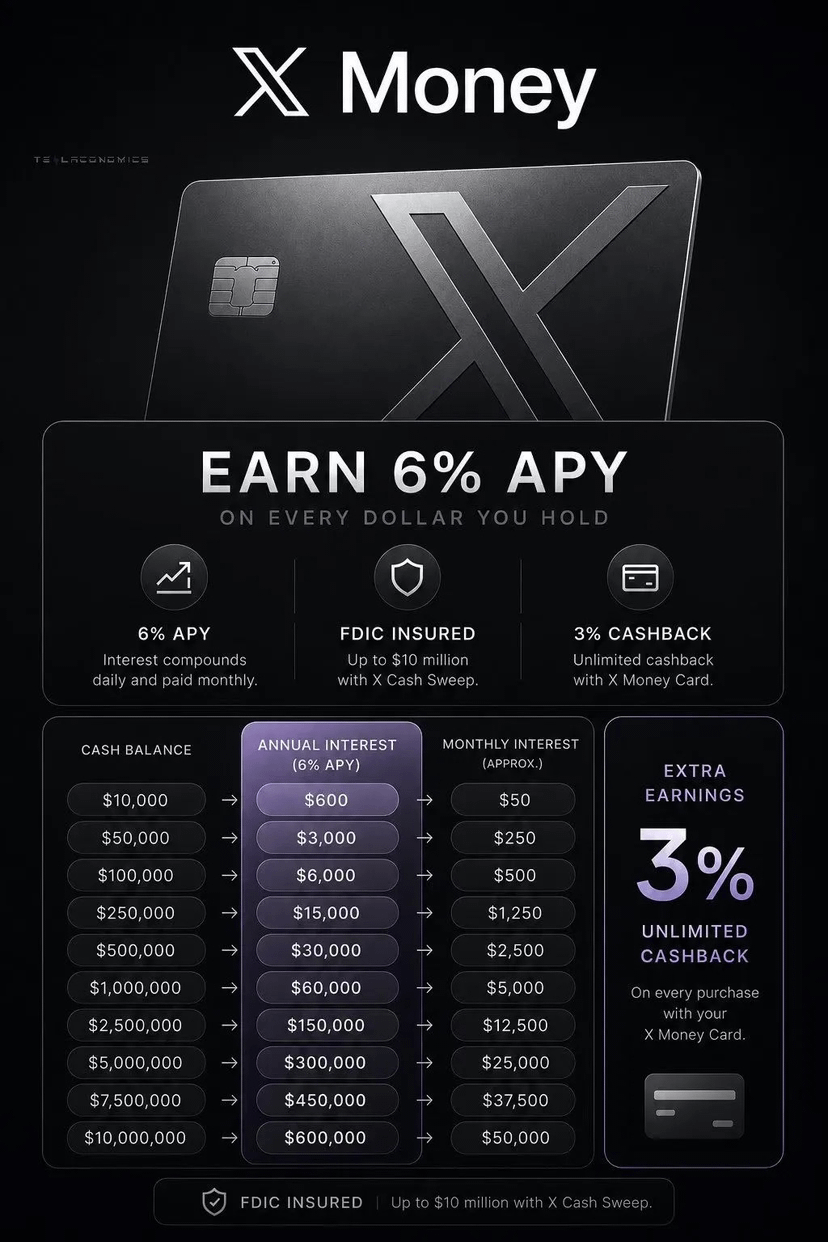
X Money is being built as financial infrastructure within the X platform, rather than as a standalone payment destination. X Money’s own website describes a service that can handle direct deposits, bill payments, wire transfers, checks, and peer-to-peer transfers. It also offers an X-branded Visa Inc. (NYSE: V) card and cashback features.
The service is supported by Cross River, which says X is the first platform on a U.S. social platform to directly embed FDIC-insured interest-bearing accounts and broader payment capabilities.
X could then potentially turn financial activity into yet another layer of the experience users already have on the platform.
This is already being implemented, starting with creators. X says that eligible U.S. creators who want to earn revenue through subscription features must register for X Money to receive payments.
Today, X Money has been incorporated into a larger Musk ecosystem: Space Exploration Technologies Corp. (NASDAQ: SPCX) owns X after merging with xAI, putting Musk’s renewed financial-services vision alongside his artificial intelligence, social media, and space businesses.
SpaceX’s AI strategy is becoming clearer
All-in-one app testing
Musk is trying to make payments a component of a broader platform.
X Money’s biggest opportunity may not come from transaction fees, but from strengthening everything else on the X platform through payment functionality—creator revenue, subscription services, e-commerce, and ultimately other financial services.
Therefore, the key metric is how much financial activity Musk can bring into X that would otherwise happen elsewhere.
$SPCX.US
Continuing to invest in SPCX stock is something I’ve kept doing!
X Money is being built as financial infrastructure within the X platform, rather than as a standalone payment destination. X Money’s own website describes a service that can handle direct deposits, bill payments, wire transfers, checks, and peer-to-peer transfers. It also offers an X-branded Visa Inc. (NYSE: V) card and cashback features.
The service is supported by Cross River, which says X is the first platform on a U.S. social platform to directly embed FDIC-insured interest-bearing accounts and broader payment capabilities.
X could then potentially turn financial activity into yet another layer of the experience users already have on the platform.
This is already being implemented, starting with creators. X says that eligible U.S. creators who want to earn revenue through subscription features must register for X Money to receive payments.
Today, X Money has been incorporated into a larger Musk ecosystem: Space Exploration Technologies Corp. (NASDAQ: SPCX) owns X after merging with xAI, putting Musk’s renewed financial-services vision alongside his artificial intelligence, social media, and space businesses.
SpaceX’s AI strategy is becoming clearer
All-in-one app testing
Musk is trying to make payments a component of a broader platform.
X Money’s biggest opportunity may not come from transaction fees, but from strengthening everything else on the X platform through payment functionality—creator revenue, subscription services, e-commerce, and ultimately other financial services.
Therefore, the key metric is how much financial activity Musk can bring into X that would otherwise happen elsewhere.
$SPCX.US
Continuing to invest in SPCX stock is something I’ve kept doing!
SPCXUS+4.18%
Verified
Federal Reserve Chair Powell Says the Global Economy Is Entering a Period of Investment Surge; Growth Potential May Be Underestimated
At the G20 finance leaders meeting, Federal Reserve Chair Powell said the world is seeing a wave of investment that will boost economic growth and reverse the situation in which excess savings flowed into low-yield instruments due to a lack of investment opportunities in the past.
He said at the G20 opening plenary session that he hopes to learn more about the growth outlook of member economies.
Powell said he is considering whether the growth rates of the United States and other G20 economies could exceed forecasts from traditional institutions such as the U.S. Congressional Budget Office—namely, that annual growth of about 1.8% is possible even when productivity growth is “sluggish.” * U.S. President Trump told reporters in the Oval Office that he greatly respects Federal Reserve Chair Powell and believes the latter “will do what he has to do” on the issue of interest rates.
$TSLA.US
At the G20 finance leaders meeting, Federal Reserve Chair Powell said the world is seeing a wave of investment that will boost economic growth and reverse the situation in which excess savings flowed into low-yield instruments due to a lack of investment opportunities in the past.
He said at the G20 opening plenary session that he hopes to learn more about the growth outlook of member economies.
Powell said he is considering whether the growth rates of the United States and other G20 economies could exceed forecasts from traditional institutions such as the U.S. Congressional Budget Office—namely, that annual growth of about 1.8% is possible even when productivity growth is “sluggish.” * U.S. President Trump told reporters in the Oval Office that he greatly respects Federal Reserve Chair Powell and believes the latter “will do what he has to do” on the issue of interest rates.
$TSLA.US

TSLAUS+3.78%
“The AI investment wave is far from over—will supply and demand only reach balance by 2028?
The staggering capital expenditure figures reported by major tech companies such as Alphabet, Meta, and Amazon are far from the end of the story, because the industry is racing to build artificial intelligence (AI) infrastructure.
The expected supply-demand balance for AI won’t be achieved until the first half of 2028. As a result, the imbalance is likely to persist for a long time. This means more capital spending and revenue growth are needed, but the supply chain is still constrained in many ways.
With the supply chain so tight, memory prices are rising. Chip prices are also higher than they were six months ago—even higher than they were twelve months ago. As a result, all input costs are increasing. In addition, data centers also face demand for acquiring land and building facilities— even for data center capacity that is currently vacant—because companies are trying to seize the lead so that when components are ready in two or three years, or even four years, they can be put into use immediately.
SpaceX is expected to invest $200 billion per year in the AI sector over the next two years.
And the most critical question now is whether the large-scale investments by big tech companies in AI have already been reflected in their stock prices. Many companies—such as Tesla—saw their share prices plunge in the last earnings season due to worries about spending.
I believe that large high-tech companies are shifting from focusing on the size of capital expenditures (regardless of whether they’re good or bad) to focusing on the visibility of capital expenditure returns. As this theme continues to dominate discussions among investors, attention to both absolute amounts and the visibility of returns will increase. This will lead to further expansion of the price-to-earnings ratio.
I continue to invest $SOL
$SPCX.US
The staggering capital expenditure figures reported by major tech companies such as Alphabet, Meta, and Amazon are far from the end of the story, because the industry is racing to build artificial intelligence (AI) infrastructure.
The expected supply-demand balance for AI won’t be achieved until the first half of 2028. As a result, the imbalance is likely to persist for a long time. This means more capital spending and revenue growth are needed, but the supply chain is still constrained in many ways.
With the supply chain so tight, memory prices are rising. Chip prices are also higher than they were six months ago—even higher than they were twelve months ago. As a result, all input costs are increasing. In addition, data centers also face demand for acquiring land and building facilities— even for data center capacity that is currently vacant—because companies are trying to seize the lead so that when components are ready in two or three years, or even four years, they can be put into use immediately.
SpaceX is expected to invest $200 billion per year in the AI sector over the next two years.
And the most critical question now is whether the large-scale investments by big tech companies in AI have already been reflected in their stock prices. Many companies—such as Tesla—saw their share prices plunge in the last earnings season due to worries about spending.
I believe that large high-tech companies are shifting from focusing on the size of capital expenditures (regardless of whether they’re good or bad) to focusing on the visibility of capital expenditure returns. As this theme continues to dominate discussions among investors, attention to both absolute amounts and the visibility of returns will increase. This will lead to further expansion of the price-to-earnings ratio.
I continue to invest $SOL
$SPCX.US
SOL-0.45%
SPCXUS+4.18%
Verified
Once Waller’s hawkish remarks hit the market, are forecasts now saying the Fed will hike once in September and once in December?
It is expected that the Federal Reserve will raise rates by 25 basis points in both September and December.
Waller’s speech was “clearly hawkish.” Although he still refused to provide explicit forward guidance, he effectively signaled further tightening of policy.
Market pricing has shifted accordingly. The CME FedWatch data shows that the probability of a September rate hike has risen to 60.4%, a clear increase from before Waller’s remarks. Interest-rate futures indicate that investors are re-pricing the Fed’s in-year hikes, and the policy meeting on September 16 will become the next key milestone.
During his first major speech in his current term at Jackson Hole last Friday, Waller did not directly lay out a September policy path, but his comments on inflation were clearly hawkish.
Even if monthly inflation data over the coming months may soften noticeably, longer-term inflation indicators could still be affected by adverse base effects, meaning the process of inflation cooling by year-end may not be smooth.
The issue is that Waller’s hawkish stance primarily addresses short-end interest rates and inflation expectations, but may not resolve the core pressure facing long-term U.S. Treasury yields.
U.S. government debt has already surpassed $40 trillion. Meanwhile, tech giants have been issuing large amounts of long-term corporate bonds for AI data center construction, also competing for capital that would otherwise flow into the Treasury market, further increasing long-term funding pressures.
Whether the market’s repricing after Waller’s speech can persist ultimately depends on economic data.
If subsequent economic data does not continue to move in a “hawkish” direction, the market action triggered by this speech could fade quickly. Especially if the next jobs report again shows weakness in the labor market, expectations for a September hike could cool down again.
The U.S. quarterly options expiration dates are the third Friday of March, June, September, and December. Similar to triple expiration is double expiration, where two of the three contracts expire simultaneously on the same date.
It is expected that the Federal Reserve will raise rates by 25 basis points in both September and December.
Waller’s speech was “clearly hawkish.” Although he still refused to provide explicit forward guidance, he effectively signaled further tightening of policy.
Market pricing has shifted accordingly. The CME FedWatch data shows that the probability of a September rate hike has risen to 60.4%, a clear increase from before Waller’s remarks. Interest-rate futures indicate that investors are re-pricing the Fed’s in-year hikes, and the policy meeting on September 16 will become the next key milestone.
During his first major speech in his current term at Jackson Hole last Friday, Waller did not directly lay out a September policy path, but his comments on inflation were clearly hawkish.
Even if monthly inflation data over the coming months may soften noticeably, longer-term inflation indicators could still be affected by adverse base effects, meaning the process of inflation cooling by year-end may not be smooth.
The issue is that Waller’s hawkish stance primarily addresses short-end interest rates and inflation expectations, but may not resolve the core pressure facing long-term U.S. Treasury yields.
U.S. government debt has already surpassed $40 trillion. Meanwhile, tech giants have been issuing large amounts of long-term corporate bonds for AI data center construction, also competing for capital that would otherwise flow into the Treasury market, further increasing long-term funding pressures.
Whether the market’s repricing after Waller’s speech can persist ultimately depends on economic data.
If subsequent economic data does not continue to move in a “hawkish” direction, the market action triggered by this speech could fade quickly. Especially if the next jobs report again shows weakness in the labor market, expectations for a September hike could cool down again.
The U.S. quarterly options expiration dates are the third Friday of March, June, September, and December. Similar to triple expiration is double expiration, where two of the three contracts expire simultaneously on the same date.
Verified
G20 finance and technology meeting sets the tone for global monetary policy and new AI regulation rules
Next week, the United States will simultaneously host two key G20 ministerial-level meetings to warm up for the year-end G20 leaders’ summit. The two meetings will run in parallel, covering macro-finance and the technology industry, respectively—setting the tone for the direction of global economic policy and AI regulation.
August 31—September 1: The G20 meeting of finance ministers and central bank governors will focus on global inflation, macro policy coordination, exchange-rate volatility, debt risks, and financial stability. The wording in its communique will directly affect the U.S. dollar, U.S. Treasuries, and the outlook for major global asset classes.
September 1—September 2: The G20 technology ministers’ meeting will be held on top of that, bringing together technology officials worldwide and major tech leaders such as Musk, Jensen Huang, and Sam Altman. It will focus on implementing the U.S. AI “Carroll/AIO” principles, and discuss global AI governance, technological innovation, and the rules of the digital economy.
Tesla officially announces: Cybercab launch event on September 3
Stick to dollar-cost averaging into $BTC, $BNB, and mega-cap technology companies
$TSLAB
$NVDAB
$AAPL.US
Next week, the United States will simultaneously host two key G20 ministerial-level meetings to warm up for the year-end G20 leaders’ summit. The two meetings will run in parallel, covering macro-finance and the technology industry, respectively—setting the tone for the direction of global economic policy and AI regulation.
August 31—September 1: The G20 meeting of finance ministers and central bank governors will focus on global inflation, macro policy coordination, exchange-rate volatility, debt risks, and financial stability. The wording in its communique will directly affect the U.S. dollar, U.S. Treasuries, and the outlook for major global asset classes.
September 1—September 2: The G20 technology ministers’ meeting will be held on top of that, bringing together technology officials worldwide and major tech leaders such as Musk, Jensen Huang, and Sam Altman. It will focus on implementing the U.S. AI “Carroll/AIO” principles, and discuss global AI governance, technological innovation, and the rules of the digital economy.
Tesla officially announces: Cybercab launch event on September 3
Stick to dollar-cost averaging into $BTC, $BNB, and mega-cap technology companies
$TSLAB
$NVDAB
$AAPL.US
Verified
Wach提出九问
Wach raised nine questions in one go, and each of them hit the mark. But he did not give answers on the spot; instead, he said the Federal Reserve’s special working group would study these issues in subsequent reports.
For the Federal Reserve, the most core challenge is how artificial intelligence will affect the employment objective within its dual mandate. Two of the questions are centered on jobs. Historically, general-purpose new technologies like AI have always eliminated some jobs, but the number of new jobs ultimately created has often exceeded the number of jobs lost. Some people’s situation may worsen, but most people can benefit from it.
AI may be different.
AI can see, hear, speak, and perform logical reasoning. In the future, it will also smoothly carry out various physical labor. Therefore, its impact will not be confined to a single industry. Although some new jobs may be created, if supporting policies are lacking, the number of newly added positions will likely be far less than the number of existing jobs today.
AI may have already begun to disrupt employment in the U.S. information sector. This sector includes publishing, broadcasting, media, website operations, and software development, among other areas. Employment in this segment peaked in November 2022, the same month ChatGPT was first released. Since then, industry employment has declined by 11%. However, employment changes are influenced by multiple factors, making it difficult to isolate the impact attributable solely to AI.
The other two questions focus on labor productivity. Productivity is closely tied to employment and is also one of the core drivers of economic growth. Looking back at history, after new technologies are introduced, it often takes years or even decades for productivity benefits to become visible. Past experience suggests that in the early stages—before supporting employee training programs and business processes are fully formed—new technologies tend to put downward pressure on productivity.
Artificial intelligence will significantly shorten this time frame.
Continue with regular investment: #BTC , BNB, and below—large technology companies
$NVDA.US
$AMZNB
$METAB
Wach raised nine questions in one go, and each of them hit the mark. But he did not give answers on the spot; instead, he said the Federal Reserve’s special working group would study these issues in subsequent reports.
For the Federal Reserve, the most core challenge is how artificial intelligence will affect the employment objective within its dual mandate. Two of the questions are centered on jobs. Historically, general-purpose new technologies like AI have always eliminated some jobs, but the number of new jobs ultimately created has often exceeded the number of jobs lost. Some people’s situation may worsen, but most people can benefit from it.
AI may be different.
AI can see, hear, speak, and perform logical reasoning. In the future, it will also smoothly carry out various physical labor. Therefore, its impact will not be confined to a single industry. Although some new jobs may be created, if supporting policies are lacking, the number of newly added positions will likely be far less than the number of existing jobs today.
AI may have already begun to disrupt employment in the U.S. information sector. This sector includes publishing, broadcasting, media, website operations, and software development, among other areas. Employment in this segment peaked in November 2022, the same month ChatGPT was first released. Since then, industry employment has declined by 11%. However, employment changes are influenced by multiple factors, making it difficult to isolate the impact attributable solely to AI.
The other two questions focus on labor productivity. Productivity is closely tied to employment and is also one of the core drivers of economic growth. Looking back at history, after new technologies are introduced, it often takes years or even decades for productivity benefits to become visible. Past experience suggests that in the early stages—before supporting employee training programs and business processes are fully formed—new technologies tend to put downward pressure on productivity.
Artificial intelligence will significantly shorten this time frame.
Continue with regular investment: #BTC , BNB, and below—large technology companies
$NVDA.US
$AMZNB
$METAB

Log in to explore more content