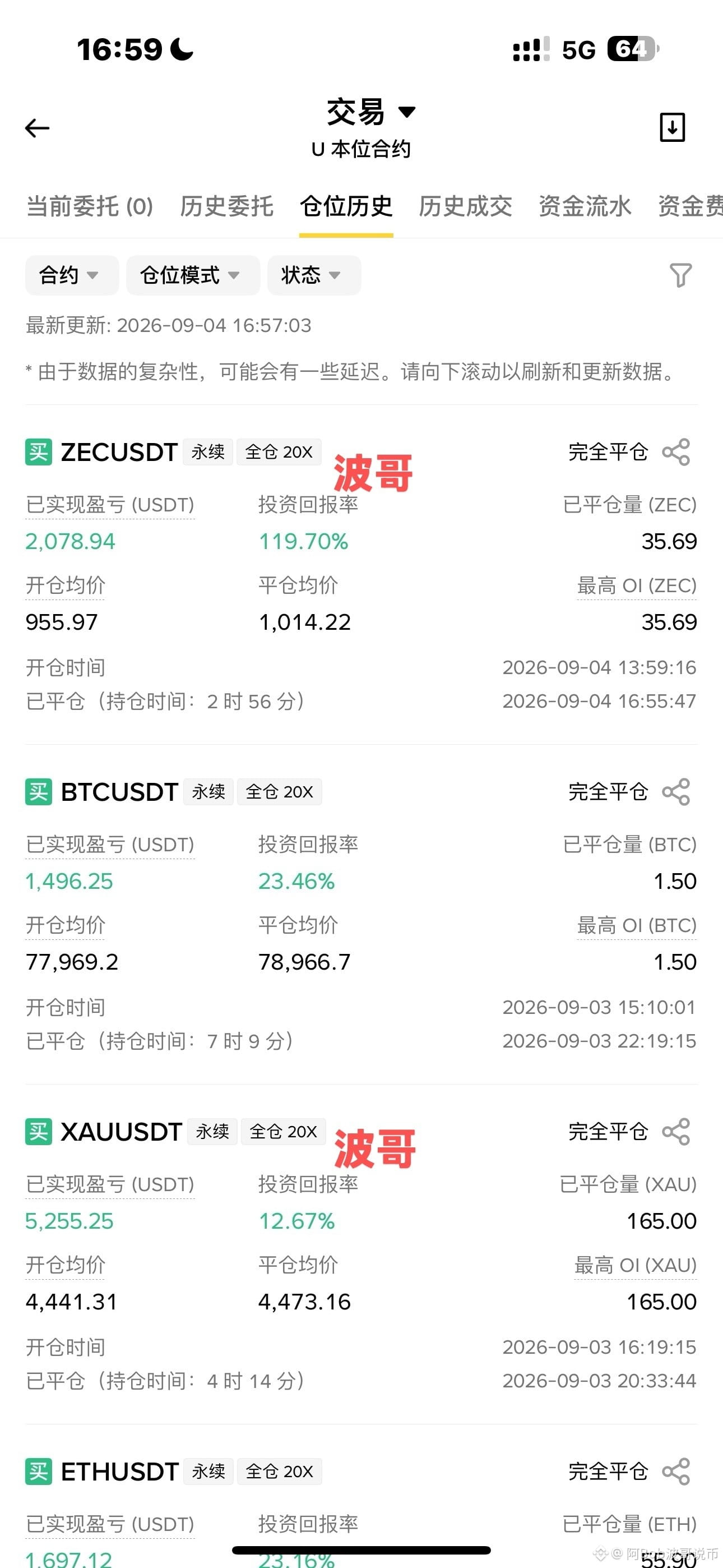
Short-term trading isn’t based on instinct—it’s built on accumulation.
The real short-term trading is established on extensive observation, reflection, and validation. By studying enough candlestick charts and researching how price behaves across different timeframes, you can form a set of judgment rules with a probability edge.
What people call “patterns” can only indicate a probabilistic direction. Behind the market are emotions, news, and multi-party game play—no one can be 100% accurate.
So what exactly should you do? Keep reviewing past trades. Identify under what conditions similar price action occurred, and after which signals the move is more likely to continue. Candlesticks don’t only reflect volatility; they also reveal traces of fund flow.
Some products slide steadily from the upper range with very little fluctuation—classic cases of “nobody manages it, and there’s no资金 lifting it.” Retail investors are still stuck in it, holding on to the end: turning a short-term position into a medium-term one, and then into something that gets carried on for years—don’t even touch such targets.
Newcomers, remember a few things: before entering, look at the win rate—prefer doing less over doing things randomly. Be content with profits; stay calm when you lose; don’t argue with the trades or fight the market. Having someone guide you can make it faster, but the key is whether you can stop and summarize on your own.
Turning over your account isn’t something you can “scroll” your way into. If you really want to change, decide on your method early. Only when your pace is stable can you talk about returns.
The real short-term trading is established on extensive observation, reflection, and validation. By studying enough candlestick charts and researching how price behaves across different timeframes, you can form a set of judgment rules with a probability edge.
What people call “patterns” can only indicate a probabilistic direction. Behind the market are emotions, news, and multi-party game play—no one can be 100% accurate.
So what exactly should you do? Keep reviewing past trades. Identify under what conditions similar price action occurred, and after which signals the move is more likely to continue. Candlesticks don’t only reflect volatility; they also reveal traces of fund flow.
Some products slide steadily from the upper range with very little fluctuation—classic cases of “nobody manages it, and there’s no资金 lifting it.” Retail investors are still stuck in it, holding on to the end: turning a short-term position into a medium-term one, and then into something that gets carried on for years—don’t even touch such targets.
Newcomers, remember a few things: before entering, look at the win rate—prefer doing less over doing things randomly. Be content with profits; stay calm when you lose; don’t argue with the trades or fight the market. Having someone guide you can make it faster, but the key is whether you can stop and summarize on your own.
Turning over your account isn’t something you can “scroll” your way into. If you really want to change, decide on your method early. Only when your pace is stable can you talk about returns.