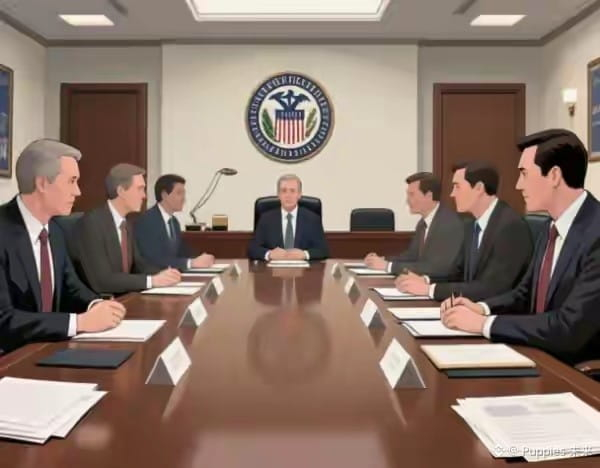
$ZEC $DOGE $牛来 The Federal Reserve's policy shift has sparked global attention, and whether September will bring a rate hike is becoming the market's most nerve-wracking question 🤯. CME FedWatch shows the probability of a rate hike at the September 15-16 meeting has risen to 50%, effectively neck and neck with no change in policy. After new Chair Kevin Warsh took office in May, he quickly reversed the policy tone, not only scrapping forward guidance but also publicly stressing that “price stability” is the top priority at present. U.S. inflation rose to 4.2% in May, a three-year high, driven by tariffs and the lingering effects of the Iran war, fueling the continued spread of “Trumpflation.” Although the Federal Reserve's statutory mandate includes maximum employment, in the face of price pressures, the employment goal has temporarily taken a back seat 🔥.
The history of the past 36 years has poured cold water on optimists. Carson Investment Research analyzed six rate-hiking cycles since 1990, with an average interval of 4.4 years between each round. In five of those cycles, the first hike was 25 basis points; the S&P 500 fell 100% of the time within one month after the hike and 80% within three months, with an average decline of 2.7%. The only cycle that began with a large 50-basis-point hike had even grimmer consequences — three months, six months, and even one year later, the S&P 500 all posted double-digit percentage declines 💥. In other words, whether gradual or aggressive, short-term equities rarely escape the pain, and history has repeatedly confirmed the destructive power of the early stage of rate hikes.
What is even trickier now is that rate hikes could interrupt the AI-driven rally 🤖. Many AI infrastructure projects rely on debt financing, and rising borrowing costs will directly delay construction while putting even more pressure on already elevated technology valuations. At present, AI-related stocks generally trade at price-to-earnings ratios in historically high percentiles; if financing conditions tighten, the pressure for valuation re-rating could be significant. If a September hike really happens, not only will overall risk appetite come under pressure, but the AI sector will also face a double hit from “valuation compression” and “financing difficulties” ⚠️. Investors should now closely watch inflation data, every word Warsh says, and whether the FOMC really dares to pull the trigger before prices have clearly cooled. September's rate puzzle is bound to be bumpy — fasten your seatbelt 🎢.
The history of the past 36 years has poured cold water on optimists. Carson Investment Research analyzed six rate-hiking cycles since 1990, with an average interval of 4.4 years between each round. In five of those cycles, the first hike was 25 basis points; the S&P 500 fell 100% of the time within one month after the hike and 80% within three months, with an average decline of 2.7%. The only cycle that began with a large 50-basis-point hike had even grimmer consequences — three months, six months, and even one year later, the S&P 500 all posted double-digit percentage declines 💥. In other words, whether gradual or aggressive, short-term equities rarely escape the pain, and history has repeatedly confirmed the destructive power of the early stage of rate hikes.
What is even trickier now is that rate hikes could interrupt the AI-driven rally 🤖. Many AI infrastructure projects rely on debt financing, and rising borrowing costs will directly delay construction while putting even more pressure on already elevated technology valuations. At present, AI-related stocks generally trade at price-to-earnings ratios in historically high percentiles; if financing conditions tighten, the pressure for valuation re-rating could be significant. If a September hike really happens, not only will overall risk appetite come under pressure, but the AI sector will also face a double hit from “valuation compression” and “financing difficulties” ⚠️. Investors should now closely watch inflation data, every word Warsh says, and whether the FOMC really dares to pull the trigger before prices have clearly cooled. September's rate puzzle is bound to be bumpy — fasten your seatbelt 🎢.