

The number that caught my attention is not the amount stolen.
It is how different these attacks were.
Within just 12 hours the crypto market saw four separate security threats. Each one used a different weakness and that tells me something important about the current risk.
The first involved a malicious governance proposal targeting Olas.
Around 40.196 ETH worth roughly $100000 was placed at risk.
The attacker used an ENS name that looked connected to the project and disguised the proposal as a normal treasury ownership migration.
But executing it would have moved treasury control to an attacker controlled contract.
This is the kind of attack that can look completely normal if someone only reads the proposal title.
Then another issue appeared on Reddio.
A cross vault accounting flaw reportedly caused stETH to be counted twice as backing for different assets.
The estimated loss was around 9.25 ETH.
The bigger concern was that the flaw could potentially be abused through a flash loan to create artificial value and withdraw excess ETH.
At the same time another threat was targeting ordinary wallet users.
A theft toolkit was reportedly being sold that focused on Ledger and Trezor users.
The important part is that this was not about breaking the hardware itself.
The attack relied on social engineering and fake transaction signing requests.
A user could believe they were approving a normal transaction while actually giving permission for a malicious transfer.
Then came another social media attack.
Base co founder Jesse Pollak warned that a compromised third party app connected to his social account was used to post scam content.
The access was later removed.
And this happened around the same time as the compromised Neuralink related account that pushed the SLINK memecoin.
That case showed how powerful one trusted reaction can be.
Elon Musk replied to the post and traders treated that reaction as confirmation.
The token then surged before crashing more than 95 percent.
Looking at all four cases together gives me a different view of crypto security.
The biggest weakness is not always smart contract code.
Sometimes it is governance.
Sometimes it is accounting.
Sometimes it is a wallet signature.
Sometimes it is simply trust.
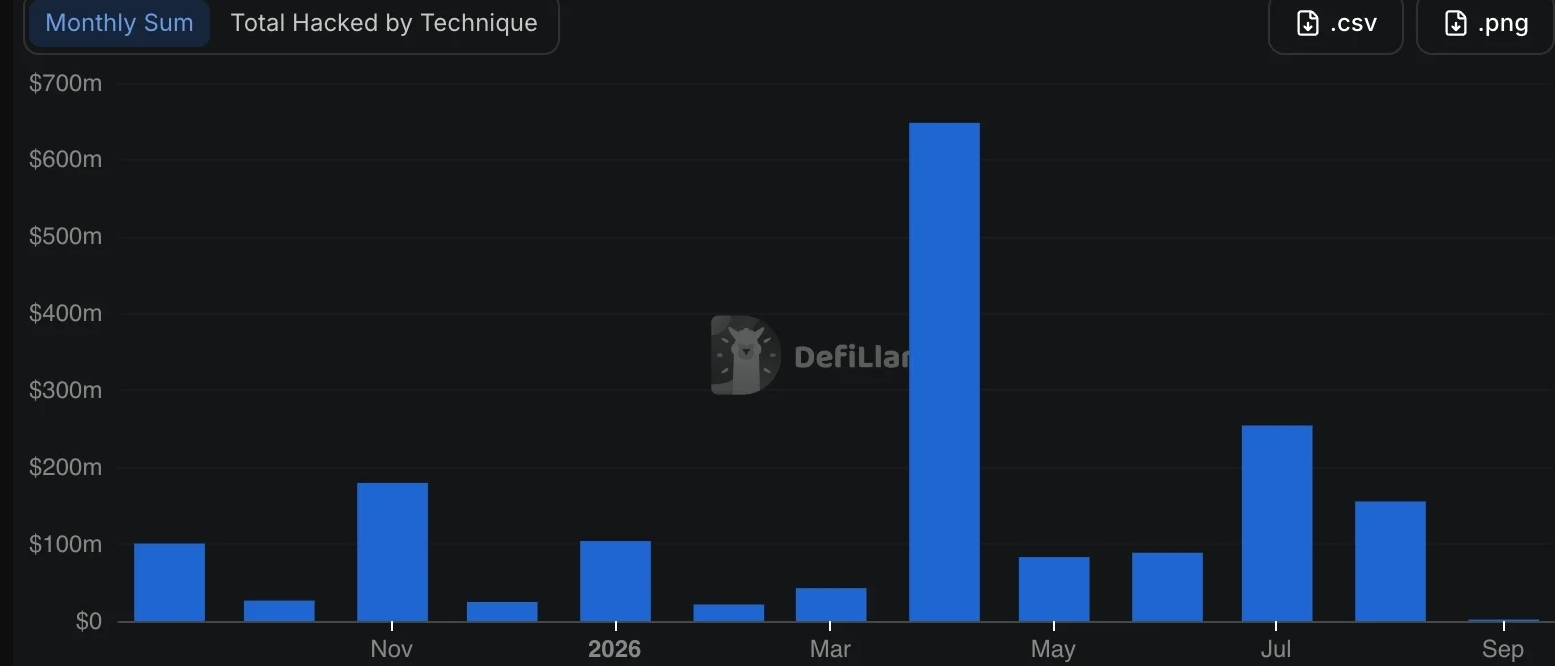
DeFiLlama data cited in the report puts losses between September 2025 and September 2026 at around $1.732 billion.
That is a serious number.
But there is also an important comparison.
H1 2025 reportedly lost around $2.3 billion while H1 2026 crossed $1 billion.
So 2026 is not automatically worse than 2025 yet.
For me the lesson is simple.
Never approve a governance proposal just because the name looks familiar.
Never sign a transaction you do not fully understand.
Never treat a celebrity reaction as proof that a token is legitimate.
And never assume a connected social account is safe just because it belongs to someone you trust.
Crypto gives users control over their money.
That also means users have to verify what they are signing before that control becomes someone else’s.