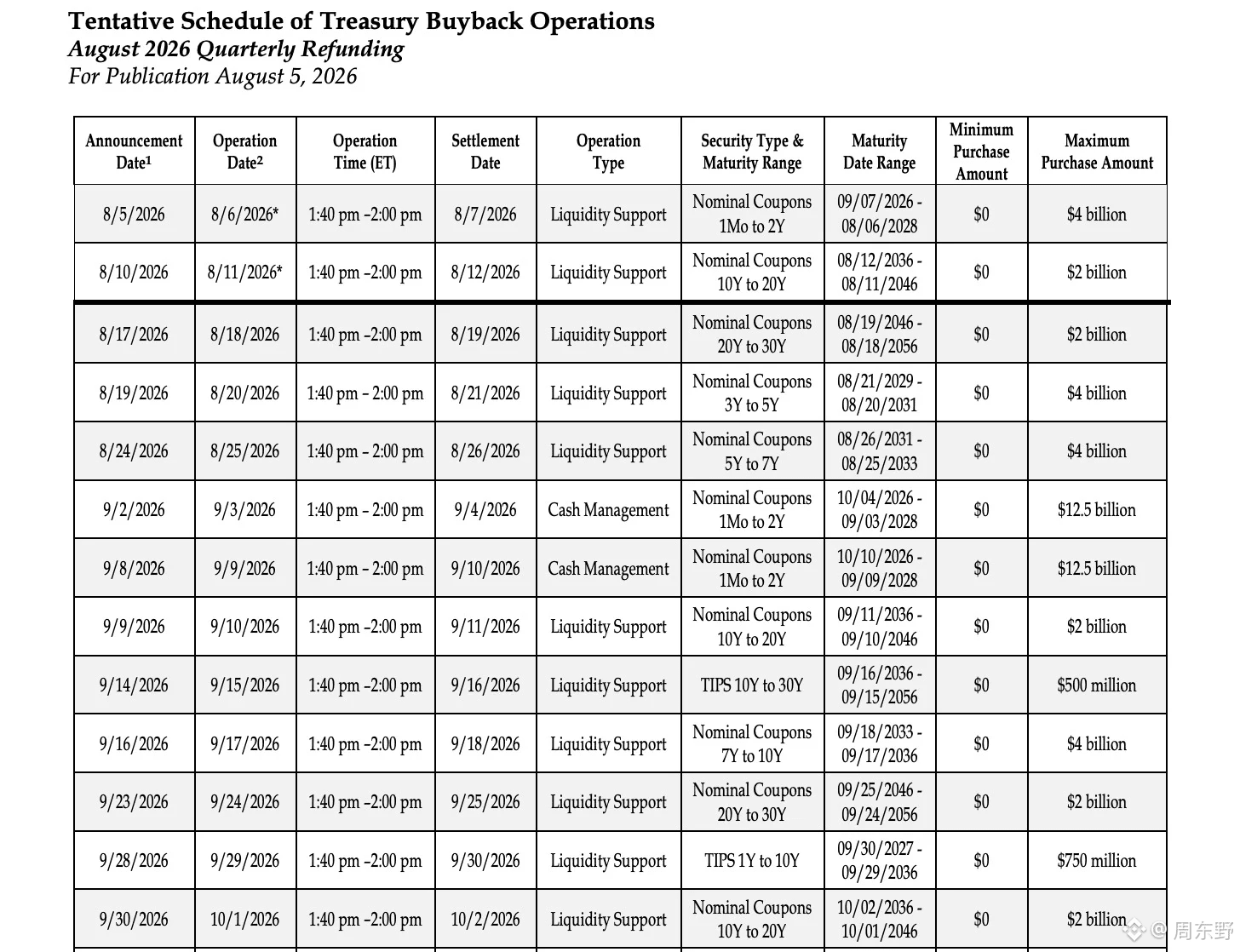
On September 7, the U.S. Treasury launched a new round of Treasury buybacks, with a weekly cap of $14.5 billion and a monthly plan to buy back $38.25 billion in long-dated bonds, while the Fed will also reinvest more than $2 billion in short-dated bonds.
The market is once again cheering and calling this a full QE, but there is no need to be overly excited. What Scott Bessent is doing is using cash raised from issuing short-term debt to buy back old long-term bonds with very poor liquidity. In essence, it is using short-term borrowing to pay down long-term debt and forcibly suppress long-term Treasury yields. It is by no means the Fed turning on its money printer.
However, the first hands to receive the cash are Wall Street primary dealers. For the crypto market, the game is about liquidity spillover.
Bitcoin is currently stuck at the $80,000 threshold, with huge short liquidation clusters piled up between $79,500 and $82,000. After Wall Street giants receive cash on Wednesday, balance-sheet liquidity increases significantly. Even if only a very small portion of risk capital flows into crypto, it would still be enough to spark a move on the charts. Breaking above $82,000 could trigger a chain reaction of short squeezes.
XRP, meanwhile, is benefiting from liquidity while also building in hard expectations around the Senate’s CLARITY Act vote on September 15. Net inflows into spot ETFs have already exceeded $1.66 billion, and price has consolidated around $1.45. If this new money combines with favorable legislation, once the $1.70 resistance is broken, the $2 barrier will quickly collapse.
But the fatal mid-term risk is very clear. If this kind of operation triggers a rebound in inflation, the Fed will be forced to keep rates high for longer, which in turn would cap the ceiling for the next major bull market.
On September 9, there is no need to look at grand narratives. Just watch where the money lands next, the real buying support for $BTC Bitcoin at $80,000 and $XRP at $1.45.
#BTC触及80000美元 #xrp
The market is once again cheering and calling this a full QE, but there is no need to be overly excited. What Scott Bessent is doing is using cash raised from issuing short-term debt to buy back old long-term bonds with very poor liquidity. In essence, it is using short-term borrowing to pay down long-term debt and forcibly suppress long-term Treasury yields. It is by no means the Fed turning on its money printer.
However, the first hands to receive the cash are Wall Street primary dealers. For the crypto market, the game is about liquidity spillover.
Bitcoin is currently stuck at the $80,000 threshold, with huge short liquidation clusters piled up between $79,500 and $82,000. After Wall Street giants receive cash on Wednesday, balance-sheet liquidity increases significantly. Even if only a very small portion of risk capital flows into crypto, it would still be enough to spark a move on the charts. Breaking above $82,000 could trigger a chain reaction of short squeezes.
XRP, meanwhile, is benefiting from liquidity while also building in hard expectations around the Senate’s CLARITY Act vote on September 15. Net inflows into spot ETFs have already exceeded $1.66 billion, and price has consolidated around $1.45. If this new money combines with favorable legislation, once the $1.70 resistance is broken, the $2 barrier will quickly collapse.
But the fatal mid-term risk is very clear. If this kind of operation triggers a rebound in inflation, the Fed will be forced to keep rates high for longer, which in turn would cap the ceiling for the next major bull market.
On September 9, there is no need to look at grand narratives. Just watch where the money lands next, the real buying support for $BTC Bitcoin at $80,000 and $XRP at $1.45.
#BTC触及80000美元 #xrp