
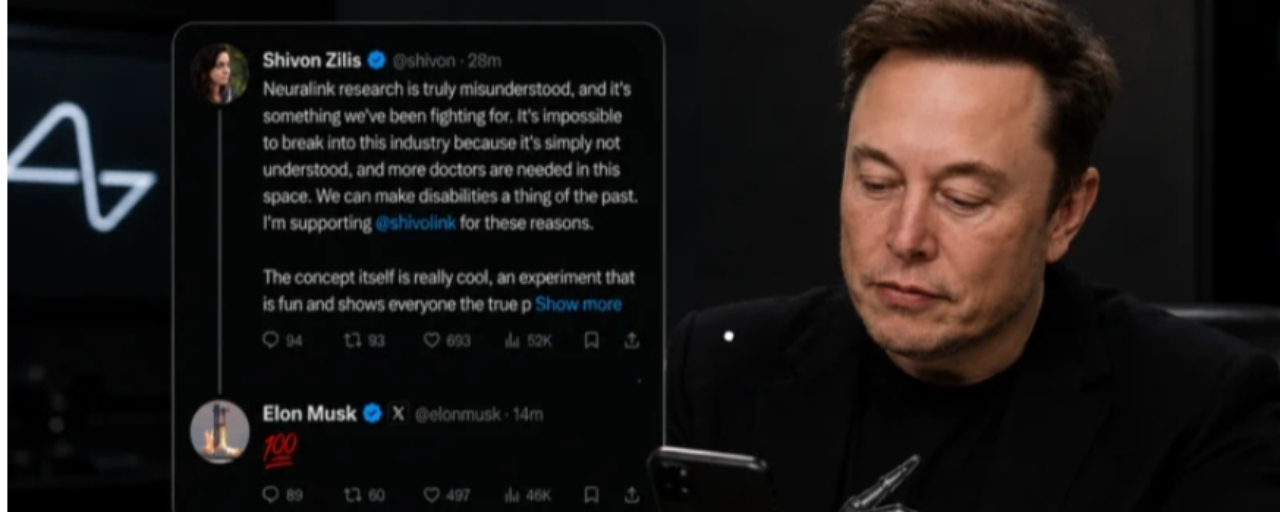

What happened with SLINK is a good example of how dangerous social engineering can be in crypto.
The hacker did not need access to Elon Musk’s account. Instead they targeted an account connected to him through Shivon Zilis who is a Neuralink executive and the mother of Musk’s children.
The compromised account posted about SLINK in a way that did not immediately look like a crypto promotion. Then Elon replied to the post with an emoji.
That small reaction was enough to change the situation.
Traders saw Elon interacting with the post and many assumed he was supporting the project. The token quickly moved past an $80 million market cap.
This is where the real danger appeared.
People were not buying because they had studied the token. They were buying because they believed they had seen a signal from someone with huge influence.
Then the post was deleted.
SLINK collapsed by more than 95 percent and its market cap dropped below $1 million.
The damage was massive for traders who entered after the move. Four large wallets were reported to have losses above $807000.
But some wallets were already positioned before the crowd arrived.
The top 30 insider wallets reportedly made around $4.7 million from the move. Some of those wallets turned very early entries into more than 1200 times their initial value.
That part is what stands out to me.
The scam did not depend on complicated technology. It depended on trust.
A familiar name created attention. A simple reaction created legitimacy. FOMO brought buyers. Then insiders had liquidity to sell into.
This is why I think meme coin traders need to be more careful with social signals.
A celebrity reaction is not proof of ownership.
A post from a related account is not proof of an official project.
Even a screenshot can be misleading.
Before buying something that suddenly moves because of a famous person I would check the official account. The contract address. The token history. Wallet activity. Liquidity and who bought before the crowd arrived.
The biggest lesson from SLINK is simple.
In crypto you can lose money without anyone hacking your wallet.
Sometimes all it takes is one fake signal that makes you believe everyone else already knows something.