˗ˋ🔥ˎˊ˗ 𝗕𝗜𝗦 TESTS THE XRP LEDGER ⋙ 𝗔𝗡𝗗 𝗫𝗥𝗣𝗟 ENTERS THE INSTITUTIONAL RADAR⚜️
The Bank for International Settlements, known as the “bank of central banks,” has just put the $XRP Ledger into a real-world experiment.
BIS researchers developed and tested a system that records on the blockchain a cryptographic fingerprint of official statistical data, making it possible to verify whether information really came from the original institution and whether it was altered after publication.
🔥 And the blockchain chosen for the test was precisely the $XRP Ledger.
In the experiment, the data is not published in full on the network. A cryptographic identifier is calculated and recorded on XRPL, creating a kind of immutable and verifiable authenticity stamp.
This matters because it shows XRPL being studied in an institutional context that goes far beyond speculation with $XRP .
⚠️ But there is an important difference
BIS did NOT announce that it tested XRP for cross-border payments.
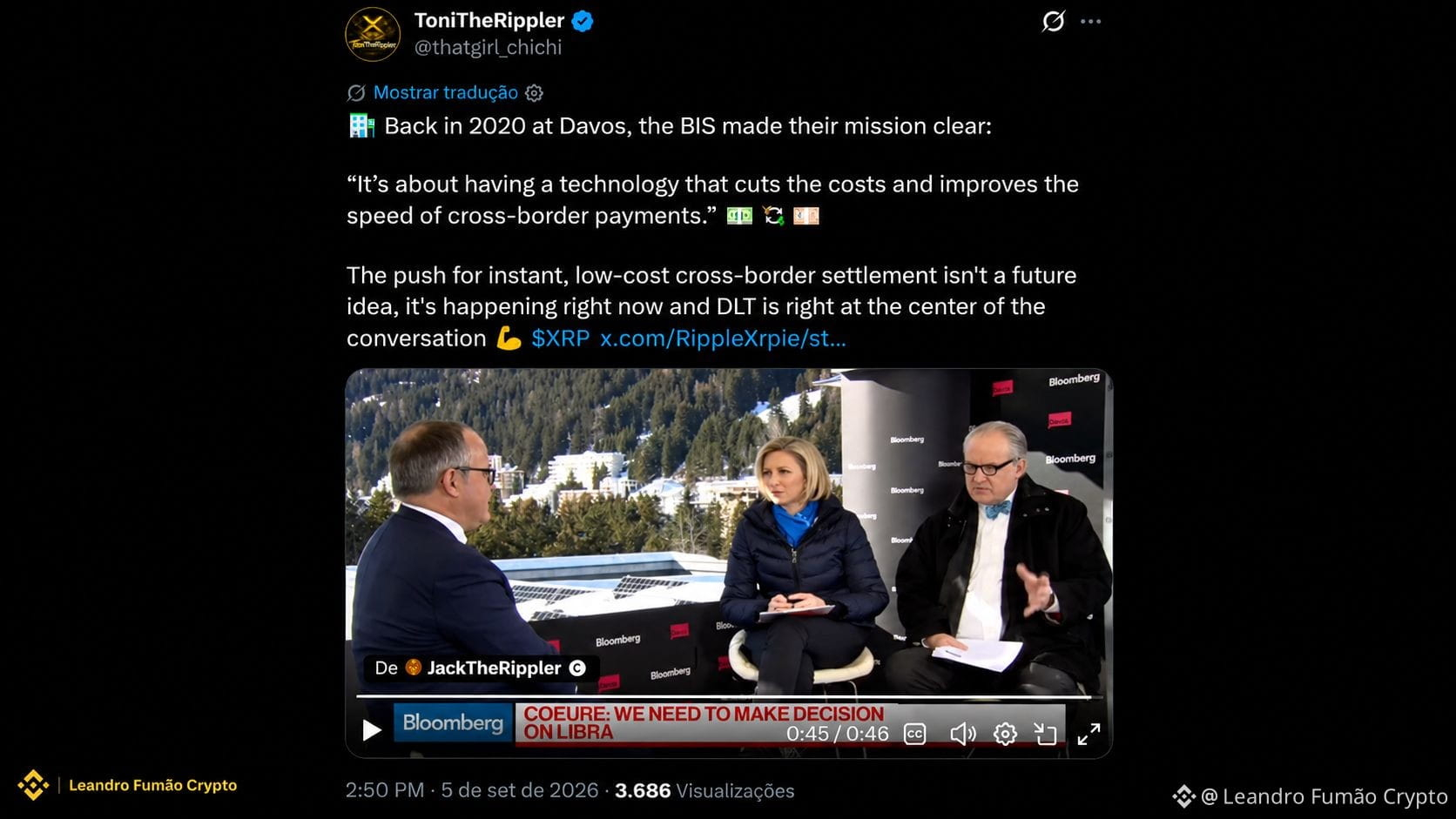
The institute separately researches how new technologies can reduce costs, delays, and intermediaries in international payments. In March, BIS highlighted that these payments remain more expensive, slower, and less transparent than domestic ones.
In Project Agorá, for example, BIS has already demonstrated atomic settlement between currencies using bank deposits and tokenized central bank reserves.
🔥 Therefore, the real story may be even more interesting:
XRPL IS ALREADY BEING TESTED BY BIS AS VERIFIABLE PUBLIC INFRASTRUCTURE.
The question now is how far this technological convergence can go.
👇 Does seeing BIS using the $XRP Ledger change your perception of the network?
#xrp #XRPL #BIS
The Bank for International Settlements, known as the “bank of central banks,” has just put the $XRP Ledger into a real-world experiment.
BIS researchers developed and tested a system that records on the blockchain a cryptographic fingerprint of official statistical data, making it possible to verify whether information really came from the original institution and whether it was altered after publication.
🔥 And the blockchain chosen for the test was precisely the $XRP Ledger.
In the experiment, the data is not published in full on the network. A cryptographic identifier is calculated and recorded on XRPL, creating a kind of immutable and verifiable authenticity stamp.
This matters because it shows XRPL being studied in an institutional context that goes far beyond speculation with $XRP .
⚠️ But there is an important difference
BIS did NOT announce that it tested XRP for cross-border payments.
The institute separately researches how new technologies can reduce costs, delays, and intermediaries in international payments. In March, BIS highlighted that these payments remain more expensive, slower, and less transparent than domestic ones.
In Project Agorá, for example, BIS has already demonstrated atomic settlement between currencies using bank deposits and tokenized central bank reserves.
🔥 Therefore, the real story may be even more interesting:
XRPL IS ALREADY BEING TESTED BY BIS AS VERIFIABLE PUBLIC INFRASTRUCTURE.
The question now is how far this technological convergence can go.
👇 Does seeing BIS using the $XRP Ledger change your perception of the network?
#xrp #XRPL #BIS