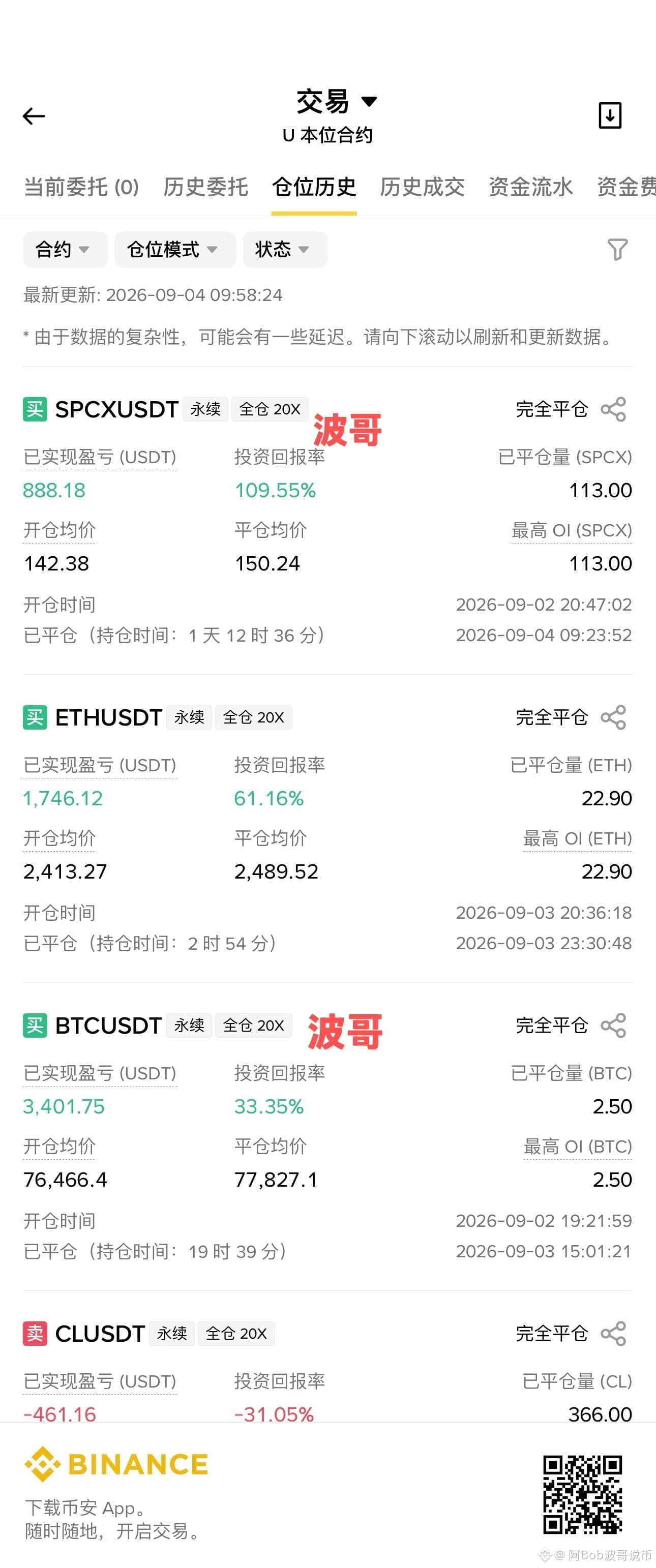
For those who have been trading crypto for more than a year and still haven’t reached their goals, these tips are worth taking the time to read.
I’ve lost money and made mistakes too, and later I realized: what determines whether you can keep going long term isn’t how great your skills are, but whether you can repeatedly do the most basic things right.
If your capital isn’t large, don’t think about going all-in to turn things around. Catching one or two highly certain opportunities a year is better than making frequent trades every day. Staying alive matters more than anything.
Practice first, then put real money on the line. Demo trading is not about making money; it’s about discipline and mindset. Going straight in without practice is the most costly approach.
Don’t rush to chase after good news once it’s already priced in. By the time the news comes out, the money may already have entered early. After a sharp open and surge, profit-taking pressure often follows.
Control your position size around important events. Holidays and major announcements usually bring bigger volatility; when you can’t read the market, trading less is the best choice.
Always keep some cash for medium- to long-term trades. Don’t put all your chips in; leave yourself some room to adjust, and you’ll have the initiative.
For short-term trades, only choose coins with liquidity. Assets with active trading and market attention are easier to time.
Understand the market rhythm before acting. When the market is slowly trending down, don’t rush to buy the dip; after a fast decline has flushed out the risk, rebound opportunities are more likely to appear.
Cut losses quickly when you’re wrong. Trading is never 100% accurate; the real danger is being wrong and still refusing to let go.
Indicators are only a reference, not the answer. Tools can help with judgment, but in the end you still have to look at the trend, the capital flow, and the market environment.
Find the method that suits you and keep executing it. People who make money are often not using the most complicated strategies—they are repeatedly doing one simple approach well.
There are plenty of opportunities in crypto, but only a few will ever stay. Making fewer mistakes is itself a way to make money. First learn risk control, then talk about profits.
I’ve lost money and made mistakes too, and later I realized: what determines whether you can keep going long term isn’t how great your skills are, but whether you can repeatedly do the most basic things right.
If your capital isn’t large, don’t think about going all-in to turn things around. Catching one or two highly certain opportunities a year is better than making frequent trades every day. Staying alive matters more than anything.
Practice first, then put real money on the line. Demo trading is not about making money; it’s about discipline and mindset. Going straight in without practice is the most costly approach.
Don’t rush to chase after good news once it’s already priced in. By the time the news comes out, the money may already have entered early. After a sharp open and surge, profit-taking pressure often follows.
Control your position size around important events. Holidays and major announcements usually bring bigger volatility; when you can’t read the market, trading less is the best choice.
Always keep some cash for medium- to long-term trades. Don’t put all your chips in; leave yourself some room to adjust, and you’ll have the initiative.
For short-term trades, only choose coins with liquidity. Assets with active trading and market attention are easier to time.
Understand the market rhythm before acting. When the market is slowly trending down, don’t rush to buy the dip; after a fast decline has flushed out the risk, rebound opportunities are more likely to appear.
Cut losses quickly when you’re wrong. Trading is never 100% accurate; the real danger is being wrong and still refusing to let go.
Indicators are only a reference, not the answer. Tools can help with judgment, but in the end you still have to look at the trend, the capital flow, and the market environment.
Find the method that suits you and keep executing it. People who make money are often not using the most complicated strategies—they are repeatedly doing one simple approach well.
There are plenty of opportunities in crypto, but only a few will ever stay. Making fewer mistakes is itself a way to make money. First learn risk control, then talk about profits.